
Why Smart Buyers Source Halloween & Christmas Cookie Cutters in June: A Pre-Holiday Procurement Guide
It sounds early. It never is.
Every October, retail buyers say the same thing: "We should have ordered in June." By the time September arrives, factories are at capacity, customization slots are gone, and generic stock is all that's left.
This guide is for buyers who don't want to have that conversation again.
The Pre-Holiday Sourcing Calendar (And Why It's Tighter Than You Think)
Most buyers treat Halloween and Christmas as Q4 problems. In manufacturing, they're Q2 decisions.
Here's why:
Halloween (October 31) requires retail placement by mid-September at the latest. Working backward from a September 15 in-store date:
- Inland delivery + customs: subtract 7–10 days → ship by September 5
- Sea freight from Asia: subtract 18–22 days → goods ready by August 15
- Production + customization: subtract 20–30 days → order confirmed by July 15
- Sample approval: subtract 5–7 days → sample request by July 8
That means you have about four weeks from today to request samples if you want custom Halloween cookie cutters on US shelves.
Christmas has a slightly longer runway — but not much. Retail floor sets go up in late October. Add the same math, and your Christmas custom order deadline is early August.
Why Cookie Cutters Specifically? The Data Behind the Category
Holiday baking has quietly become one of the most powerful drivers of festive retail engagement. Here's what's driving wholesale demand:
DIY baking is a cultural moment, not a niche. During Q4 2024, searches for "Christmas cookie recipes" exceeded 12 million in the US alone. Craft and lifestyle brands — from Anthropologie to small Etsy-adjacent DTC brands — have capitalized on this with seasonal baking kits. Cookie cutters are the highest-margin, lowest-logistics-complexity component of those kits.
Gift sets are the sweet spot. A 6-piece Halloween cutter set in a windowed box retails for $12–$22. A premium 10-piece Christmas set with recipe cards retails for $24–$45. Margins are strong. Returns are low. Storage is easy.
Brand customization is becoming the norm. What used to be a generic category is increasingly branded. Coffee chains, grocery retailers, and lifestyle brands are all putting their logo on seasonal bakeware. If you can offer custom shape development + branded packaging, you have a meaningful competitive advantage.
The Formats That Convert Best at Retail
After years of shipping to US and EU retail accounts, here's what we see actually selling through:
🎃 Halloween winners: Ghost, pumpkin, bat, skull, spider web. Sets of 6 in kraft paper box with window. Orange/black color packaging.
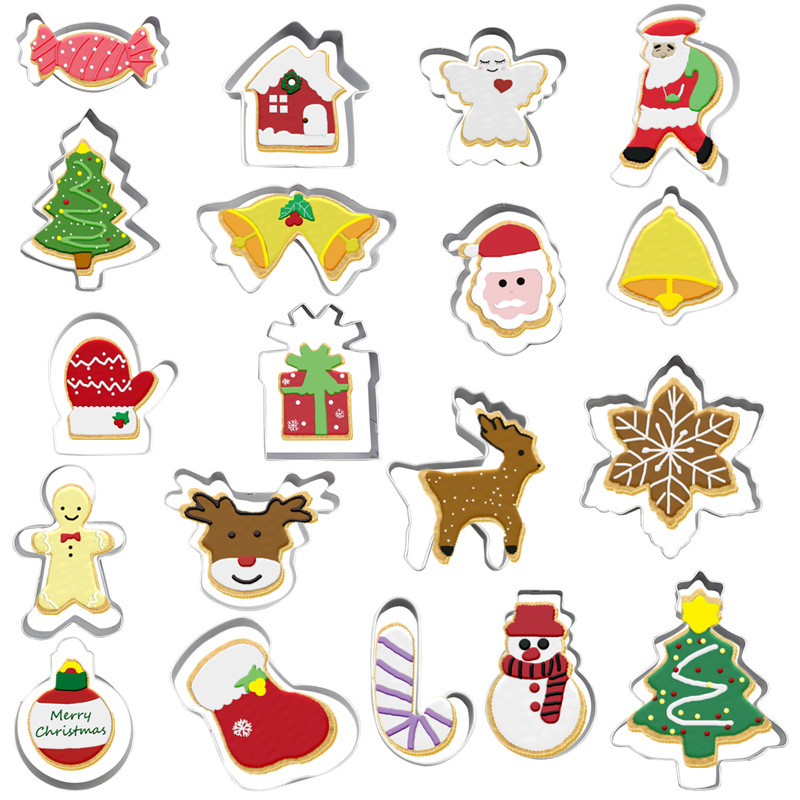
🎄 Christmas winners: Tree, star, snowflake, gingerbread man, bell, reindeer. Sets of 6–10. Red/green or kraft + foil packaging.
The single most important retail insight: sets with a recipe card insert have 30–40% higher perceived value and dramatically lower return rates. It's a $0.08 addition that moves product.
Questions to Ask Before You Order
- ✅ Material: food-grade 304 stainless or BPA-free ABS plastic?
- ✅ Are edges food-safe (rolled, not sharp cut)?
- ✅ Can you supply an FDA compliance letter for food-contact materials?
- ✅ Can packaging artwork be submitted as AI or PDF?
- ✅ Is there a dieline template available for custom box design?
Request samples today — spots fill up fast in July. [Contact us →]
The Wholesale Buyer's Guide to Custom Kids Tableware for Halloween & Christmas 2026: What Sells, What Doesn't, and When to Order
Summer 2026 Sourcing Guide: Why Stainless Steel BBQ Utensils Are Flying Off Shelves — And How to Stock Before the Rush



