
Why the Approved Sample Matters in OEM Cutlery Production
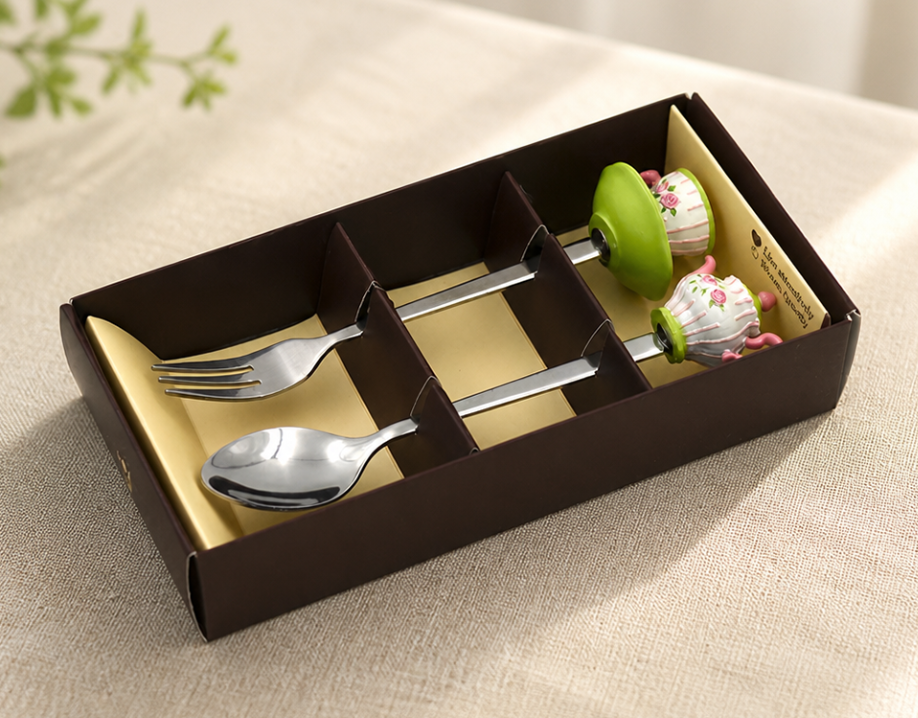
In an OEM cutlery project, the approved sample is more than a sales sample.
It should become an important production reference.
Before mass production, buyers and manufacturers normally discuss dozens of details: material, dimensions, thickness, weight, polishing, logo, handle color and packaging.
Emails and specification sheets are essential.
But a physical approved sample provides something documents cannot always communicate clearly:
the expected final result.
What Should the Sample Confirm?
Depending on the project, the approved sample can help confirm:
-
Overall shape
-
Dimensions
-
Weight and balance
-
Surface finish
-
Edge quality
-
Handle assembly
-
Color
-
Logo position
-
Printing
Once these details are approved, production teams have a physical reference for comparison.
Why Specifications Are Still Necessary
A sample should not replace technical documentation.
Imagine that a spoon sample looks correct, but nobody records the stainless steel grade.
Six months later, the same appearance could theoretically be reproduced using a different material.
The physical sample shows appearance and feel.
The specification sheet records technical requirements.
Good OEM control uses both.
What About Repeat Orders?
Approved samples become even more valuable when a product is reordered.
Instead of relying on memory or old photographs, the factory can compare new production against the retained reference.
This is especially useful for finishes, colors and composite handles where visual differences may be difficult to describe numerically.
Expert Tip
For important OEM projects, both buyer and factory should retain approved references whenever practical.
Make sure the reference is clearly identified with the project or item number and approval date.
Buyer Takeaway
The best OEM production standard is not an email saying “same as last time.”
It is a controlled combination of approved sample, specification sheet and final artwork.





