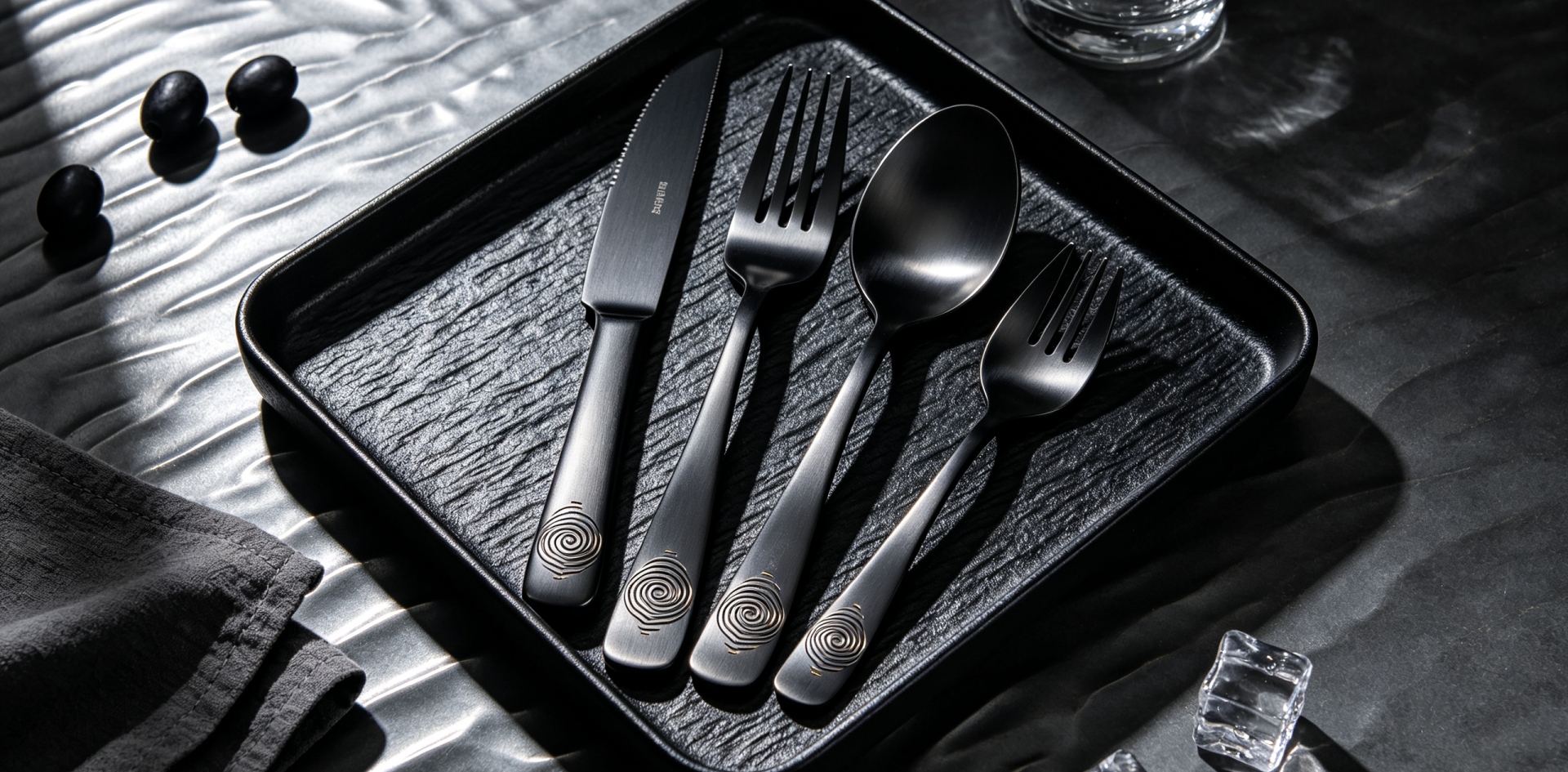
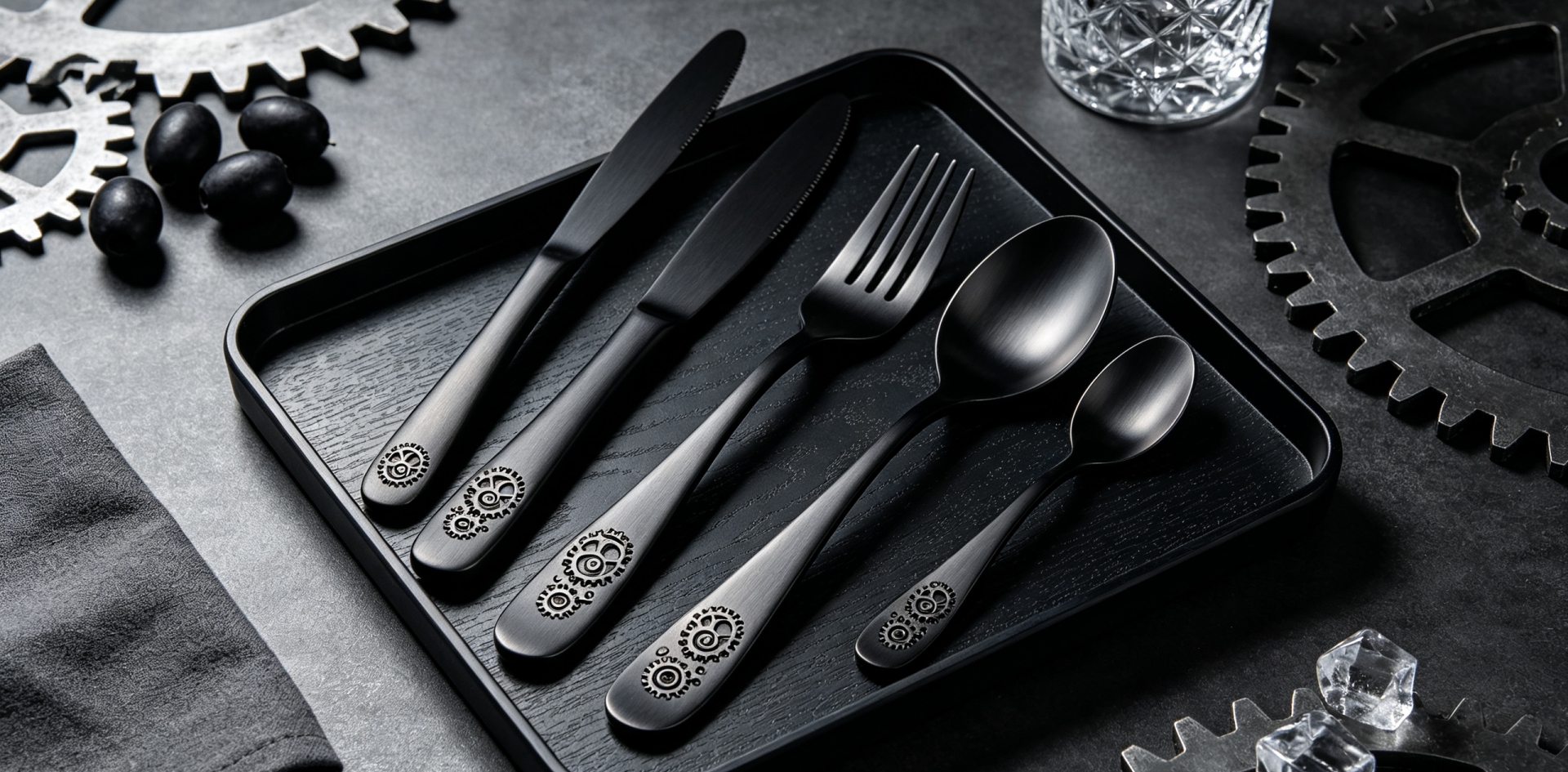
Commercial Stainless Steel Cutlery for Foodservice Businesses

Commercial Stainless Steel Cutlery for Foodservice Businesses
Commercial foodservice businesses need cutlery that fits the realities of daily operation. Restaurants, catering companies, institutional kitchens, canteens and foodservice distributors may all purchase stainless steel forks, knives and spoons in large quantities, but their requirements can vary significantly.
A catering company serving large events may focus on quantity and efficient distribution. A restaurant group may need the same flatware design across multiple locations. An institutional foodservice operator may prioritize standardized purchasing and organized replacement. For these buyers, selecting commercial stainless steel cutlery is not simply about choosing a design. The purchasing decision should connect product specifications with service volume, operating conditions and long-term supply requirements.
For B2B buyers, the right approach is to define how the products will be used before confirming material, dimensions, finish and quantity. A clear specification can make supplier communication, sampling, production and future repeat orders easier to manage.
What Is Commercial Stainless Steel Cutlery?
Commercial stainless steel cutlery refers to forks, knives, spoons and related dining utensils purchased for professional foodservice operations rather than occasional household use.
These products may be used in:
-
Restaurants
-
Catering companies
-
Hotels
-
Corporate cafeterias
-
School dining facilities
-
Healthcare foodservice
-
Event venues
-
Staff canteens
-
Foodservice distribution
-
Institutional dining operations
The required product range and purchasing quantity depend on the service environment.
Start With the Foodservice Model
Different foodservice businesses have different operating patterns.
A quick-service restaurant may experience concentrated demand during lunch and dinner periods. A catering company may prepare large quantities for a single event. A hospital kitchen may distribute meals according to fixed schedules. A distributor may need inventory that can serve several customer types.
Understanding the service model helps buyers determine the appropriate cutlery range and inventory level.
Choose Products Based on the Menu
The menu should guide the cutlery selection.
A standard foodservice collection may include:
-
Table fork
-
Table knife
-
Table spoon
-
Dessert fork
-
Dessert spoon
-
Teaspoon
Some menus may require additional specialty utensils. Buyers should select products according to actual service needs instead of purchasing unnecessary product types.
Calculate Quantity Beyond Seating Capacity
The number of dining seats does not always equal the required cutlery quantity.
Buyers should also consider:
-
Daily meal volume
-
Table turnover
-
Number of service periods
-
Cleaning turnaround
-
Number of dining locations
-
Event demand
-
Reserve inventory
-
Replacement requirements
A foodservice operation with rapid turnover may need several cycles of cutlery available during a busy day.
Understand the Product Circulation Cycle
Commercial cutlery moves through a continuous operational cycle.
Products may be placed on tables, distributed with meals, collected after use, transferred for cleaning, inspected and returned to service.
If the total quantity does not support this circulation cycle, shortages may occur during busy periods.
Purchasing teams should evaluate how long each stage takes and plan active and reserve inventory accordingly.
Select the Material Specification
The material specification should be agreed before mass production.
Different stainless steel grades may be selected according to the product design, target market and intended application.
Buyers should communicate the required material clearly and request confirmation in the product specification.
For repeat orders, retaining the original material information can help maintain consistency.
Review Product Dimensions
Dimensions affect how the cutlery performs in the dining environment.
Overall length should work with the plate size and table setting. Handle proportions can influence comfort and appearance. Product thickness and weight can also affect the user's perception of the finished item.
Samples allow buyers to review these details in real conditions.
Evaluate Weight and Balance
Commercial buyers should not rely only on photographs or dimensions.
Two similar products can feel different because of their weight distribution and handle design.
Restaurants and hospitality businesses may want a particular balance to match their dining concept, while high-volume foodservice programs may focus more on practical handling.
Physical sample evaluation can help determine the preferred product.
Select the Right Surface Finish
Surface finish is an important visual element.
Polished stainless steel can provide a bright appearance suitable for many dining environments. Satin or brushed finishes can create a more understated look.
The final finish should be reviewed with the buyer's existing plates, bowls, glassware and dining furniture where possible.
Standard Collections for Commercial Buyers
Standard cutlery collections can simplify purchasing.
The product design and basic production process are already established, which can reduce development time.
These collections can be useful for foodservice distributors, restaurants and institutional buyers that need practical products for regular replenishment.
Custom Commercial Cutlery
Some foodservice businesses require products with a distinctive appearance.
Custom stainless steel cutlery can be developed according to selected dimensions, handle profiles and surface finishes.
Before mass production, buyers should approve physical samples.
The approved sample can then serve as a reference for future production.
Foodservice Cutlery for Restaurants
Restaurants may require cutlery that supports their menu and dining concept.
Casual dining, premium restaurants and restaurant chains can have different expectations for design and table presentation.
A written specification can help maintain the same product standard when new locations open or replacement orders are placed.
Cutlery for Catering Companies
Catering operations can involve large and changing guest numbers.
The cutlery inventory should support peak events as well as routine business.
Packaging and storage are also important because products may move between warehouses, central kitchens and event venues.
Clear product organization can help catering teams prepare efficiently.
Institutional Foodservice
Schools, workplaces, healthcare facilities and other institutions may serve large populations on a regular schedule.
Standardized cutlery can simplify purchasing across multiple locations.
A central procurement team can establish approved specifications while individual facilities adjust order quantities according to local demand.
Foodservice Distribution
Distributors may need commercial cutlery that can serve different customer segments.
A carefully selected standard range can simplify warehouse inventory.
For larger customers, customized designs, packaging or branding may also be available.
Long-term supplier capability can be important when distributors need to maintain the same products over time.
Cleaning and Reuse
Reusable stainless steel cutlery can be incorporated into commercial foodservice operations where established procedures support reusable tableware.
Products can move through collection, sorting, cleaning, inspection and redistribution according to the operator's workflow.
Foodservice businesses should follow the applicable sanitation and operational procedures for their location and service model.
Plan Storage and Distribution
Storage should be considered before confirming the final order.
High-use products may need to remain close to service areas, while reserve inventory can be stored separately.
For large operations, products can be organized by type, location or service department.
Packaging quantities can also be selected to support warehouse handling and internal distribution.
Prepare for Replacement
Individual pieces can be lost, damaged or removed from service over time.
A replacement plan helps maintain a consistent cutlery collection.
Buyers should retain product specifications, dimensions, finish information and approved samples for future orders.
This is particularly important for multi-location businesses.
Packaging for Commercial Orders
Commercial cutlery may move through factories, warehouses, distributors and foodservice locations before entering daily service.
Packaging should protect the products during transportation and storage.
Buyers can discuss individual packaging, inner boxes, master cartons, labels and carton quantities according to their supply chain requirements.
Support Multi-Location Purchasing
Restaurant groups, catering companies and institutional operators may purchase for several locations.
A central product specification can establish consistency across the organization.
Each location can then receive quantities based on seating capacity, service volume and inventory needs.
This approach can simplify future purchasing and replacement.
Consider Repeat Production Early
The first order is often only the beginning of a commercial cutlery program.
Businesses may expand, replace inventory or introduce the same collection at new locations.
Before approving a supplier, buyers should discuss repeat production capability and long-term product availability.
Detailed specifications and approved samples can help support consistency.
Private Label and Custom Packaging
Foodservice distributors and commercial brands may require private label products.
Branding and packaging can be developed according to the buyer's distribution requirements.
The manufacturer should receive clear artwork and packaging specifications before production begins.
Samples can help confirm the final presentation before a large order.
New Foodservice Projects
New restaurants, cafeterias and catering operations often purchase cutlery together with plates, bowls, glassware and kitchen equipment.
Evaluating samples as part of the complete dining setup can help buyers identify the most suitable product proportions and finish.
Early product approval can also help align production with the project opening schedule.
Foodservice Renovation and Expansion
Existing foodservice operations may expand capacity or renovate their dining spaces.
These projects can create demand for additional cutlery.
Where consistency is important, the original product specification can be used as the basis for replenishment.
Maintaining detailed product records makes future purchasing easier.
Working With an Experienced Manufacturer
Commercial foodservice buyers often need dependable production, flexible product options and reliable communication.
Homefelt has more than 30 years of stainless steel manufacturing experience and produces stainless steel cutlery together with kitchen and dining products, BBQ tools, pet bowls and children's tableware.
For international B2B customers, Homefelt supports standard and customized stainless steel products.
Restaurants, catering companies, foodservice distributors and institutional procurement teams can discuss product material, dimensions, finish, packaging, branding and estimated quantities according to their requirements.
For long-term projects, approved samples and detailed specifications can provide a clear reference for future repeat production.
What Commercial Buyers Should Prepare
Before requesting a quotation, buyers can prepare:
-
Business type
-
Intended application
-
Product list
-
Required material
-
Product dimensions
-
Surface finish
-
Quantity per item
-
Packaging requirements
-
Branding requirements
-
Number of locations
-
Estimated annual demand
-
Target purchasing schedule
This information helps the manufacturer understand the project and prepare a more relevant quotation.
Establish a Commercial Cutlery Standard
Businesses with ongoing purchasing needs can create a standard product specification.
The document can include product names, material, dimensions, finish, packaging and approved sample references.
This can reduce unnecessary variation and make repeat purchasing more efficient.
Plan for Business Growth
A foodservice business may open new locations, increase customer capacity or expand into new markets.
A stable cutlery specification makes it easier to reproduce the same dining standard as the business grows.
Central purchasing teams can maintain product documentation and approved samples for future projects.
Conclusion
Commercial stainless steel cutlery should be selected according to the realities of foodservice operations rather than appearance alone.
B2B buyers should consider the service model, menu, product range, usage volume, circulation cycle, material, dimensions, weight, finish, packaging, cleaning workflow, replacement requirements and future supply.
For restaurants, catering companies, distributors and institutional foodservice operators, a clear product specification can simplify both the initial purchase and long-term repeat ordering.
Homefelt has more than 30 years of stainless steel manufacturing experience and works with international B2B customers on standard and customized stainless steel products.
By sharing service requirements, expected quantities and product specifications with the manufacturer, commercial buyers can develop a stainless steel cutlery program that supports efficient daily operations and dependable long-term procurement.
You May Be Interested In
How to Buy Stainless Steel Cutlery in Bulk for Hotels, Restaurants and Distributors
Wholesale Stainless Steel Flatware Supplier: What B2B Buyers Should Know
Stainless Steel Cutlery for Restaurants: How to Choose the Right Commercial Flatware
Stainless Steel Cutlery for Corporate Cafeterias and Workplace Dining
Custom Stainless Steel Cutlery for Commercial Foodservice Projects
Stainless Steel Flatware Packaging Options for B2B Buyers


Stainless Steel Cutlery Thickness Guide for B2B Buyers
How to Buy Stainless Steel Cutlery in Bulk for B2B Buyers
Related Article