
Stainless Steel Spoon Handle Taper and Width Transition
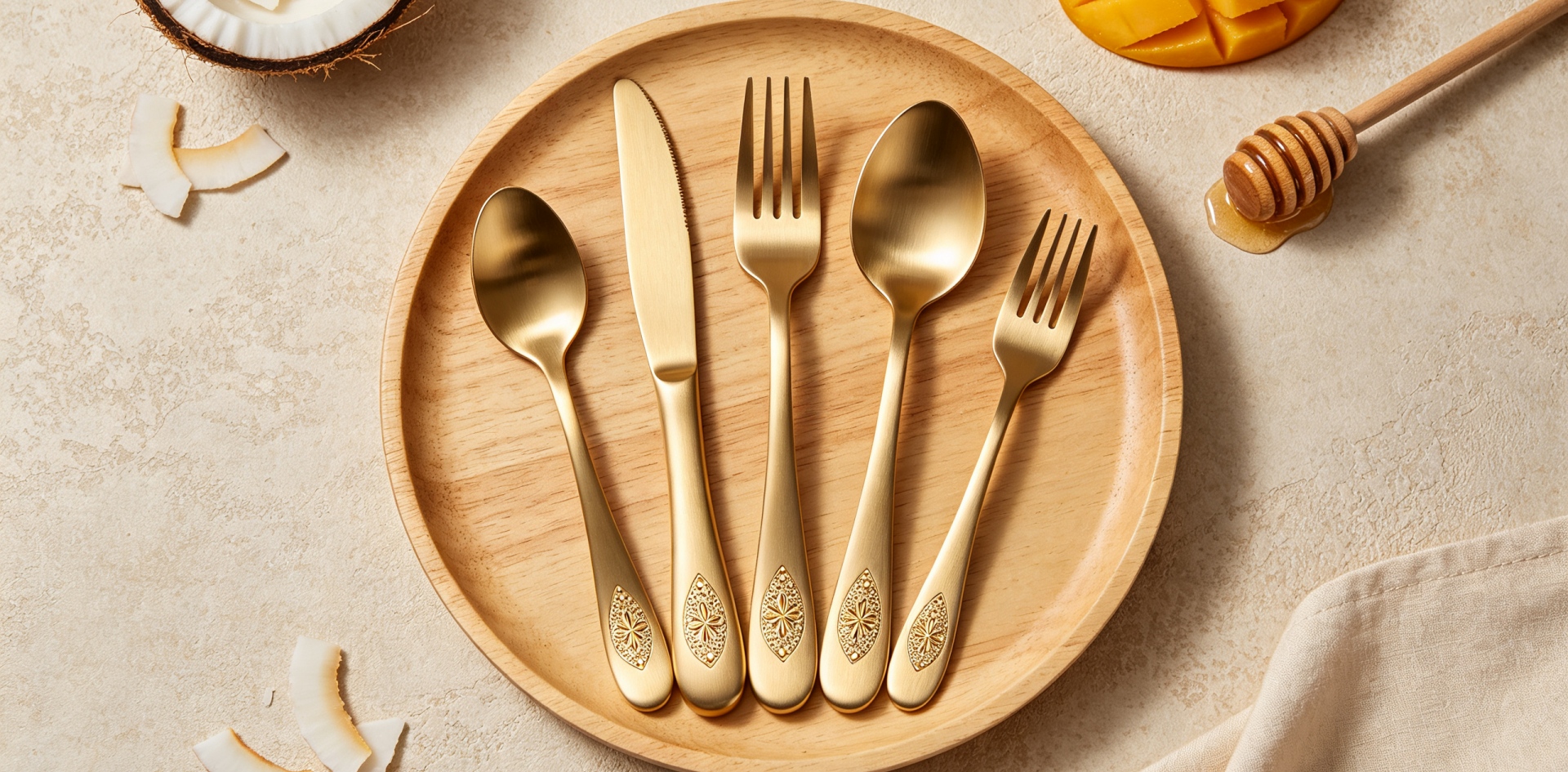
Stainless Steel Spoon Handle Taper and Width Transition
The handle of a stainless steel spoon does not always maintain the same width from end to end. Some designs gradually narrow toward the neck, while others widen near the end or use a combination of straight and tapered sections. These transitions influence the spoon's silhouette, visual balance, and handling characteristics.
For B2B buyers, handle taper is an important detail when developing a new cutlery design, matching an existing collection, or preparing a private-label product. Two handles may share the same overall length and maximum width yet look noticeably different because their width changes occur at different points.
Homefelt factory supports stainless steel spoon customization, OEM/ODM manufacturing, private-label development, and wholesale supply. Defining handle taper before sample approval helps buyers communicate design expectations and establish a more consistent reference for bulk production.
What Is Handle Taper?
Handle taper describes how the handle's width changes along its length. A spoon may have a gradual narrowing profile, a wider end that transitions toward a slimmer neck, or a more complex outline with several width changes.
Taper is different from overall handle width. Measuring only the widest point does not describe the full shape, and measuring only the neck does not explain how the handle reaches that dimension.
For customized spoons, the intended taper should be shown through a technical drawing, clearly identified measurement points, or an approved physical sample. This gives the manufacturer a reference for the complete outline rather than relying on broad descriptions such as “slim handle” or “wide end.”
Why Handle Width Transition Matters
The handle is one of the most visible parts of a spoon. Its outline contributes to the overall style, whether the product has a minimalist, classic, contemporary, or decorative appearance.
A poorly controlled width transition can create several issues:
-
The handle may look asymmetrical or uneven.
-
The neck may appear too narrow or too broad relative to the bowl.
-
The end of the handle may not match the approved design.
-
Similar spoons within one collection may have noticeably different silhouettes.
-
Small dimensional differences may become more visible on polished metal surfaces.
Width transitions can also affect the feel of the handle in the hand. A broader end and narrower neck may feel different from a nearly parallel handle, even when both products have similar overall dimensions.
The appropriate shape depends on the design and intended use. There is no universal taper that suits every stainless steel spoon.
Common Spoon Handle Taper Designs
Gradually Narrowing Handles
A gradually narrowing handle becomes slimmer toward the neck or bowl connection. This design can create a streamlined appearance and may suit contemporary cutlery collections.
The important consideration is how quickly the width changes. A smooth, gradual transition looks different from a profile that narrows sharply over a short distance.
For buyers, the drawing should identify the handle width at several defined positions if the taper is a critical design feature.
Handles With Wider Ends
Some spoon handles widen toward the end, creating a more substantial terminal shape. This can be a useful visual feature for classic, decorative, or branded designs.
The transition should look intentional rather than abrupt. If the wider end is too prominent or begins too close to the neck, the handle may appear visually unbalanced.
An approved sample helps establish the intended relationship between the end width, middle section, and neck.
Nearly Parallel Handles
A nearly parallel handle maintains a relatively consistent width along much of its length. This can simplify the outline and create a restrained appearance.
Even when the design is described as straight-sided, small changes may occur near the neck or end. Buyers should specify which sections must remain parallel and which areas may follow a different contour.
Decorative and Shaped Handles
Embossed, curved, or ornamented handles may have a more complex width profile. Their outline may include several transitions, and visual consistency can depend on both the external edge and the decorative details.
For these products, a top-view drawing may not communicate every relevant feature. Additional views or a physical sample can clarify the intended shape.
How to Specify Handle Taper Accurately
A useful handle specification records more than the maximum width. It identifies how the width changes along the handle and how those measurements relate to the overall spoon.
1. Define the Main Measurement Points
Record the handle width at selected positions, such as the terminal end, middle section, and neck. The exact points should be marked on the drawing so the buyer and factory use the same reference locations.
For a simple handle, a few measurements may be sufficient. A more complex profile may require additional points to describe its shape accurately.
2. Specify the Transition Length
Transition length describes the distance over which the handle changes from one width to another. Two handles with the same end and neck widths can still look different if one tapers gradually and the other narrows more quickly.
When the taper is important to the product's appearance, identify the start and end of the transition on the drawing.
3. Check Both Sides of the Outline
For a symmetrical handle, compare the left and right outlines relative to the centerline. Uneven width changes can make the handle appear twisted or off-center even when the overall dimensions seem acceptable.
For intentionally asymmetrical designs, the drawing should identify the intended difference rather than treating every deviation as a defect.
4. Confirm the Handle-to-Bowl Connection
The neck and bowl transition should be assessed alongside the handle taper. A handle that narrows appropriately may still look poorly proportioned if its connection to the bowl is too abrupt or inconsistent with the approved design.
Reviewing these features together helps preserve the intended silhouette.
Inspecting Handle Width Consistency
Inspection should combine dimensional measurement with visual comparison. The method depends on how complex the handle is and how critical its profile is to the finished product.
First, measure the defined width points using a consistent method. Record the results and compare them with the approved drawing. Measurements should use the same reference points across all inspected samples.
Next, compare the handle outlines from above. Look for uneven taper, unexpected bulges, abrupt transitions, and differences between the two sides. For polished products, consistent lighting can make shape variations easier to notice, but reflections should not replace dimensional checks.
Finally, compare several spoons from the same production lot. A single approved sample does not establish that the complete order will maintain the same handle profile.
Acceptance criteria should identify the critical dimensions, permitted variations, inspection method, and sampling approach. Where a numerical tolerance is required, it should be based on the actual design and agreed with the manufacturer before production.
How Handle Taper Influences Weight and Material Use
Changes in handle width can affect the amount of material used, but width alone does not determine finished weight. Thickness, cross-sectional shape, handle length, and other product dimensions also contribute.
A wider handle may create a more substantial appearance, while a narrower profile may support a lighter visual style. However, buyers should avoid assuming that a particular taper automatically produces a specific weight or level of rigidity.
If weight is an important requirement, specify it separately and confirm the measurement basis. The supplier can then assess the relationship between the target weight, handle profile, material thickness, and overall design.
For bulk orders, even small changes to the handle dimensions can influence material consumption across a large quantity. Reviewing these relationships during product development is generally more practical than changing dimensions after production has started.
Maintaining Handle Profile Consistency in Bulk Orders
Once a design is approved, the factory needs a reliable reference for production checks. This may include a controlled drawing, an approved physical sample, defined measurement points, and inspection records.
Buyers can ask how the supplier checks handle width at the relevant production stages and how deviations are reviewed. If the same area repeatedly differs from the approved profile, the cause should be investigated rather than relying only on final sorting.
Any agreed changes to the taper should be documented. A minor adjustment to the neck width or transition length may affect the overall appearance of the spoon and its relationship with other pieces in a collection.
For repeat orders, retaining the approved reference and identifying the correct drawing version help reduce uncertainty. If the design is revised, the updated specification should be approved before the next bulk production run.
What Buyers Should Include in an RFQ
When requesting a quotation for customized stainless steel spoons, provide the spoon type, material grade, overall dimensions, handle width, thickness where relevant, surface finish, expected quantity, and packaging requirements.
If handle taper is important, include a top-view drawing with the key width measurements and transition locations. Reference photographs can clarify the intended appearance, while a physical sample can help confirm the feel and proportions.
Buyers should also identify branding requirements, applicable product testing, inspection expectations, and any certification documents needed for their target market. The relevance and availability of each document should be confirmed for the particular project.
Clear specifications allow the manufacturer to assess feasibility, prepare a suitable sample, and provide a more accurate quotation for bulk supply.
How Homefelt Supports Custom Spoon Manufacturing
Homefelt factory works with B2B buyers on stainless steel spoons and coordinated cutlery ranges, offering OEM/ODM manufacturing, private-label customization, and wholesale production. Product discussions can cover handle outlines, width transitions, bowl proportions, material specifications, finishes, branding, and packaging.
With 40 years of experience in the stainless steel cutlery business, Homefelt helps customers coordinate product design requirements with manufacturing considerations. Depending on the project, one-stop support can include product design coordination, packaging arrangements, and transportation planning.
For importers, distributors, and retail brands, providing a clear drawing and reference sample makes it easier to align the handle profile with the intended product style before mass production.
To discuss a custom stainless steel spoon design, request wholesale pricing, or review OEM/ODM requirements, contact Homefelt at ingrid@homefelt.net. Include your drawing, target quantity, preferred finish, and key dimensions to begin the discussion.
You May Be Interested In
Stainless Steel Spoon Handle Edge Radius and Corner Finishing
Stainless Steel Spoon Handle-to-Bowl Proportion Design
Related Article



