
Stainless Steel Spoon Handle-to-Bowl Proportion Design
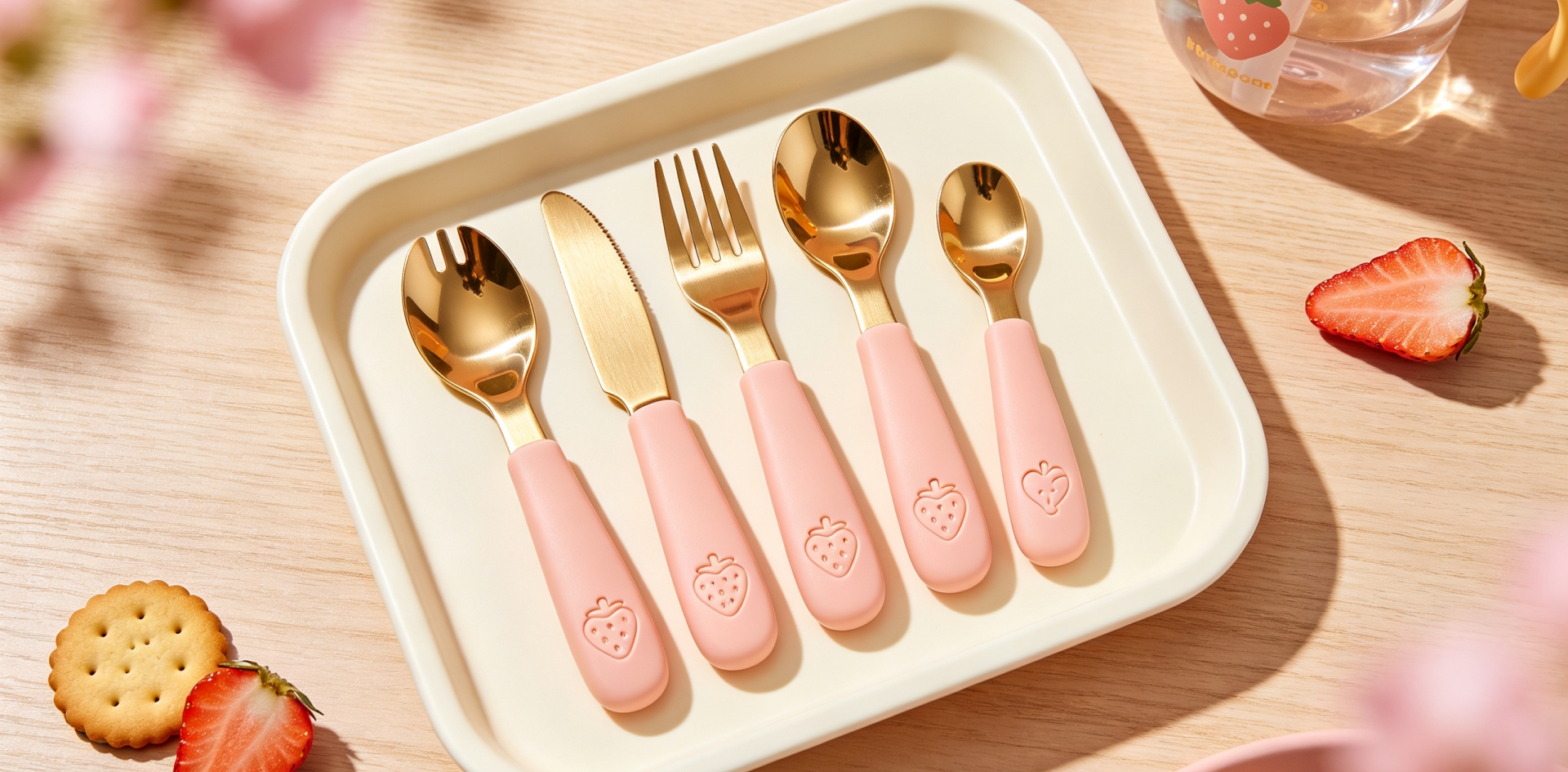
Stainless Steel Spoon Handle-to-Bowl Proportion Design
A stainless steel spoon can meet its specified length and width yet still look unbalanced if the handle and bowl do not work well together. A long handle paired with a compact bowl creates a different visual impression from a shorter handle with a broad bowl. For cutlery buyers, these relationships matter when developing a new product, coordinating a collection, or matching an existing design for a private-label program.
Handle-to-bowl proportion is not simply a matter of appearance. It also influences how the spoon is held, how the bowl relates to the user's hand, and how the finished product fits within a coordinated range. For B2B buyers, defining these proportions early can make sample approval more objective and help prevent avoidable design changes during bulk production.
Homefelt factory supports stainless steel spoon customization, OEM/ODM manufacturing, private-label projects, and wholesale supply. By aligning dimensions, product references, and intended applications before production, buyers can establish a clear design direction for their cutlery orders.
Why Handle-to-Bowl Proportion Matters
The handle and bowl form one connected product, but each has a different function and visual role. The bowl determines the spoon's holding area, while the handle provides a grip and creates the overall silhouette.
When their proportions are poorly coordinated, several issues may arise:
-
The spoon may look too narrow or too broad for its overall length.
-
The bowl may appear undersized relative to the handle.
-
The handle may look visually heavy beside a delicate bowl profile.
-
Different spoon sizes may lack a consistent design relationship.
-
A new product may not match the proportions of an existing cutlery collection.
These concerns are particularly relevant to retailers and distributors who need products to look consistent across catalogues, product photographs, and coordinated tableware ranges.
There is no single ideal handle-to-bowl ratio for every spoon. The appropriate relationship depends on the product category, design style, target market, and intended use.
Key Dimensions That Define Spoon Proportion
Overall Spoon Length
Overall length provides the starting point for evaluating a spoon's proportions. However, two spoons with the same total length can look very different if the handle and bowl lengths are distributed differently.
A technical drawing should define the overall length and the points used to measure it. For custom designs, it is also useful to record the bowl length and handle length separately.
Bowl Length and Width
Bowl dimensions influence the visual weight of the front section of the spoon. A longer bowl may create an elongated appearance, while a wider bowl may appear fuller even when its length remains unchanged.
The width-to-length relationship should be evaluated alongside bowl depth and curvature. A broad bowl with a shallow profile creates a different impression from a similarly sized bowl with deeper sides.
Handle Length and Width
Handle length determines how much of the spoon's overall length is assigned to the grip. Handle width and profile influence the product's visual character and how it feels in the hand.
A broad decorative handle may require a different bowl proportion from a slim, minimalist handle. The objective is to create a coherent design rather than selecting each dimension independently.
Handle-to-Bowl Transition
The transition between the handle and bowl connects the two main sections. A gradual transition may create a flowing silhouette, while a more defined transition can produce a stronger visual separation.
This area should be included in sample evaluation because changes in its shape may alter the perceived balance of the entire spoon, even when the main dimensions remain unchanged.
Choosing Proportions for Different Spoon Types
Different spoon categories have different design priorities. Buyers should define the intended product before settling on dimensional relationships.
Teaspoons and Small Spoons
Small spoons often require compact proportions that maintain a comfortable relationship between the handle and bowl. An excessively broad handle may dominate the design, while an undersized bowl may look inconsistent with the intended product category.
When developing a coordinated set, compare the teaspoon with the larger spoons to ensure that the design language remains recognizable across sizes.
Dessert and Dining Spoons
Dessert and dining spoons need a balance between bowl dimensions, handle length, and the overall silhouette. Buyers should assess how the spoon looks from above and from the side rather than relying on total length alone.
For a private-label collection, consistent handle styling can help connect different sizes, while bowl proportions can be adjusted to suit each product's intended role.
Serving Spoons
Serving spoons may use a larger bowl and a longer handle than individual place-setting spoons. Their proportions should be assessed as a separate design rather than scaled mechanically from a smaller spoon.
The bowl's intended capacity, handle reach, and overall dimensions should be considered together. If the serving spoon belongs to a coordinated collection, its handle details can repeat the collection's design features without requiring identical proportions.
How to Evaluate Handle-to-Bowl Ratios
A ratio can help describe the relationship between two dimensions, but it should not replace a complete drawing or physical sample.
For example, a buyer may compare handle length with bowl length or compare bowl width with overall spoon length. These measurements can help identify major design differences between samples.
However, the same ratio can describe products with very different absolute dimensions. A small spoon and a large serving spoon may share a similar ratio while serving different purposes.
A practical evaluation process includes four steps.
1. Record the Main Dimensions
Measure overall length, bowl length, bowl width, and handle length using consistent reference points. Record other dimensions, such as handle width or bowl depth, where they influence the design.
2. Compare the Product Silhouette
Review the spoon from above and from the side. Look for a coherent relationship between the handle, transition, and bowl rather than evaluating each section separately.
3. Review a Physical Sample
A sample helps buyers judge proportions in three dimensions. It can reveal differences that are difficult to understand from a flat drawing, particularly when the handle has decorative contours or the bowl has a pronounced curve.
4. Confirm the Approved Reference
Once the design is accepted, record the approved dimensions and sample version. This gives the factory a consistent reference for production and future repeat orders.
Common Proportion Problems in Custom Spoon Design
One frequent issue is increasing the handle length without reviewing the bowl dimensions. The resulting product may meet the new overall length requirement but look noticeably different from the original concept.
Another problem is copying the dimensions of a spoon from a different product category. A ratio that works for a teaspoon may not create a suitable appearance for a serving spoon.
A third issue occurs when buyers evaluate only the top view. The handle may look proportionate from above but appear too thick, too flat, or visually disconnected from the bowl when viewed from the side.
These problems can be reduced by reviewing the overall silhouette, main dimensions, cross-section, and transition area together. When a change is requested, buyers should identify the dimension to be adjusted and confirm whether related measurements must also change.
Maintaining Design Consistency Across a Cutlery Collection
For distributors and retailers, a collection often includes several spoon sizes alongside forks and knives. The products do not need identical proportions, but they should share a recognizable design language.
Consistency may come from the handle outline, decorative details, surface finish, or the shape of the handle-to-bowl transition. The dimensions can vary according to each product's purpose while preserving these shared features.
A product specification sheet can document the common design elements and the dimensions unique to each item. This is especially useful when multiple SKUs are manufactured together or when new sizes are added later.
If a buyer changes the design of one spoon, the factory and buyer should review whether the change affects the visual relationship with the rest of the collection. Approving the updated sample before mass production helps prevent inconsistent versions from entering the same product range.
What Buyers Should Include in an RFQ
When requesting a quotation for a custom stainless steel spoon, provide the intended spoon type, overall length, bowl dimensions, handle dimensions, material grade, surface finish, target quantity, and packaging requirements.
Include drawings or reference photographs where possible. If the project has a particular visual direction, explain whether the priority is a longer silhouette, a fuller bowl, a slimmer handle, or consistency with an existing collection.
For OEM/ODM orders, also identify branding requirements, packaging specifications, and any product-specific inspection or documentation needs. Confirm which certifications and test reports are applicable to the product and destination market rather than assuming that every document applies to every item.
A clear RFQ helps the manufacturer assess feasibility and identify any design details that should be resolved before sample development.
How Homefelt Supports Custom Cutlery Development
Homefelt factory works with B2B customers on stainless steel spoons and coordinated cutlery products, offering wholesale supply, OEM/ODM manufacturing, and private-label customization. Product discussions can cover dimensional relationships, handle profiles, bowl design, surface finishes, branding, and packaging.
With 40 years of experience in the stainless steel cutlery business, Homefelt helps customers coordinate design expectations with practical manufacturing considerations. Depending on project requirements, one-stop support can include product design coordination, packaging arrangements, and transportation planning.
For buyers developing a new spoon collection or revising an existing design, preparing a dimensional drawing, reference sample, and target quantity provides a useful starting point for evaluation and quotation.
To discuss custom stainless steel spoon development, bulk orders, or private-label manufacturing, contact Homefelt at ingrid@homefelt.net.
You May Be Interested In
Stainless Steel Spoon Handle Taper and Width Transition
Stainless Steel Spoon Bowl Rim Height and Profile Control
Related Article



