
Protecting Custom Stainless Steel Cutlery Designs in B2B
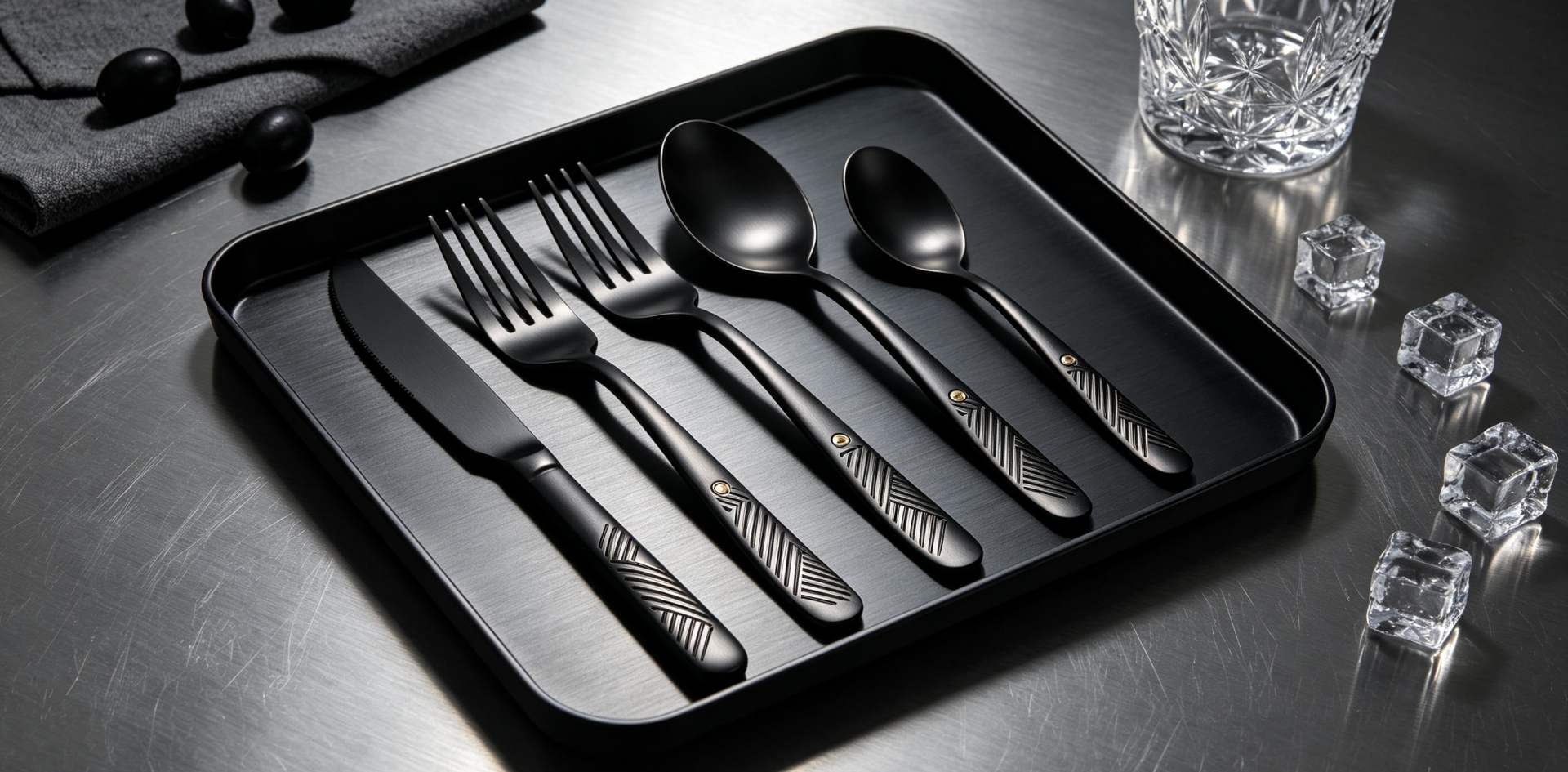
Protecting Custom Stainless Steel Cutlery Designs in B2B
For a B2B stainless steel cutlery project, the product itself is only one part of the development process.
A private label brand may spend considerable time developing a handle shape, spoon profile, fork design or complete flatware collection. Drawings, samples, artwork and product specifications may then be exchanged with the manufacturing partner before the final product is approved.
For these projects, keeping design information organized and appropriately protected is an important part of professional supplier cooperation.
Why Design Protection Matters for Custom Cutlery
Standard stainless steel cutlery products are generally easier to identify and source because their designs are already established.
A custom product is different.
A brand may have developed its own handle appearance, proportions, decorative details or branding elements. These characteristics can form part of the product identity that the buyer wants to bring to market.
For an OEM or ODM project, the buyer therefore needs a clear understanding of how product drawings, samples, artwork and other project information will be handled during development and manufacturing.
This is particularly relevant when a new product is being prepared for a retail launch.
What Information Can Be Part of a Custom Cutlery Design?
A custom stainless steel cutlery project can involve many different types of information.
Examples include:
Product drawings
3D design files
Dimension specifications
Approved samples
Handle designs
Knife blade designs
Spoon bowl proportions
Fork head details
Logo artwork
Packaging artwork
Product photographs
Brand guidelines
Product codes
These materials may be provided by the buyer or developed jointly with the manufacturer.
Keeping them clearly identified can help avoid confusion during the development process.
Customer-Owned Designs
Some B2B customers approach a factory with an existing cutlery design.
The customer may already have a drawing, prototype or physical sample and simply needs a manufacturing partner capable of producing the product at commercial volume.
In this situation, it is useful to identify the customer-provided design clearly from the beginning of the project.
The manufacturer can then understand which elements are part of the customer's existing product concept and which elements may be discussed or developed during manufacturing.
This creates a clearer foundation for the cooperation.
OEM Projects and Brand Identity
OEM projects often involve products developed specifically for a particular brand.
The brand may have a defined visual language that needs to appear consistently across its stainless steel knives, forks, spoons and flatware sets.
A handle shape, engraved logo or distinctive surface treatment may become an important part of the finished collection.
For this reason, product development should not be treated simply as a generic manufacturing request.
The manufacturer needs to understand which design elements are essential to the customer's brand and which specifications are flexible.
ODM Development and Shared Product Creation
ODM projects can involve more collaboration between the buyer and manufacturer.
The buyer may provide an initial concept while the factory contributes manufacturing experience and product-development suggestions.
During this process, several design versions may be discussed.
One version may change the handle proportions. Another may adjust the spoon bowl. A later version may combine the preferred features into the final product.
Because multiple parties may contribute to the development, it is useful to keep the approved design and supporting information clearly identified.
This helps establish which version represents the final commercial product.
Managing Drawings During Development
Drawings are often an important reference for custom stainless steel cutlery.
A drawing may contain dimensions and design details that are difficult to communicate accurately through written descriptions alone.
When a drawing is revised, the buyer and manufacturer should have a clear way to identify the latest version.
Simple information such as a drawing number, revision date or version reference can make communication more straightforward.
The goal is not to create unnecessary paperwork. It is to make sure everyone is working from the same product information.
Samples as Design References
Physical samples can also represent important design information.
A buyer may send a reference sample to a factory for evaluation. The manufacturer may then produce a development sample for review.
If several samples are exchanged, it is useful to distinguish between them.
The final approved sample should be clearly identified before bulk production.
This can help reduce the risk of an earlier development sample being mistaken for the final product.
Branding and Logo Information
Private label cutlery projects often involve brand-specific artwork.
The logo may be engraved, printed or incorporated into another agreed product detail.
The buyer should provide the correct artwork and clearly communicate the required position and appearance.
If artwork is revised during development, the latest approved version should be clearly distinguished from earlier versions.
This is particularly important when the same branding is used across a complete cutlery collection.
Packaging Design
Custom product information does not always stop at the stainless steel cutlery itself.
Retail packaging can also contain proprietary brand information.
A private label customer may have its own packaging design, brand colors, product descriptions and retail presentation.
The product and packaging therefore need to be treated as connected parts of the same commercial project.
Keeping the correct product reference associated with the correct packaging version can help prevent mistakes during production preparation.
Discussing Confidentiality With a Factory
For a new OEM or ODM project, buyers may want to discuss how project information will be handled before sharing sensitive materials.
The appropriate arrangements depend on the relationship, project requirements and applicable agreements.
For some projects, the buyer may use a confidentiality agreement before providing detailed product information.
For other projects, the buyer may already have established commercial terms with the manufacturer covering the relevant information.
The important point is to discuss expectations clearly rather than assuming that both sides have identical requirements.
Protecting Product Information During Communication
A cutlery project may involve several people on the buyer's side and several contacts at the factory.
Product drawings, samples, photographs and specifications may be exchanged during development.
Clear file names and product references can make this communication easier to control.
For example, a file containing an approved drawing should be distinguishable from an early concept.
Similarly, the latest packaging artwork should be identifiable from an older version.
Good information organization can reduce accidental use of outdated materials.
Protecting a Complete Cutlery Collection
A brand may not be developing just one product.
It may be developing a complete collection containing knives, forks and spoons with a shared design language.
In this situation, individual product information should still be clearly organized.
The buyer may have one handle design shared across several products, while the functional parts differ between the knife, fork and spoon.
Keeping the collection structure clear helps the manufacturer understand which elements should remain consistent and which are product-specific.
From Design to Mass Production
Design protection is closely connected with manufacturing accuracy.
Once a custom product has been approved, the factory needs to know exactly which design is authorized for production.
The approved drawing, sample, product specification and other relevant references can provide the foundation for manufacturing.
This is especially important for large-volume orders because production is based on the approved product requirements rather than an early concept.
A clear transition from development to production helps connect the customer's original design intention with the finished stainless steel cutlery.
Homefelt for OEM and ODM Cutlery Projects
Homefelt manufactures stainless steel knives, forks, spoons and complete flatware sets for international B2B customers.
The factory supports OEM, ODM, private label and wholesale manufacturing projects.
Customers can provide their own designs, drawings, samples and branding requirements when developing customized stainless steel cutlery.
For brands with proprietary product concepts, clear communication during development helps establish the exact product requirements before manufacturing.
For customers working with Homefelt on new collections, the development process can cover individual cutlery pieces as well as coordinated knives, forks, spoons and complete flatware sets.
Building a Professional Supplier Relationship
A reliable B2B manufacturing relationship involves more than price and production capacity.
For custom products, buyers also need confidence that their product information is understood correctly and handled professionally.
Clear product references, organized drawings, approved samples and defined communication procedures can all contribute to a smoother development process.
This becomes increasingly important as the project moves from an initial concept to samples and finally to commercial production.
For private label and OEM brands, the objective is to turn a unique product concept into a repeatable manufacturing specification while maintaining the identity of the original design.
Starting a Custom Cutlery Project
If your company has developed a new stainless steel cutlery concept, the next step is to communicate the design requirements clearly to a suitable manufacturing partner.
You may already have finished drawings and samples, or you may only have an initial concept that needs further development.
An experienced stainless steel cutlery factory can discuss the manufacturing requirements, review the available product information and determine the practical path toward sample development and bulk production.
Whether you are developing a new spoon, fork, knife or complete flatware collection, establishing clear design information from the beginning can make the B2B project easier to manage.
Discuss Your Custom Stainless Steel Cutlery Design
Start an OEM or ODM Flatware Project
Develop a Private Label Cutlery Collection
Stainless Steel Cutlery Barcode and Product Identification
Stainless Steel Cutlery Order Specifications for B2B Buyers
Related Article



