
Consolidated Stainless Steel Cutlery Orders for OEM and Wholesale Buyers
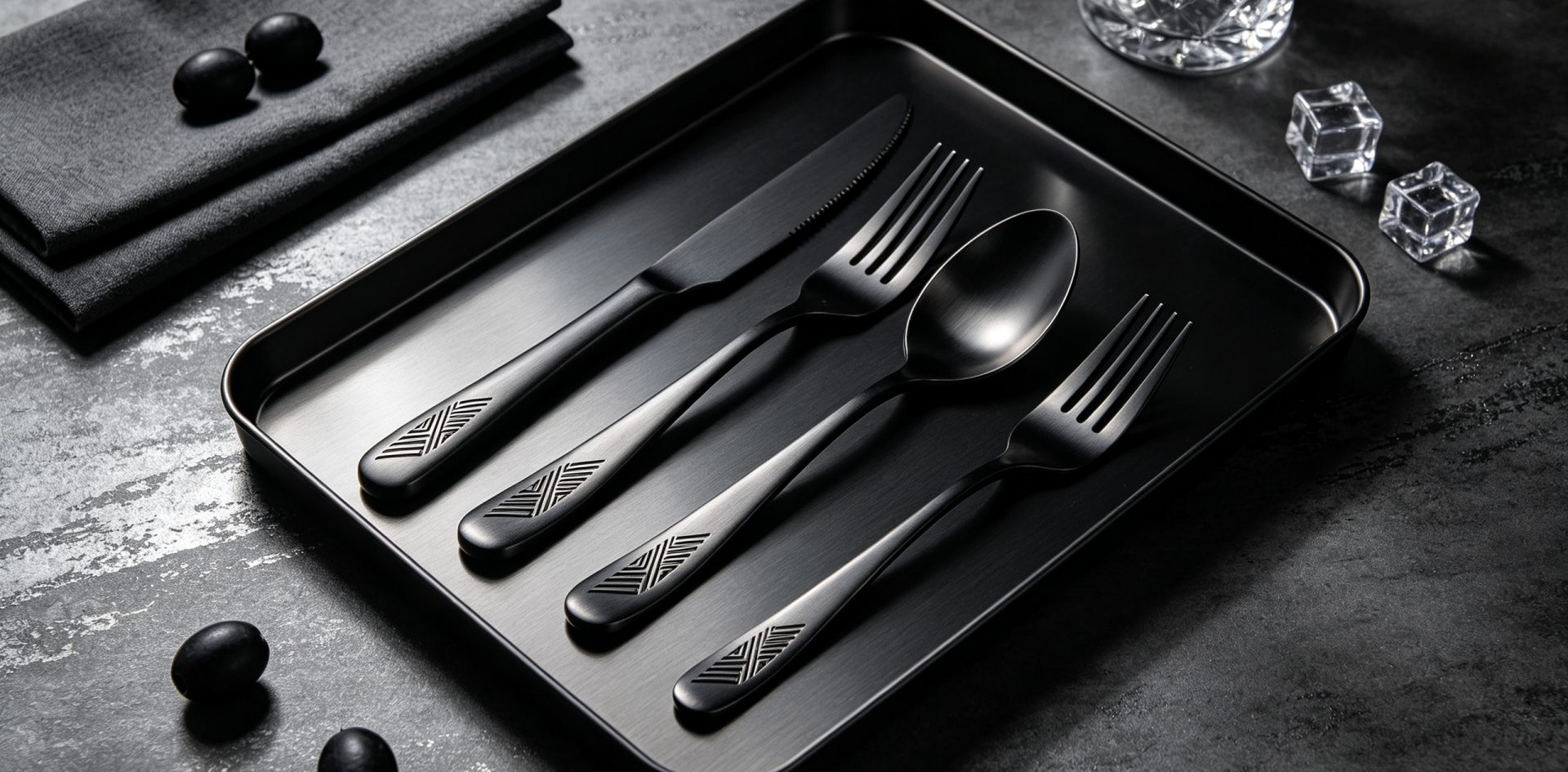
Consolidated Stainless Steel Cutlery Orders for OEM and Wholesale Buyers
For brands, distributors and wholesale buyers, a stainless steel cutlery purchasing program often includes more than one product. A single order may contain table knives, dinner forks, tablespoons, teaspoons and several matching flatware sets.
Managing these products through separate suppliers can create unnecessary communication, production coordination and shipping work. A consolidated purchasing program can bring related stainless steel cutlery items together under one manufacturing project, while allowing each product to retain its own specification.
This approach can be especially useful for buyers developing a private label collection or preparing a larger wholesale assortment.
Why Consolidate Stainless Steel Cutlery Orders?
The main advantage of consolidation is coordination.
Instead of discussing knives with one supplier, forks with another and spoons with a third, a buyer can work with one stainless steel cutlery factory that has the capability to manufacture the complete collection.
This creates a clearer relationship between the products. The buyer can establish the intended collection specifications, packaging requirements and commercial quantities within one project.
For example, a wholesale buyer may require:
-
Table knives
-
Table forks
-
Table spoons
-
Teaspoons
-
Dessert forks
-
Matching flatware sets
Each item can have its own dimensions and production requirements, while the overall collection can be managed through one coordinated purchasing program.
For OEM and ODM projects, this can also make communication easier because product development, manufacturing and packaging are discussed with the same manufacturing team.
Keeping Different Items Consistent
When several cutlery products belong to the same collection, visual consistency matters.
The knife, fork and spoon do not need to be identical in shape because each performs a different function. However, their overall appearance should normally communicate the same collection identity.
Buyers may compare elements such as:
-
Material specification
-
Overall appearance
-
Surface finish
-
Handle styling
-
Proportional relationship
-
Product dimensions
-
Weight range
-
Packaging presentation
These details help a collection look intentional rather than assembled from unrelated products.
Homefelt factory works with stainless steel knives, forks, spoons and flatware sets for OEM and private label projects. When customers purchase several related products, the factory can coordinate their requirements within the same project discussion.
This is particularly useful when a brand wants to introduce a complete tableware collection rather than a single standalone SKU.
Planning Quantities Across the Collection
Consolidated purchasing does not mean that every product needs the same quantity.
A distributor may require 10,000 knives, 15,000 forks and 18,000 spoons based on expected market demand. Another customer may purchase complete sets in equal quantities.
The important point is to establish the quantity relationship before production begins.
A practical order plan can identify:
Product | Specification | Quantity | Packaging | Branding Requirement
This gives the manufacturer a clear overview of the complete project.
It also helps the buyer identify which products represent the core volume and which items are supporting products in the collection.
For Homefelt, this type of project information can be reviewed before quotation and production so that the manufacturing arrangement reflects the customer's actual purchasing structure.
Combining OEM and Private Label Requirements
A consolidated order may contain both product customization and branding requirements.
For example, a customer could request a customized stainless steel spoon and fork collection together with standard table knives, while applying the same private label packaging to the complete range.
Another customer may require different packaging for different sales channels but want the same cutlery collection underneath.
This is where an experienced OEM flatware manufacturer can provide value beyond basic production.
Homefelt supports OEM and ODM stainless steel cutlery manufacturing and can coordinate product requirements, private label needs and packaging according to the customer's project.
The objective is not to force every product into exactly the same specification, but to create a practical manufacturing structure for the complete order.
Packaging a Consolidated Cutlery Program
Packaging becomes particularly important when several products are shipped together.
A buyer may require loose bulk packing for foodservice distribution while another part of the same order is prepared as retail-ready flatware sets.
These requirements can coexist within one manufacturing program if they are defined clearly.
For example:
-
Bulk-packed spoons for wholesale distribution
-
Individual boxes for branded knife-and-fork combinations
-
Complete flatware sets for retail
-
Master cartons separated by product code
The packaging structure should correspond to the buyer's sales channel and warehouse requirements.
Homefelt can provide one-stop coordination covering cutlery production, packaging and transportation, allowing buyers to manage these related requirements through one manufacturing partner.
Production Coordination for Larger Orders
A consolidated order can involve many production items, so organization becomes important.
Before manufacturing, the supplier should have a clear product list showing each item's specification, quantity and packaging requirement. This creates a practical reference for production and subsequent inspection.
For experienced manufacturers, managing a broader order is not simply about producing more pieces. It also requires keeping the relationship between different products clear throughout the project.
Homefelt has 40 years of experience in the stainless steel cutlery business and supports large-volume manufacturing for knives, forks, spoons and flatware collections.
Its experience with different customer projects allows product requirements to be reviewed from both the manufacturing and purchasing perspectives.
How Consolidation Can Simplify Logistics
When multiple cutlery items are produced under one coordinated project, transportation planning can also become easier.
Instead of arranging separate shipments from several suppliers, buyers may be able to coordinate related products through one shipping plan.
This can simplify:
-
Carton information
-
Shipping documentation
-
Delivery scheduling
-
Warehouse receiving
-
Product allocation
-
Communication with the supplier
The final arrangement depends on the order structure, production schedule and customer's destination, but consolidating related products can reduce unnecessary coordination.
A Practical Approach for Distributors
Distributors often need a product range rather than one individual SKU.
A consolidated stainless steel cutlery order can provide a practical way to build that range. The buyer can combine core products with complementary items while maintaining a consistent collection identity.
For example, a distributor serving hospitality and wholesale customers may purchase several knife, fork and spoon models in one program, then allocate them to different customers or sales channels.
The manufacturer therefore needs to understand not only the individual product requirements but also the commercial role of each item.
Homefelt can work with distributors and private label buyers to develop stainless steel cutlery programs based on their product requirements, expected quantities and packaging needs.
Documentation and Product Control
For a larger consolidated order, clear documentation helps reduce confusion.
Useful project information may include:
-
Product specifications
-
Product references
-
Approved samples
-
Quantity by item
-
Packaging details
-
Branding requirements
-
Inspection requirements
-
Shipping information
Homefelt has experience working with certification and audit requirements including BSCI, SEDEX 4P, BRC and ISO9001, as well as Disney audit experience. The factory also has FAMA and FSC certificates.
For individual projects, the applicable documentation and testing requirements should be confirmed according to the customer's market and product specification.
Building a Long-Term Supply Program
The value of consolidated purchasing can become greater when a buyer places repeat orders.
Once a collection has been established, the same manufacturer can potentially support subsequent replenishment, new products and packaging adjustments within the broader supply relationship.
This can help brands and distributors maintain continuity while expanding their stainless steel cutlery range.
Homefelt factory provides OEM, ODM, private label, wholesale and bulk stainless steel cutlery manufacturing. Its one-stop service can be adapted to customer requirements, covering product design, manufacturing, packaging and transportation.
For buyers looking to combine several knife, fork and spoon requirements into one coordinated project, a consolidated manufacturing approach can provide a clearer path from product planning to bulk delivery.
If you are preparing a multi-item stainless steel cutlery order, send your product list, reference images, estimated quantities and packaging requirements to Homefelt. The factory can review the project and discuss a suitable manufacturing and service solution.
Stainless Steel Cutlery Quotation Evaluation for OEM and Bulk Buyers
Stainless Steel Cutlery Market Entry for OEM and Private Label Brands
Related Article



