
Coordinated Stainless Steel Cutlery Design for B2B Brands
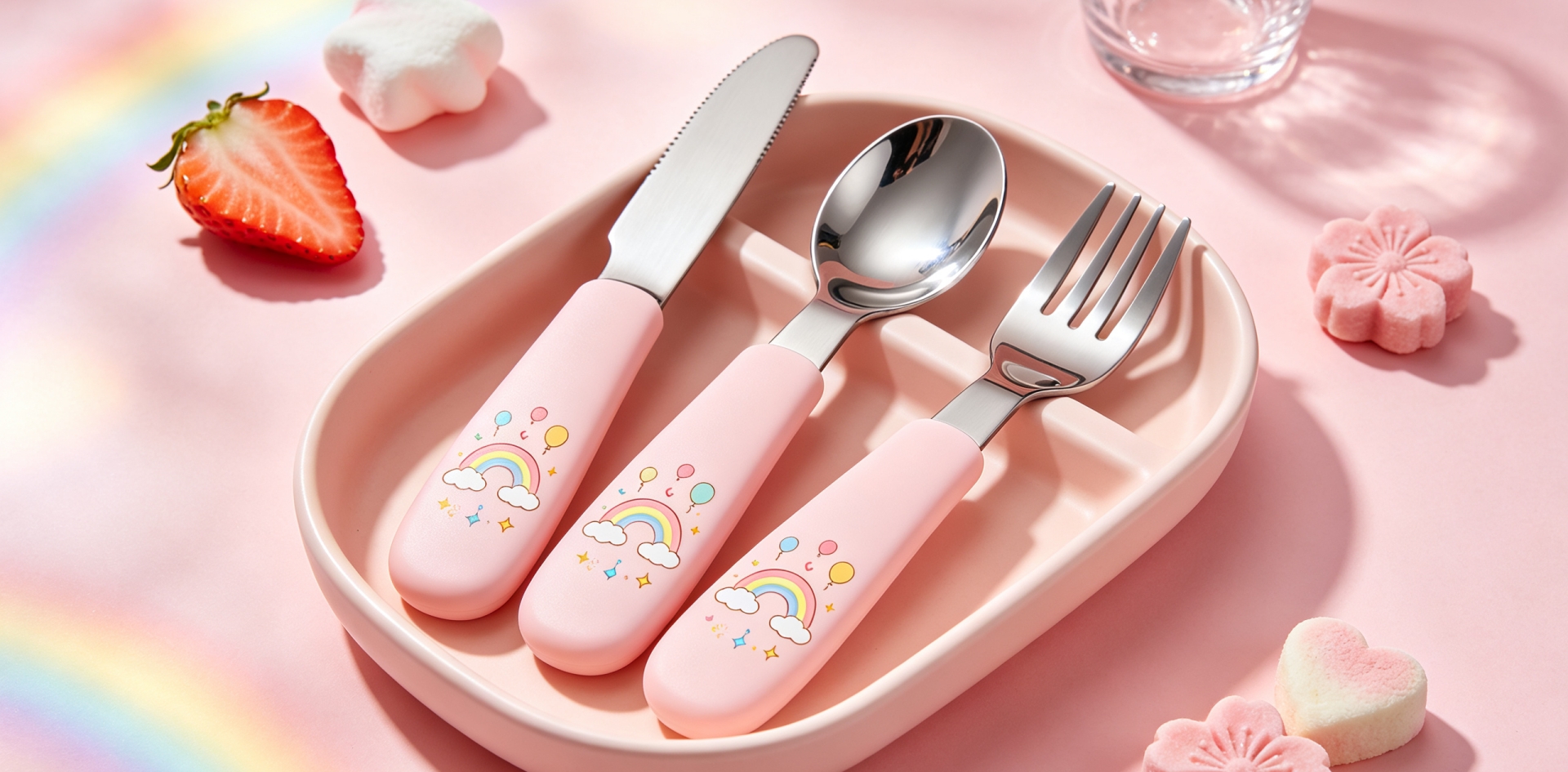
Coordinated Stainless Steel Cutlery Design for B2B Brands
A successful stainless steel cutlery collection needs to look connected without making every product identical. Knives, forks and spoons have different functional requirements, yet customers should still recognize them as part of the same collection.
For B2B brands, this balance can make a significant difference when developing private label flatware. A coordinated collection can create a stronger product identity while giving buyers enough flexibility to offer individual pieces and complete sets.
Achieving this result requires more than copying the same handle onto every product. The design relationship between the pieces needs to be considered from the beginning.
What Makes Cutlery Look Like One Collection?
A coordinated cutlery collection usually shares several visual elements.
These may include the overall handle direction, surface finish, decorative details, proportions or general design language.
The knife, fork and spoon do not need to have exactly the same shape. Their working ends are naturally different because each product performs a different function.
Instead, the goal is to create recognizable connections between them.
For example, a handle profile can remain consistent while the blade, fork head and spoon bowl are developed separately for their respective uses.
This creates visual unity without sacrificing functionality.
Starting With the Handle Language
The handle is often one of the strongest visual connections between different cutlery pieces.
A straight handle can create a clean modern appearance, while a tapered or curved profile may produce a softer character.
Decorative lines, recessed details, textured areas or subtle transitions can also become part of the collection identity.
When a brand develops a custom knife, fork and spoon together, these handle elements can be reviewed as a group.
The factory can then consider how the same design principle should be adapted to each product rather than simply reproducing one shape without modification.
Keeping Surface Finishes Consistent
Surface finish is another important element in creating a coordinated collection.
If a fork has a polished surface while the matching spoon has a noticeably different finish, the products may appear unrelated even when their handles are similar.
For this reason, B2B buyers should confirm the intended finish across the collection before production.
Mirror, satin, brushed and other surface treatments can create different visual effects.
When several products are sold together, the selected finish should support the overall product direction.
For customized stainless steel cutlery, this can be discussed with the factory during the development stage.
Adapting the Design to Each Product
Although the collection should be visually connected, knives, forks and spoons cannot always use identical proportions.
A knife requires a blade with suitable dimensions and construction. A fork requires an appropriate head and tine arrangement. A spoon needs a bowl designed for its intended use.
These differences are not problems. They are part of the product design.
The collection becomes coordinated when the common visual elements are adapted intelligently to each product.
A professional stainless steel cutlery manufacturer can review these differences while keeping the overall design direction consistent.
Designing for Individual Pieces and Sets
B2B buyers may sell cutlery as individual pieces, sets or both.
When products are coordinated, the same design language can support several sales formats.
A retailer may offer a four-piece flatware set, while a distributor may purchase individual spoons, forks and knives for replacement or replenishment.
The underlying product family remains the same.
This gives the brand more flexibility without requiring completely separate designs for every sales format.
For large-volume projects, the factory can also discuss different set compositions and packaging requirements according to the customer's sales strategy.
Creating a Recognizable Private Label Identity
Private label brands often need more than a generic stainless steel cutlery product.
The collection should have enough visual character to support the brand while remaining practical to manufacture.
Coordinated design can help achieve this.
A distinctive handle profile, carefully selected finish or consistent decorative detail can become a recognizable feature across the collection.
The brand can then use the same design language across knives, forks and spoons while allowing each item to retain its own functional shape.
This approach can make future product expansion easier because new pieces can be developed around an established visual identity.
Avoiding Over-Design
More decoration does not automatically create a stronger collection.
For commercial products, excessive details can sometimes make a design difficult to coordinate or less suitable for different markets.
A simpler design with well-controlled proportions can remain relevant across different product categories and sales channels.
This is particularly useful for B2B brands that expect to keep a collection in their product range for several years.
The design should therefore be considered not only from the perspective of the first launch but also from the perspective of future manufacturing and product expansion.
Design Consistency and Manufacturing
A coordinated design also needs to be practical for factory production.
If the same decorative concept is used across several products, the factory needs to consider how that concept will be applied to different shapes and dimensions.
A detail that works well on a spoon handle may need a slight adjustment on a knife or fork.
The purpose of this adjustment is not to change the collection identity but to make the design work correctly on each individual product.
Early communication with the manufacturer can help identify these requirements before the final specifications are confirmed.
Custom Design for OEM and ODM Projects
OEM and ODM customers may approach a factory with very different starting points.
Some have complete drawings. Others have existing samples or reference products. Some only have a general concept and want to discuss possible product directions.
Homefelt factory can work with these different development stages.
Customers can discuss customized stainless steel knives, forks, spoons and complete flatware sets according to their requirements.
The project can also include private label branding, packaging coordination and bulk manufacturing when needed.
This allows the customer to build a service package around the actual project rather than selecting only a standard catalogue product.
Coordinating the Complete Product Experience
The product itself is only one part of a B2B collection.
For a private label project, the visual direction may also continue into packaging, product photography, catalogues and retail presentation.
When the cutlery design, set composition and packaging follow the same concept, the complete collection can feel more organized.
This is particularly useful for brands launching several products at the same time.
Homefelt can support customers with stainless steel cutlery customization, OEM and ODM production, private label services, packaging coordination and large-volume manufacturing.
Customers can discuss the level of support they need based on their own business model.
Supporting Future Collection Expansion
A coordinated design system can also provide a foundation for future products.
Once the main visual language has been established, additional knives, forks, spoons or sets can be developed around it.
The new products do not need to be identical to the original pieces. They simply need to share enough design characteristics to remain recognizable as part of the same family.
This gives B2B brands room to respond to market demand without completely redesigning their product identity each time.
For growing brands, this can be particularly useful when expanding from a small initial range to a broader flatware program.
From Design Concept to Factory Production
Once the visual direction has been confirmed, the next step is to translate the design into clear production requirements.
The material, dimensions, surface finish, handle details, product composition and packaging can then be reviewed before commercial manufacturing.
This is where factory experience becomes important.
A design needs to work not only on a screen or sample table but also as a repeatable product that can be manufactured in the required quantity.
Homefelt supports B2B customers with stainless steel cutlery production for customized knives, forks, spoons and flatware sets.
The factory can work with product references and customer requirements to develop practical solutions for OEM, ODM and private label programs.
Build a Cutlery Collection With a Clear Design Language
A coordinated stainless steel cutlery collection does not require every product to look exactly the same.
The better approach is to identify the visual elements that should connect the range and then adapt them appropriately to each knife, fork and spoon.
This creates a collection that can remain visually consistent while still providing functional differences between products.
For wholesalers, distributors and private label brands, this can provide a useful foundation for building a recognizable flatware range.
If you already have a reference design, existing sample or collection concept, Homefelt can discuss how it can be developed into customized stainless steel cutlery for commercial production.
Custom Stainless Steel Cutlery Design
OEM & ODM Flatware Manufacturing
Private Label Stainless Steel Cutlery Factory
Custom Stainless Steel Knife, Fork and Spoon
Stainless Steel Fork Tine Thickness for B2B Cutlery
Stainless Steel Table Knife Cutting Performance for B2B
Related Article



