
Custom Stainless Steel Cutlery Tooling for OEM and ODM Projects
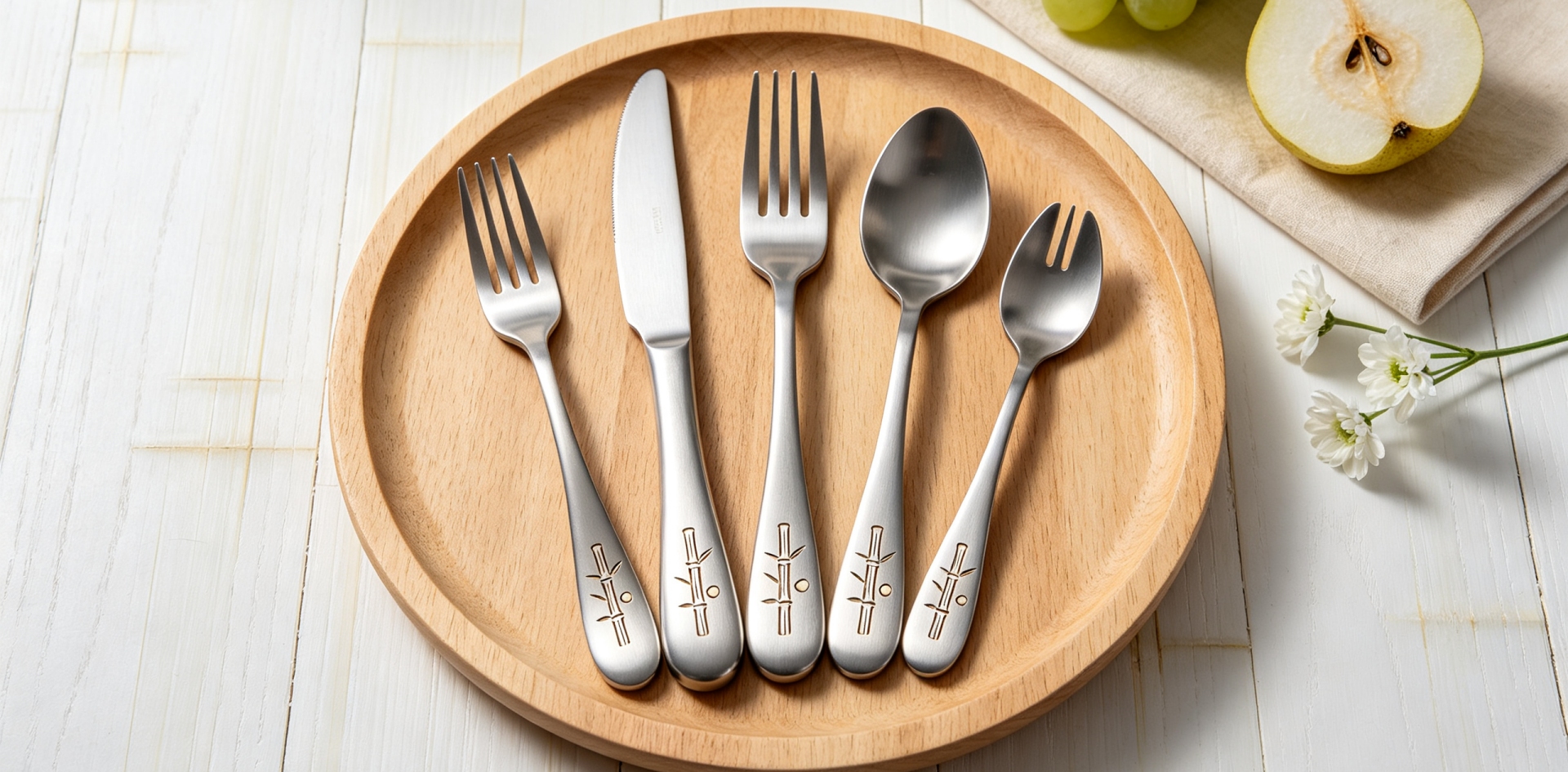
Custom Stainless Steel Cutlery Tooling for OEM and ODM Projects
When a buyer wants to develop a stainless steel spoon, fork or knife with a design that is different from existing standard products, custom tooling may become an important part of the manufacturing process.
For B2B customers, tooling is not simply a production step. It connects the product concept with the physical shape that will eventually be produced in large quantities.
The tooling requirements can be influenced by the product dimensions, handle shape, bowl or blade structure, decorative details and overall design. Therefore, buyers should consider tooling together with product development rather than treating it as a separate issue.
An experienced stainless steel cutlery manufacturer can help evaluate the design, confirm practical specifications and coordinate the development process before mass production.
When Does Custom Tooling Make Sense?
Not every stainless steel cutlery project requires completely new tooling.
If a buyer selects an existing spoon, fork or knife design and only requires packaging or branding customization, existing production tooling may be sufficient.
Custom tooling is more relevant when the customer wants a unique product structure or appearance.
Typical situations may include:
-
A completely new handle design
-
A unique spoon bowl shape
-
A customized fork head
-
A new knife profile
-
Special decorative details
-
A proprietary flatware collection
-
A private label product with a distinctive appearance
For these projects, developing dedicated tooling can help create a product that is different from standard catalog designs.
Product Design Comes Before Tooling
Before tooling begins, the product concept needs to be clearly defined.
A stainless steel spoon, fork or knife can contain many dimensional details that influence the final tooling design.
Important information may include:
-
Overall product length
-
Product width
-
Handle dimensions
-
Material thickness
-
Spoon bowl dimensions
-
Fork head dimensions
-
Tine arrangement
-
Knife blade dimensions
-
Product weight target
-
Surface finish
-
Logo or decorative requirements
A product drawing, reference sample or clear design image can provide a starting point.
For customers without a complete technical drawing, an experienced factory can discuss the requirements and help develop the specifications before the tooling stage.
Handle Tooling for Customized Flatware
The handle is often one of the most important areas when developing customized stainless steel cutlery.
A unique handle can create a recognizable appearance for a private label collection.
The tooling design may need to consider:
-
Handle length
-
Handle width
-
Handle thickness
-
Curvature
-
Decorative elements
-
Logo placement
-
Transition to the working section
A small change in handle shape can significantly change the appearance of the final product.
For this reason, buyers should review the design carefully before approving tooling.
A physical sample can be especially useful because it allows the customer to evaluate the actual shape instead of relying only on drawings or computer images.
Customized Spoon Tooling
For spoons, tooling development needs to accommodate the bowl and the transition from the bowl to the handle.
The bowl length, width and depth influence the final shape, while the handle determines much of the product's visual character.
For a new spoon design, buyers can provide an existing product as a reference and identify which areas need to change.
For example, a customer may want:
-
A wider bowl
-
A different bowl profile
-
A longer handle
-
A new handle pattern
-
A special decorative transition
The manufacturer can then evaluate the proposed design and develop the required tooling solution.
Customized Fork Tooling
Forks require additional attention because the working section contains multiple tines.
Tooling development may involve:
-
Fork head width
-
Tine length
-
Tine spacing
-
Tine shape
-
Head-to-handle transition
-
Overall product length
When creating a matching spoon, fork and knife collection, the fork should maintain the same design language as the other pieces.
The handle shape, decorative elements and overall proportions can be coordinated across the collection while the working sections remain different.
This is one reason why complete collection development is often more effective when handled by an experienced cutlery manufacturer.
Customized Knife Tooling
Knives have their own tooling and development requirements because the blade structure is different from a spoon or fork.
The customer may need to specify:
-
Blade profile
-
Blade length
-
Blade width
-
Handle dimensions
-
Overall length
-
Connection area
-
Decorative details
When the knife belongs to a matching flatware collection, the handle should coordinate visually with the spoon and fork.
At the same time, the blade needs to retain the appropriate structure for its intended use.
A factory can review these requirements during the development stage before finalizing the production solution.
Sample Approval Is an Important Step
For OEM and ODM projects, sample approval provides an important opportunity to confirm the actual product before bulk manufacturing.
After tooling development, the customer can evaluate the sample and check:
-
Overall shape
-
Product dimensions
-
Handle appearance
-
Working-section proportions
-
Decorative details
-
Surface appearance
-
Product weight
-
Matching relationship between different pieces
If changes are required, adjustments can be discussed before final production.
This helps reduce the risk of discovering design problems only after a large quantity has been manufactured.
Once the sample is approved, it can serve as an important reference for subsequent production.
Experience Helps Turn Ideas Into Manufacturable Products
Many B2B customers have a clear product concept but do not have detailed manufacturing drawings.
They may provide photographs, sketches, competitor samples or existing products and explain the changes they want.
This is where factory experience becomes valuable.
A professional stainless steel cutlery manufacturer can review the customer's idea from a manufacturing perspective and identify the dimensions and structures that need to be confirmed.
For example, if a customer wants to develop a new spoon, fork and knife with a distinctive handle, the factory needs to consider the handle design together with the bowl, fork head and knife blade.
The goal is not only to make the product look attractive but also to create a practical specification that can be transferred into stable mass production.
Tooling and Mass Production Should Be Connected
For a B2B project, tooling should ultimately support repeatable production.
Once the customer has approved the final design, the tooling becomes part of the manufacturing process used for future orders.
This is particularly important for private label and wholesale customers who may reorder the same product over a long period.
Clear product specifications and approved samples can provide a reference for repeat production.
For customers planning to expand their collection, the same design language can also be applied to additional spoon, fork and knife models.
Certifications and Factory Qualification
Tooling capability is only one part of supplier selection.
International B2B buyers may also need to evaluate the factory's manufacturing experience, audit status and certification information.
Homefelt presents its stainless steel cutlery manufacturing experience together with BSCI, SEDEX 4P, BRC and ISO9001-related credentials, as well as Disney audit experience and FAMA and FSC certificates.
For individual projects, product specifications, inspection requirements and testing documentation can also be discussed according to the customer's market and purchasing requirements.
This allows the buyer to evaluate both the product development capability and the broader manufacturing support available from the supplier.
One-Stop Service From Product Design to Delivery
Custom tooling is only one stage of a complete stainless steel cutlery project.
Depending on the customer's requirements, Homefelt can provide a one-stop service covering product design, customization, packaging and transportation.
The service can include:
-
Product concept discussion
-
Product design support
-
Custom tooling development
-
Sample production
-
Spoon, fork and knife customization
-
OEM and ODM manufacturing
-
Private label customization
-
Packaging design
-
Customized packaging
-
Bulk production
-
Transportation coordination
The exact service package can be adjusted according to the customer's situation.
Some customers may already have complete product drawings and only need manufacturing support. Others may need assistance from the initial concept through product development, packaging and final delivery.
The goal is to provide a dedicated service solution rather than forcing every customer into the same production process.
A Manufacturing Partner for Long-Term Development
For B2B buyers, a successful cutlery project can lead to long-term cooperation.
After the first customized product is completed, customers may develop additional spoon, fork and knife designs, expand their collection or increase order quantities.
A manufacturer familiar with the customer's previous specifications can make future product development more efficient.
Homefelt focuses on stainless steel knife, fork and spoon manufacturing for international B2B customers, supporting OEM, ODM, private label, wholesale and large-volume production.
We aim to provide practical one-stop solutions, support customers from product development to delivery and continue growing together with our customers.
You May Be Interested In
Stainless Steel Cutlery Stamping and Forming for Consistent Production
Stainless Steel Flatware Dimensions and Proportions for B2B Projects
Related Article



