Exclusive Private Label Stainless Steel Flatware for B2B Brands
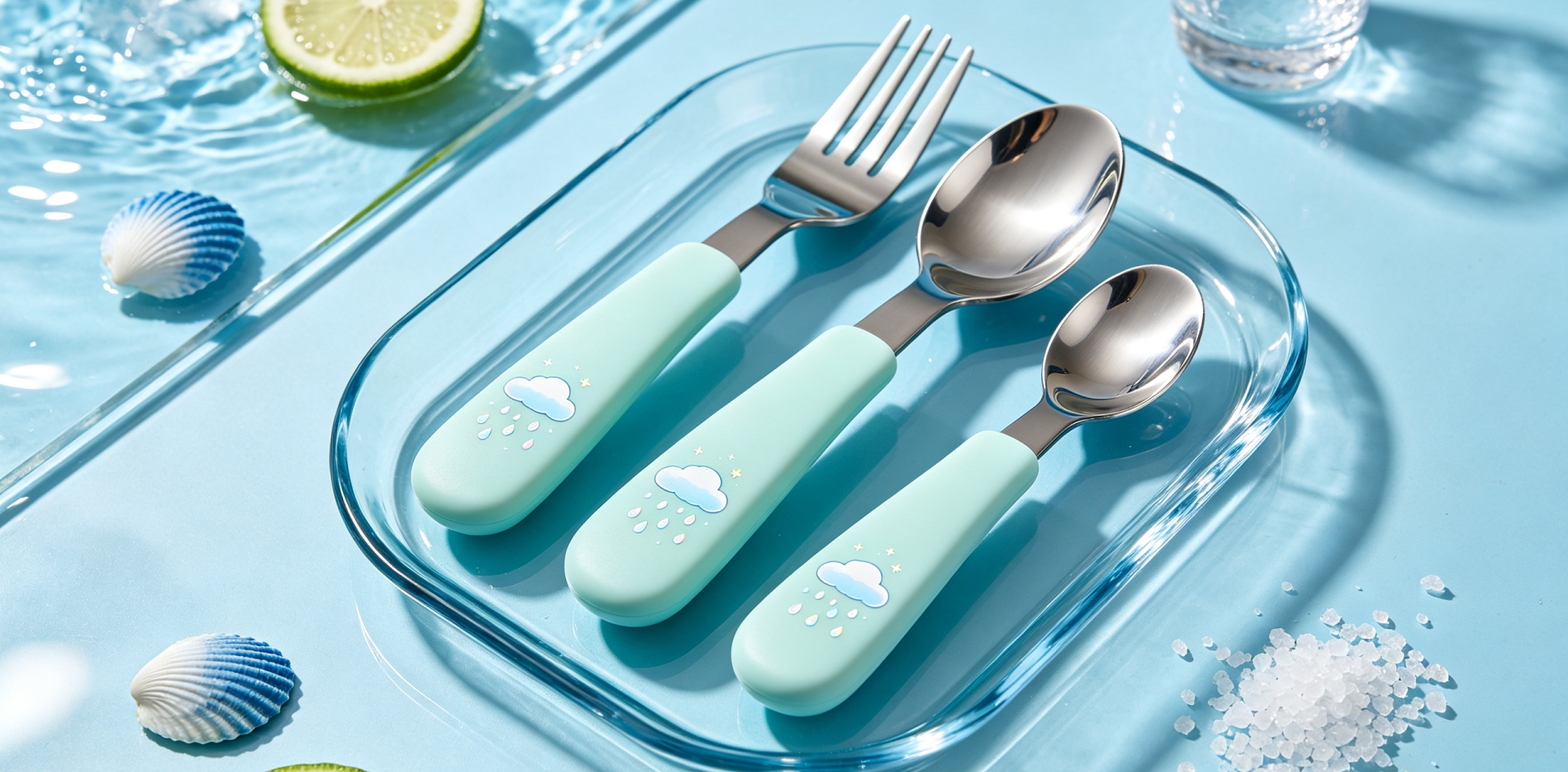
Exclusive Private Label Stainless Steel Flatware: Building a Distinctive Product for Your Brand
For a brand selling tableware, the difference between a standard product and a product developed specifically for the brand can have a major impact on how customers perceive the entire range.
Stainless steel cutlery is a good example. Knives, forks and spoons may appear simple at first, but small differences in shape, proportions, surface treatment and overall presentation can create a completely different product experience.
For B2B buyers, this creates an opportunity. Instead of relying only on standard flatware already available in the market, brands can work directly with an experienced manufacturer to develop products that better match their own positioning.
OEM, ODM and private label manufacturing make this possible at different levels of customization. The right approach depends on how much control the buyer wants over the final product and how the cutlery will be sold.
Why Brands Choose Exclusive Cutlery
A standard cutlery model can be purchased by many companies. While this can be convenient, it also means that competing brands may offer products with a very similar appearance.
For a brand trying to establish its own identity, this can become a limitation.
Exclusive stainless steel flatware offers another approach. The buyer can work with a manufacturer to select or develop products according to specific requirements rather than simply choosing from a standard wholesale range.
The goal is not necessarily to create something completely different from everything else on the market. Sometimes a carefully adjusted handle shape, a different surface finish or a specific combination of knife, fork and spoon is enough to give a collection its own character.
This is where direct communication with a factory becomes valuable.
Turning a Brand Concept Into Physical Cutlery
Many product ideas start with something simple: a reference image, an existing product, a drawing or an idea from a brand's design team.
The challenge is turning that idea into a product that can actually be manufactured in quantity.
An experienced flatware manufacturer can discuss the practical requirements behind the concept. The buyer can explain the desired appearance, target market, estimated quantity and other product expectations.
From there, the project can move toward a manufacturable solution.
This is particularly useful for brands that have strong commercial or design ideas but do not have their own manufacturing facilities. Instead of building an entire production system internally, they can work with a specialist factory that already understands stainless steel cutlery manufacturing.
OEM for Brands With Specific Requirements
OEM manufacturing is suitable when a buyer already has clear product requirements.
A brand may have its own design, dimensions, reference product or other specifications. These details can be communicated to the factory so that the manufacturing requirements can be discussed before production.
For B2B projects, this direct process can make communication more efficient.
Instead of explaining the same product requirements through several intermediaries, the buyer can communicate directly with the manufacturer responsible for production.
OEM is especially useful when a brand wants greater control over the final product while still relying on an established factory for manufacturing.
ODM When You Have the Direction but Not Every Detail
Not every brand begins with a finished design.
Sometimes the buyer knows the market, target customer and desired style but has not finalized every product detail. ODM manufacturing can provide a practical route in this situation.
The buyer can start with a general direction and review suitable product possibilities with the manufacturer. Existing manufacturing experience can then be combined with the buyer's commercial requirements.
This approach can help brands move from a general concept toward a finished stainless steel flatware product without having to develop every technical detail independently.
For companies entering the cutlery market for the first time, this can make the initial process much easier to manage.
Private Label Cutlery for a Stronger Brand Identity
Private label manufacturing allows stainless steel cutlery to become part of a brand's own product offering.
Instead of presenting the products simply as generic wholesale flatware, the buyer can develop a range that fits the identity and positioning of the brand.
This can be valuable for kitchenware companies, homeware brands, retailers, distributors and importers that want greater differentiation in their product assortment.
A private label program can include individual knives, forks and spoons as well as complete flatware sets. The exact combination depends on the sales strategy and the market being served.
The manufacturer provides the production capability, while the brand defines how the products should fit into its commercial offering.
Choosing the Right Level of Customization
Customization does not always mean developing every component from scratch.
For some projects, selecting an existing model and making targeted changes may be the most practical solution. Other brands may require a much higher level of product development.
The right approach depends on several factors, including expected order volume, target price, product positioning and the degree of differentiation required.
A professional manufacturer can help buyers understand which elements should be customized and which can remain based on proven production solutions.
This balance can be important for B2B buyers because the best product is not necessarily the most complicated one. A successful product needs to combine appearance, usability, manufacturability and commercial viability.
Designing for Wholesale Markets
A private label product also needs to work from a wholesale perspective.
A brand may have a strong design concept, but the product still needs to fit the expected sales price and order volume.
For this reason, estimated quantities should be discussed early in the project. A factory can better understand the scale of production when the buyer provides an approximate order requirement.
This is particularly important when several cutlery items are being considered together.
For example, a buyer may want to purchase knives, forks and spoons in matching designs, with different quantities for individual sales and flatware sets.
Discussing these requirements with the factory at the beginning allows the project to be considered as a complete B2B order rather than as unrelated individual products.
Building a Product Customers Can Recognize
One of the advantages of private label flatware is the ability to create consistency across a brand's offering.
When different products share a recognizable design language, customers can more easily connect them with the same brand.
This can be particularly useful when the company plans to expand its tableware business over time.
A first product may become the foundation for additional stainless steel cutlery. New knives, forks, spoons or sets can later be introduced while maintaining a consistent visual direction.
For this reason, selecting the right manufacturing partner at the beginning can be important for more than one purchase order.
A Reliable Factory Supports Repeat B2B Orders
For wholesalers and brands, the first order is only part of the business relationship.
Once a product has been introduced successfully, the company may need repeat orders based on sales performance. If demand grows, larger quantities may be required. New products may also be added later.
Working with a specialized stainless steel cutlery factory creates a more direct path between the brand and production.
The buyer can discuss future requirements with the same manufacturing partner and gradually build a stable supply program.
For B2B businesses, this continuity can be much more valuable than simply finding the lowest price for a single order.
Homefelt for OEM, ODM and Private Label Cutlery
Homefelt has more than 40 years of experience in the stainless steel cutlery business and provides manufacturing solutions for international B2B customers.
The company produces stainless steel knives, forks, spoons and flatware sets and supports OEM, ODM and private label projects.
For brands and wholesale buyers, a project can begin with a product reference, drawing, image or simple description of the desired cutlery. The buyer can also provide the expected quantity and target market when available.
The factory can then review the requirements and discuss the appropriate manufacturing solution.
Homefelt's experience working with international brands provides a practical foundation for companies that want to develop branded stainless steel cutlery rather than rely entirely on generic products.
Start Your Custom Cutlery Project With a Clear Request
You do not need to have every technical detail finalized before contacting a manufacturer.
A good first inquiry can simply explain what you want to produce, how the products will be sold and approximately how much you expect to order.
You can send product images, existing references, preferred styles, required cutlery pieces and customization ideas. If you already have a target quantity, including it will help the factory understand the scale of the project.
From there, the discussion can become more specific as the product requirements are confirmed.
For companies looking for exclusive stainless steel flatware, the first step is straightforward: communicate the product idea to a manufacturer that understands both customization and B2B production.
If you are planning to launch branded knives, forks, spoons or flatware sets, send your requirements to Homefelt and request a quotation for your project.
Request a quotation for private label stainless steel flatware
Start an OEM cutlery manufacturing project
Ask about ODM flatware development
OEM, ODM & Private Label Besteck: Die richtige Fabrik auswählen
Programme de Couverts Inox OEM et Marque Privée pour B2B
Related Article