
Exclusive Stainless Steel Cutlery Design Development for B2B Brands
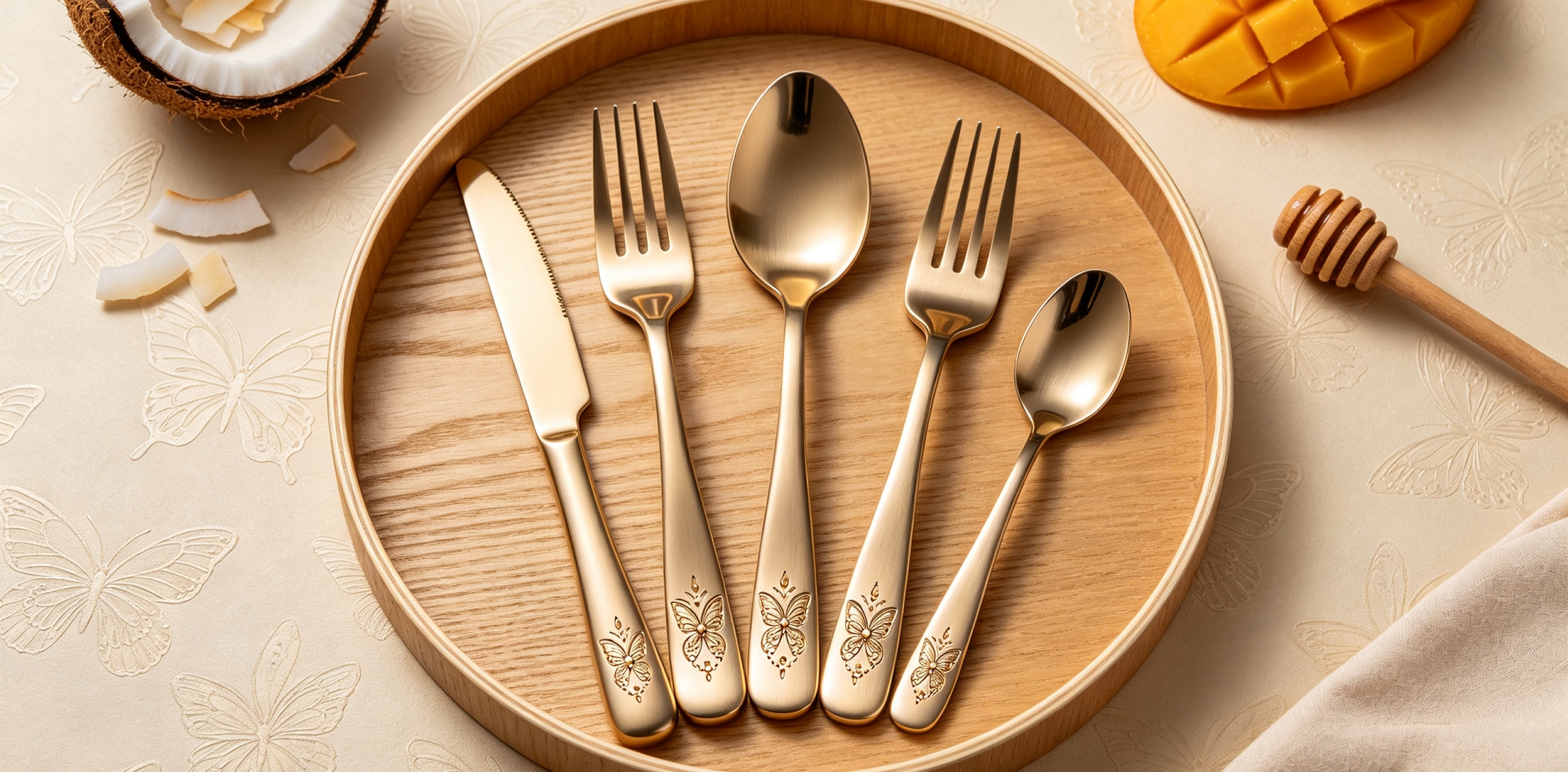
Exclusive Stainless Steel Cutlery Design Development for B2B Brands
For distributors and private label brands, a distinctive stainless steel cutlery collection can help create a recognizable product identity. However, developing an exclusive design involves more than choosing an attractive handle shape. Buyers must consider product proportions, material specifications, manufacturing feasibility, usability, packaging and the intended market position.
A well-planned design development process helps connect a commercial idea with a product that can be manufactured consistently in bulk. Homefelt factory supports OEM, ODM, customized and wholesale stainless steel knives, forks, spoons and flatware sets for business customers seeking products aligned with their brand requirements.
Begin With a Clear Product Design Brief
Before discussing detailed shapes or finishes, buyers should define what the proposed cutlery collection needs to achieve. A design brief gives the manufacturer a clear starting point and helps prevent repeated revisions caused by changing expectations.
The brief can identify the target customer, sales channel, intended price segment, preferred appearance, planned product range and estimated order quantity. Buyers can also share reference images, competitor examples or existing products that illustrate the direction they want to pursue.
It is important to distinguish inspiration from mandatory requirements. A reference photograph may communicate a general design style, but it may not provide enough information about dimensions, thickness, material or the construction of the handle. These details should be clarified separately.
For example, a brand may want a minimalist flatware collection with a gently tapered handle and a polished surface. The manufacturer still needs to determine the intended handle proportions, product dimensions, finish requirements and other technical details before the design can be evaluated for production.
Choose Design Features That Support Brand Identity
Exclusive cutlery designs often rely on a combination of details rather than one dramatic feature. Handle silhouette, end shape, surface finish, decorative lines and the relationship between the handle and working end can all influence the overall appearance.
Buyers should identify which details are essential to the collection and which can be adjusted during development. A distinctive handle outline may be central to brand recognition, while a small dimensional adjustment may be acceptable if it improves manufacturability without changing the intended visual character.
The design should also remain coherent across the full range. Dinner spoons, teaspoons, dinner forks and table knives do not have identical working ends, but their handles, finishes and overall proportions should create a recognizable family.
A coordinated collection is easier for customers to understand and can support future additions. When planning the initial design, buyers may therefore consider which related pieces could be developed later using the same design language.
Translate Visual Concepts Into Measurable Specifications
Visual direction becomes actionable when it is supported by drawings and defined parameters. Depending on the product, a technical specification may include overall length, handle width, thickness at selected measuring points, unit weight, material grade, finish and logo placement.
These parameters should reflect the design rather than being chosen independently. A heavier handle, for example, can change the balance and perceived feel of a spoon or fork. A narrower handle may create a more delicate appearance but could require closer evaluation of its shape and structural characteristics.
Buyers should identify critical dimensions and agree on the applicable tolerances. Where a measurement can vary depending on the measurement location, the drawing should show the relevant point or method.
A three-view drawing or other suitable technical illustration can help clarify the design's front, side and overall profile. Reference photographs remain useful for appearance, but they should not replace dimensional information when precise production requirements are involved.
Evaluate Material and Finish as Part of the Design
The selected stainless steel specification and surface finish affect the final product's appearance and performance. Buyers should define the required material grade according to the intended application, customer expectations and relevant product requirements.
The finish also needs a clear description. Mirror polishing, satin finishing and colored treatments produce different visual effects and may involve different processing considerations. Terms such as “premium shine” or “soft silver” can communicate a general preference, but they are not precise acceptance criteria by themselves.
A physical reference sample or an agreed finish standard can help both parties evaluate the intended result. If a colored finish is requested, the buyer should confirm the approved reference and understand that the final appearance may be influenced by the agreed process and production conditions.
For OEM and ODM projects, material and finish requirements should be recorded alongside the design specification. This makes it easier to assess the complete product rather than approving a shape without considering how the finished cutlery will look.
Assess Usability Alongside Appearance
A visually distinctive product still needs to work well for its intended users. Buyers should evaluate how the handle feels in the hand, how the spoon bowl or fork head relates to the handle and whether the knife's form suits its intended use.
A design review can consider handle width, edge smoothness, overall length, weight distribution and the transitions between different sections of the product. These factors should be evaluated together because a change in one area may affect the impression of the entire piece.
For example, a handle with a strong taper may look elegant in a product image, but its proportions should also be reviewed in a physical sample. A spoon's bowl shape should complement its handle, while a fork's head and tine arrangement should remain consistent with the intended design and functional requirements.
The appropriate checks depend on the product and target market. Buyers should define the important usability criteria before approving the design for bulk production.
Plan Prototype Reviews With Specific Feedback
Prototype evaluation is more effective when feedback is specific and organized. Instead of saying that a sample “does not look right,” the buyer can identify the exact area that needs attention and explain the desired outcome.
Feedback may address handle proportions, finish appearance, logo scale, product dimensions, weight or the relationship between individual pieces. Annotated photographs and marked-up drawings can help communicate these points clearly.
Each revision should be documented so that the manufacturer can distinguish the latest proposal from earlier versions. If several items belong to one collection, the buyer should identify which models are affected by each requested change.
Before approving a sample, buyers should also confirm that the physical product matches the relevant specification and finish requirements. Sample approval should refer to a clearly identified version rather than a general design concept.
Consider Manufacturing Feasibility Early
Some design features may require additional tooling, special forming steps, more complex polishing or customized decoration. Discussing these requirements early can help buyers understand their implications before committing to a final design.
For example, a deeply contoured handle or a detailed decorative pattern may need additional technical evaluation. The manufacturer can review the proposed geometry, production method and finishing requirements to determine whether adjustments are needed.
The purpose of this review is not to remove every distinctive feature. It is to understand which details are essential to the design and how they can be produced reliably at the intended order volume.
Buyers should also clarify whether a project requires new tooling, what approvals are needed before tooling begins and how tooling ownership or future use will be handled under the agreed commercial terms. These matters should be documented before development moves forward.
Maintain Design Consistency Across the Collection
An exclusive collection should look coordinated even when its products have different functions. The dinner spoon, teaspoon, fork and table knife may vary in overall proportions, but their shared design features should remain recognizable.
The buyer and manufacturer can define a common design reference covering handle style, finish, decorative elements and approved branding. Individual product drawings then specify the details unique to each piece.
This approach is useful when a collection includes several sizes or when the buyer plans to introduce additional items later. New products can be evaluated against the established design language rather than developed as unrelated pieces.
Consistency should be verified against approved specifications and reference samples. If a future product requires a visible departure from the original style, the buyer can decide whether it belongs in the same collection or should be treated as a separate design.
A Practical Example of Private Label Design Development
Consider a distributor planning an exclusive flatware collection for a retail brand. The initial concept includes a tapered handle, a restrained decorative detail and a polished finish across four core pieces.
The buyer first provides a design brief, target quantities and reference images. The manufacturer then reviews the technical requirements and prepares the appropriate design information for evaluation. After reviewing the sample, the buyer requests a small adjustment to the handle proportions and confirms the logo placement.
The revised design is documented, and the buyer checks the coordinated appearance of the spoon, fork and knife before approving the collection. Packaging requirements are then reviewed against the final product configuration.
This process gives both parties a clearer basis for production and reduces the likelihood that important design decisions will remain informal or ambiguous.
Work With a Manufacturing Partner From Concept to Bulk Production
Successful product development combines commercial direction, technical detail and realistic production planning. Buyers who provide clear requirements and consolidated feedback can make more informed decisions during the development process.
Homefelt factory supports stainless steel cutlery customization, OEM and ODM production, wholesale supply and private label projects. Its business credentials include BSCI, SEDEX 4P, BRC and ISO 9001 audit or certification experience, as well as Disney audit experience. FAMA and FSC certificates are available for applicable projects; customers should confirm the specific documentation relevant to their requirements.
One-stop coordination can include product design, customized packaging and transportation arrangements according to the agreed project scope. This allows buyers to discuss the product and its presentation as connected parts of the same commercial program.
You May Be Interested In
Stainless Steel Cutlery Gift Set Customization for Wholesale Buyers
Stainless Steel Cutlery SKU Identification for Accurate Warehouse Picking
Related Article



