
Heritage Stainless Steel Cutlery for B2B Brands
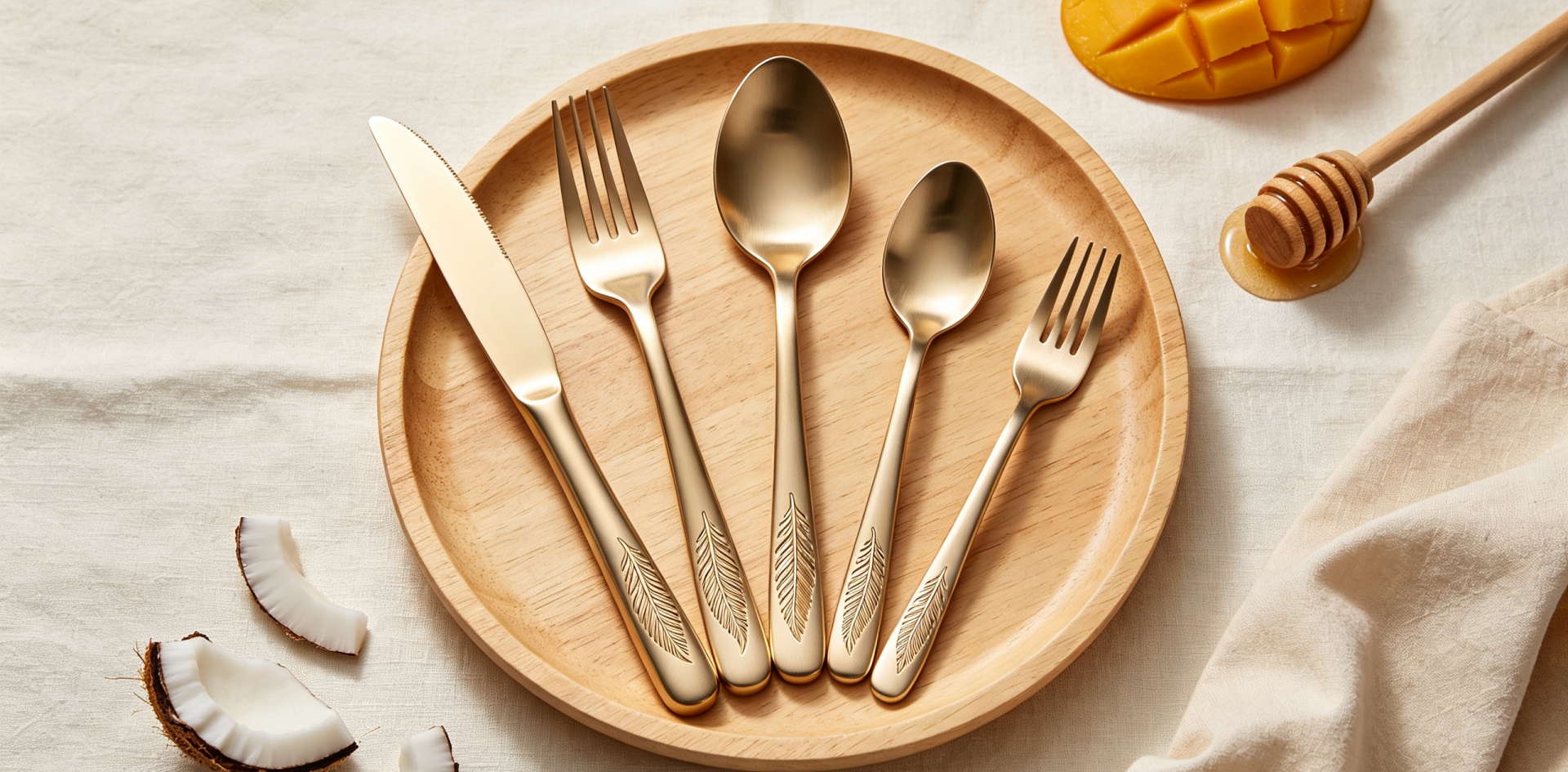
Heritage Stainless Steel Cutlery for B2B Brands
Classic design continues to have a place in the stainless steel cutlery market. While contemporary flatware often focuses on simple lines and minimal shapes, many B2B brands still look for designs that create a sense of tradition, craftsmanship and familiarity.
Heritage-inspired stainless steel cutlery can provide this visual direction without requiring products to become purely decorative. With the right balance of classic details and practical manufacturing, a brand can develop knives, forks and spoons that feel established while still being suitable for modern wholesale markets.
For retailers, distributors and private label brands, this type of collection can become an alternative to highly minimalist flatware.
What Makes a Cutlery Collection Feel Heritage-Inspired?
Heritage styling is usually created through a combination of visual details rather than one specific feature.
Traditional-looking proportions, subtle decorative lines, shaped handles, carefully controlled curves and polished surfaces can all contribute to a classic appearance.
The objective is not necessarily to reproduce an old-fashioned product. A modern manufacturer can reinterpret familiar design characteristics while keeping the product suitable for contemporary use.
This gives B2B buyers more flexibility when developing a private label collection.
A brand can choose which traditional elements are appropriate for its market and combine them with practical stainless steel construction.
Why Classic Styling Still Works for B2B Markets
A recognizable traditional appearance can be useful for brands that want their products to communicate familiarity and continuity.
Some retailers prefer flatware that complements traditional dining environments. Certain hospitality concepts may also require products that fit an established interior style rather than appearing highly contemporary.
For distributors, classic designs can provide another category within a broader stainless steel cutlery range.
Instead of competing only through modern shapes, a supplier can offer different visual directions to serve customers with different requirements.
This makes heritage-inspired cutlery a potential addition to a broader wholesale flatware portfolio.
Combining Traditional Details With Stainless Steel
Stainless steel provides a practical foundation for classic cutlery designs.
The material can be formed into different handle silhouettes and functional shapes while supporting the polished appearance often associated with traditional flatware.
For B2B projects, the material specification should still be selected according to the intended product requirements.
Buyers may have their own expectations regarding stainless steel grade, thickness, weight and finish. These requirements can be defined during the product development stage so that the classic appearance is supported by an appropriate construction.
The result is a product that looks traditional without relying on outdated manufacturing standards.
Designing the Handle for a Classic Appearance
The handle is often one of the strongest visual elements in heritage-style cutlery.
A slightly shaped silhouette can create a traditional impression. Additional contouring can make the handle appear more substantial. Carefully positioned decorative elements may also help establish the desired character.
However, the handle should remain practical.
Excessive decoration can make a product difficult to manufacture or create unnecessary complexity across multiple pieces. For a commercial collection, the design should maintain a reasonable relationship between appearance, usability and production requirements.
An experienced stainless steel cutlery manufacturer can help evaluate these factors when developing a custom handle design.
Creating a Matching Knife, Fork and Spoon
One challenge with classic cutlery is ensuring that decorative details work across different product types.
A knife, fork and spoon have different functional heads, so their shapes cannot be identical. The collection therefore needs shared characteristics that visually connect the pieces.
For example, a handle detail can be adapted across all three products. A similar transition or decorative line can also establish a common appearance.
This approach allows a B2B brand to create a coordinated range without forcing every product into exactly the same shape.
The collection can then be expanded into different set configurations while maintaining its overall identity.
Keeping the Design Suitable for Modern Retail
Heritage styling does not mean that a collection needs to look old.
Many modern brands use traditional references while simplifying them for contemporary customers.
A handle may borrow the proportions of classic flatware but use cleaner lines. A decorative detail can be reduced to a subtle accent rather than becoming the dominant feature.
This combination can make the collection easier to position across different retail environments.
For private label brands, it also provides an opportunity to create a product that feels distinctive without becoming difficult to understand.
Choosing the Right Finish
Finish plays an important role in how classic stainless steel cutlery is perceived.
A polished surface can emphasize traditional elegance and highlight the contours of the handle. Other surface treatments can create a softer or more contemporary interpretation.
The finish should be considered together with the design rather than selected as a separate decision.
For a B2B collection, consistency is particularly important. If several knives, forks and spoons are intended to be sold as one range, their surface appearance should support the same overall visual direction.
Customers developing custom stainless steel cutlery can discuss available finishing options with their manufacturing partner before finalizing the collection.
Adapting Heritage Designs for Private Label
Private label buyers may already have a specific market image in mind.
One customer may want a subtle European-inspired appearance, while another may prefer a more decorative traditional style. A third brand may want classic proportions combined with a cleaner contemporary finish.
This is where customization becomes important.
Rather than selecting a standard product without modification, the buyer can communicate the desired design characteristics to the manufacturer and discuss how they can be incorporated into a production-ready product.
For OEM and ODM projects, this can include changes to handle shapes, dimensions, decorative details, finishes and product combinations according to the agreed specifications.
Building a Commercial Product Range
A heritage-inspired collection can include more than a basic four-piece cutlery set.
Depending on the customer's market, the range may include different spoon sizes, additional forks and knives, or individual pieces for replacement and replenishment.
The important consideration is that additional products should remain visually connected to the core collection.
For wholesalers and distributors, this can make it easier to present the range as a complete product family.
For retailers, it can provide flexibility in creating different set configurations for different price points and customer requirements.
For private label brands, the same design direction can potentially support a broader long-term collection.
Manufacturing Considerations for Classic Designs
Traditional details can sometimes require more attention during manufacturing than very simple shapes.
Curves, transitions and decorative elements need to be reproduced consistently across production quantities. The relationship between different products also needs to be considered so that the final range looks coordinated.
This is why discussing the design with the factory before mass production is valuable.
At Homefelt factory, buyers can develop custom stainless steel knives, forks, spoons and complete flatware sets for OEM, ODM and private label projects.
Customers can provide their own references, drawings or design ideas and discuss the practical requirements for manufacturing. The factory can also support wholesale and large-volume production for B2B customers.
For a brand developing a heritage-inspired collection, this early communication helps connect the desired classic appearance with realistic production requirements.
Making Classic Cutlery Suitable for Long-Term Sales
One advantage of a carefully developed classic design is that it does not necessarily depend on a short-lived trend.
A recognizable traditional appearance can remain relevant across different product cycles, particularly when the design is balanced rather than overly decorative.
This can be useful for B2B buyers who need to replenish products over time.
If the collection remains commercially active, the manufacturer can continue producing the established designs while supporting additional orders according to the customer's requirements.
For distributors and private label brands, this can create a more stable foundation for developing a long-term flatware assortment.
From Heritage Inspiration to Finished Product
Developing heritage stainless steel cutlery starts with identifying the visual characteristics that the brand wants to communicate.
The next step is to determine how those characteristics can be applied to knives, forks, spoons and complete sets while maintaining practical proportions and manufacturing feasibility.
Material specifications, surface treatment, dimensions, customization requirements and quantities can then be defined for the project.
Samples provide an opportunity to evaluate the physical result before moving into larger-volume production.
This process allows a B2B buyer to preserve the character of the original design idea while making the product suitable for commercial manufacturing.
A successful heritage-inspired cutlery collection does not need to imitate historical products exactly. It can take inspiration from classic forms while using modern stainless steel manufacturing to create a product that is practical, consistent and suitable for today's B2B market.
For brands, wholesalers and distributors looking for a classic alternative to minimalist flatware, custom heritage-inspired stainless steel cutlery can provide another direction for product development.
Homefelt factory supports OEM, ODM, private label and bulk production of customized stainless steel knives, forks, spoons and flatware sets for B2B customers.
Custom Heritage Stainless Steel Cutlery
OEM & ODM Stainless Steel Flatware Manufacturing
Private Label Vintage-Style Cutlery
Custom Stainless Steel Knife, Fork and Spoon
Wholesale Stainless Steel Flatware Supplier
Homefelt Factory — Custom Stainless Steel Cutlery & Bulk Production
Stainless Steel Cutlery Passivation for B2B Buyers
Stainless Steel Cutlery Design Concepts for B2B Brands
Related Article



