How Stainless Steel Flatware Is Made: Manufacturing Process Guide

How Stainless Steel Flatware Is Made: A Complete Manufacturing Process Guide
Stainless steel flatware may appear simple when placed on a dining table, but manufacturing a consistent fork, spoon or knife involves a series of carefully connected production stages. For B2B buyers, understanding these stages can provide useful insight into product quality, customization, lead time and supplier capability.
The manufacturing process can vary according to product design, material specification, finish and production method. Standard commercial flatware may follow an established production route, while custom products can require additional development and sampling before mass production.
For importers, distributors, hospitality suppliers and private label brands, understanding how stainless steel flatware is made can also make supplier communication more precise. Instead of evaluating a product only by its finished appearance, buyers can consider the manufacturing capabilities behind it.
Stainless Steel Flatware Manufacturing Overview
A typical stainless steel flatware production process may include:
-
Material preparation
-
Cutting
-
Forming
-
Shaping
-
Stamping
-
Grinding
-
Polishing
-
Cleaning
-
Inspection
-
Packaging
Not every product uses exactly the same sequence. Forks, spoons and knives can require different manufacturing steps because their shapes and functions are different.
Material Preparation
Production begins with stainless steel material that meets the required specification.
The material may be supplied in sheets or other suitable forms depending on the manufacturing process.
Before production, the material specification should be confirmed according to the product requirements.
For B2B projects, the material should be clearly documented so that future orders can follow the same specification.
Cutting the Material
The stainless steel material is prepared into suitable blanks for further processing.
The size and shape of the blank depend on the final product design.
Efficient material preparation can help support consistent production and reduce unnecessary material waste.
The cutting stage must be coordinated with the dimensions of the finished product.
Forming the Basic Shape
The prepared material is formed into the basic shape of the fork, spoon or other cutlery product.
Different products require different forming methods.
The goal is to create the intended overall shape while maintaining the dimensions required by the design.
For custom products, the forming process may need to be developed specifically for the new design.
Stamping and Shaping
Stamping can be used to create specific shapes and details.
The process may define areas such as spoon bowls, fork heads or other structural features.
Tooling and production settings should correspond with the approved product design.
Consistent forming is important because later finishing processes cannot completely correct major shape differences.
Fork Manufacturing
Fork production includes forming the head and creating the tines.
The handle and neck also need to maintain the intended shape.
Important considerations can include:
-
Overall length
-
Tine alignment
-
Tine spacing
-
Handle profile
-
Product thickness
-
Weight
The finished fork should maintain consistent proportions across the production batch.
Spoon Manufacturing
Spoon manufacturing requires the formation of the bowl and handle.
The bowl needs to achieve the specified depth and shape while maintaining a smooth transition to the handle.
The handle can be straight, tapered, rounded or customized according to the product design.
Knife Manufacturing
Knife production can differ from fork and spoon manufacturing.
The blade and handle may require different processing steps depending on the construction.
The final product should maintain the specified dimensions, shape and surface appearance.
Grinding and Surface Preparation
After forming, the stainless steel surface may contain production marks that need to be removed or reduced.
Grinding helps prepare the surface for polishing and finishing.
The grinding process must be controlled carefully because excessive material removal can affect product dimensions.
Proper preparation creates a more consistent foundation for the final surface treatment.
Polishing the Surface
Polishing improves the appearance and surface quality of the finished cutlery.
The exact process depends on the desired finish.
A polished product can provide a bright reflective appearance, while satin or brushed finishes create different visual effects.
The polishing process should preserve the intended product shape.
Surface Finishes
Different stainless steel flatware collections can use different surface treatments.
Common options include:
-
Polished
-
Satin
-
Brushed
The selected finish should be established before production.
For customized products, a physical sample is particularly useful for confirming the final appearance.
Cleaning After Finishing
After polishing and other surface treatments, products may require cleaning to remove production residues.
The finished pieces should be prepared for inspection and packaging.
Cleaning requirements can vary according to the production process and product type.
Quality Inspection
Inspection can take place during different stages of production.
A final inspection may review:
-
Material requirements
-
Dimensions
-
Weight
-
Shape
-
Surface finish
-
Workmanship
-
Quantity
-
Packaging
For custom orders, the approved sample should be used as a reference.
Dimensional Consistency
Consistent dimensions are important for commercial flatware.
Small differences can become noticeable when products from the same collection are placed together.
Manufacturers can establish measurement points and tolerances according to the product specification.
This is especially important for repeat production.
Weight Consistency
Weight can provide another reference for production consistency.
However, weight should be evaluated together with product dimensions and thickness.
A change in shape can affect weight even when material thickness remains unchanged.
For B2B orders, the target weight or acceptable range should be agreed before production.
Surface Quality Inspection
Surface inspection can identify visible issues such as scratches, uneven polishing or inconsistent finish.
The exact inspection criteria should reflect the buyer's approved sample and product requirements.
For premium collections, surface appearance may require particularly careful evaluation.
Tooling for Custom Flatware
Custom designs may require tooling or production equipment developed around the product shape.
Tooling requirements depend on the complexity of the design.
Before mass production, the manufacturer can review the design to determine whether the proposed shape is practical for the intended quantity and production method.
Prototype and Sample Development
Custom flatware normally requires sample development before bulk production.
The sample allows buyers to evaluate:
-
Shape
-
Dimensions
-
Weight
-
Balance
-
Handle design
-
Surface finish
-
Overall appearance
The approved sample then becomes a practical reference for production.
From Sample to Mass Production
Once the sample is approved, the manufacturer can establish the production specifications.
The product dimensions, material, finish and packaging requirements should be documented.
This reduces the risk of producing the final order according to an outdated or incomplete design.
Production Efficiency
Large-volume orders require efficient production planning.
Manufacturers may organize production according to product type, quantity and required delivery schedule.
Production efficiency can influence lead time and overall purchasing cost.
For B2B buyers, supplier capacity should be evaluated when planning large or repeat orders.
Packaging After Inspection
After the products pass inspection, they can be packed according to the buyer's requirements.
Packaging may include:
-
Individual bags or wraps
-
Inner boxes
-
Product sets
-
Master cartons
-
Retail packaging
-
Custom labels
The appropriate packaging depends on the distribution model.
Export Packaging
International shipments require packaging that can support handling during transportation and storage.
Buyers should communicate carton requirements and labeling needs before production.
For distributors, clear carton identification can also simplify warehouse management.
Custom Stainless Steel Flatware Production
Custom manufacturing gives B2B buyers greater control over product design.
The process can include:
-
Initial design
-
Technical review
-
Sample development
-
Sample approval
-
Production specification
-
Mass manufacturing
-
Inspection
-
Packaging
-
Shipment
The timeline can vary according to design complexity and order quantity.
Private Label Manufacturing
Private label projects can combine product manufacturing with customized branding and packaging.
The buyer may provide artwork, packaging specifications and product requirements.
The manufacturer can coordinate production according to the approved information.
Manufacturing Lead Time
Production lead time depends on factors such as:
-
Product complexity
-
Order quantity
-
Material availability
-
Tooling requirements
-
Surface finish
-
Packaging
-
Factory production schedule
Standard products can have a different lead time from newly developed custom products.
Repeat Production
Repeat production is particularly important for B2B buyers.
Restaurants, hotels and distributors may reorder the same collection after the initial shipment.
Detailed specifications and approved samples help the manufacturer reproduce the product more consistently.
Why Factory Experience Matters
Manufacturing experience can affect how effectively a factory handles product development, production and quality control.
An experienced stainless steel manufacturer can identify practical issues during the development stage before they become production problems.
This can be particularly valuable for custom designs and large commercial orders.
Working With an Experienced Manufacturer
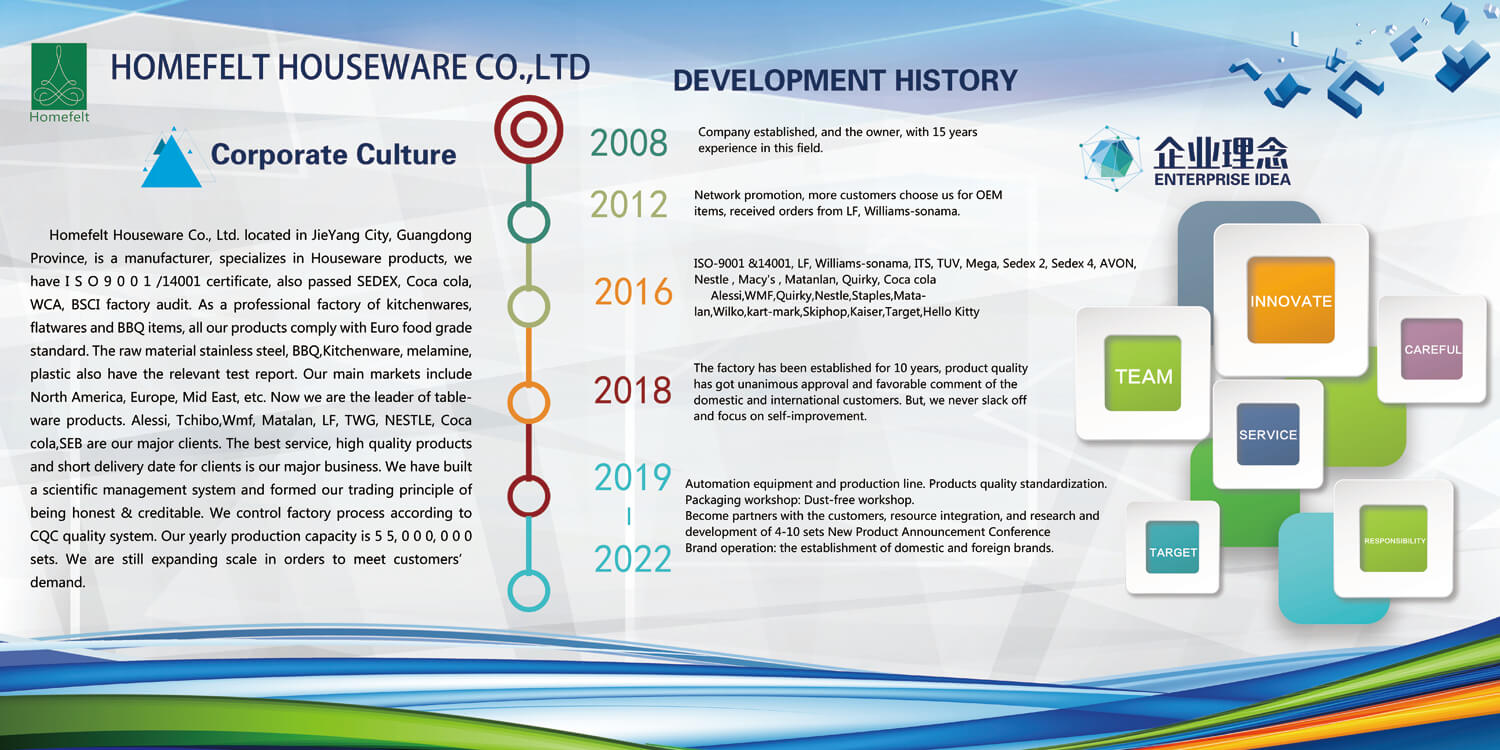
Homefelt has more than 30 years of stainless steel manufacturing experience and produces stainless steel cutlery together with kitchen and dining products, BBQ tools, pet bowls and children's tableware.
For international B2B customers, Homefelt supports standard and customized stainless steel products.
Importers, distributors, restaurant suppliers, hospitality businesses and private label brands can discuss product design, material, dimensions, thickness, weight, finish, packaging and estimated quantities according to their requirements.
For long-term projects, approved samples and documented product specifications can support consistent repeat manufacturing.
What B2B Buyers Should Provide
Before starting production, buyers can prepare:
-
Product design
-
Product drawings or reference images
-
Material requirement
-
Dimensions
-
Thickness
-
Target weight
-
Surface finish
-
Packaging requirements
-
Branding requirements
-
Estimated quantity
-
Target delivery schedule
-
Expected repeat demand
Complete information allows the manufacturer to evaluate the project more accurately.
Manufacturing and Product Development
The best time to identify production challenges is before mass manufacturing begins.
During the development stage, buyers and manufacturers can review handle shape, dimensions, thickness, finish and packaging.
Early technical discussion can reduce unnecessary revisions later.
Building a Long-Term Manufacturing Program
For buyers who expect regular purchases, manufacturing should be viewed as an ongoing supply relationship rather than a single transaction.
Maintaining specifications, samples and packaging records can simplify future orders.
As the buyer's business grows, the same manufacturing relationship may also support additional products and customized collections.
Conclusion
Stainless steel flatware manufacturing involves a series of connected stages, from material preparation and forming to grinding, polishing, inspection and packaging.
Each stage contributes to the final product, and consistency depends on controlling the complete manufacturing process rather than focusing only on the finished surface.
For B2B buyers, understanding the production process can make it easier to evaluate suppliers, prepare specifications and develop custom products.
Homefelt has more than 30 years of stainless steel manufacturing experience and works with international B2B customers on standard and customized stainless steel products.
By working with an experienced manufacturer and establishing clear product specifications before mass production, importers, distributors, hospitality suppliers and private label brands can build a more reliable stainless steel flatware sourcing program.
You May Be Interested In
18/10 vs 18/0 Stainless Steel Flatware: A B2B Buying Guide
Stainless Steel Cutlery Polishing and Surface Finish Process
Stainless Steel Cutlery Quality Control and Inspection Guide
Stainless Steel Cutlery Thickness Guide: What B2B Buyers Need to Consider
Stainless Steel Cutlery Weight Guide for Bulk and Wholesale Buyers
Custom Stainless Steel Flatware Development From Sample to Production

Wholesale Stainless Steel Flatware Supplier: B2B Buying Guide
18/10 vs 18/0 Stainless Steel Flatware: A B2B Buying Guide
Related Article