
Stainless Steel Cutlery Catalog Management and Product Model Coding for B2B Buyers
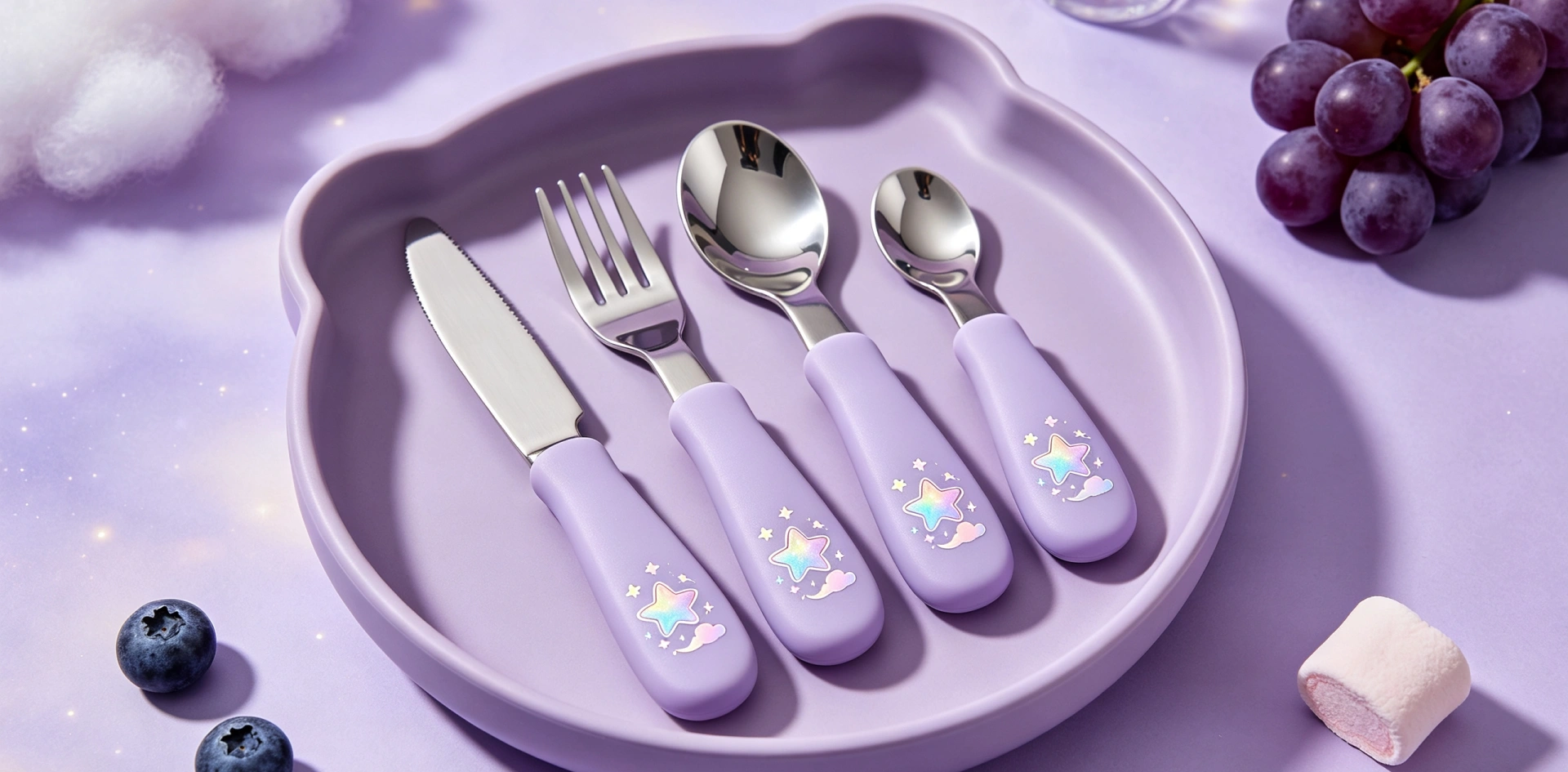
Stainless Steel Cutlery Catalog Management and Product Model Coding for B2B Buyers
A well-organized product catalog helps stainless steel cutlery buyers manage product information, compare designs, and communicate purchasing requirements accurately. For importers, distributors, retailers, and private label brands, the challenge is not simply displaying attractive knives, forks, and spoons. It is ensuring that every product image, model number, technical specification, and packaging option refers to the correct item.
When a business offers multiple flatware collections, small differences in handle shape, finish, dimensions, or set composition can create confusion during quotation, sampling, and repeat ordering. A consistent catalog structure makes these differences easier to identify and helps purchasing teams work more efficiently with their manufacturing partners.
Homefelt factory supports stainless steel cutlery customization, OEM/ODM manufacturing, wholesale supply, and bulk production. Clear product records help both buyers and the factory coordinate product selection and project requirements.
1. Create a Unique Model Code for Every Product
A product model code should identify one specific cutlery item or defined configuration. It should be short enough to use in quotations and order sheets, but structured enough to distinguish similar products.
For example, a buyer might use codes such as DS-101 for a dinner spoon, DF-101 for a dinner fork, and TK-101 for a table knife. These are illustrative codes, not existing Homefelt product numbers.
The most important rule is consistency. Once a model code has been assigned to an approved product, avoid reusing it for a different design. If a product undergoes a substantial specification change, determine whether a new code or a clearly documented revision is required.
A practical model code system can identify the product family while keeping technical details in separate catalog fields. This prevents codes from becoming unnecessarily long whenever a product has several variations.
For customized products, record the customer's project reference alongside the factory model number. The two identifiers serve different purposes: one supports the customer's internal purchasing system, while the other identifies the corresponding manufacturing product.
2. Separate Product Models from Their Variations
A cutlery collection may include several items that share a design language but have different functions and dimensions. It may also offer multiple finishes or packaging configurations.
These details should be documented without making the catalog difficult to maintain.
Consider a collection that includes a dinner spoon, dinner fork, table knife, and teaspoon. Each item should have its own product record. If the same spoon is offered in a standard polished finish and a customized colored finish, the catalog should indicate whether these are separate orderable SKUs or variations managed under one parent product.
Useful variation fields include:
-
Material grade
-
Product dimensions
-
Thickness where applicable
-
Unit weight
-
Surface finish
-
Handle design
-
Logo or branding method
-
Packaging configuration
-
Approved sample or drawing reference
This structure helps prevent a buyer from ordering the correct model with the wrong finish or assuming that two visually similar items have identical specifications.
For private label projects, record customer-specific designs and packaging separately from standard catalog products. This makes it easier to identify which options are available for general wholesale orders and which require project-specific approval.
3. Build a Technical Specification Sheet for Each Model
Product photographs are useful for visual selection, but they cannot communicate every manufacturing detail. A technical specification sheet provides the information required to confirm the product before ordering.
For stainless steel cutlery, the specification sheet may include overall length, width at the widest point, thickness, unit weight, material grade, surface finish, and relevant dimensional tolerances. For spoons, the bowl dimensions may also be important. For table knives, the blade profile and handle construction may need additional documentation.
Measurements should use consistent units, usually millimeters for dimensions and grams for unit weight. Where tolerances matter, state the acceptable range and define the measurement method where necessary.
The sheet should also indicate the status of the information. For example, distinguish between an initial design proposal, a quotation reference, an approved sample, and the final production specification.
This distinction is particularly important for OEM and ODM projects. An early drawing may change during development, so the factory and buyer should agree on which revision governs production.
Homefelt factory can discuss product specifications and customization requirements with buyers before production details are finalized. A complete model record helps clarify the scope of each quotation and reduces avoidable misunderstandings.
4. Use Consistent Product Images and File Names
A professional catalog should make it easy to connect each photograph with the correct model code. Use consistent image naming and keep the model identifier in the associated product record.
For example, a product image file might be named DS-101-front-view.jpg, while additional images could identify the handle detail, side profile, or complete set arrangement.
For image management, consider maintaining separate views for:
-
Full product appearance
-
Handle decoration and surface finish
-
Side profile and thickness
-
Product scale or dimensions
-
Complete set composition
-
Packaging presentation
Images should accurately represent the product being offered. If a photograph shows a special finish, decorative logo, or retail box that is not included in the standard offer, label the option clearly.
This is especially helpful when a buyer manages many product models or distributes catalog information across sales teams, purchasing departments, and external retail partners.
Consistent photography also makes it easier to compare similar products and identify the details that distinguish one collection from another.
5. Organize the Catalog Around Buyer Needs
A catalog can be arranged by product function, collection, design style, or intended sales channel. The best structure depends on how customers typically select and purchase cutlery.
A distributor may prefer separate sections for spoons, forks, knives, and complete cutlery sets. A retail brand may prioritize coordinated collections and packaging choices. A hospitality buyer may want to compare product dimensions, material options, and the availability of individual replacement pieces.
For a B2B catalog, useful fields include product name, model code, product image, material, dimensions, finish, available customization, packaging options, and quotation contact information.
Avoid placing every possible detail in a single crowded table. Keep the main catalog easy to browse and provide a separate specification sheet for more technical information.
If the catalog contains products with different customization possibilities, clearly identify which details are standard and which require confirmation. This helps buyers understand the difference between an existing product option and a newly developed design.
6. Control Catalog Revisions During Customization
Catalog accuracy becomes more challenging when products are customized for individual customers. A project may involve a revised handle pattern, updated logo position, a new finish, or a different assortment of pieces.
Without revision control, an older image or drawing may remain in circulation after the product has changed.
A simple revision system can include a document date, revision number, change description, approval status, and responsible contact. When a new version is approved, distribute it to the relevant purchasing, sales, quality, and production teams.
For example, if a customer requests a change to the handle decoration after sample review, the catalog record should not continue to show the earlier design as the final approved version. The revised reference should be clearly linked to the customer's confirmation.
For custom OEM/ODM projects, buyers should also confirm whether a change affects pricing, tooling, sampling, packaging, or the delivery schedule. Not every design revision has the same production impact.
Keeping these records organized supports clearer communication and makes future repeat orders easier to manage.
7. Link Product Records to Quality and Inspection Information
Product data should connect to the relevant quality records without making unsupported claims about product performance.
Depending on the project, supporting records may include approved sample references, material documentation, inspection criteria, dimensional measurements, surface appearance checks, and applicable test reports.
Certification information should be recorded accurately, including its scope and validity where relevant. A factory-level certification should not automatically be presented as proof that every product has passed a specific product test.
A useful catalog field can identify which documents are available upon request and which need to be confirmed for a particular order or destination market.
This approach helps purchasing teams understand what information supports a product specification and what further documentation may be required before shipment.
8. Example: Managing a Growing Private Label Collection
Imagine a distributor developing a private label cutlery range with several spoon, fork, and knife models. During product development, the team evaluates alternative finishes and different retail packaging configurations.
The distributor first assigns unique model codes to the core products. It then records material specifications, dimensions, unit weights, approved photographs, and packaging references. Customer-specific variations are documented separately so that the standard product and customized version cannot be confused.
Before placing a bulk order, the buyer shares the final model list and approved specification revisions with Homefelt factory. Both parties can then review quantities, customization requirements, packaging details, and the intended delivery schedule against the same product references.
This example illustrates how a structured catalog can support communication throughout product development and repeat purchasing. It does not require an expensive catalog system; even a well-maintained spreadsheet and organized reference files can provide a useful starting point.
9. Coordinate Catalog Data with Your Manufacturing Partner
A product catalog is most useful when it reflects the actual items that can be quoted, sampled, and manufactured. Buyers should periodically review product records, remove outdated references, and confirm that the latest specifications are being used.
Homefelt factory works with B2B buyers seeking stainless steel cutlery customization, OEM/ODM manufacturing, wholesale supply, private label development, and bulk production. Depending on project requirements, product design, packaging, and transportation can also be coordinated through a one-stop service.
When requesting a quotation, provide your preferred model codes, reference images, required specifications, estimated quantities, and packaging expectations. If you are developing a new collection, identify which features are fixed and which can be adjusted during design discussions.
A shared and accurate product record gives both sides a clearer basis for evaluating the project, confirming specifications, and planning production.
You May Be Interested In
Stainless Steel Cutlery Product Development Timeline for OEM and ODM Projects
How to Prepare a Stainless Steel Cutlery RFQ for Accurate Factory Quotations
Related Article



