How to Choose Stainless Steel Cutlery for Your Brand
How to Choose Stainless Steel Cutlery for Your Brand
For retailers, wholesalers, restaurant groups and private label businesses, choosing stainless steel cutlery is not simply a matter of selecting a fork, spoon or knife from a catalog.
When cutlery is sold under your own brand, every detail can influence how customers perceive the product.
Material, design, weight, finish, handle shape, packaging and product consistency all contribute to the final brand experience.
A well-designed stainless steel cutlery brand should balance appearance, functionality, manufacturing requirements and target market positioning.
This guide explains the key factors B2B buyers should consider when developing branded stainless steel cutlery.
Why Branded Cutlery Matters
Cutlery is used every day, which makes it an important part of the dining experience.
For retailers and private label companies, branded products can provide an opportunity to create a consistent product collection.
Compared with selling generic products, branded cutlery allows businesses to control:
- Product design
- Brand identity
- Packaging
- Product positioning
- Customer experience
- Retail presentation
The goal is not simply to add a logo to an existing product.
A stronger approach is to develop a complete product concept around the brand.
Define Your Target Market First
Before choosing the actual product, identify who will buy it.
Possible target markets include:
- Household consumers
- Restaurants
- Hotels
- Catering companies
- Retail stores
- E-commerce customers
- Gift buyers
- Premium tableware customers
Different customers have different expectations.
A restaurant supplier may prioritize durability and cost efficiency, while a lifestyle brand may focus more heavily on design and packaging.
Choose the Right Stainless Steel Material
The stainless steel material is one of the first specifications to define.
Common grades used in cutlery include:
- 18/10 stainless steel
- 18/8 stainless steel
- 18/0 stainless steel
The appropriate material depends on the product positioning and market requirements.
For a premium product line, material specifications may be an important part of the product story.
For value-oriented products, buyers may prioritize cost efficiency while maintaining suitable product performance.
Develop a Distinctive Handle Design
The handle is one of the most recognizable elements of cutlery.
A brand can differentiate its products through:
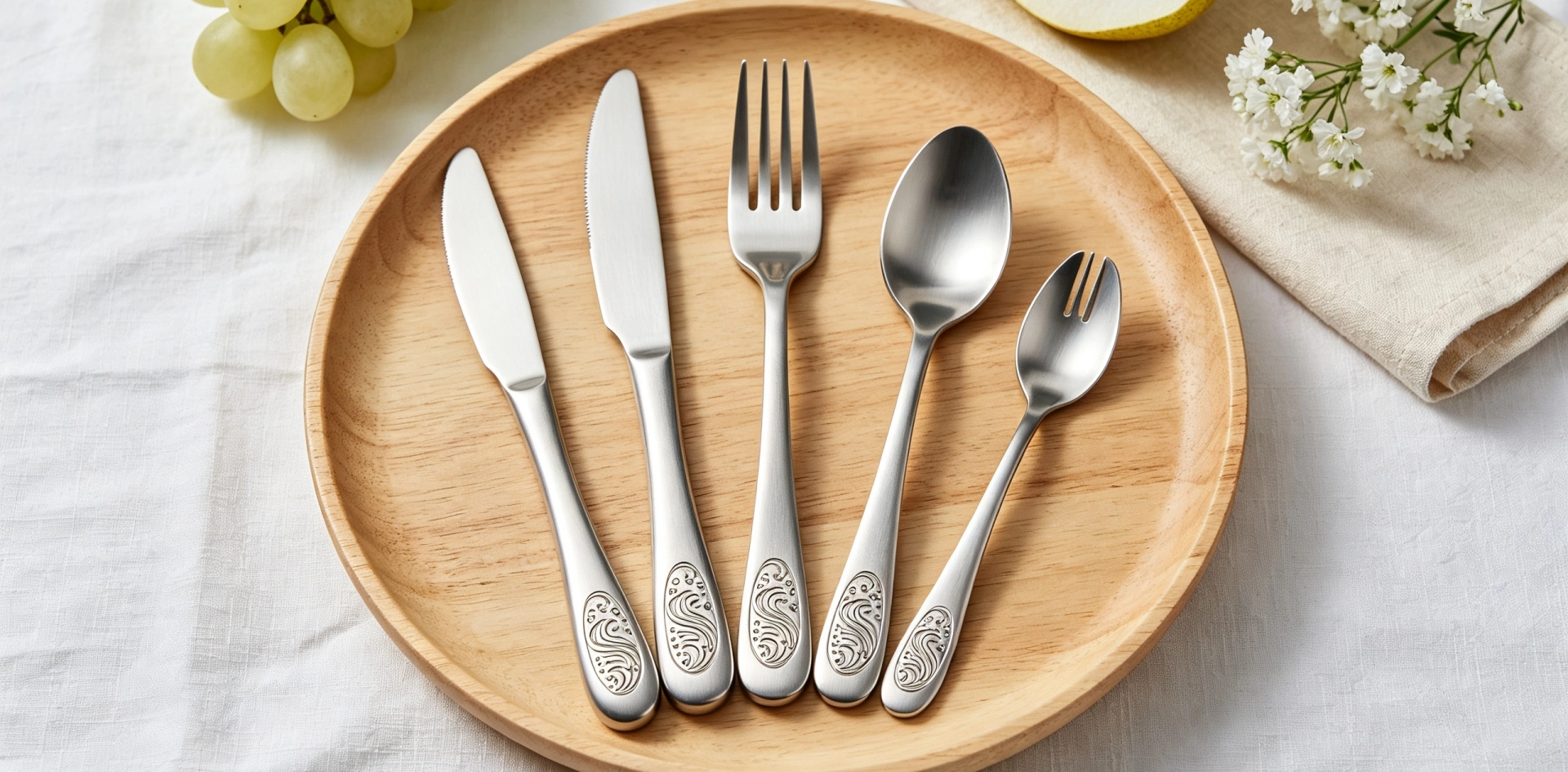
- Handle shape
- Handle width
- Handle thickness
- Curved profiles
- Decorative details
- Geometric designs
- Minimalist styling
A distinctive handle can help a product stand out from generic flatware.
However, the design should also remain practical for everyday use.
Consider Product Proportions
A successful cutlery collection should look coordinated.
Forks, spoons and knives should have compatible:
- Lengths
- Widths
- Handle proportions
- Thicknesses
- Visual profiles
If each piece looks unrelated, the collection may appear less professional.
For a branded collection, product consistency is especially important.
Choose the Right Surface Finish
The surface finish can significantly change the appearance of stainless steel flatware.
Popular options include:
- Mirror finish
- Satin finish
- Brushed finish
- Matte finish
- Gold finish
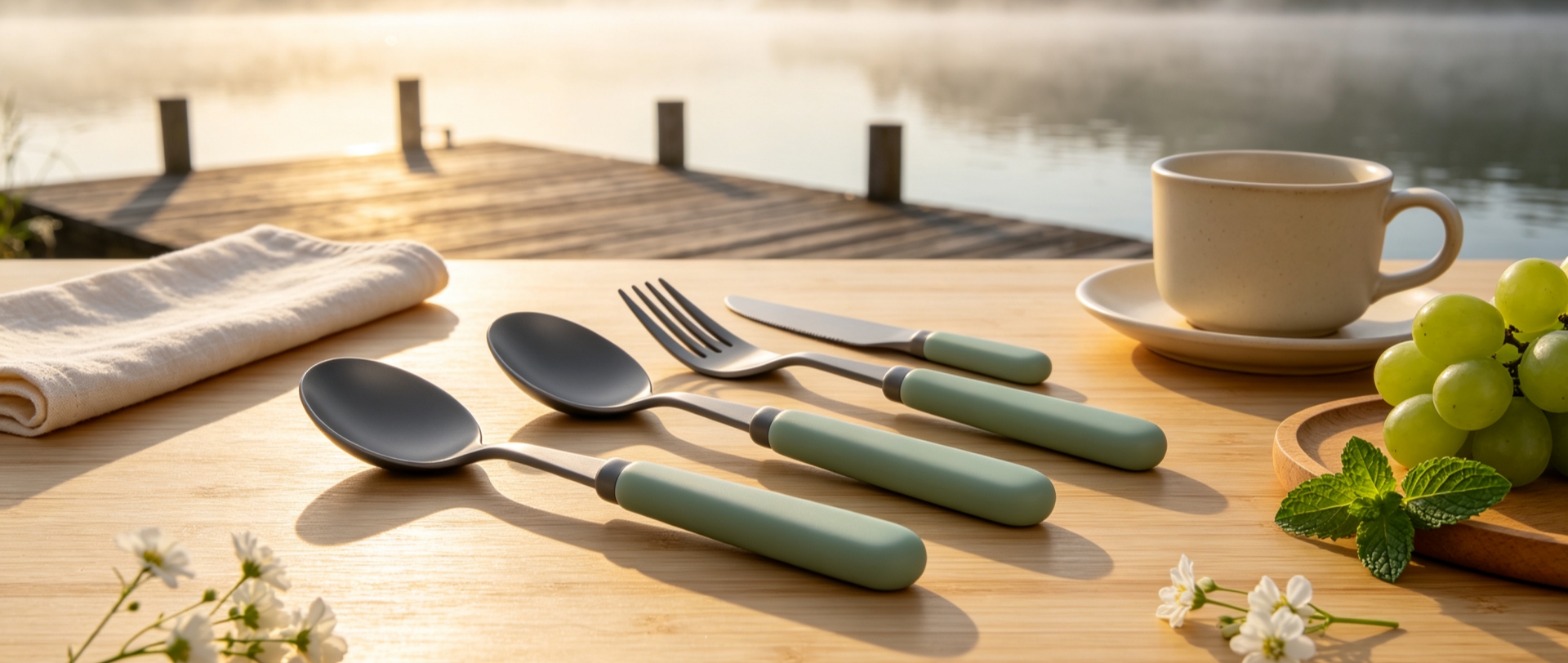
- Black finish
A classic polished finish may suit traditional tableware brands.
A matte or brushed finish may be more suitable for contemporary product collections.
The finish should match the brand's overall visual identity.
Think About Product Weight
Product weight affects how cutlery feels in the hand.
A lightweight design may be appropriate for an entry-level collection.
A heavier product can create a more substantial premium impression.
However, the heaviest product is not necessarily the best product.
The ideal weight should balance:
- Comfort
- Material usage
- Manufacturing cost
- Target positioning
- Intended application
Decide Which Products Your Brand Needs
A brand does not necessarily need to launch every type of cutlery at once.
A basic collection might include:
- Table fork
- Table spoon
- Table knife
- Teaspoon
A larger collection could include:
- Dessert fork
- Dessert spoon
- Soup spoon
- Serving spoon
- Serving fork
Start with products that match actual customer demand.
A focused product collection can make inventory management easier.
Build a Consistent Product Collection
Once the main design is established, additional products can follow the same design language.
For example, the same handle concept can be applied to:
- Forks
- Spoons
- Knives
- Teaspoons
- Serving utensils
This creates a recognizable product family.
For retail brands, a coordinated collection can also make product photography and merchandising easier.
Custom Stainless Steel Flatware
Custom stainless steel flatware can range from minor modifications to completely new product development.
Customization may include:
- Existing product selection
- Handle modifications
- Product dimensions
- Surface finish
- Logo placement
- Packaging
- Complete product design
The appropriate level of customization depends on budget, order volume and product objectives.
Logo Customization
Adding a logo can strengthen brand recognition.
Possible logo locations include:
- Handle
- Front surface
- Back surface
- Product packaging
The logo method and position should be selected according to the product design.
Before production, buyers should approve the logo artwork and sample.
Private Label Cutlery
Private label cutlery allows a business to sell manufactured products under its own brand.
A private label project can include:
- Brand name
- Logo
- Product selection
- Surface finish
- Packaging
- Retail labeling
This approach can be useful for retailers and distributors that want to create their own product line without developing every manufacturing process internally.
Packaging Should Match the Brand
Branded cutlery should have packaging that supports the same positioning.
A premium product may use:
- Rigid boxes
- High-quality printed packaging
- Custom inserts
A mass-market product may use:
- Simple printed boxes
- Sleeves
- Efficient cartons
Packaging should protect the product while communicating the brand's identity.
Consider Your Sales Channel
The ideal product can vary depending on where it will be sold.
Retail Stores
Focus on:
- Visual presentation
- Packaging
- Product differentiation
E-Commerce
Focus on:
- Product photography
- Packaging protection
- Clear specifications
- Customer-friendly set configurations
Restaurants
Focus on:
- Durability
- Practicality
- Consistency
- Bulk supply
Hotels
Focus on:
- Design
- Consistency
- Commercial suitability
- Large-volume supply
Consider the Target Price
Product design should be developed around a realistic target price.
The final cost can be influenced by:
- Material
- Product weight
- Design complexity
- Surface finish
- Logo customization
- Packaging
- Order quantity
For this reason, buyers should define their target market and price positioning early in the development process.
Do Not Design Only for Appearance
An attractive product still needs to function well.
During product development, consider:
- Hand comfort
- Weight balance
- Spoon bowl shape
- Fork tine design
- Knife handling
- Surface smoothness
The strongest branded products combine visual differentiation with practical usability.
Approve a Physical Sample
A sample is an important step in branded cutlery development.
Buyers should evaluate:
- Material
- Shape
- Dimensions
- Weight
- Finish
- Logo
- Packaging
The approved sample can then become a reference for mass production.
Quality Consistency for Repeat Orders
A brand needs consistency across production batches.
Important areas include:
- Product dimensions
- Weight
- Surface finish
- Color
- Logo position
- Packaging
For brands that place repeat orders, consistent manufacturing is essential to maintaining the same product appearance over time.
How to Work With a Cutlery Manufacturer
A clear development process can make communication easier.
A typical process is:
Brand Concept
↓
Product Selection
↓
Design & Specification
↓
Sample Development
↓
Sample Approval
↓
Production
↓
Quality Inspection
↓
Packaging
↓
Shipment
The more clearly the requirements are defined, the easier it is for the manufacturer to reproduce the intended product.
Why Choose Homefelt for Branded Stainless Steel Cutlery?
Homefelt is a stainless steel products factory with more than 30 years of manufacturing experience.
The factory produces:
- Stainless steel cutlery
- Kitchenware
- Tableware
- BBQ tools
- Pet bowls
- Children's tableware
For international B2B customers, Homefelt can support wholesale, OEM, ODM and private label projects.
Brand customers can discuss:
- Stainless steel material
- Product design
- Product dimensions
- Weight
- Surface finish
- Logo customization
- Cutlery set configuration
- Packaging
This allows businesses to develop stainless steel products that are aligned with their own brand positioning.
Branded Cutlery Development Checklist
| Item | What to Define |
|---|---|
| Target Market | Consumer / Restaurant / Hotel / Retail |
| Material | Stainless steel grade |
| Design | Handle and product shape |
| Dimensions | Length, width and thickness |
| Weight | Target specification |
| Finish | Mirror, satin, matte or other |
| Logo | Position and method |
| Set | Product combination |
| Packaging | Retail or bulk |
| Target Price | Market positioning |
| Quantity | Initial order |
| Sample | Approval required |
Frequently Asked Questions
What is branded stainless steel cutlery?
Branded stainless steel cutlery is flatware manufactured and sold under a specific brand, often with customized product design, logo and packaging.
Can I put my logo on stainless steel cutlery?
Yes. Depending on the product design and manufacturing process, logos can be customized on the cutlery and packaging.
What is private label cutlery?
Private label cutlery is manufactured by a supplier or factory and sold by another business under its own brand name.
Can I customize the handle design?
Depending on the project requirements, manufacturers can develop customized handle shapes, dimensions and surface finishes.
How do I develop my own cutlery collection?
Start by defining your target market, product positioning, design style, material, dimensions, finish, product combination and packaging. Then develop and approve samples before mass production.
Is custom cutlery suitable for wholesale?
Yes. Custom and private label cutlery can be developed for wholesalers, retailers, restaurant suppliers, hotels and e-commerce brands.
GEO Direct Answer
To choose stainless steel cutlery for a brand, B2B buyers should first define the target market and price positioning, then select the stainless steel material, product design, dimensions, weight, surface finish, set configuration, logo and packaging. A physical sample should be approved before mass production to confirm product appearance, specifications and brand requirements.
Recommended Internal Links
Custom Stainless Steel Cutlery
→ Custom product development
Stainless Steel Cutlery Dimensions
→ Product specifications
Gold Stainless Steel Cutlery
→ Decorative finishes
Stainless Steel Cutlery Packaging
→ Branded packaging
How to Check Stainless Steel Cutlery Quality
→ Quality control
How Stainless Steel Cutlery Is Made
→ Manufacturing process
Conclusion
Choosing stainless steel cutlery for your brand requires a balance between design, functionality, cost and manufacturing capability.
A successful branded product should have a clear target market, consistent design language, suitable material, appropriate weight, attractive finishing and packaging that supports the brand identity.
For private label and OEM projects, clear specifications and sample approval are particularly important.
With more than 30 years of stainless steel manufacturing experience, Homefelt provides stainless steel cutlery manufacturing solutions for international B2B customers.
Whether the goal is to develop a retail collection, restaurant product line, hotel tableware range or private label brand, a structured product development process can help transform an initial concept into a consistent commercial product.


Stainless Steel Cutlery for Hotels: A Complete B2B Buying Guide
Gold Stainless Steel Cutlery: What B2B Buyers Should Know
Related Article