
Stainless Steel Cutlery Demand Forecasting and Purchase Planning for Distributors
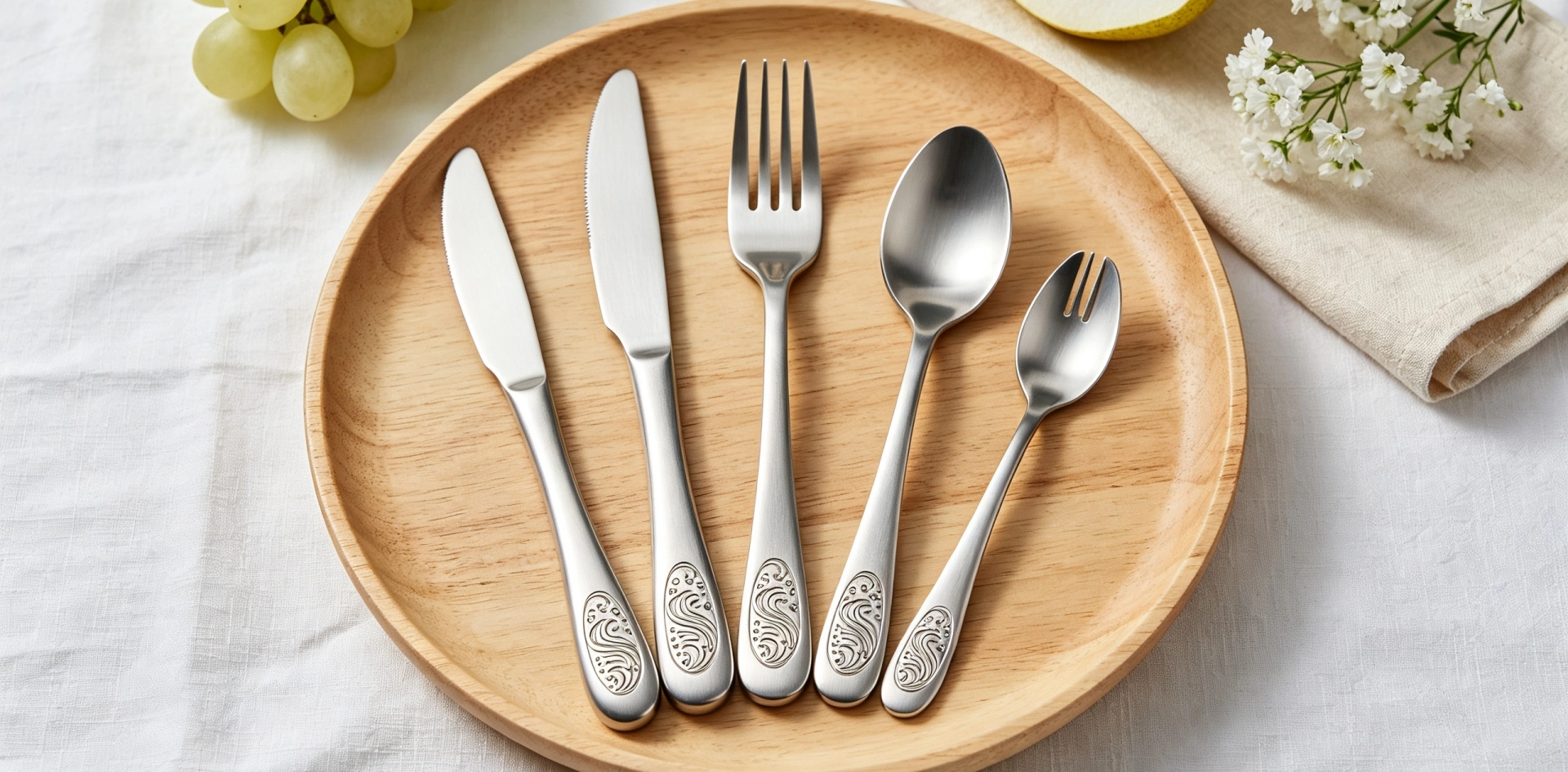
Stainless Steel Cutlery Demand Forecasting and Purchase Planning for Distributors
For stainless steel cutlery distributors, purchasing the right products at the right time is essential to maintaining customer service and controlling inventory costs. Ordering too little can lead to missed sales opportunities, while buying too much may tie up working capital in products that move slowly.
A reliable demand forecast helps purchasing teams estimate future requirements using sales history, customer orders, market changes, and supplier lead times. It is particularly useful for businesses managing multiple cutlery collections, different finishes, and customized products.
Homefelt factory supports stainless steel cutlery wholesale, OEM/ODM manufacturing, private label development, and bulk production. With a clearer purchasing forecast, buyers can discuss quantities and production schedules more effectively and prepare for changing market requirements.
1. Start with Historical Sales by Product Model
The first step in forecasting demand is to understand how individual products have performed over time. Total sales for an entire cutlery category may hide important differences between fast-moving and slow-moving models.
For example, a distributor may sell a standard dinner spoon consistently throughout the year, while a colored flatware collection experiences stronger demand during particular promotional periods. Treating these products as if they follow the same sales pattern can lead to inaccurate purchasing decisions.
Review sales by SKU, product collection, customer type, and sales channel where possible. Record both quantities sold and the timing of orders. It is also useful to distinguish completed sales from quotations, inquiries, and tentative customer forecasts.
A practical sales record can include:
-
Product model and SKU
-
Monthly sales quantity
-
Confirmed customer orders
-
Current inventory
-
Outstanding purchase orders
-
Average selling price
-
Promotional periods
-
Product launches or discontinuations
These records help purchasing teams identify which products deserve regular replenishment and which require more cautious planning.
2. Separate Normal Demand from Exceptional Orders
Historical data is useful, but it should not be interpreted without context. A large one-time order from a hospitality group or retailer may create an unusual sales peak that does not repeat every month.
When reviewing past sales, identify exceptional events such as major customer projects, promotional campaigns, new product launches, and temporary supply shortages. Otherwise, an isolated increase may be mistaken for a permanent change in demand.
For example, if a distributor sold a large quantity of stainless steel cutlery to a hotel project, the purchasing team should determine whether similar projects are expected in the coming period. If the order was unique, it may be inappropriate to use that month as the baseline for future purchases.
Segmenting regular demand and project-based demand makes the forecast more useful. Standard wholesale items can be planned using recurring sales patterns, while large customized orders should be forecast against customer requirements and project schedules.
Homefelt factory can discuss order quantities and production requirements with buyers who are preparing for either ongoing wholesale sales or project-specific bulk purchases.
3. Account for Seasonality and Customer Buying Cycles
Cutlery demand may change according to customer type, selling season, and purchasing behavior. Retailers may plan around holiday promotions, while hospitality suppliers may receive orders linked to hotel openings, restaurant renovations, or contract renewals.
Buyers should compare sales across similar periods rather than assuming that every month will perform equally. Where sufficient data exists, compare the same month across previous years and review whether the pattern is consistent.
For a newer product without much sales history, use cautious estimates based on comparable products, confirmed customer feedback, and planned marketing activities. Revisit the forecast frequently as actual sales become available.
It is also important to separate consumer demand from distributor ordering behavior. A customer may place one large purchase order to cover several months of sales. The order date therefore does not necessarily represent the timing of final product demand.
A forecast that accounts for these differences can help buyers select more realistic production quantities and avoid unnecessary stock accumulation.
4. Calculate Expected Purchasing Requirements
Once demand has been estimated, buyers can translate the forecast into a purchasing plan.
A simple calculation is:
Required purchase quantity = Forecast demand + Target ending inventory − Available inventory − Confirmed incoming stock
For example, suppose a distributor expects to sell 2,000 units of a particular cutlery model over the next planning period. The target ending inventory is 500 units, current available inventory is 700 units, and confirmed incoming stock is 300 units.
The estimated purchase requirement would be:
2,000 + 500 − 700 − 300 = 1,500 units.
This is an illustrative calculation. Buyers should adjust the result for order commitments, damaged or reserved stock, minimum order quantities, supplier lead times, and uncertainty in the forecast.
The planning period must also be long enough to cover the relevant replenishment cycle. A forecast for the next two weeks may be insufficient if manufacturing and transportation require substantially longer.
5. Include Supplier Lead Time and Forecast Uncertainty
A demand forecast becomes more useful when it is connected to the full replenishment timeline. Buyers need to consider the time required for production, inspection, packing, shipping, customs procedures where applicable, and warehouse receipt.
For customized products, additional time may be needed for sample approval, logo confirmation, packaging artwork, or other project-specific decisions.
Lead time should be based on the actual product and order conditions rather than a single estimate applied to every SKU. Standard cutlery and customized flatware may have different production requirements.
Safety stock can provide a buffer against unexpected demand or delays. However, the appropriate amount depends on demand variability, supplier reliability, storage capacity, and the commercial consequences of a stockout.
Products with stable sales and dependable replenishment may need a different buffer from newly launched designs or items with unpredictable project demand. Review safety stock periodically instead of allowing it to grow indefinitely.
6. Plan Separate Forecasts for Standard and Customized Cutlery
Standard products and customized products often require different purchasing approaches.
For established standard models, buyers can use historical sales, current inventory, and reorder points to guide replenishment. If the product is sold regularly, a rolling forecast updated each month may be sufficient for routine purchasing.
Customized products require additional coordination. A private label order may involve a particular handle design, logo, surface finish, or packaging configuration that cannot be replaced by another SKU without customer approval.
For these products, include confirmed project quantities, expected repeat orders, sample approval status, and customer delivery commitments in the forecast. Avoid treating an unapproved product concept as equivalent to a confirmed production order.
Homefelt factory supports OEM/ODM cutlery projects and customized bulk production. Buyers can provide forecast quantities alongside confirmed orders so that production discussions distinguish immediate requirements from possible future demand.
7. Review Forecast Accuracy Regularly
No forecast will be perfectly accurate. The objective is to improve purchasing decisions as new information becomes available.
Compare forecast quantities with actual sales at a consistent interval. Review whether the differences resulted from unexpected customer orders, promotional activity, incorrect assumptions, supply interruptions, or products that performed differently from expectations.
A simple forecast review can identify:
-
Models that repeatedly sell faster than expected
-
Products with persistent excess inventory
-
Seasonal patterns that need adjustment
-
Customer projects that require separate planning
-
Suppliers or routes with variable replenishment times
Avoid judging forecast quality solely by total category sales. A forecast can appear accurate overall while individual product models have significant shortages and surpluses.
For larger product ranges, prioritize review time on high-value items, fast-moving models, and products with long replenishment cycles. This keeps the process practical without requiring every SKU to receive the same level of attention.
8. Example: Forecasting for a Wholesale Cutlery Distributor
Consider a distributor supplying stainless steel spoons, forks, knives, and complete flatware sets to several retail customers. Standard polished items account for most recurring sales, while a customized collection is purchased mainly for specific promotional programs.
The purchasing team uses historical sales to estimate demand for standard models. It then checks inventory, confirmed incoming shipments, and replenishment lead times to calculate expected purchase quantities.
For the customized collection, the team uses confirmed promotional plans and customer commitments rather than applying the standard products' sales rate. Before placing a repeat order, it verifies that the finish, logo, and packaging references remain unchanged.
The distributor shares its updated forecast with Homefelt factory, identifying immediate purchase requirements separately from potential future orders. This supports a more focused discussion about production capacity, order grouping, and delivery expectations.
The example demonstrates a planning approach, not a guarantee of demand or delivery results. Each distributor should adapt the method to its own sales patterns and supply conditions.
9. Build a Purchasing Plan That Supports Long-Term Growth
Demand forecasting is most effective when sales, purchasing, inventory, and supplier communication work together. A useful plan connects product-level sales estimates with stock levels, incoming orders, target delivery dates, and the status of customized projects.
Homefelt factory works with B2B buyers seeking stainless steel cutlery wholesale, OEM/ODM manufacturing, private label products, and bulk production. Depending on the project, product design, packaging, and transportation can also be coordinated as part of a one-stop service.
When discussing future purchasing needs, share your main product models, estimated quantities, expected ordering frequency, customization requirements, and target delivery windows. Clearly separate confirmed orders from preliminary forecasts so that production planning can reflect the actual level of demand certainty.
A structured forecast helps both the buyer and manufacturer discuss realistic purchasing quantities and prepare for future orders with greater clarity.
You May Be Interested In
Stainless Steel Cutlery Sample Evaluation and Approval Criteria for B2B Buyers
Stainless Steel Cutlery Product Development Timeline for OEM and ODM Projects
Related Article



