
Mixed Material Stainless Steel Cutlery for OEM and Private Label Orders
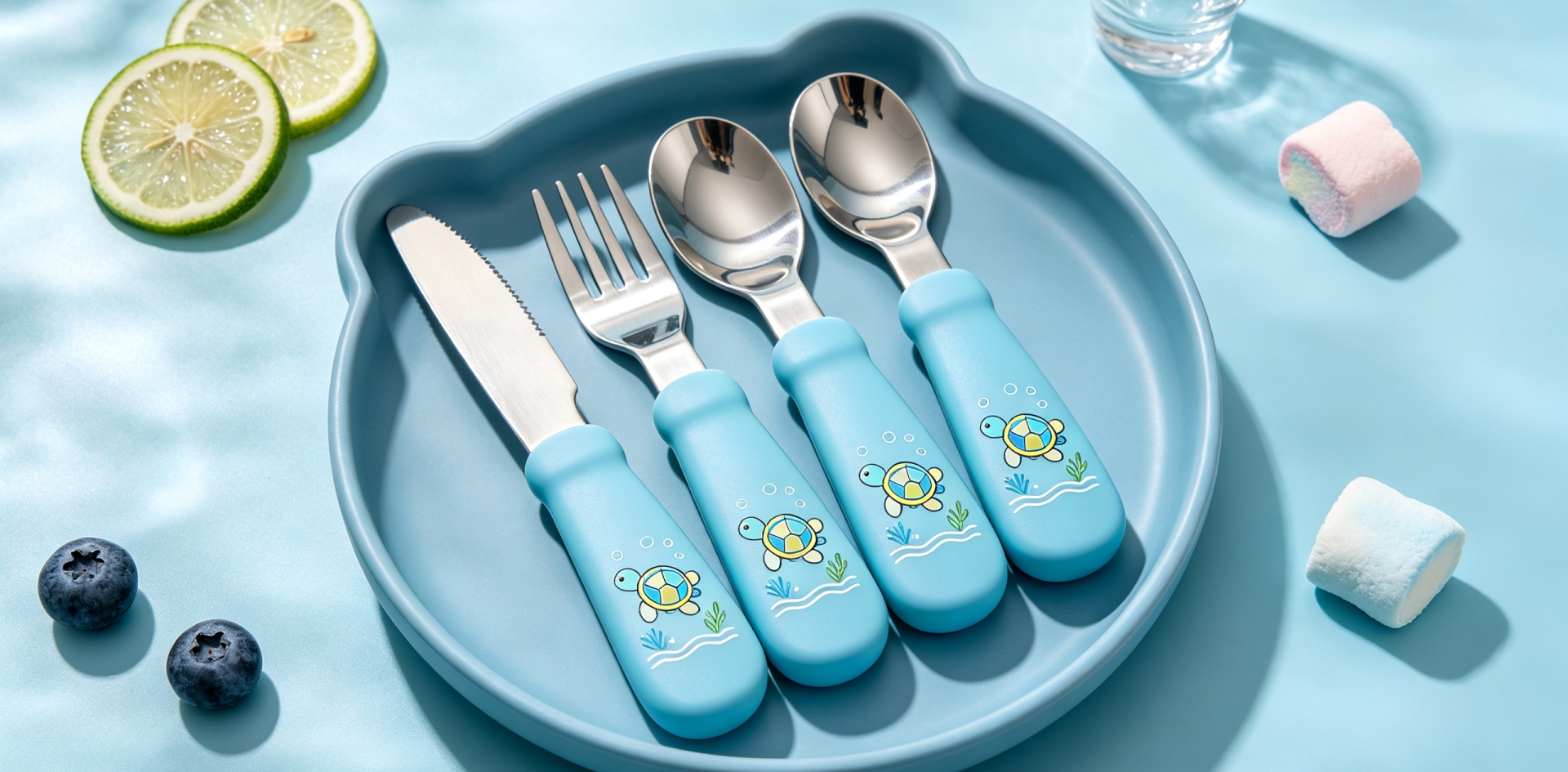
Mixed Material Stainless Steel Cutlery for OEM and Private Label Orders
Stainless steel remains one of the most widely used materials for spoons, forks and knives, but some buyers want a different product appearance and tactile experience. Combining stainless steel with another handle material can create a distinctive cutlery collection for retail, hospitality and private label markets.
Wood, resin, acrylic and other decorative materials can be combined with stainless steel to create products with a different visual character from conventional all-metal flatware.
For B2B buyers, mixed-material stainless steel cutlery requires careful coordination between product design and manufacturing. The materials need to work together as a finished product while remaining suitable for commercial production.
Why Choose Mixed-Material Stainless Steel Cutlery?
A conventional stainless steel spoon, fork or knife has an entirely metal appearance. A mixed-material design introduces another visual element into the product.
This can help a private label brand create a more recognizable collection.
For example, a stainless steel fork with a wood-look handle can provide a warmer appearance, while a resin or acrylic handle can support a more contemporary product concept.
The stainless steel component continues to provide the functional foundation of the spoon, fork or knife, while the additional handle material contributes to the product's visual identity.
For B2B customers, this combination can create a product that is easier to differentiate from standard wholesale flatware.
Wood and Wood-Look Handle Options
Wood handles are often considered when a customer wants a natural or warm appearance.
Real wood and wood-look materials can create different product characteristics, so the buyer should clarify the intended material before production.
For a stainless steel knife, fork or spoon, the handle should be designed as part of the complete product rather than treated as an unrelated decorative component.
The color, texture and appearance of the handle should complement the stainless steel section.
For private label collections, this can help create a consistent product identity across several pieces.
Resin and Acrylic Handle Designs
Resin and acrylic provide another option for customers seeking distinctive stainless steel cutlery.
These materials can support a broad range of visual effects and can be considered for modern or decorative flatware collections.
A resin handle may be developed in a particular color or visual style, while acrylic can provide a different appearance depending on the product concept.
For OEM and ODM projects, the manufacturer needs to consider how the selected material interacts with the stainless steel component and how the finished product will be produced consistently in larger quantities.
Combining Materials Across a Cutlery Collection
When a buyer develops mixed-material stainless steel cutlery, the spoon, fork and knife should still appear as members of the same collection.
The non-metallic handle material can be used consistently across the three pieces, while the stainless steel functional sections retain their individual designs.
This creates a unified product identity without requiring the spoon, fork and knife to have identical shapes.
For example, a private label collection may use the same wood-look handle concept across a stainless steel spoon, fork and table knife.
This type of coordination can make the collection easier to present as one product range.
Material Selection for Different Markets
The appropriate handle material depends on the target market and product positioning.
A distributor serving lifestyle or retail customers may prefer a decorative material that creates a distinctive appearance.
A hospitality supplier may require a product concept that fits a particular dining environment.
A private label brand may select a material based on its existing product identity.
The buyer should therefore discuss the intended application with the factory before confirming the material combination.
This allows the manufacturer to evaluate the product from both a design and production perspective.
Manufacturing Considerations for Mixed Materials
Combining stainless steel with another material introduces additional manufacturing considerations compared with a conventional all-metal product.
The factory needs to evaluate the connection between the materials, the production method, the appearance of the finished product and the expected production quantity.
A design that works for a prototype may need refinement before it is released for large-volume manufacturing.
For OEM buyers, discussing these points at the product development stage can help prevent unnecessary changes later.
The goal is to create a product that is attractive, practical and repeatable in commercial quantities.
Homefelt's Mixed-Material Cutlery Capability
Homefelt factory focuses on stainless steel spoons, forks, knives and flatware sets for OEM, ODM, private label, wholesale and bulk customers.
For customers interested in mixed-material cutlery, the factory can review the proposed combination of stainless steel and the selected handle material.
The project can be developed according to the customer's market, design concept, target quantity and commercial requirements.
Homefelt has more than 40 years of experience in the stainless steel cutlery business and has worked with well-known brands. This manufacturing background provides practical experience in developing stainless steel cutlery for different product concepts.
For a new product, the factory can discuss the design and manufacturing approach before moving into larger-scale production.
What B2B Buyers Should Confirm
Before placing a mixed-material cutlery order, buyers should provide as much product information as possible.
Useful details include:
-
Product type: spoon, fork, knife or complete set
-
Stainless steel requirements
-
Handle material
-
Handle color or appearance
-
Reference product or design
-
Target order quantity
-
Intended market
-
Surface finish
-
Packaging requirements
-
Private label requirements
-
Expected future order volume
This information allows the factory to evaluate the product as a complete commercial project.
For customers who only have a reference photograph or initial concept, the factory can also discuss possible product directions before the final specifications are confirmed.
OEM and Private Label Development
Mixed-material cutlery can be particularly suitable for private label brands looking for a more distinctive product.
Instead of purchasing a completely standard stainless steel collection, the brand can develop a product with its own combination of metal and handle materials.
An OEM customer can provide an existing design for manufacturing, while an ODM customer can work with the factory from an initial product concept.
The result can be a stainless steel spoon, fork and knife collection designed around the customer's own market requirements.
One-Stop Service from Design to Shipment
Homefelt provides one-stop support covering product design, manufacturing, packaging and transportation.
For mixed-material stainless steel cutlery, this allows the product design and commercial requirements to be discussed together from the beginning.
The customer can develop an exclusive service package according to the project, including product development, bulk manufacturing and final shipment arrangements.
This can be useful for private label brands and distributors that need one manufacturing partner to coordinate multiple parts of the order.
Manufacturing Management and Product Requirements
Homefelt has passed or worked with BSCI, SEDEX 4P, BRC and ISO9001 requirements, together with Disney audit experience.
These certifications and audits provide supporting evidence of manufacturing management capabilities.
For a mixed-material cutlery project, the actual product requirements remain the primary reference. The agreed materials, appearance, construction and finished product expectations should be confirmed before bulk production.
This creates a clearer basis for both the buyer and factory when managing a customized order.
Building a Distinctive Cutlery Product
Mixed-material stainless steel cutlery gives B2B buyers another way to develop products beyond conventional all-metal flatware.
The combination of stainless steel with wood, resin, acrylic or other suitable handle materials can create a different visual identity while keeping the spoon, fork or knife at the center of the product.
For private label brands, this can provide an opportunity to develop a recognizable collection.
For wholesalers and distributors, it can create an additional product category with a distinctive appearance.
Homefelt aims to support customers through this development process and build long-term cooperation as their stainless steel cutlery product range expands.
https://www.huabao-homecollection.com/en/inquiry.html
Stainless Steel Cutlery Collection Coordination for OEM and Bulk Orders
Related Article



