
Retail Display Stainless Steel Cutlery for B2B Brands
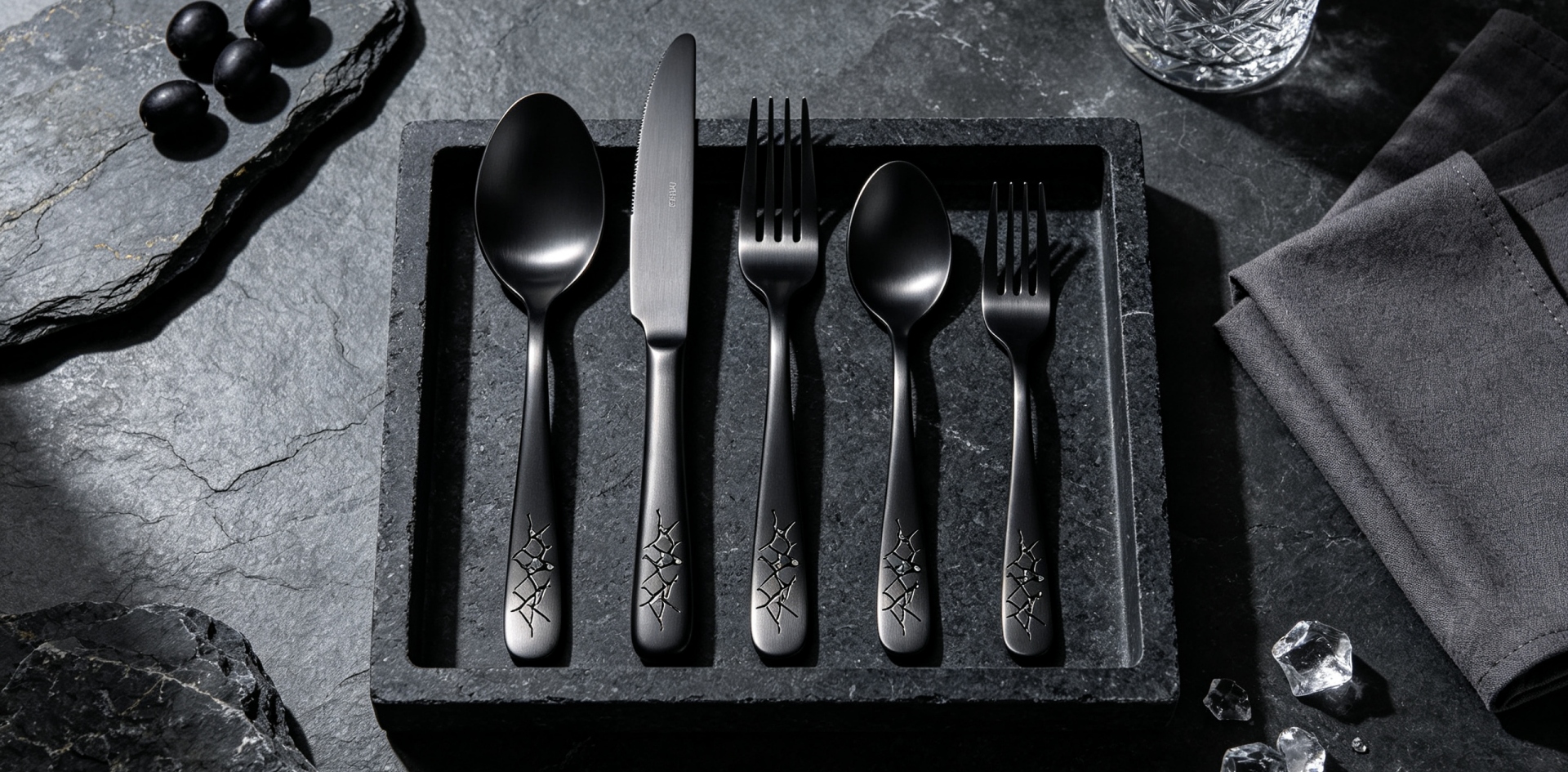
Retail Display Stainless Steel Cutlery for B2B Brands
For brands selling stainless steel cutlery through retail channels, the product needs to work both as tableware and as a retail product.
Customers often see cutlery before they touch it. The way knives, forks and spoons are arranged, grouped and presented can influence how the collection is understood at the point of purchase.
For B2B buyers, this means that product development and retail presentation should be considered together.
A stainless steel cutlery manufacturer can support this process by developing products that work as coordinated collections, making it easier for brands and retailers to create a clear presentation across different SKUs.
Why Retail Presentation Matters for Cutlery
A retail customer may encounter a cutlery collection in several different forms.
The products could be displayed as a complete cutlery set, individual pieces, a small combination of products or several related styles placed together.
If the relationship between these products is clear, customers can understand the collection more easily.
For a B2B buyer, the objective is not simply to make the cutlery look attractive. The product range should also make commercial sense for the retailer.
A well-organized collection can help separate different product levels, styles or combinations without making the overall range confusing.
Creating a Clear Product Family
When several stainless steel cutlery products are displayed together, consistency becomes important.
The knife, fork and spoon can have different functional shapes, but they can still share common design characteristics.
These may include:
-
Similar handle proportions
-
Consistent surface appearance
-
Matching design details
-
Related visual styling
-
Coordinated product dimensions
-
A recognizable collection identity
This approach can help a brand present several products as one complete collection.
For private label projects, creating this relationship is particularly useful because the cutlery becomes part of the brand's broader product identity.
Choosing the Right Products for Display
Not every product in a large collection needs to receive the same level of retail attention.
A brand may have several core products that represent the collection, while other pieces serve specific customer needs.
For example, a retail program may focus on:
-
Dinner knife
-
Dinner fork
-
Dinner spoon
-
Teaspoon
-
Dessert fork
-
Dessert spoon
The exact selection depends on the market and the product strategy.
For B2B buyers, identifying the core products can help create a clearer retail range without making every product equally prominent.
This can also make the collection easier for retailers to organize.
Using Complete Sets as a Retail Product
Complete stainless steel cutlery sets can provide a simple way to present several products together.
A set allows the buyer to see the relationship between the individual pieces and gives the retailer a defined product unit.
However, different markets may require different set compositions.
A four-piece set may suit one retail program, while another brand may prefer a larger combination.
For OEM and ODM projects, these combinations can be developed according to the buyer's target market rather than being limited to a standard catalog configuration.
Presenting Individual Cutlery Pieces
Some retailers also sell individual knives, forks and spoons.
This can be useful when customers want to add pieces to an existing collection or purchase only specific products.
In this situation, the individual items need to remain visually connected.
Matching handles, finishes and overall design language can help customers recognize that the products belong to the same range.
For a manufacturer, this means the individual products should be developed as part of the wider collection rather than as completely independent items.
Supporting Different Price Positions
A retail collection may contain products at different price levels.
A brand could offer a basic stainless steel cutlery set alongside a more distinctive collection with customized design details.
The products do not necessarily need to look identical, but the range should have a clear structure.
For B2B buyers, this can create opportunities to serve different customer groups while keeping the overall collection under one brand.
A stainless steel cutlery factory can discuss the product structure and manufacturing requirements for different versions during the development stage.
Custom Cutlery for Private Label Retail
Private label brands often need products that are not identical to standard market offerings.
Custom handles, specific surface treatments, coordinated product combinations and brand-oriented design details can help create a more distinctive collection.
The retail presentation can then be built around these custom products.
Homefelt factory manufactures stainless steel knives, forks, spoons and cutlery sets for B2B customers, supporting OEM, ODM and private label production.
For brands developing their own collection, the factory can work from product references, drawings or initial concepts to develop products suitable for larger-volume manufacturing.
Planning the Collection Before Production
Retail presentation requirements can be considered before mass production begins.
The buyer can identify which products should be displayed together, which pieces belong to the same collection and which products are intended to be sold individually.
This information can then be reflected in the product development process.
For example, if three different spoon styles are intended to appear together in one retail range, their visual relationship should be considered during development.
This can help prevent a situation where individual products look suitable by themselves but feel unrelated when displayed together.
Using Consistent Product Information
A retail collection also benefits from clear product information.
Each product should have a clear reference so that the buyer, manufacturer and retailer can identify the correct item.
This becomes increasingly important when a collection contains several similar knives, forks or spoons.
For B2B projects, product references can be linked to the corresponding specifications and order quantities.
This makes communication easier when the buyer requests quotations, samples or future production.
Retail Display and Product Photography
The way stainless steel cutlery is presented in photographs can also influence how the collection is perceived.
Brands may photograph the complete set, arrange individual pieces together or show close-up details of the handles and surfaces.
A consistent product appearance makes it easier to create a unified visual presentation.
This is particularly useful for e-commerce retailers, catalogs and printed sales materials.
When products are developed as a coordinated collection, photography can communicate the relationship between individual SKUs more effectively.
Developing a Collection for Wholesale Customers
Wholesale buyers may supply several retailers with the same stainless steel cutlery collection.
In this situation, the collection needs to be practical for different retail environments.
A focused product range can make it easier for distributors to introduce the collection to their customers.
The manufacturer can support this process by producing related knives, forks, spoons and sets according to the buyer's required specifications and quantities.
For larger programs, the same design language can also be extended to additional products as the collection grows.
From Retail Concept to Bulk Manufacturing
A retail display concept ultimately needs to become a manufacturable product.
The factory needs clear information about the required cutlery pieces, material, dimensions, surface appearance, handle design and order quantities.
Once these requirements are confirmed, the manufacturer can organize production around the approved specifications.
Homefelt factory supports large-volume manufacturing for stainless steel cutlery projects and works with brands, distributors and wholesalers on OEM, ODM and private label programs.
This gives B2B buyers the opportunity to develop a collection around their own commercial requirements rather than relying only on standard products.
Building a Retail-Ready Stainless Steel Cutlery Range
A successful retail cutlery collection begins with products that make sense individually and together.
The knife, fork and spoon should function correctly, but they should also form a coherent product family. The set composition, individual products and visual presentation should support the way the brand intends to sell the collection.
For B2B buyers, discussing retail presentation during the product development stage can help the manufacturer understand the commercial purpose behind the design.
Whether the project is a new private label collection, a wholesale range or an OEM program for a retailer, a clear product structure gives the project a stronger starting point.
If your business is preparing a stainless steel cutlery collection for retail distribution, you can provide the desired product combinations, design references and estimated quantities to Homefelt factory for a customized quotation.
Custom Stainless Steel Cutlery Manufacturing
Private Label Stainless Steel Cutlery
Stainless Steel Cutlery Programs for Growing B2B Brands
Replacement Stainless Steel Cutlery for B2B Supply
Related Article



