
Stainless Steel Cutlery Assortment Planning for B2B Buyers
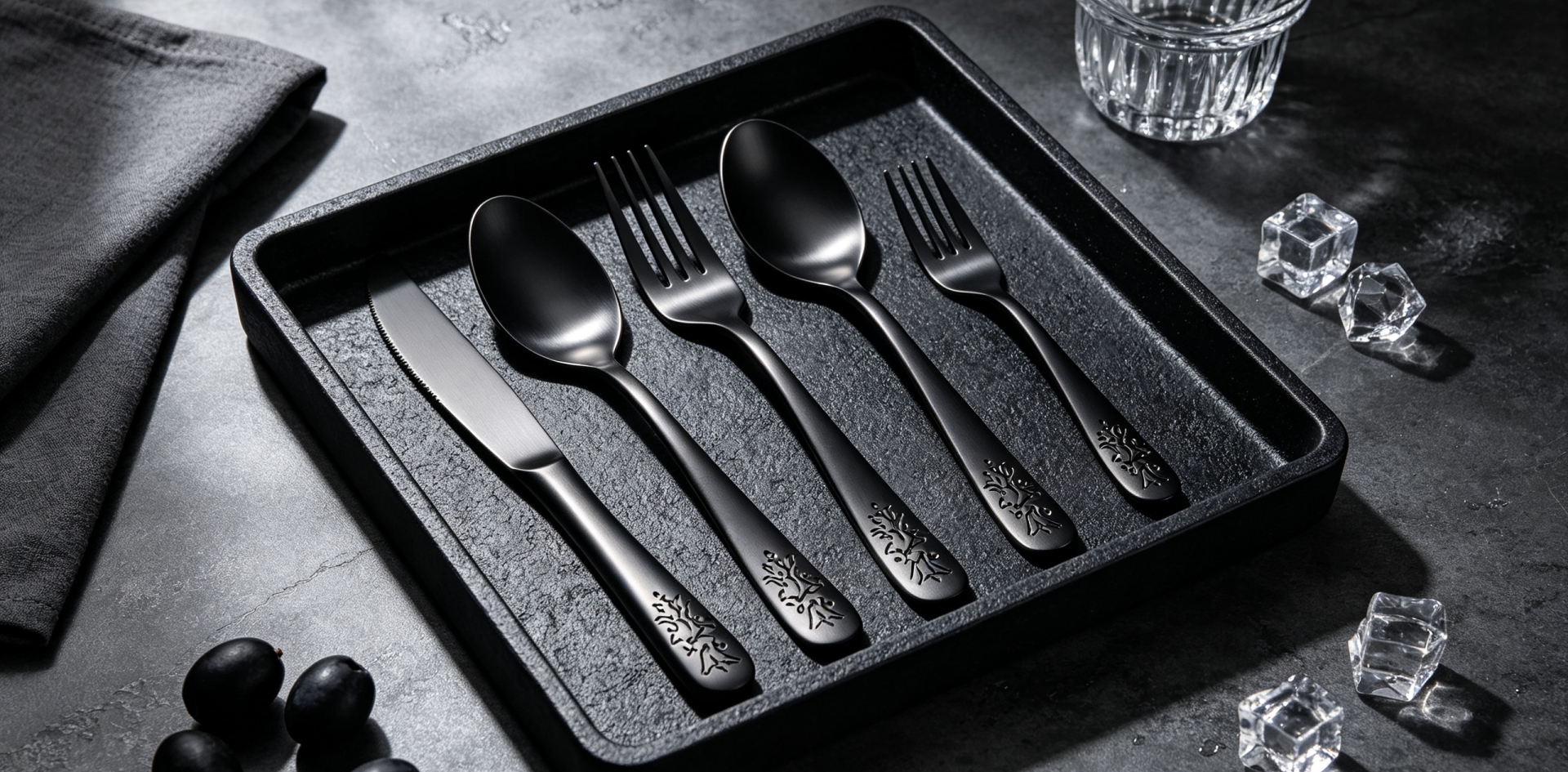
Stainless Steel Cutlery Assortment Planning for B2B Buyers
For a B2B stainless steel cutlery business, offering too few products can limit sales opportunities, while offering too many unrelated products can make purchasing and product management unnecessarily complicated.
The challenge is to build a product assortment that gives customers enough choice while maintaining a clear commercial structure.
For distributors, retailers, importers and private label brands, this often means looking beyond individual knives, forks and spoons and considering how different products work together for different customer groups.
A professional stainless steel cutlery factory can support this process by helping buyers translate market requirements into practical product combinations and production specifications.
Start With the Customers You Want to Serve
A useful cutlery assortment begins with the target customer rather than the factory catalog.
Different buyers may have very different expectations. A retail customer may look for attractive flatware sets, while a distributor may want a wider range of individual SKUs. A commercial buyer may prioritize practical designs and consistent supply, while a private label brand may want distinctive products that support its own positioning.
Understanding these differences helps determine which products should become core items and which should be offered as additional options.
This does not mean creating a completely different collection for every customer. In many cases, several customer groups can share the same core products while using different packaging or product combinations.
Creating Core and Supporting Products
A practical assortment can contain core products and supporting products.
Core products are the knives, forks and spoons that are expected to generate regular demand. Supporting products can add variety or complete a collection.
For example, a basic assortment may begin with a dinner knife, dinner fork, tablespoon and teaspoon. Additional spoon or fork styles can then be introduced according to customer demand.
This structure gives buyers a clear foundation without requiring every possible cutlery type from the beginning.
For a growing brand, it also creates room to expand the range gradually.
Matching Products by Design
Visual consistency can be important when several products are sold as one collection.
A knife and fork with completely different handle proportions may not create the same impression as a coordinated set. When selecting products, buyers should therefore consider handle shape, surface finish, dimensions and overall visual balance.
A stainless steel cutlery factory can review these details when developing matching products.
For OEM and ODM projects, an existing product can also be used as a reference for developing additional knives, forks or spoons that follow the same design direction.
Building Different Product Levels
Some B2B brands serve customers with different price expectations. In this situation, the assortment may need several product levels.
One collection may focus on straightforward designs and efficient commercial use, while another may emphasize more detailed handles, special finishes or premium presentation.
The important point is that each level should have a clear purpose.
Instead of creating many products with only small differences, buyers can define meaningful distinctions between collections based on design, finish, weight, packaging or customization.
This can make the range easier for sales teams and distributors to present.
Considering Set Combinations
Cutlery sets can be another important part of an assortment.
A four-piece set may work for one retail channel, while a larger set may be more suitable for another market. Some customers may prefer individual pieces because they already have their own packaging or sales system.
The same basic stainless steel knife, fork and spoon can therefore support several commercial formats.
When planning an assortment, buyers can consider both the individual products and the possible set combinations.
This allows one product family to serve multiple purchasing needs without requiring completely different manufacturing programs.
Planning Customization Around the Collection
Customization is often more effective when it is considered at collection level.
For example, a brand may want the same handle concept across several stainless steel cutlery products. Instead of customizing each item independently, the buyer can establish a broader design direction and then develop matching pieces.
This can create a stronger identity for the finished collection.
Homefelt factory supports customized stainless steel knives, forks, spoons and complete flatware sets for B2B customers. OEM, ODM and private label projects can be developed around the buyer's design concepts, specifications and target quantities.
Choosing Which Products Need Custom Development
Not every item in an assortment needs to be completely new.
A buyer may use standard factory products for several core SKUs while developing selected products specifically for the brand. This can create a balance between recognizable commercial products and differentiated items.
For example, a standard spoon and fork may form part of the initial collection, while a custom handle is developed for a signature knife.
This approach can make product development more focused and allow the brand to invest customization effort where it creates the most meaningful difference.
Managing Assortment Size
A large product assortment can provide more choice, but it also creates more product references, samples, specifications and packaging requirements.
For B2B buyers, every additional SKU may require ongoing management.
A practical assortment should therefore be large enough to meet customer demand without becoming unnecessarily difficult to control.
A factory experienced in stainless steel cutlery can help buyers review the product structure and determine whether several products can share common specifications, packaging concepts or manufacturing processes.
This can make the collection easier to expand in the future.
Using Market Feedback to Adjust the Range
An assortment does not need to remain unchanged.
After products enter the market, buyers can observe which designs receive more attention, which products generate repeat orders and which items are requested less frequently.
This information can guide future product development.
Popular products may become core items, while slower products can be reduced or replaced. New products can then be introduced based on actual customer requests.
For a stainless steel cutlery brand, this creates a continuous connection between market demand and factory development.
Coordinating Assortment With Packaging
Product assortment and packaging should also be considered together.
A collection may use individual packaging for some products and complete-set packaging for others. Retail packaging may require different labels, inserts or carton configurations depending on the product combination.
If these requirements are planned early, the factory can better understand the complete project.
Homefelt can support stainless steel cutlery projects involving product customization and packaging coordination, helping B2B buyers organize the finished products around their intended sales format.
Supporting Wholesale and Private Label Programs
For wholesalers and distributors, assortment breadth can be important because different customers may require different product combinations.
For private label brands, the priority may instead be a smaller but highly coordinated collection.
Both models can be supported through the same basic manufacturing process: define the product requirements, confirm the specifications, develop samples where needed and then proceed with bulk production.
Homefelt factory works with B2B customers on wholesale, OEM, ODM and private label stainless steel cutlery projects. The product range includes knives, forks, spoons and complete flatware sets.
The factory can discuss different product combinations according to the customer's market, design direction, packaging requirements and expected volume.
Turning an Assortment Into a Long-Term Product Program
A well-planned assortment can become more than a list of products.
It can provide the foundation for future collection development. New handles, finishes, set combinations and complementary cutlery pieces can be introduced while keeping the core design direction consistent.
This gives a brand room to grow without rebuilding the entire product range each time a new item is needed.
For B2B buyers, the value of a stainless steel cutlery factory is therefore not limited to producing today's order. A capable manufacturing supplier can also support the evolution of the product range as market requirements change.
Planning Your Next Stainless Steel Cutlery Assortment
Before contacting a factory, buyers can prepare a basic outline of the assortment they want to develop.
Consider the target customer groups, core products, expected quantities, preferred materials, finishes, packaging formats and areas where customization may be required.
Even an initial idea is enough to begin a discussion.
Homefelt can review product concepts, existing samples or specifications and discuss suitable stainless steel knife, fork, spoon and flatware set options for bulk production.
If you are developing a new B2B cutlery assortment or expanding an existing range, contact Homefelt at ingrid@homefelt.net with your preferred product types, target market and estimated quantities. The factory can discuss customization, OEM/ODM production, private label requirements and bulk manufacturing options.
Custom Stainless Steel Cutlery Assortments
OEM Stainless Steel Flatware Manufacturing
Private Label Cutlery Production
Stainless Steel Cutlery Support for B2B Distributors
Stainless Steel Cutlery Catalog Development for B2B Brands
Related Article



