
Stainless Steel Cutlery Brand Signature for B2B Brands
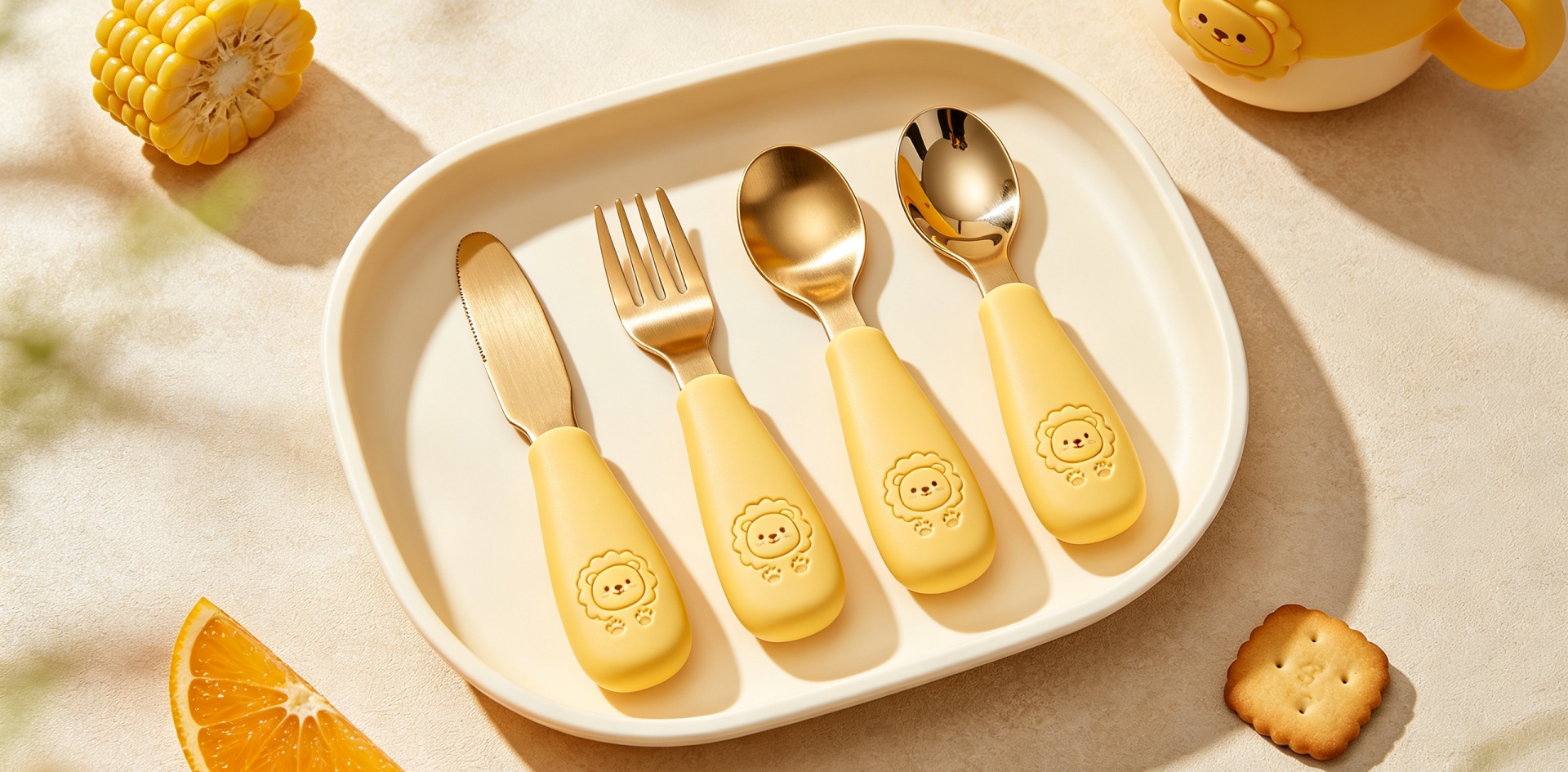
Stainless Steel Cutlery Brand Signature for B2B Brands
A stainless steel cutlery collection can become more recognizable when several products share a few carefully defined characteristics. For B2B brands, this can be useful when the goal is to build a flatware range that customers can associate with the brand rather than simply another standard catalog product.
A brand signature does not necessarily require an unusual shape or complicated decoration. It can come from a combination of subtle product characteristics that are repeated across knives, forks and spoons.
For companies developing OEM, ODM or private label stainless steel cutlery, establishing these characteristics at the beginning of a product program can provide a practical foundation for future product development.
What Is a Cutlery Brand Signature?
A brand signature is a recognizable characteristic or combination of characteristics that helps distinguish one product range from another.
In stainless steel cutlery, this may be expressed through the overall silhouette, handle proportions, transition between sections, surface appearance or another repeatable design element.
The important point is consistency.
One isolated detail may not be enough to identify a collection. When several related characteristics appear across multiple products, however, they can create a recognizable visual language.
For a B2B brand, this can make a knife, fork and spoon feel connected even when their functional shapes are naturally different.
Why Recognition Matters for B2B Flatware
B2B buyers are often developing products that will remain in their assortment for an extended period.
A recognizable cutlery range can make it easier to introduce additional pieces without making every new product feel unrelated to the existing collection.
For retailers, this can support a more coherent product presentation. For distributors, it can make a range easier to organize. For private label brands, it can help establish a consistent visual identity across their stainless steel flatware products.
The objective is not simply to make a product look different.
The stronger approach is to develop characteristics that can be repeated consistently across the collection.
Choosing the Right Signature Elements
Not every design feature needs to become part of a brand signature.
A practical signature should be distinctive enough to be recognizable but flexible enough to work across different types of cutlery.
The handle is often one possible area.
A particular handle silhouette, proportion or transition can be adapted across a dinner knife, dinner fork, tablespoon and teaspoon while respecting the functional requirements of each piece.
Another possibility is the relationship between the handle and the functional head.
A consistent visual transition can create a subtle connection between otherwise different products.
Surface appearance can also contribute, although the visual finish should be considered separately from the fundamental shape of the collection.
Keeping the Signature Subtle
A strong brand signature does not have to be obvious.
In fact, a subtle feature can sometimes provide greater flexibility for long-term product development.
For example, a small change in the handle profile may be repeated across a collection without dominating the entire product. A carefully controlled transition may also create recognition without making the product appear overly specialized.
This can be useful for B2B brands that want their stainless steel cutlery to remain commercially versatile.
The product can have its own identity while still fitting naturally into different dining environments and table settings.
Applying One Concept Across Knives, Forks and Spoons
The biggest challenge is often translating one signature characteristic across different products.
A spoon has a bowl, a fork has tines and a knife has a blade. Their functional heads naturally create different proportions.
The shared identity therefore needs to come from elements that can be adapted rather than copied.
For example, the handle can maintain a similar overall character while the functional head changes according to the product.
The transition between the handle and head can also follow a related visual approach.
This allows the three products to look like members of the same family without compromising their individual functions.
Planning for Additional Pieces
A brand signature becomes more valuable when it can support future products.
A company may begin with a small core collection and later decide to add more pieces. If the signature characteristics were chosen with flexibility in mind, those additional products can follow the established direction.
This can make future development more efficient.
Instead of starting from zero every time, the manufacturer can use the existing collection as a reference.
For OEM and ODM stainless steel flatware programs, this can be particularly useful when the buyer wants to expand the range gradually.
The original products establish the design foundation, while later products are developed as extensions of that foundation.
Balancing Brand Identity and Manufacturing
A brand signature should also be practical from a manufacturing perspective.
A design feature that looks attractive on one sample may become more complicated when applied to several different products or produced in large quantities.
For commercial B2B projects, the manufacturer therefore needs to consider how the selected characteristics can be reproduced consistently.
The shape, transitions, surface treatment and other details should be evaluated together with the production process.
This does not mean that custom products need to look generic.
Instead, the objective is to identify distinctive features that can be manufactured reliably.
Developing Signature Details With a Factory
Working directly with a stainless steel cutlery manufacturer during the development stage can help buyers understand which elements are suitable for mass production.
A buyer may provide reference products, drawings, sketches or a general visual direction. The manufacturer can then discuss how the desired characteristics could be translated into stainless steel knives, forks and spoons.
For a private label project, the discussion can cover the desired appearance as well as material, dimensions, finish and estimated quantities.
At Homefelt factory, B2B customers can develop customized stainless steel cutlery for OEM, ODM and private label projects. The factory supports custom knives, forks, spoons and complete flatware collections for wholesale and large-volume production.
This allows the brand concept to be discussed together with the practical requirements of manufacturing.
Protecting Consistency Across a Collection
Once a brand signature has been established, consistency becomes important.
If a characteristic changes significantly from one product to another, the connection between the products can become weaker.
For this reason, B2B buyers should identify which features are essential and which features can vary.
The essential elements become the foundation of the collection.
Other characteristics can then be adjusted according to the function of each product.
This approach gives the manufacturer enough flexibility to produce practical knives, forks and spoons while maintaining the recognizable character of the range.
Using the Signature in Product Expansion
A recognizable cutlery signature can also support future collection expansion.
For example, a brand may initially launch a core flatware set and later add individual pieces. The same design characteristics can provide a reference for the new products.
This can be particularly useful for private label brands that intend to develop a long-term stainless steel flatware portfolio.
The manufacturer can use the established products as references when developing additional pieces, helping the new products remain visually connected.
Over time, the signature can become a consistent characteristic across the brand's cutlery range.
Avoiding Over-Design
There is a difference between distinctive design and unnecessary complexity.
Adding more details does not automatically make a product more recognizable.
A collection may actually become stronger when it relies on a smaller number of well-controlled characteristics.
For B2B buyers, this can also make the product easier to manufacture and easier to extend.
A clean handle profile, a particular transition or a carefully defined proportion may be enough to create a recognizable appearance.
The most useful signature is one that supports the product rather than distracting from its function.
Considering the Commercial Market
The intended market should influence the type of brand signature selected.
A retail-focused brand may want a distinctive feature that is easy to recognize when customers compare products visually. A hospitality supplier may prefer a more restrained identity that can work across different property concepts.
A distributor may require a collection with broad commercial flexibility.
These different requirements mean there is no single formula for creating a stainless steel cutlery signature.
The buyer should first determine how the collection will be positioned and then select design characteristics that support that commercial direction.
From Brand Idea to Production Specification
Once the signature characteristics have been defined, they can be translated into practical product requirements.
The buyer and manufacturer can identify the required pieces and confirm the relevant dimensions, material, surface treatment and other specifications.
The signature characteristics can then be incorporated into the product development process.
Samples provide an opportunity to evaluate whether the intended visual identity has been successfully transferred to the physical products.
If adjustments are necessary, they can be discussed before larger-scale manufacturing begins.
This process helps connect the brand concept with an actual production specification.
Why This Approach Works for Private Label Cutlery
Private label customers often want more control over how their products appear in the market.
Selecting a standard catalog item may be appropriate for some projects, but brands seeking a stronger identity may prefer to develop their own recognizable characteristics.
A customized stainless steel cutlery range can provide this opportunity.
The brand can define the visual direction, identify the important signature details and work with the factory to determine how those characteristics can be manufactured.
The result is not simply a customized individual product. It can become a recognizable product family.
Building Long-Term Value Through Consistency
A stainless steel cutlery brand signature is most useful when it can remain relevant beyond one product launch.
The same design characteristics can be referenced when new pieces are developed, helping the brand maintain continuity across its assortment.
This can also simplify future communication with the manufacturing partner.
Instead of describing every new product from the beginning, the buyer can refer to the established collection and identify which characteristics should remain unchanged.
For long-term B2B relationships, this can create a more efficient way to develop additional stainless steel flatware products.
A recognizable cutlery signature does not have to rely on complicated decoration or dramatic shapes. The strongest results can come from a small number of carefully selected characteristics that are practical, repeatable and appropriate for the brand.
For B2B buyers, the process begins by deciding what the brand should be recognized for, then translating that idea into knives, forks and spoons that can be manufactured consistently.
Homefelt factory supports OEM, ODM, private label and wholesale production of customized stainless steel cutlery for brands, distributors and other B2B buyers.
Whether the project begins with a drawing, reference product or simple design direction, the goal is to turn the desired brand characteristics into practical stainless steel flatware suitable for commercial production.
Custom Stainless Steel Cutlery for B2B Brands
OEM & ODM Stainless Steel Flatware Manufacturing
Private Label Stainless Steel Cutlery
Custom Knife, Fork and Spoon Manufacturing
Wholesale Stainless Steel Flatware Supplier
Homefelt Factory — Custom Stainless Steel Cutlery & Bulk Production
Stainless Steel Cutlery Burr Control for B2B Production
Stainless Steel Cutlery Passivation for B2B Buyers
Related Article



