
Stainless Steel Cutlery Burr Control for B2B Production
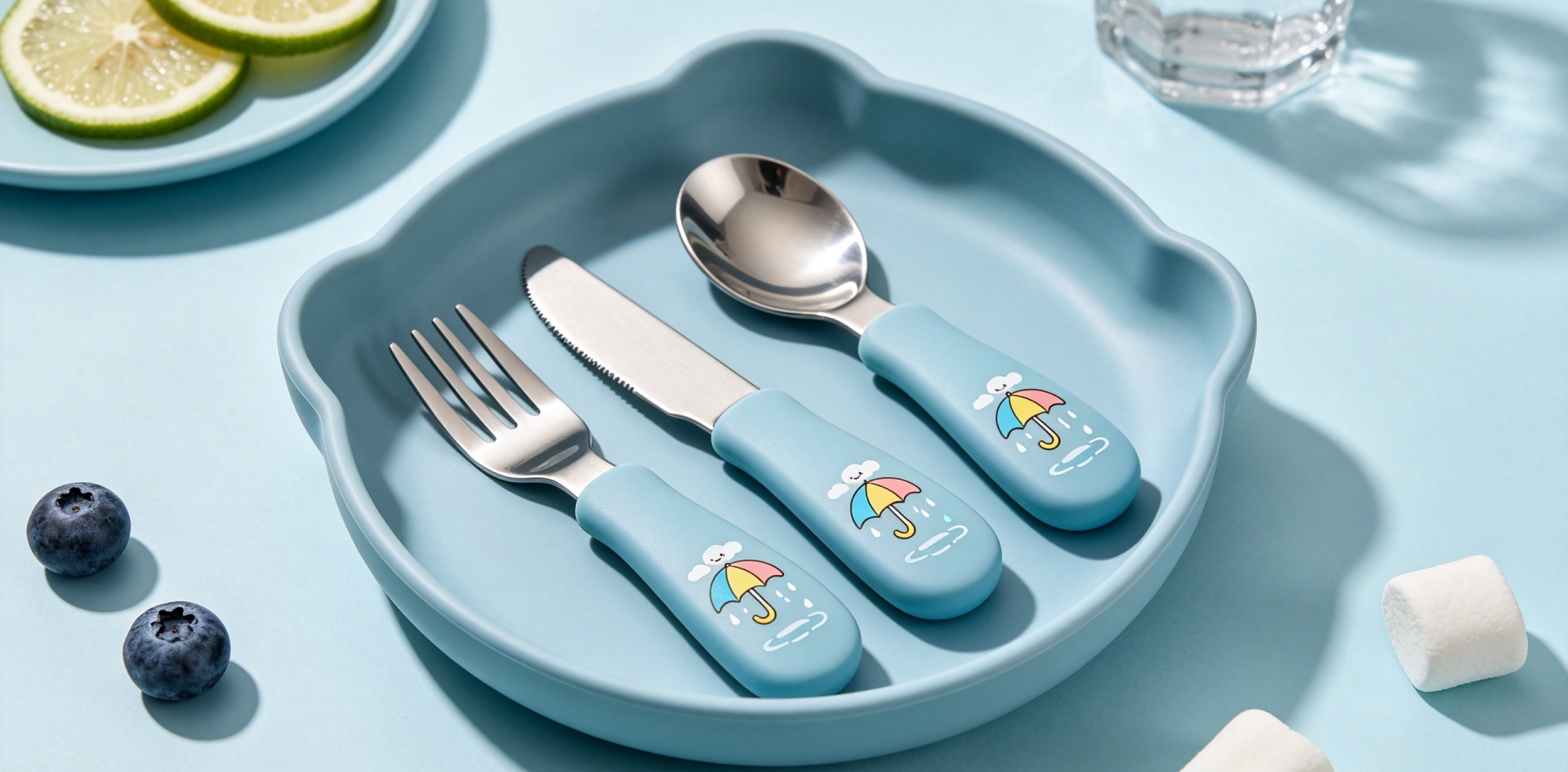
Stainless Steel Cutlery Burr Control for B2B Production
A stainless steel knife, fork or spoon may look simple when it is displayed on a table, but producing a comfortable finished product requires attention to many small manufacturing details. One of these details is burr control.
Burrs are small unwanted projections or rough remnants that can occur after cutting, stamping, forming or other manufacturing operations. For stainless steel cutlery, controlling them is particularly important because the products are handled directly and used repeatedly.
For B2B buyers developing custom flatware, understanding burr control can help when discussing product requirements with an OEM or ODM manufacturer.
What Are Burrs in Stainless Steel Cutlery?
A burr is an unwanted raised edge or small piece of material that can remain after a manufacturing operation.
When stainless steel sheet or components are cut, formed or processed, the resulting edge may not always be completely clean immediately after the operation.
The size and location of a burr depend on factors such as the manufacturing method, tooling condition, material characteristics and production parameters.
On cutlery, these unwanted remnants can occur around processed areas or edges before subsequent finishing operations are completed.
The objective of burr control is to ensure that the finished product does not retain unwanted sharp projections or rough material that could affect handling.
Why Burr Control Matters for Cutlery
Knives, forks and spoons are different from many industrial metal products because users hold them directly.
A fork handle is held in the hand. A spoon may contact the lips. A knife is handled around both the handle and functional areas.
This means that edge condition is an important part of the finished product.
For B2B buyers, burr control is therefore not simply an aesthetic issue. It is part of producing a finished item that is appropriate for normal handling and use.
A clean edge can also contribute to a more consistent overall appearance.
The goal is to make sure that the finished stainless steel cutlery does not have unwanted rough areas resulting from earlier manufacturing operations.
Where Burrs Can Occur During Production
Different stages of cutlery manufacturing can create different opportunities for burr formation.
Cutting operations may leave material along processed edges. Stamping and forming can also affect the condition of an edge or transition area.
Additional machining or processing, where applicable, can create similar considerations.
The exact manufacturing route depends on the design of the cutlery.
A simple product may require fewer processing stages, while a customized design with more complex details may require additional forming or finishing work.
For this reason, burr control should be considered as part of the complete production process rather than as an isolated final step.
Burr Removal and Finishing
Once unwanted material has been created during an earlier production operation, it may need to be removed or controlled through an appropriate finishing process.
The method depends on the location, size and nature of the burr as well as the product design.
Subsequent finishing processes can also influence the final condition of the surface and edge.
For stainless steel cutlery, the objective is not simply to remove visible material. The finished product should maintain the intended shape and appearance after the process.
This is particularly important for customized knives, forks and spoons where the design may include specific transitions, contours or decorative features.
Controlling Burrs Without Changing the Design
One challenge in custom cutlery manufacturing is removing unwanted material without affecting the intended product geometry.
If excessive material is removed from an important area, the original design may change.
This can be particularly relevant around detailed transitions or areas where two sections of a cutlery piece meet.
For OEM and ODM projects, the factory therefore needs to understand which product features are critical.
The buyer may provide drawings, samples or dimensional requirements that define the intended shape. Manufacturing processes can then be selected and controlled with those requirements in mind.
This is one reason why communication between the buyer and factory is important during custom product development.
Tooling and Burr Formation
Tooling can influence the quality of processed stainless steel components.
As production tools are used repeatedly, their condition can change over time. This may affect the way material is cut or formed.
For large-volume B2B orders, consistent tooling performance can therefore contribute to consistent product processing.
The exact relationship depends on the type of tooling and manufacturing operation involved.
A manufacturer with established production controls can monitor the relevant process and determine when tooling attention is required.
For buyers, this means that burr control is connected not only to final finishing but also to the condition and management of the manufacturing process.
Burr Control in Custom Cutlery
Standard catalog products and customized products can have different manufacturing requirements.
A standard design may already have an established production process. A new OEM project, however, may introduce different dimensions, shapes or transitions.
These changes can influence how the product is processed.
For a custom stainless steel cutlery project, the factory should therefore evaluate the production route for the actual design rather than assume that the same process will work identically for every product.
This is especially relevant when a brand wants to develop a distinctive handle or modify the shape of an existing knife, fork or spoon.
The design needs to remain compatible with practical manufacturing processes.
Burr Control Across Different Cutlery Pieces
Knives, forks and spoons each present different manufacturing considerations.
A knife includes a blade and handle. A fork contains multiple tines and a head area. A spoon includes a bowl that must maintain its intended shape.
The locations and types of processed edges can therefore differ from one product to another.
A collection should not be evaluated only from the perspective of one sample piece.
For B2B production, each SKU should be considered according to its own manufacturing route while maintaining the required overall product standards.
This becomes increasingly important when a private label brand is ordering several related pieces at the same time.
Why Burr Control Matters for Private Label Brands
Private label buyers are building products under their own commercial identity.
If a customer receives a large shipment of cutlery, the products represent the buyer's brand as well as the manufacturer's production.
This makes consistent finishing particularly important.
A well-developed specification can identify the expected condition of edges and surfaces so that both sides have a shared understanding of the finished product.
For repeat orders, the same requirements can then be referenced when the product is manufactured again.
This creates a more stable foundation for long-term supply.
Discussing Burr Requirements With a Factory
B2B buyers do not necessarily need to specify every manufacturing method themselves.
Instead, they can clearly communicate the required finished-product condition.
For example, the buyer can provide a reference sample, drawing or description showing the desired edge condition and overall appearance.
The manufacturer can then determine the appropriate production and finishing process.
This approach allows the factory to use its manufacturing experience while ensuring that the buyer's expectations remain clear.
At Homefelt factory, customers can discuss custom stainless steel knives, forks, spoons and complete flatware collections for OEM, ODM and private label production.
The factory supports wholesale and large-volume stainless steel cutlery manufacturing according to agreed product specifications.
From Prototype to Mass Production
Burr control should be considered during product development rather than only after mass production has started.
When a new custom design is sampled, the buyer has an opportunity to examine the physical product and provide feedback.
If an edge, transition or processed area does not meet the expected standard, the issue can be discussed before the design enters larger-scale production.
This can save time compared with discovering the same issue after a large quantity has already been manufactured.
For B2B projects, sample evaluation therefore provides useful information about how the proposed design performs as a physical product.
Maintaining Consistency in Large Orders
Large-volume manufacturing requires repeatability.
It is not enough for one piece to have an acceptable edge condition if subsequent pieces vary significantly.
The manufacturing process should therefore be controlled so that the relevant operations are performed consistently.
This includes the relationship between processing, finishing and final handling.
For buyers ordering thousands of pieces, consistency across the shipment can be just as important as the appearance of the first sample.
A clearly defined product specification and communication with the manufacturer can help establish the expected result.
Burr Control and the Overall Cutlery Experience
Burr control is only one part of stainless steel cutlery manufacturing.
Material selection, forming, polishing, surface treatment, dimensions and final finishing all contribute to the finished product.
A cutlery piece that is well designed but poorly finished may not deliver the expected result.
Likewise, a well-finished product still needs appropriate material and construction.
For this reason, B2B buyers should consider burr control as part of a broader manufacturing system rather than as a standalone quality claim.
The objective is a finished knife, fork or spoon that reflects the complete product specification.
Why Manufacturing Experience Matters
Small manufacturing details can become more significant as product quantities increase.
A factory producing customized stainless steel cutlery needs to understand how design requirements translate into repeatable production.
This includes recognizing where processing may create unwanted material, how finishing affects the final product and how the same requirements can be maintained across large quantities.
Homefelt factory has experience in stainless steel cutlery manufacturing and supports OEM, ODM, private label and wholesale projects.
For customers developing custom knives, forks, spoons or complete flatware sets, production requirements can be discussed according to the specific product design and order quantity.
A clean finished edge may seem like a small detail, but it reflects the relationship between product design, manufacturing processes and finishing control.
For B2B buyers, discussing burr control early can help ensure that a custom stainless steel cutlery project is developed with both appearance and practical handling in mind.
When a product is manufactured in commercial quantities, these small details become part of the overall consistency of the collection.
For brands, wholesalers and distributors looking for custom stainless steel cutlery, working with an experienced manufacturer can help turn product specifications into finished knives, forks and spoons suitable for large-volume supply.
Custom Stainless Steel Cutlery Manufacturing
OEM & ODM Stainless Steel Flatware
Private Label Cutlery Manufacturer
Custom Stainless Steel Knives, Forks and Spoons
Wholesale Stainless Steel Cutlery Factory
Homefelt Factory — OEM, ODM & Bulk Stainless Steel Cutlery Production
Stainless Steel Cutlery Collection Proposals for B2B Buyers
Stainless Steel Cutlery Brand Signature for B2B Brands
Related Article



