
Stainless Steel Cutlery Collection Coordination for OEM and Bulk Orders
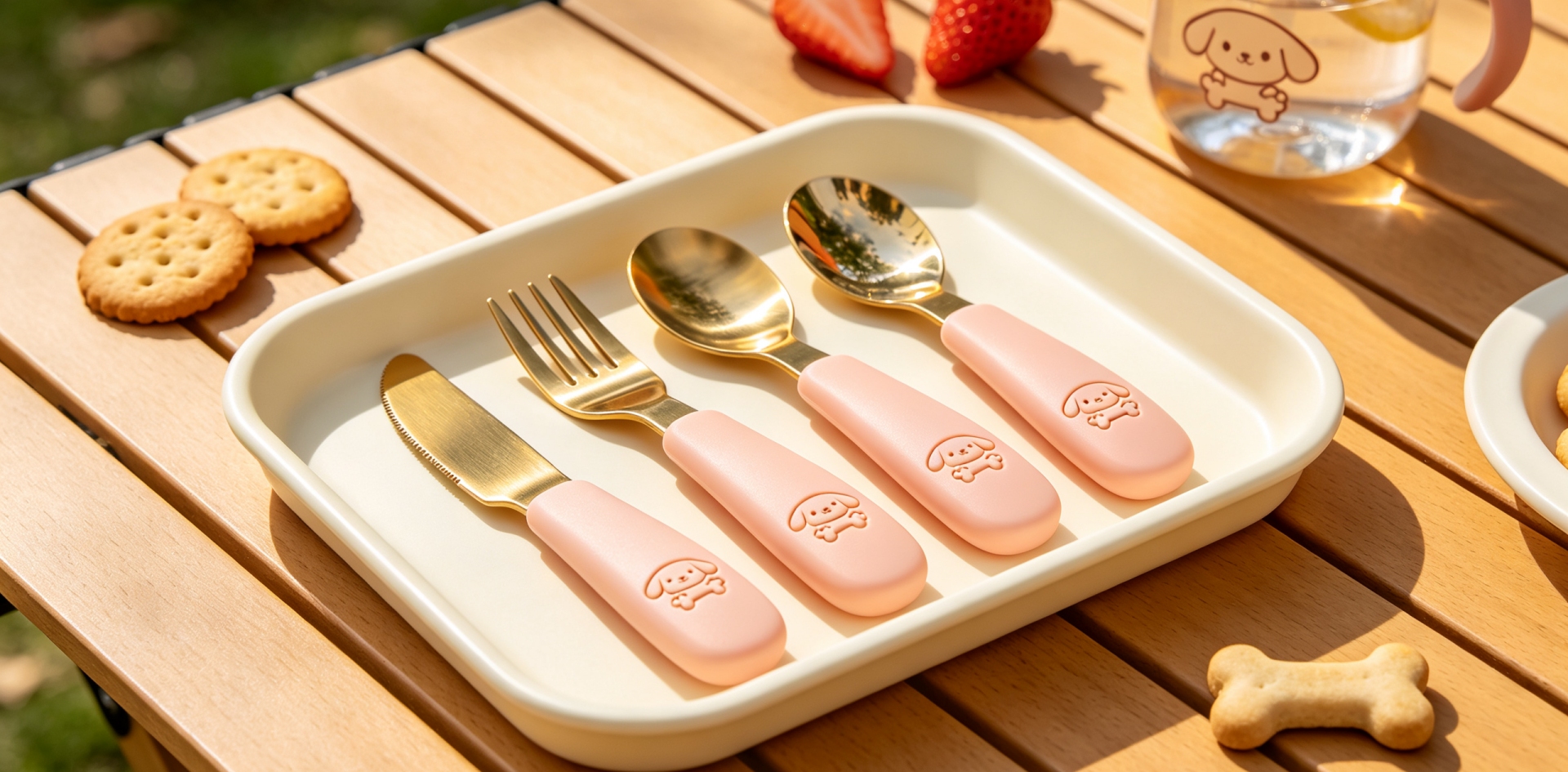
Stainless Steel Cutlery Collection Coordination for OEM and Bulk Orders
When a buyer orders stainless steel spoons, forks and knives as a collection, each product needs to work not only as an individual piece but also as part of the same commercial range. A spoon that looks attractive on its own may not necessarily create the right relationship with the matching fork and knife.
For OEM, ODM and private label buyers, collection coordination is therefore an important part of stainless steel cutlery development.
The objective is to create a group of products with a consistent visual identity, practical positioning and suitable manufacturing requirements while allowing each piece to retain its own function.
Why Collection Coordination Matters
A stainless steel cutlery collection is usually viewed together by the end customer.
When a spoon, fork and knife are placed on the same table, differences in visual character can become noticeable. The pieces may have different shapes because of their functions, but they should still appear to belong to one product family.
For a wholesale distributor, this creates a more complete product offering.
For a private label brand, collection coordination can also help establish a recognizable identity across multiple products.
This is why buyers developing a new collection should consider the relationship between the products from the beginning rather than developing every piece independently.
Creating a Consistent Product Language
Collection coordination begins with the overall design direction.
A modern stainless steel flatware collection may use clean and simple visual features, while a more traditional collection may have a different character.
The spoon, fork and knife should reflect the same design intention.
This can involve the relationship between their overall silhouettes, visual proportions, finishing appearance and handle character.
The purpose is not to make every piece identical. A fork naturally has a different head from a spoon, and a knife has a different functional area.
Instead, the goal is to make their differences feel intentional.
For B2B buyers, this can be particularly valuable when building a private label collection that needs a clear market identity.
Coordinating Different Cutlery Pieces
A collection may contain several types of stainless steel spoons, forks and knives.
The buyer may want a basic table spoon, table fork and table knife as the core products, followed by additional pieces for specific dining requirements.
As the number of products increases, coordination becomes more important.
Each new item should be evaluated against the existing collection rather than designed as an unrelated product.
For example, a new spoon can be reviewed in relation to the existing fork and knife to make sure the complete range maintains a consistent visual direction.
This approach can help prevent a collection from becoming a mixture of unrelated designs.
Collection Coordination for Private Label Brands
Private label brands often need products that can be recognized as belonging to the same brand.
A coordinated stainless steel cutlery collection can support this objective.
The brand may begin with three core products and later expand into additional spoons, forks or knives.
If the original design direction has been clearly established, new products can be developed to complement the existing range.
This provides greater flexibility for future product expansion.
For the manufacturer, understanding the complete collection also makes it easier to consider production requirements across different products.
Homefelt's Approach to Collection Development
Homefelt factory specializes in stainless steel cutlery, including spoons, forks, knives and complete flatware collections for OEM, ODM, private label, wholesale and bulk customers.
The factory can review a collection as a complete product program instead of focusing only on individual items.
For customers with existing products, Homefelt can discuss how new pieces can be developed to fit the established collection.
For customers starting from a new concept, the factory can support the product development process from an earlier stage.
This allows the customer to build an exclusive service package according to the target market, product positioning and purchasing requirements.
Balancing Design and Manufacturing
A coordinated collection also needs to remain practical for manufacturing.
A visually attractive design may contain features that are difficult to reproduce consistently at large quantities.
For OEM and bulk orders, the design therefore needs to be considered together with production feasibility.
The manufacturer can review the proposed collection and identify areas that may require adjustment before mass production.
This does not mean reducing the originality of the product. Instead, it helps translate the design concept into a repeatable stainless steel cutlery product.
For a private label brand, this balance is important because the collection needs to look distinctive while remaining commercially practical.
Managing Multiple Products in One Order
Large cutlery collections can involve multiple products and quantities.
A buyer may order several spoon, fork and knife models at the same time, with different quantities for each item.
The manufacturer needs to understand how these products relate to one another so that the collection remains consistent throughout production.
This is particularly relevant for distributors who purchase a complete range rather than one individual product.
The collection approach allows the buyer to discuss the entire commercial program with the factory instead of handling every SKU as an isolated purchase.
Experience Behind the Product
Homefelt has more than 40 years of experience in the stainless steel cutlery business and has worked with well-known brands.
This experience supports the development of stainless steel spoon, fork and knife collections for different commercial requirements.
The factory has also passed or worked with BSCI, SEDEX 4P, BRC and ISO9001 requirements, together with Disney audit experience.
These credentials provide supporting evidence of manufacturing management. For an individual collection, however, the agreed product requirements and approved design remain the practical basis for production.
From Product Concept to Finished Collection
A successful cutlery collection normally develops through several stages.
The buyer first establishes the product direction and target market. The manufacturer then reviews the proposed designs and discusses the practical production requirements.
Once the products are confirmed, the factory can organize manufacturing and coordinate the packaging and transportation requirements.
Homefelt provides one-stop service covering product design, manufacturing, packaging and transportation.
This can simplify communication for customers who want one manufacturing partner to coordinate the complete stainless steel cutlery project.
OEM, ODM and Bulk Production Options
Different buyers can approach collection development in different ways.
An OEM customer may already have established product designs and require the factory to manufacture them.
An ODM customer may need assistance developing a collection from an initial concept.
A private label brand may want to combine distinctive product designs with branded packaging.
A wholesale distributor may prioritize a commercially practical collection that can be ordered repeatedly in bulk quantities.
Homefelt can support these different models according to the customer's situation.
The factory's objective is to provide a practical manufacturing solution rather than forcing every customer into the same product structure.
Supporting Future Collection Expansion
Collection coordination becomes even more useful when a product range is expected to grow.
A brand may begin with a basic stainless steel spoon, fork and knife and later add other cutlery pieces.
If the original collection has a clear visual direction, future products can be developed to complement it.
This can help create a stronger and more recognizable flatware range over time.
For long-term B2B customers, the ability to expand a collection while maintaining its overall identity can be an important part of supplier cooperation.
Homefelt aims to grow together with customers by supporting product development, manufacturing and future bulk supply.
Mixed Material Stainless Steel Cutlery for OEM and Private Label Orders
Stainless Steel Cutlery for Hospitality Projects and Bulk Orders
Related Article



