
Stainless Steel Cutlery Collection Design Coordination for OEM and Private Label Programs
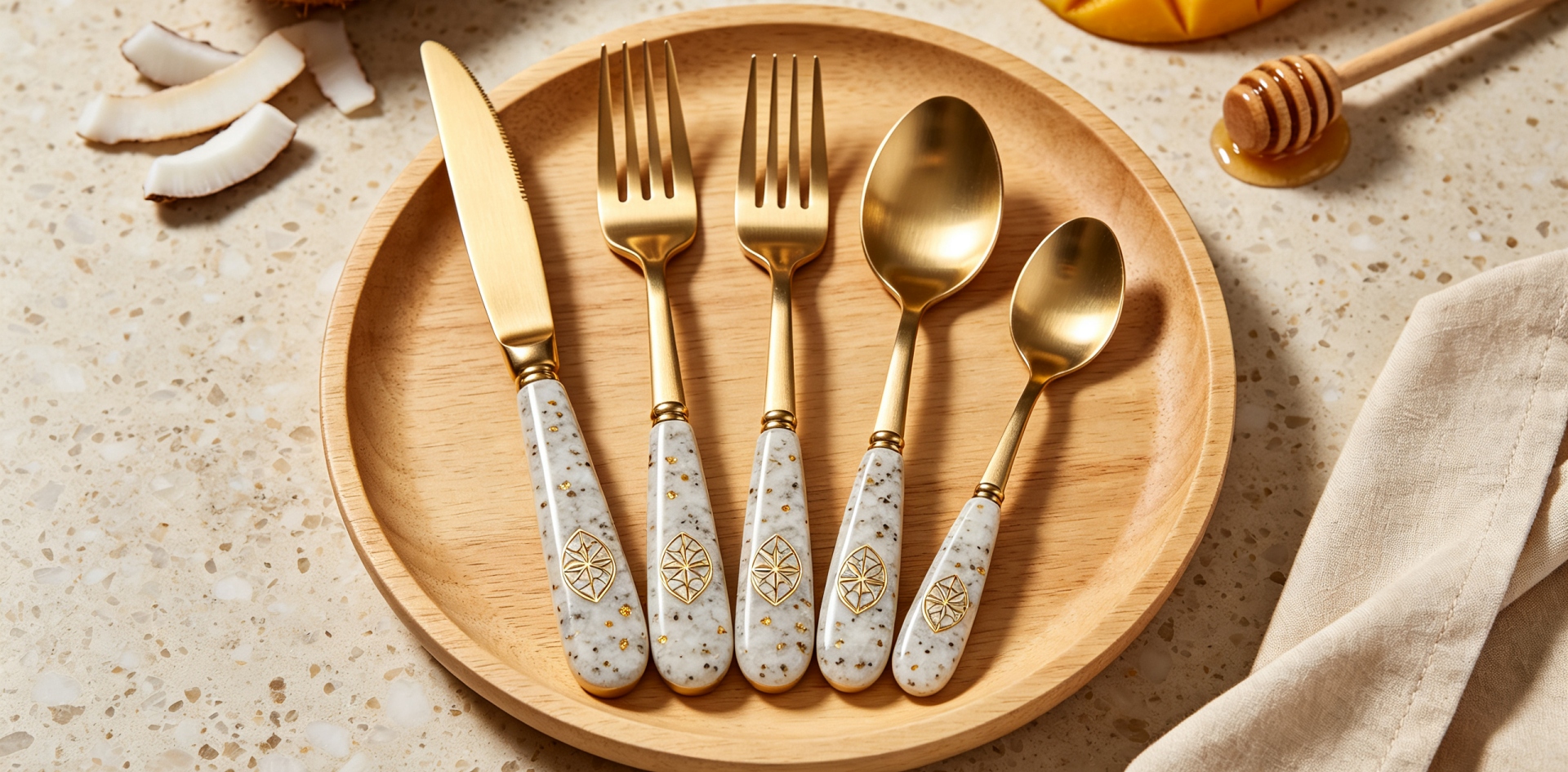
Stainless Steel Cutlery Collection Design Coordination for OEM and Private Label Programs
A successful stainless steel cutlery collection needs more than a group of attractive individual products. Spoons, forks and table knives should look coordinated, meet the needs of the target market and follow specifications that can be reproduced during bulk manufacturing. For importers, retailers, distributors and hospitality suppliers, collection design coordination helps create a recognizable product range while simplifying sourcing and replenishment.
Homefelt factory supports OEM, ODM, wholesale and private label stainless steel cutlery projects. By reviewing the relationship between product appearance, dimensions, materials, finishing and packaging before production begins, buyers can develop collections that are practical to manufacture and easier to manage over time.
Why Collection Coordination Matters
Buyers often select cutlery piece by piece during early product development. A spoon may have an attractive handle, a fork may feature a suitable head shape, and a table knife may meet functional requirements. However, placing these products together can reveal differences in visual weight, handle proportions, surface reflection or decorative details.
These differences may be intentional in a contemporary collection, but they should be part of the design rather than accidental outcomes. When a product range is intended to look uniform, uncoordinated details can weaken its overall presentation.
For retail brands, consistent design supports shelf presentation and product recognition. For hospitality projects, coordinated flatware contributes to a consistent table setting. For distributors, a well-organized range can make it easier to present entry-level, mid-range and premium options to different customers.
Collection coordination does not mean every item must have identical dimensions or construction. It means the differences between products should follow a clear design direction.
Establish a Shared Design Language
The first step is to define the visual characteristics that should connect the collection. These may include handle geometry, edge contours, decorative lines, surface finish, end shapes and the relationship between the handle and functional head.
For example, a collection may use gently tapered handles and a polished finish. The spoon, fork and knife can retain their different functional shapes while sharing the same handle language. A more decorative range may use engraved lines or a distinctive handle end, with those features repeated consistently across the selected pieces.
Buyers should distinguish essential design features from optional variations. Essential features may include the main handle outline, logo position and finish. Optional variations may include additional serving pieces, alternative sizes or a different packaging format.
This distinction helps control product development. It also reduces unnecessary revisions when a collection expands to include teaspoons, dessert forks or other compatible items.
Coordinate Dimensions Without Forcing Identical Proportions
Spoons, forks and table knives perform different functions, so their dimensions should be selected individually. Collection coordination comes from maintaining an appropriate relationship between those dimensions.
Useful specifications include overall length, handle length, handle width, handle thickness, spoon bowl dimensions, fork head dimensions and knife blade geometry. Buyers should also consider the relative visual weight of each piece. A very wide handle paired with a narrow functional head may create a different impression from a slim, balanced design.
A technical specification sheet should identify each item separately rather than applying one set of measurements to the entire collection. For example, a dinner spoon and a teaspoon may share the same handle motif but require different overall lengths and bowl sizes.
When the collection is intended for a specific market, buyers can provide reference products, target dimensions or technical drawings. The manufacturer can then review which characteristics should remain consistent and which need to change according to product function.
All final dimensions and tolerances should be confirmed during sample development. This gives the production team a clear basis for tooling, forming, finishing and inspection.
Align Materials and Surface Finishes
Material selection is another important part of coordinated collection development. Stainless steel grades such as 18/10, 18/8 and 18/0 may be considered depending on the project specification, intended application, cost target and corrosion-resistance requirements.
The selected material should be recorded for each product. If a collection includes items with different construction methods or material combinations, those differences should be stated clearly in the technical documents.
Surface finishing also requires coordination. Mirror polishing produces a bright reflective appearance, while satin finishing creates a more subdued visual effect. Decorative treatments may introduce additional differences in texture or reflectivity.
Even when products use the same named finish, the visible result can vary with surface geometry and the angle at which light reaches the item. Buyers should therefore review the full spoon, fork and knife set together under suitable lighting instead of approving each piece independently.
For colored or specially treated cutlery, the project specification should additionally identify the required finish, color reference and applicable acceptance criteria. Where relevant, confirm whether testing or supporting documents are needed for the particular treatment.
Develop and Approve a Representative Sample Set
A representative sample set is more useful for collection review than isolated product samples. It allows buyers to compare the complete range and identify inconsistencies before committing to bulk production.
During evaluation, review the following points:
-
Handle shape and decorative details across all pieces
-
Proportions between handles and functional heads
-
Material and finish consistency
-
Logo size, placement and legibility
-
Overall appearance when the items are displayed together
-
Packaging arrangement and product identification
Record any approved changes and maintain a reference sample for future comparisons. If a handle shape, finish or logo position changes after approval, the revised sample should be reviewed before the updated specification is released.
For OEM and ODM projects, clear version control is especially useful when several products are being developed at the same time. Each SKU should have its own identification, drawing or specification, while the collection document records the shared design features.
A Practical Example: Building a Retail Flatware Range
Consider an importer planning a stainless steel cutlery range for supermarkets and online retailers. The initial program includes dinner spoons, dinner forks, table knives and teaspoons. The buyer wants the products to share a modern appearance but also needs different pack sizes for individual shoppers and family households.
The development team first defines the common handle design, surface finish and logo treatment. Each product then receives its own dimensional specification based on its intended function. The complete sample set is reviewed together, and any differences in appearance are documented.
The packaging team subsequently matches product identification and presentation across the various pack sizes. The buyer can offer different set configurations without creating unrelated-looking products.
This approach gives the distributor a coherent collection while allowing flexibility in assortment, packaging and target price. It also provides a documented foundation for future additions or repeat orders.
Manufacturing and Documentation for Coordinated Collections
Once the design is approved, the collection must be translated into clear production requirements. Homefelt factory can support stainless steel cutlery projects involving product customization, OEM and ODM development, wholesale supply, private labeling and large-volume production.
A coordinated project may require individual product specifications, approved samples, finish references, logo artwork, packaging details and a consolidated SKU list. These documents help production and quality teams understand both the requirements of each item and the features that connect the range.
Inspection criteria should be defined according to the product and customer requirements. Depending on the project, checks may include dimensions, appearance, material identification, logo quality and packaging accuracy. Applicable material certificates and product-specific test reports can be discussed where required.
Homefelt has experience in stainless steel cutlery manufacturing and international customer projects. Its business credentials include BSCI, SEDEX 4P, BRC and ISO 9001 audit or certification experience, as well as Disney audit experience. FAMA and FSC certificates are available for applicable projects. Buyers should confirm the specific documentation relevant to their order rather than assume every certificate applies to every product.
Beyond manufacturing, the service process can include product design coordination, packaging development and transportation planning. Organizing these elements together helps buyers manage the collection as a complete commercial project.
Maintain Consistency as the Collection Grows
A cutlery collection may expand after its first launch. New sizes, additional pieces, revised packaging or market-specific versions can be introduced while preserving the original design direction.
Before adding a product, buyers should identify which specifications can be shared with existing items and which require separate approval. New pieces should be checked against the collection's reference samples, and all changes should be recorded in the relevant product documentation.
This process is valuable for distributors and private label brands that reorder products over several seasons. It reduces the risk of gradual design differences and helps keep product information aligned across purchasing, manufacturing and quality control.
You May Be Interested In
Stainless Steel Cutlery Table Setting Planning for Hospitality and Bulk Procurement
Stainless Steel Cutlery Handle Grip Comfort Evaluation for OEM Product Development
Related Article



