
Stainless Steel Cutlery Collection Proposals for B2B Buyers
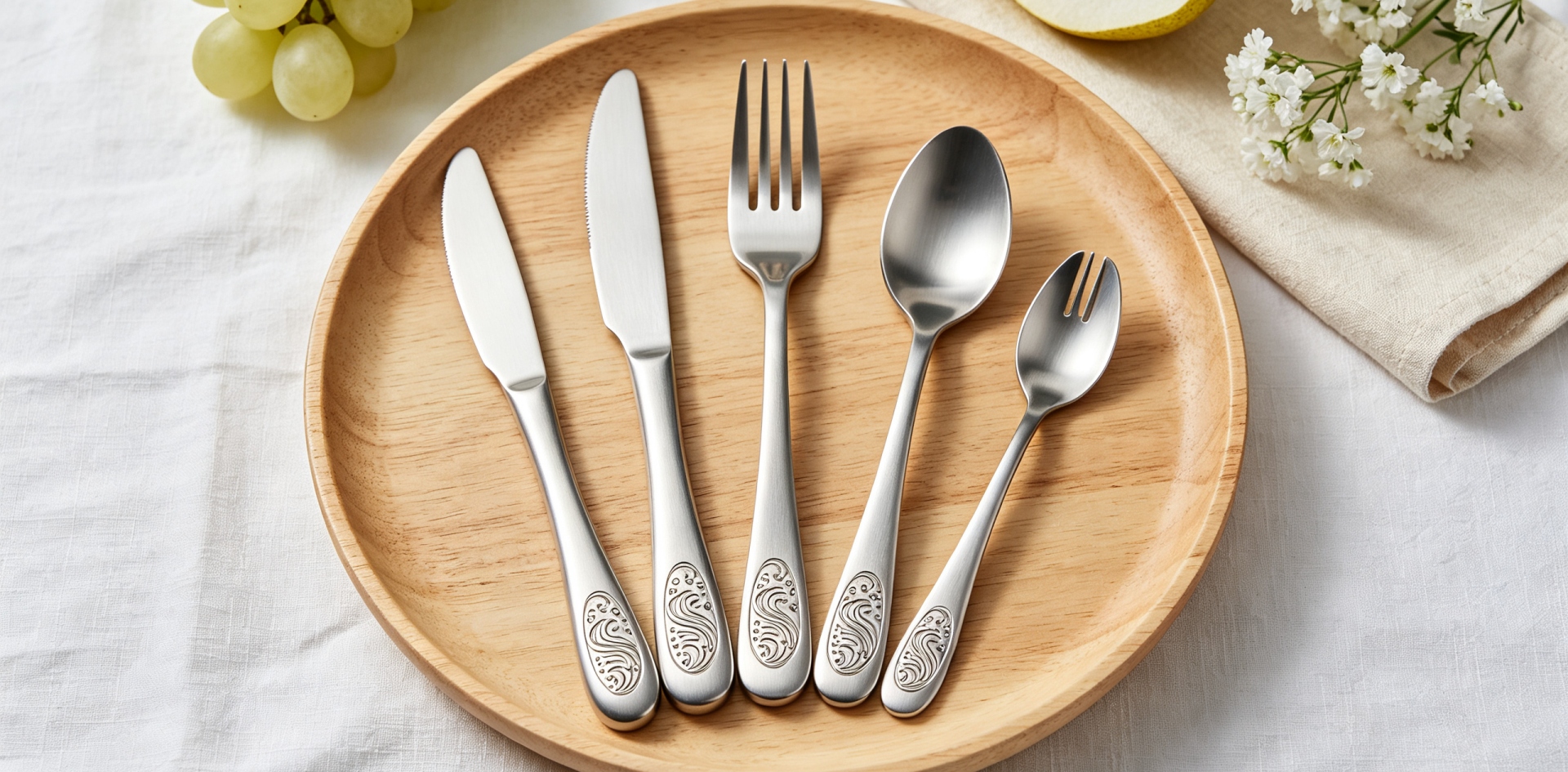
Stainless Steel Cutlery Collection Proposals for B2B Buyers
When a B2B buyer is developing a new stainless steel cutlery range, the first conversation with a manufacturer often begins with a collection idea rather than a finalized purchase order.
The buyer may know the target market, preferred design direction and approximate product range, but the exact combination of knives, forks and spoons may still be under development.
A clear collection proposal can help turn that early idea into a practical manufacturing discussion.
For wholesalers, distributors, retailers and private label brands, a well-organized proposal gives the stainless steel cutlery manufacturer a better understanding of what the customer wants to develop and which products should be considered together.
Starting With the Purpose of the Collection
Before selecting individual products, it is useful to define why the collection is being developed.
A retailer may be preparing a new flatware range for its own brand. A distributor may want to add a new category to its existing product portfolio. A hospitality supplier may be developing products for several customer groups.
These different objectives can lead to very different product requirements.
The collection proposal does not need to contain every final specification at the beginning. Instead, it should establish the commercial direction and provide enough information for the manufacturer to understand the project.
This creates a useful starting point for discussing custom stainless steel flatware.
Defining the Core Cutlery Pieces
A collection proposal should clearly identify the basic products under consideration.
For many projects, these may include a dinner knife, dinner fork, tablespoon and teaspoon. Other projects may require different combinations depending on the target market.
The important point is to distinguish between core products and possible additions.
This helps the manufacturer understand which pieces are essential to the initial project and which products may be considered later.
For B2B buyers, this can make the development conversation more focused without limiting future expansion.
Creating Relationships Between Products
A cutlery collection should normally have a visual and functional relationship between its individual pieces.
The proposal can therefore explain which products are intended to belong to the same family.
The knife, fork and spoon may share a common handle direction, similar proportions or related surface treatment. The individual pieces still need to function differently, but their overall appearance should feel coordinated.
For OEM and ODM projects, this information gives the manufacturer a clearer reference when evaluating several products as one collection.
It also helps prevent the development process from becoming a series of unrelated individual items.
Separating Confirmed Requirements From Open Decisions
Not every part of a new collection will be finalized at the beginning.
A buyer may already know the required stainless steel grade but still be deciding between two surface finishes.
Another customer may have confirmed the handle concept but not yet determined the final set combinations.
A useful proposal can separate confirmed information from items that are still open for discussion.
This allows the manufacturer to work with the information already available while identifying the points that need further confirmation.
For B2B projects, this can make early communication much more efficient.
Including Customization Requirements
If the collection is intended for private label or OEM production, customization requirements should be identified as early as practical.
These may include a custom handle design, logo application, specific surface treatment, special dimensions or a particular combination of products.
The buyer does not necessarily need to provide a complete technical specification at the first stage.
A simple description of the desired customization can give the manufacturer enough information to evaluate the project and identify what additional details are required.
At Homefelt factory, customers can discuss customized stainless steel knives, forks, spoons and complete flatware collections for OEM, ODM and private label manufacturing.
This makes the collection proposal a useful bridge between the customer's initial concept and detailed product development.
Considering the Target Quantity
Estimated quantity is another important part of a B2B collection proposal.
The buyer may not yet know the final order quantity, but an approximate range can still be useful.
For example, the customer may be planning an initial wholesale order, a market test or a larger product launch.
Quantity expectations can influence the manufacturer's understanding of the project and help determine the most appropriate production approach.
For a collection with several products, it can also be useful to indicate whether the quantities are expected to be similar across all pieces or whether certain products will have higher demand.
The exact quantities can be confirmed later.
Explaining the Intended Sales Format
The way the cutlery will be sold can affect how the collection is structured.
Some B2B buyers need individual pieces for wholesale distribution. Others require complete flatware sets. Some private label brands may use both formats.
A collection proposal can identify the intended sales format without requiring every packaging detail to be finalized.
This gives the manufacturer a better understanding of the commercial purpose of the products.
It also allows the buyer and supplier to discuss whether individual pieces and sets should be developed as part of the same project.
Connecting Product Selection With the Brand
For private label customers, the collection should reflect the brand's intended market.
The proposal can describe the general character the brand wants the cutlery to communicate, such as understated, traditional, contemporary or distinctive.
This does not replace technical specifications.
Instead, it provides context for the manufacturer when evaluating design references and product combinations.
For an ODM stainless steel flatware project, this information can be especially useful when the buyer is looking for a suitable product direction rather than providing fully developed drawings.
Using References Effectively
Product references can make a collection proposal much easier to understand.
A buyer may provide photographs, existing products, sketches or examples from the market.
These references do not necessarily mean that the final product should copy the example.
They can simply communicate a preferred direction.
For example, one reference may demonstrate the desired handle shape, another may show a preferred surface appearance, and another may indicate the proportions the buyer likes.
The manufacturer can then review these references together with the buyer's requirements and determine which characteristics should be incorporated into the final products.
Keeping the Proposal Commercially Practical
A collection proposal should provide enough information to start a productive discussion without becoming unnecessarily complicated.
Too little information may make it difficult for the manufacturer to understand the project.
Too much unconfirmed information can create confusion if the specifications change during development.
A practical proposal can therefore focus on several important areas:
The intended market.
The core knife, fork and spoon products.
The desired design direction.
Material expectations.
Surface finish preferences.
Customization requirements.
Estimated quantities.
Individual-piece or set sales format.
Information that is still open for discussion.
This structure gives both sides a useful framework without pretending that every detail has already been finalized.
Supporting Better Manufacturer Communication
Clear collection proposals can reduce repeated questions during the early stages of a B2B project.
When the manufacturer understands which products are being considered and how they relate to one another, discussions can move more quickly toward specific technical details.
The buyer can then receive more relevant feedback about customization, production feasibility and commercial quantities.
This is particularly useful when several products are being developed simultaneously.
Instead of discussing each knife, fork and spoon as a completely separate project, the factory can evaluate them as a connected collection.
From Collection Proposal to Sample Development
Once the main requirements have been established, the next stage may involve sample development.
The manufacturer can use the agreed collection direction to prepare or modify the relevant products.
At this stage, the buyer can evaluate whether the physical products match the intended appearance and functional requirements.
If changes are necessary, the proposal provides a useful reference for understanding what the original project was intended to achieve.
The collection can then be refined before larger-volume production.
This is especially valuable for private label customers because the final products need to represent the brand consistently.
Planning for Wholesale Production
A B2B collection proposal should ultimately support commercial production.
The buyer may begin with a relatively small development project, but the products need to be suitable for future wholesale or bulk orders if the range is successful.
This means that production considerations should not be ignored during the early design stage.
The manufacturer can evaluate whether the proposed product characteristics are appropriate for repeated production and whether the different pieces can be manufactured as a coherent range.
For large-volume customers, this early discussion can provide a better foundation for future orders.
Developing the Collection With Homefelt Factory
Homefelt factory works with B2B customers developing stainless steel knives, forks, spoons and complete flatware collections.
For OEM, ODM and private label projects, buyers can discuss their product ideas, reference designs, customization requirements and estimated quantities with the factory.
The collection may begin with a simple concept and gradually become more detailed as the development progresses.
The goal is to create products that reflect the customer's requirements while remaining practical for wholesale and large-volume manufacturing.
A collection proposal is therefore not just a presentation document.
It can become a working reference between the buyer and manufacturer, helping both sides understand the products being developed, the requirements that have already been confirmed and the decisions that still need to be made.
Why a Clear Proposal Helps B2B Buyers
Stainless steel cutlery projects often involve several products and multiple decisions.
Without a clear structure, information can become scattered between product images, messages, samples and quotations.
A well-organized collection proposal brings the key information together.
It gives the manufacturer a clearer picture of the project and gives the buyer a practical reference when reviewing the development.
For wholesalers, distributors and private label brands, this can make the transition from an initial idea to a commercial stainless steel flatware range more straightforward.
A good proposal does not need to be complicated. It simply needs to communicate what the buyer wants to develop, how the products should relate to one another and which requirements matter most.
From there, an experienced stainless steel cutlery manufacturer can help turn the collection concept into specific products, samples and eventually bulk production.
For B2B customers looking for customized knives, forks, spoons or complete flatware sets, starting with a clear collection proposal can create a more efficient path toward OEM, ODM and private label manufacturing.
Custom Stainless Steel Cutlery for B2B Buyers
OEM & ODM Stainless Steel Flatware Manufacturing
Private Label Cutlery Supplier
Custom Knife, Fork and Spoon Manufacturing
Wholesale Stainless Steel Cutlery Factory
Homefelt Factory — Custom Stainless Steel Cutlery & Bulk Production
Mixed-Material Stainless Steel Cutlery for B2B Brands
Stainless Steel Cutlery Burr Control for B2B Production
Related Article



