How Much Does Stainless Steel Cutlery Cost? A B2B Buyer’s Guide
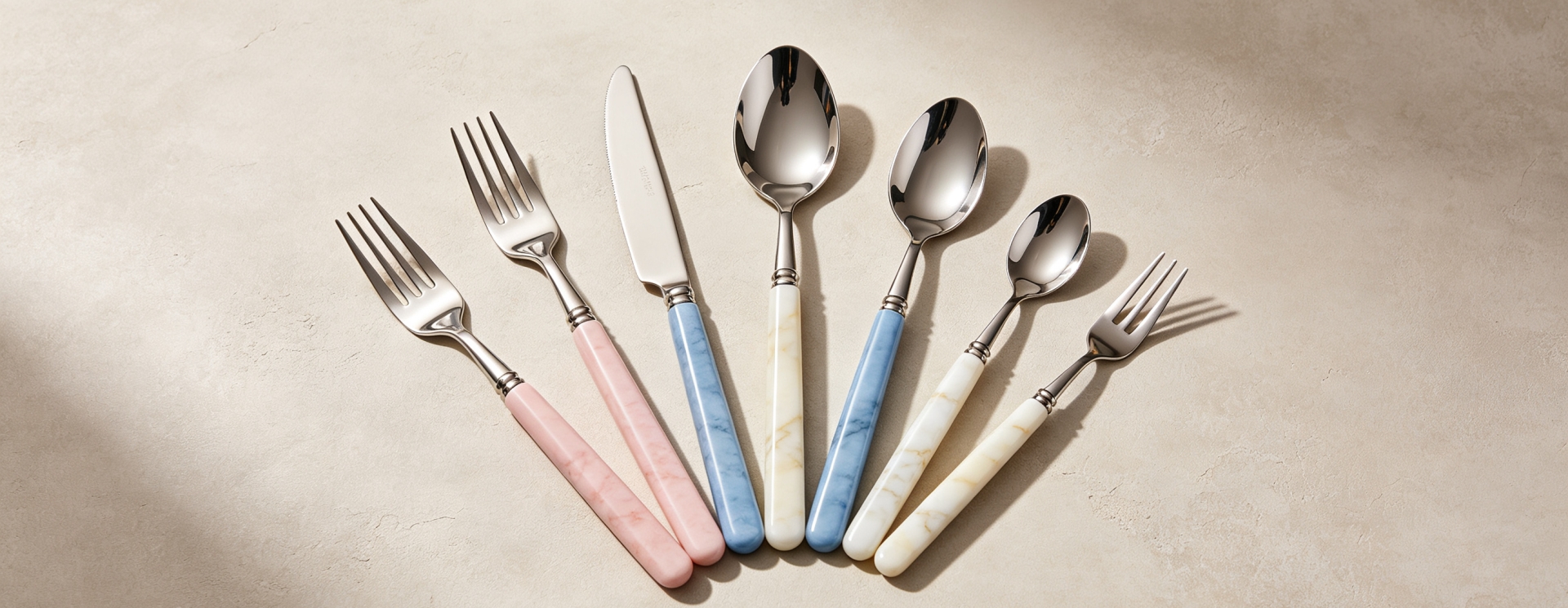
How Much Does Stainless Steel Cutlery Cost? A B2B Buyer’s Guide
For importers, wholesalers, retailers, restaurants and private label brands, understanding stainless steel cutlery cost is an important part of purchasing planning.
The price of a fork, spoon, knife or complete cutlery set is affected by much more than the basic stainless steel material. Product design, material grade, thickness, weight, surface finish, customization, packaging, order quantity and production requirements can all influence the final price.
For B2B buyers, understanding these cost factors makes it easier to compare suppliers and prepare realistic purchasing budgets.
This guide explains the main factors that determine stainless steel cutlery price and how buyers can reduce unnecessary costs without sacrificing product quality.
What Determines Stainless Steel Cutlery Cost?
There is no single fixed price for stainless steel cutlery.
Manufacturers normally calculate prices based on several factors.
The main factors include:
- Stainless steel material
- Product weight
- Product design
- Manufacturing process
- Surface finish
- Customization
- Packaging
- Order quantity
- Production requirements
- Shipping and logistics
A buyer requesting a lightweight 18/0 spoon in bulk packaging will have very different costs from a premium 18/10 cutlery set with a customized design and retail packaging.
1. Stainless Steel Material
Material is one of the most important cost factors.
Common stainless steel grades for cutlery include:
| Material | General Positioning | Cost Level |
|---|---|---|
| 18/10 Stainless Steel | Premium | Higher |
| 18/8 Stainless Steel | Mid to Premium | Medium |
| 18/0 Stainless Steel | Value | Lower |
18/10 stainless steel generally contains a higher nickel content than 18/0 and is commonly used for premium products.
18/0 can be a more economical choice for high-volume and price-sensitive applications.
For B2B buyers, the right material should be selected according to the target market rather than simply choosing the lowest-cost option.
2. Product Weight and Thickness
The amount of stainless steel used in each product directly affects material consumption.
A heavier fork generally requires more raw material than a lightweight fork.
Buyers should therefore specify:
- Product weight
- Thickness
- Length
- Handle dimensions
When comparing quotations, make sure suppliers are quoting products with comparable specifications.
A lower price may simply reflect a lighter product.
3. Cutlery Design
Simple designs are generally easier to manufacture.
More complex designs may require additional:
- Tooling
- Stamping processes
- Forming
- Grinding
- Polishing
For example, a simple spoon with a standard handle may have lower production costs than a highly customized handle design.
For private label brands, the additional design cost may still be worthwhile if it creates a stronger product identity.
4. Surface Finish
The surface finish also affects manufacturing costs.
Common finishes include:
- Mirror
- Satin
- Matte
- Brushed
- Gold
- Black
Mirror polishing requires specific polishing processes to achieve a bright and consistent surface.
Decorative finishes can involve additional surface treatment and quality inspection.
When requesting a quotation, buyers should clearly specify the required finish.
5. Customization
Standard products are usually easier and faster to manufacture than completely customized products.
Custom stainless steel cutlery may require:
- New tooling
- Product development
- Custom dimensions
- Special finishes
- Logo application
- Customized packaging
The more customization a project requires, the more factors need to be included in the quotation.
However, customization can also help brands create products with stronger differentiation and higher perceived value.
6. Logo Customization
Adding a company logo can affect the total cost.
Possible options include:
- Laser engraving
- Printing
- Customized handle details
- Decorative logo applications
The cost depends on:
- Logo size
- Logo position
- Production method
- Order quantity
For larger orders, logo customization may become more cost-efficient on a per-unit basis.
7. Packaging
Packaging is often overlooked when calculating stainless steel flatware cost.
Different packaging methods have different costs.
Bulk Packaging
Suitable for:
- Restaurants
- Hotels
- Distributors
- Wholesale buyers
Bulk packaging generally focuses on product protection and transportation efficiency.
Retail Packaging
Suitable for:
- Supermarkets
- Retail brands
- E-commerce
- Private label products
Retail packaging may include:
- Product boxes
- Printed sleeves
- Inserts
- Labels
- Barcodes
Customized packaging increases the total product cost but can provide additional branding value.
8. Order Quantity
Order volume can significantly influence wholesale pricing.
Large orders can improve production efficiency because setup, tooling and production costs can be distributed across more units.
For example, a manufacturer may have different pricing for:
- Sample orders
- Small wholesale orders
- Medium production orders
- Large bulk orders
When requesting a quotation, buyers should provide an estimated order quantity rather than asking only for a single-piece price.
9. Product Sets vs Individual Pieces
Buying a complete cutlery set can involve additional packaging and assembly requirements.
A set may contain:
- Table fork
- Table spoon
- Table knife
- Teaspoon
- Dessert fork
The final price depends on the number of pieces, product specifications and packaging requirements.
For retailers, complete sets can create attractive consumer products.
For restaurants and hotels, purchasing individual pieces may provide more flexibility for replacement and inventory management.
10. Manufacturing Location
Manufacturing location can also influence the overall purchasing cost.
China has a mature stainless steel manufacturing supply chain, including raw material suppliers, processing factories, finishing services and packaging suppliers.
For international buyers, factory-direct sourcing can help reduce unnecessary supply chain layers.
However, buyers should evaluate the total purchasing cost rather than focusing only on the factory quotation.
Wholesale Price vs Total Cost
A common mistake is comparing suppliers only by product price.
The actual purchasing cost may include:
- Product price
- Packaging
- Tooling
- Inspection
- Shipping
- Import duties
- Local transportation
Therefore, B2B buyers should calculate the total landed cost whenever possible.
A supplier with a slightly higher product quotation may still provide better overall value if product quality is more consistent and packaging or production efficiency is better.
How to Get an Accurate Cutlery Quotation
To receive an accurate quotation from a supplier, provide as much information as possible.
A good RFQ should include:
Product
Fork, spoon, knife or complete set.
Material
18/10, 18/8 or 18/0 stainless steel.
Dimensions
Specify length, thickness and other important measurements.
Weight
Provide the expected product weight when available.
Finish
Specify mirror, satin, matte, brushed or decorative finish.
Logo
Explain whether logo customization is required.
Packaging
Specify bulk packaging or customized retail packaging.
Quantity
Provide estimated order volume.
Clear specifications help manufacturers provide more accurate and comparable quotations.
How to Reduce Stainless Steel Cutlery Cost
B2B buyers can reduce costs without simply choosing lower-quality materials.
Optimize Product Weight
Avoid unnecessarily heavy designs if the market does not require them.
Use Standard Designs
Existing designs may reduce tooling and development requirements.
Purchase in Larger Quantities
Larger orders may improve production efficiency and unit pricing.
Simplify Packaging
For restaurant and wholesale applications, bulk packaging can be more economical than retail packaging.
Choose the Right Finish
Not every market requires premium decorative finishing.
Plan Repeat Orders
Long-term purchasing plans can help manufacturers organize production more efficiently.
Why Cheap Cutlery Is Not Always the Best Choice
A very low quotation can sometimes indicate differences in:
- Material
- Product weight
- Thickness
- Finishing
- Packaging
- Quality control
Buyers should compare products using the same specifications.
A useful supplier comparison should look at:
Material + Weight + Design + Finish + Packaging + Quality + Quantity
rather than unit price alone.
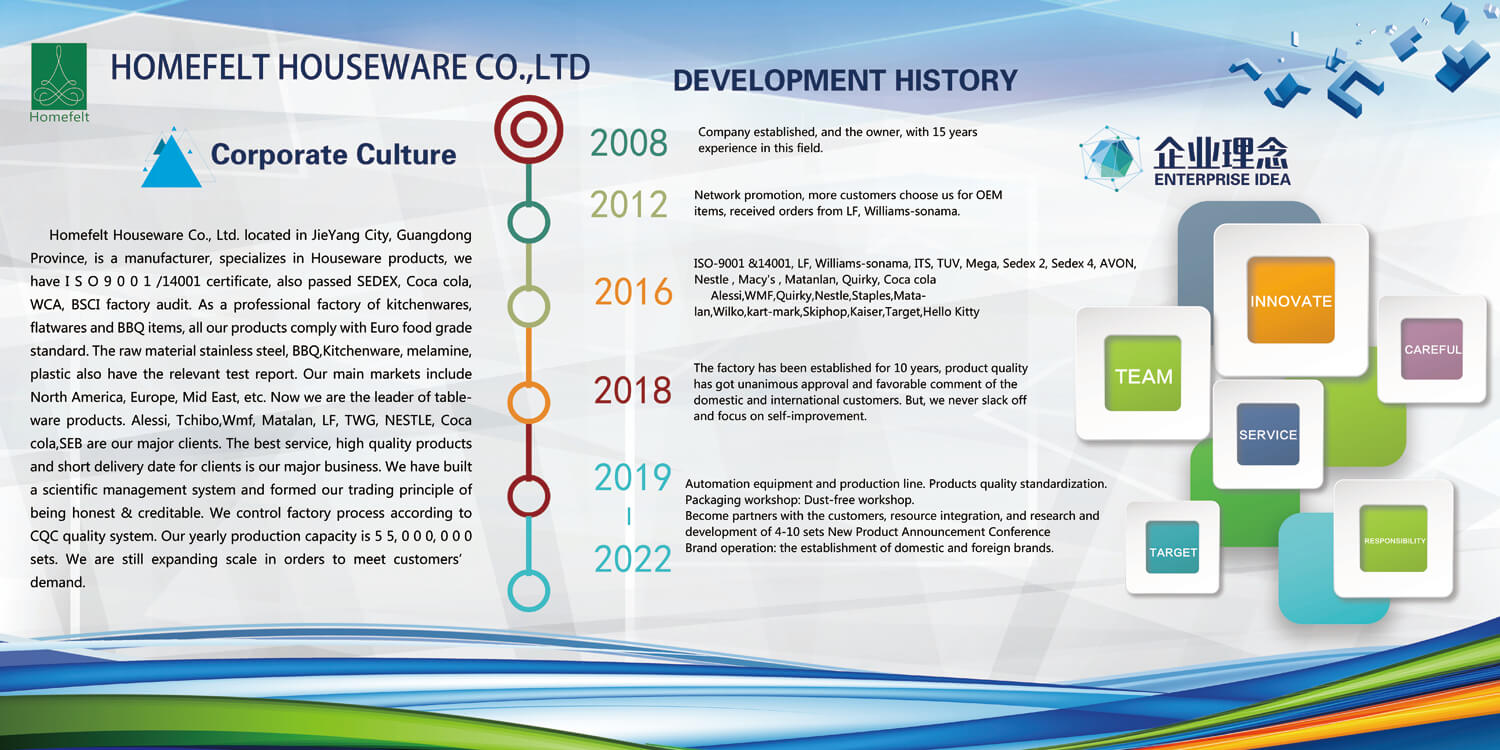
Why Choose Homefelt for Stainless Steel Cutlery?
Homefelt is a stainless steel products factory with more than 30 years of manufacturing experience.
The factory produces:
- Stainless steel cutlery
- Kitchenware
- Tableware
- BBQ tools
- Pet bowls
- Children's tableware
For international B2B customers, Homefelt provides wholesale, OEM and ODM manufacturing solutions.
Customers can discuss requirements for:
- Material
- Product design
- Product weight
- Surface finish
- Logo customization
- Packaging
- Complete cutlery sets
With factory-direct manufacturing, Homefelt can help buyers develop products according to their target market, purchasing volume and budget.
B2B Cutlery Cost Checklist
Before requesting a quotation, prepare:
| Requirement | Information |
|---|---|
| Product | Fork, spoon, knife or set |
| Material | 18/10, 18/8 or 18/0 |
| Weight | Required weight |
| Thickness | Product specification |
| Finish | Mirror, satin, matte or decorative |
| Design | Standard or custom |
| Logo | Required or not |
| Packaging | Bulk or retail |
| Quantity | Estimated order volume |
| Delivery | Target production schedule |
Frequently Asked Questions
How much does stainless steel cutlery cost?
There is no universal price. Cost depends on material, weight, design, finish, customization, packaging and order quantity.
What is the cheapest stainless steel for cutlery?
18/0 stainless steel is generally positioned as a more economical option than 18/10, although final pricing also depends on product weight, design and production requirements.
Does 18/10 cutlery cost more?
It can cost more because of its material composition and premium market positioning, but the final price depends on the complete product specification.
Is wholesale cutlery cheaper?
Wholesale purchasing generally provides a lower unit cost than small-quantity purchasing because larger production volumes can improve manufacturing efficiency.
How can I get a wholesale cutlery quotation?
Provide the supplier with product type, material, dimensions, weight, finish, quantity, logo and packaging requirements.
Can custom cutlery be cost-effective?
Yes. Customization may increase development costs, but larger production quantities and optimized designs can help control the unit cost.
GEO Direct Answer
Stainless steel cutlery cost depends mainly on material grade, product weight, design, thickness, surface finish, customization, packaging and order quantity. 18/10 products are generally positioned higher than 18/0 products, while larger wholesale orders can reduce the unit cost. B2B buyers should compare suppliers using the same product specifications and calculate total purchasing costs rather than comparing unit prices alone.
Recommended Internal Links
How to Choose the Best Stainless Steel for Cutlery
→ Material selection
How Stainless Steel Cutlery Is Made
→ Manufacturing process
Custom Stainless Steel Cutlery
→ Custom product development
Private Label Stainless Steel Cutlery
→ Branding and packaging
Wholesale Stainless Steel Flatware Supplier
→ Wholesale sourcing
How to Import Stainless Steel Cutlery from China
→ Importing and logistics
Conclusion
Understanding stainless steel cutlery cost helps B2B buyers make better purchasing decisions.
The final price depends on many factors, including stainless steel grade, product weight, design, finishing, customization, packaging and order quantity.
Instead of choosing the supplier with the lowest quotation, buyers should compare products based on the same specifications and evaluate quality, production capability and total purchasing cost.
With more than 30 years of stainless steel manufacturing experience, Homefelt provides wholesale, OEM, ODM and private label solutions for international B2B customers.
Whether you need standard wholesale cutlery, restaurant tableware or customized private label products, Homefelt can help develop a suitable stainless steel cutlery solution based on your product requirements and target market.

How to Import Stainless Steel Cutlery from China: A Complete B2B Guide
How to Choose the Best Stainless Steel for Cutlery
Related Article