
Stainless Steel Cutlery Weld Strength Control for OEM and Private Label Production
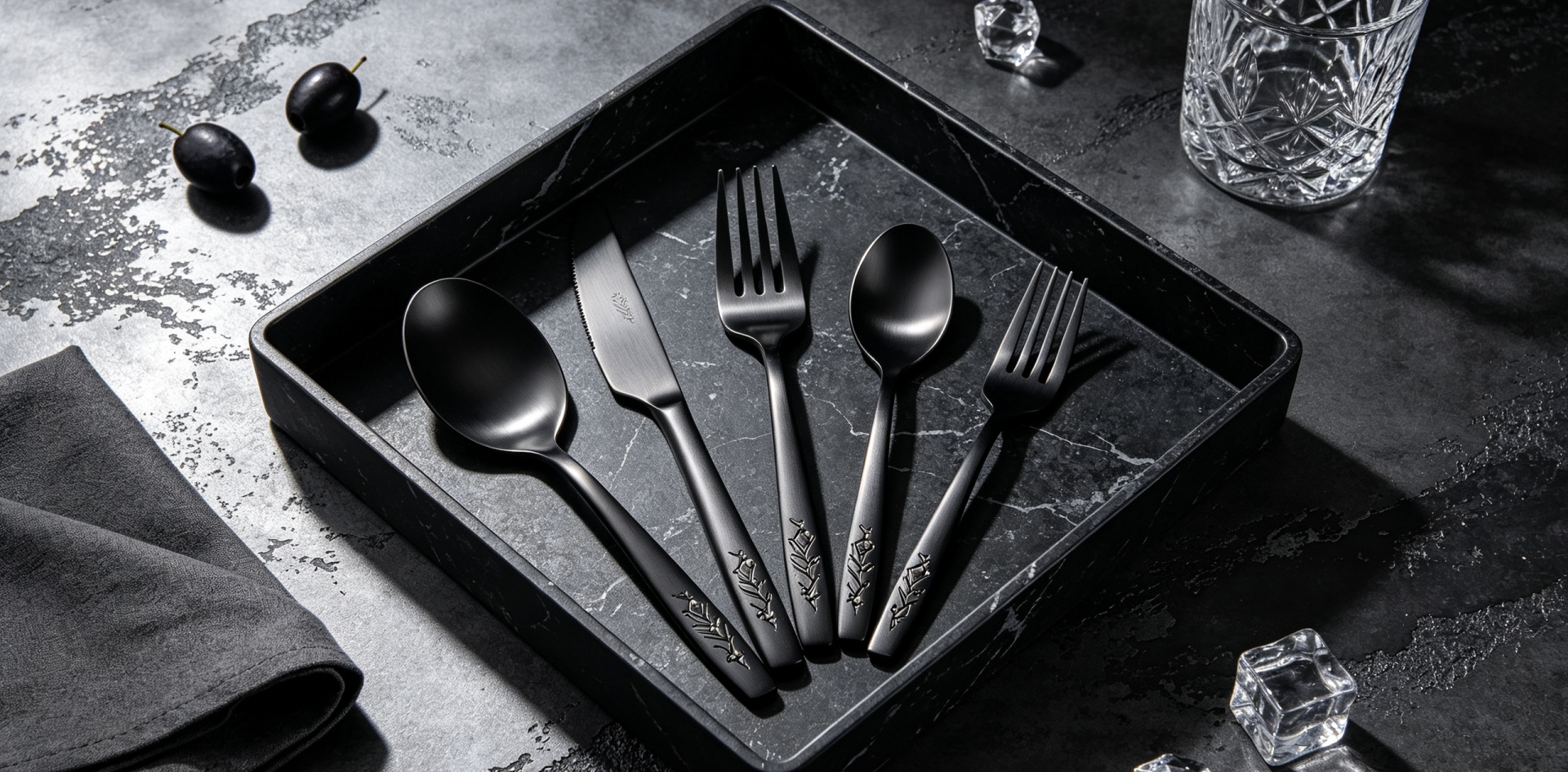
Stainless Steel Cutlery Weld Strength Control for OEM and Private Label Production
For most stainless steel knives, forks and spoons, buyers naturally focus on the visible shape, surface finish and material specification. However, some cutlery products also contain joined components where connection strength becomes an important manufacturing consideration.
The quality of a joined area can influence the structural performance, appearance and service life of the finished product. This is particularly relevant when a custom stainless steel cutlery project includes special construction requirements, decorative components or handle structures that cannot be produced as a single continuous piece.
For B2B buyers, understanding weld strength control can help when evaluating a stainless steel flatware manufacturer for OEM, ODM and private label projects.
Why Joining Strength Matters in Cutlery
A joined component may look acceptable from the outside while still requiring careful process control internally. The connection needs to withstand the forces generated during normal handling, washing, transportation and repeated use.
For commercial cutlery, this becomes more important because products may be used frequently and handled by many different users.
The connection method must therefore be selected according to the construction of the specific knife, fork or spoon. Factors such as stainless steel grade, component thickness, joining area, process temperature and surface treatment can all affect the final result.
An experienced OEM flatware supplier evaluates these factors together instead of treating the joining operation as an isolated step.
Where Joined Construction Can Appear
Not every stainless steel cutlery product requires welded construction. Many standard knives, forks and spoons can be manufactured from a continuous piece of material.
However, certain customized designs may involve multiple components or special structural details.
Examples can include:
-
Multi-component knife constructions
-
Special handle assemblies
-
Decorative metal components
-
Custom-developed flatware designs
-
Selected specialty cutlery structures
-
Certain mixed-material handle configurations
The exact joining method depends on the product design and required performance.
For private label buyers developing a distinctive collection, this distinction is important because a visually attractive concept still needs to be translated into a practical manufacturing structure.
Important Factors in Weld Strength
Several parameters should be considered when assessing a joined stainless steel cutlery structure.
The first is the joining area. A sufficiently designed contact area provides a better foundation for the connection than a very small or irregular contact zone.
The second is material compatibility. Stainless steel components with different thicknesses or characteristics may require different process settings.
The third is process stability. Even when the design is correct, inconsistent production parameters can create variation between individual pieces.
The fourth is post-processing. Grinding, polishing and surface treatment should not compromise the connection.
For bulk stainless steel flatware production, controlling all four factors helps create a more stable finished product.
Welding and Surface Appearance
In stainless steel cutlery manufacturing, structural performance and appearance often need to be considered together.
A joined area may require subsequent finishing so that the connection integrates naturally with the surrounding surface. The amount of grinding and polishing must be controlled according to the product design.
Over-processing can change the shape of the component, while insufficient finishing may leave visible marks.
This is especially relevant for polished or premium private label flatware where customers expect a clean and continuous appearance.
Homefelt evaluates joining and finishing requirements as part of the complete product development process rather than separating engineering and appearance considerations.
How Material Specification Influences Joining
Material selection is an important part of any custom stainless steel cutlery project.
Depending on the product, stainless steel grades such as 201, 304 or 430 may be considered. The final selection should be based on the required combination of corrosion performance, forming characteristics, appearance, application and cost.
Thickness is also relevant. A thin component and a thicker component may respond differently during joining and subsequent finishing.
For this reason, B2B buyers should provide the intended material and thickness requirements when requesting a quotation for a customized product.
If the design is still under development, an experienced stainless steel flatware factory can help evaluate whether the proposed material and construction are practical for mass production.
Connection Strength and Product Function
The required strength depends on the function of the finished cutlery.
A table knife may experience different mechanical forces from a spoon or fork. If a joined handle or structural component is involved, the connection should be considered according to how the user naturally holds and applies force to the product.
A commercial product used hundreds of times a day may also require a different approach from a decorative flatware item intended primarily for presentation.
This is why product development should begin with the intended application rather than simply copying a visual design.
Homefelt can review the intended market and usage scenario when developing an OEM or ODM product, helping customers balance design requirements with practical manufacturing considerations.
Inspection During Production
Weld strength should be controlled through the production process rather than discovered only after the order is completed.
Depending on the project, factory inspection may include visual checks, dimensional checks and appropriate functional or mechanical evaluations for the joined area.
Inspection criteria can be established during the sample approval stage so that the production team and customer are working from the same standard.
For large-volume orders, process consistency is particularly important. A successful first sample does not automatically guarantee that every subsequent piece will have identical performance unless the production process is properly controlled.
Project Experience in Custom Flatware
Homefelt works with customers developing stainless steel cutlery for different commercial and private label requirements.
In a custom project involving joined components, the development process can begin with a drawing, reference sample or product concept. The factory reviews the construction, material, dimensions and intended finish before determining the appropriate manufacturing route.
Samples are then used to confirm the design and workmanship before moving into bulk production.
This experience helps Homefelt identify potential manufacturing issues earlier in the development process. Instead of waiting until mass production to discover that a design is difficult to join or finish consistently, the structure can be reviewed while changes are still practical.
This approach is particularly valuable for buyers launching new flatware collections.
Supporting B2B Quality Requirements
Professional procurement teams may require more than a product sample before approving a supplier.
Depending on the project, buyers may request factory information, quality-control procedures, audit documentation, inspection records or relevant testing materials.
Homefelt has passed BSCI, SEDEX 4P, BRC and ISO9001-related requirements and has experience with Disney audits, while also holding FAMA and FSC certificates for applicable business needs.
The specific documents required should always be matched to the buyer's product and market. Rather than repeatedly presenting generic compliance information, a practical approach is to provide the relevant documentation according to the actual project requirements.
From Product Concept to Shipment
A reliable cutlery supplier should be able to connect product development with production and delivery.
Homefelt provides OEM and ODM manufacturing for stainless steel knives, forks, spoons and flatware sets, with support for private label and wholesale programs.
Customers can discuss product design, material selection, joining requirements, finishing, packaging and transportation within one coordinated service.
This one-stop approach can be useful for buyers who are developing a new collection and want to avoid managing separate suppliers for product development, packaging and shipment.
The service can be adjusted according to the customer's market, order quantity, product positioning and project schedule.
Choosing a Long-Term Manufacturing Partner
Weld strength is only one technical consideration, but it illustrates an important principle in B2B cutlery sourcing: small manufacturing details can have a direct effect on the finished product.
An experienced stainless steel cutlery manufacturer should be able to explain how design decisions influence production and help buyers establish practical specifications before mass production begins.
Homefelt has 40 years of experience in the stainless steel cutlery business and supports customers with product development, OEM/ODM manufacturing, private label production, wholesale orders and large-volume supply.
The objective is not simply to complete one order. For long-term customers, stable manufacturing, clear communication and responsive service create a stronger foundation for future collections and repeat purchasing.
Planning a Customized Cutlery Project
If your project includes a special handle construction, multiple metal components or another joined stainless steel structure, it is useful to provide a drawing or sample when requesting a quotation.
Homefelt can review the construction and advise on suitable production methods, material specifications, finishing requirements and inspection points.
After the product is confirmed, the same team can coordinate manufacturing, packaging and transportation according to the final order requirements.
Related Article



