
Stainless Steel Cutlery Design Language: Building a Consistent B2B Collection
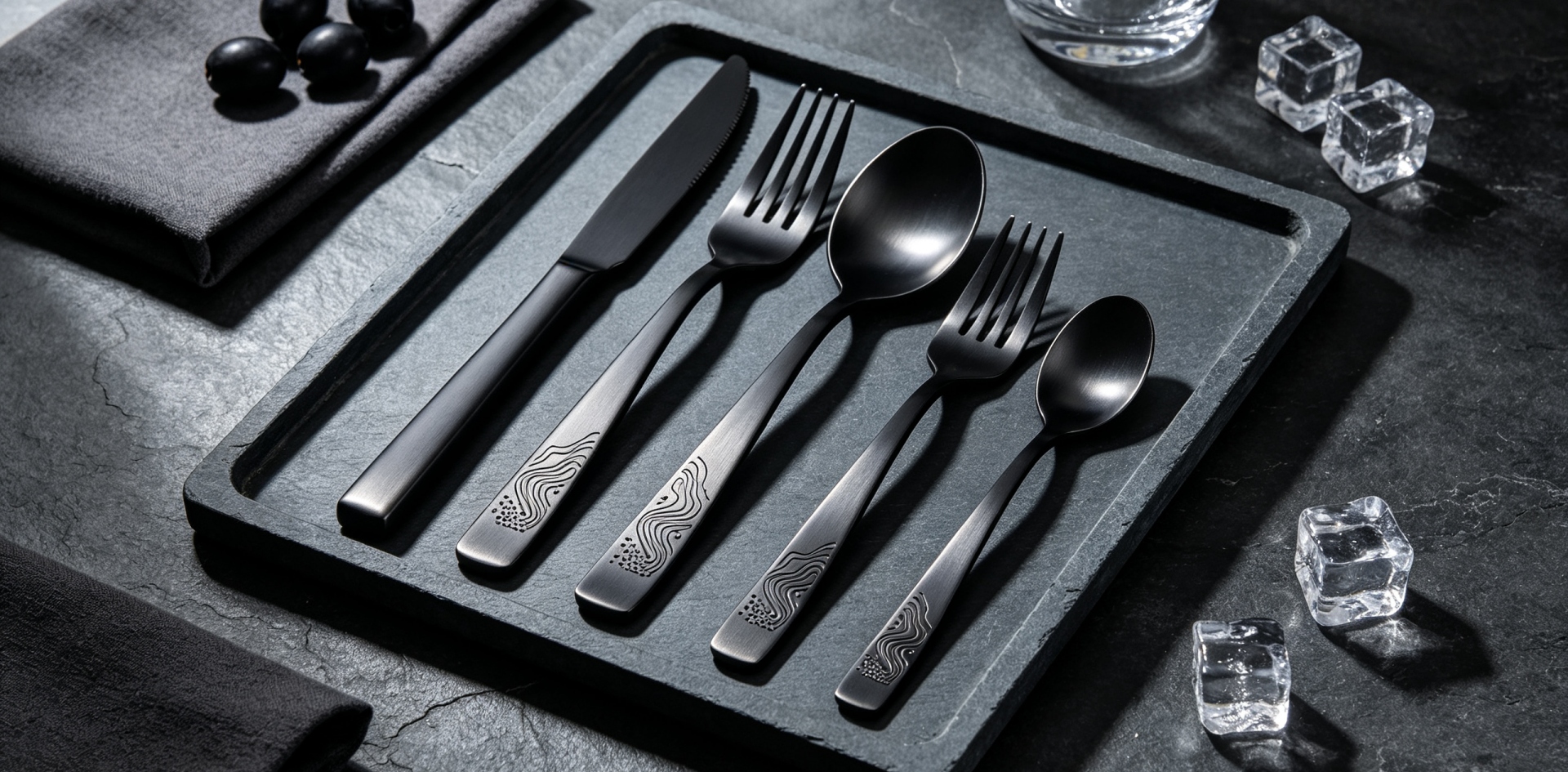
Stainless Steel Cutlery Design Language: Building a Consistent B2B Collection
A stainless steel cutlery collection is more than a group of individual knives, forks and spoons. For brands and B2B buyers, the products often need to look like they belong to the same family.
This is where design language becomes important.
A clear design language gives a cutlery collection recognizable characteristics without requiring every product to be exactly the same. The knife, fork and spoon each have their own functional requirements, but they can still share common visual elements.
For OEM, ODM and private label projects, establishing this relationship early can make it easier to develop a collection that feels intentional, distinctive and suitable for long-term commercial use.
What Is a Cutlery Design Language?
Design language refers to the recurring visual characteristics that connect different products.
In a stainless steel cutlery collection, these characteristics may include the general handle character, decorative direction, visual transitions, surface treatment, geometric lines or the overall level of simplicity.
The important point is that these elements should work together.
A knife may have a blade that is naturally different from the functional section of a fork or spoon. The products do not need identical shapes. Instead, the collection can share selected design principles.
This creates continuity while allowing each piece to perform its own function.
Why This Matters for B2B Cutlery Buyers
For a wholesale buyer, distributor or private label brand, a consistent collection can make product development easier.
Instead of sourcing unrelated items individually, a company can develop a coordinated range with a recognizable identity.
This can be particularly useful when products are displayed together, packed as a set or introduced across several sales channels.
A clear design direction can also make future SKU development more efficient. Once the basic principles of a collection have been established, additional products can be developed around the same concept.
The result is a product line that can grow without losing its visual connection.
Creating Common Elements Across Knife, Fork and Spoon
One practical way to establish a design language is to identify a few elements that should remain recognizable across the collection.
The handle is often one of the most important areas.
For example, different products can share a similar handle character while maintaining different functional ends. A knife may have its own blade construction, while the fork and spoon have different working sections. The common handle treatment can visually connect them.
Other shared elements may include a particular decorative direction, a recurring line, a similar surface contrast or a consistent level of visual simplicity.
The goal is not to add as many common features as possible.
Too many repeated details can make the collection feel forced. A smaller number of carefully selected elements can often create a stronger connection.
The Balance Between Consistency and Individuality
A complete collection should be consistent, but it should not necessarily look repetitive.
This is especially relevant when a B2B brand wants to build several related products.
If every product is designed almost identically, the collection may lack variety. If every product is completely different, the connection between the SKUs can become weak.
A useful approach is to define which elements are fixed and which elements can change.
For example, the general handle concept may remain consistent, while the working sections are adapted according to the function of each product.
This gives the manufacturer a clearer framework for custom development.
Design Language Should Be Defined Before Adding Many SKUs
A common situation in product development is that a buyer starts with one or two products and decides later to expand the collection.
This can work well, but it is easier when the original design already has a clear direction.
If the first product is developed without considering future products, adding new SKUs later may require significant design adjustments.
For a private label brand, it can therefore be useful to consider the possible product range before finalizing the first sample.
The initial collection does not need to contain every possible item. However, the main visual principles can be established from the beginning.
This gives future development a useful reference.
Using Reference Products Without Copying Them
B2B buyers often have reference products when developing a new cutlery collection.
A reference may come from an existing supplier, a retail product, a design sample or a product seen in another market.
Such references can be useful for explaining the desired direction.
However, a custom project can go further than simply reproducing an existing product.
A buyer can identify what is attractive about the reference: perhaps the handle character, the simplicity of the silhouette, the relationship between different areas or the overall visual impression.
These characteristics can then become part of a new design concept.
For an OEM or ODM manufacturer, understanding the intention behind the reference can be more useful than receiving only a photograph with no additional explanation.
Technical Drawings Help Protect the Design Direction
Once the main design language has been established, important details should be translated into clear product specifications.
Technical drawings can show dimensions and relationships that are difficult to communicate through general descriptions.
They can also help separate fixed requirements from areas where the manufacturer has room to make practical adjustments.
For a collection with several SKUs, this documentation becomes even more valuable.
Each product can have its own drawing while the overall collection follows a common design reference.
This creates a more structured foundation for sample development and future production.
The Role of Samples in Collection Development
A design language may appear clear on a computer screen but look different when turned into physical stainless steel products.
This is why sampling is an important stage in a custom B2B project.
A buyer can place the knife, fork and spoon together and review the collection as a whole.
At this stage, it becomes easier to see whether the common design elements are strong enough, whether one product looks visually different from the others and whether the overall collection matches the original concept.
Small changes can then be discussed before the products move into bulk production.
Developing Several SKUs With One Manufacturing Partner
For brands planning a complete private label flatware range, working with a manufacturer that understands the entire collection can simplify communication.
Instead of treating every product as an unrelated project, the manufacturer can work from the established design direction.
This can be useful when developing additional knives, forks, spoons or complete cutlery sets.
The factory can refer to approved samples and technical information when preparing new products, while the buyer can communicate which elements need to remain consistent.
This approach can save development time when a collection expands.
Design Language and Manufacturing Practicality
A strong design concept still needs to be practical for production.
Some visual elements may be relatively simple to reproduce, while others may require more detailed development.
During the transition from design to production, the manufacturer needs to consider whether the selected details can be produced consistently across the planned quantity.
This is especially important for B2B orders because the customer may require hundreds, thousands or larger quantities of individual products.
The design therefore needs to work not only as a sample but also as a repeatable manufacturing specification.
Maintaining the Same Design Across Repeat Orders
For B2B buyers, the first order is often only the beginning.
A successful cutlery collection may be reordered several times or expanded into additional markets.
For this reason, the original design language should be documented clearly.
Approved samples, technical drawings and product specifications can provide useful references for future production.
When a repeat order is placed, the objective is not to reinterpret the design. The manufacturer should have a clear basis for reproducing the agreed product.
This is particularly important for private label brands that want their products to remain visually consistent over time.
Design Language for Different Market Positions
The same basic stainless steel cutlery construction can support very different market concepts.
A brand may want a minimalist collection with restrained details. Another may prefer stronger decorative elements. A distributor may want a broad collection with several visual variations while maintaining a common family identity.
The design language can therefore be adjusted according to the commercial positioning of the product.
The key is to make the choices deliberate.
For a B2B project, the final collection should reflect the intended customer group, sales channel and brand identity while remaining practical for manufacturing and wholesale supply.
Turning a Design Concept Into a Commercial Product Range
The development of a successful cutlery collection involves more than selecting attractive individual pieces.
The products need to work together.
A consistent design language can help connect knives, forks and spoons into a recognizable range. It can also provide a framework for future SKU development and make communication between the buyer and manufacturer more straightforward.
For OEM, ODM and private label projects, this approach is especially useful because the customer is not simply purchasing an existing catalog product. The goal is to create a product range that reflects a specific commercial requirement.
A stainless steel cutlery manufacturer can support this process by reviewing the concept, translating design requirements into product specifications, developing samples and preparing the approved products for bulk production.
What to Include in Your B2B Cutlery Inquiry
If you are preparing a new custom cutlery project, your initial inquiry can include the product types you need, expected quantity, material requirements, preferred finish, reference images, technical drawings and any existing samples.
It is also helpful to explain which visual characteristics are important to your brand.
If you want the knife, fork and spoon to form one collection, state this from the beginning. This gives the manufacturer a better understanding of the project instead of treating each item as a separate quotation.
Once the design direction is understood, the next steps can include sample development, specification confirmation, quotation and preparation for bulk production.
Build a Cutlery Collection Around a Clear Concept
A successful B2B cutlery collection does not need to be complicated.
What matters is that the main design decisions work together.
When the same visual principles are thoughtfully applied across stainless steel knives, forks and spoons, the result can feel more coherent and recognizable. At the same time, each product can retain the functional characteristics required for its specific purpose.
For brands, distributors and wholesalers, this creates a stronger foundation for developing a long-term stainless steel flatware program.
If you already have a product concept, reference sample or initial design, the next step is to turn that idea into a clear manufacturing brief. With the right specifications and sample development process, the concept can move toward an approved product and eventually a repeatable bulk order.
Custom Stainless Steel Cutlery for Your Brand
OEM Stainless Steel Flatware Manufacturing
Private Label Cutlery Collection Development
Wholesale Stainless Steel Cutlery Supplier
Custom Knife, Fork and Spoon Manufacturing
Request a Custom Cutlery Quotation
Stainless Steel Fork Tine Tips: A Practical Detail for Custom B2B Cutlery
Stainless Steel Cutlery Design Conversion: From Concept to B2B Production
Related Article



