
How to Define Design Ownership for Customized Stainless Steel Cutlery
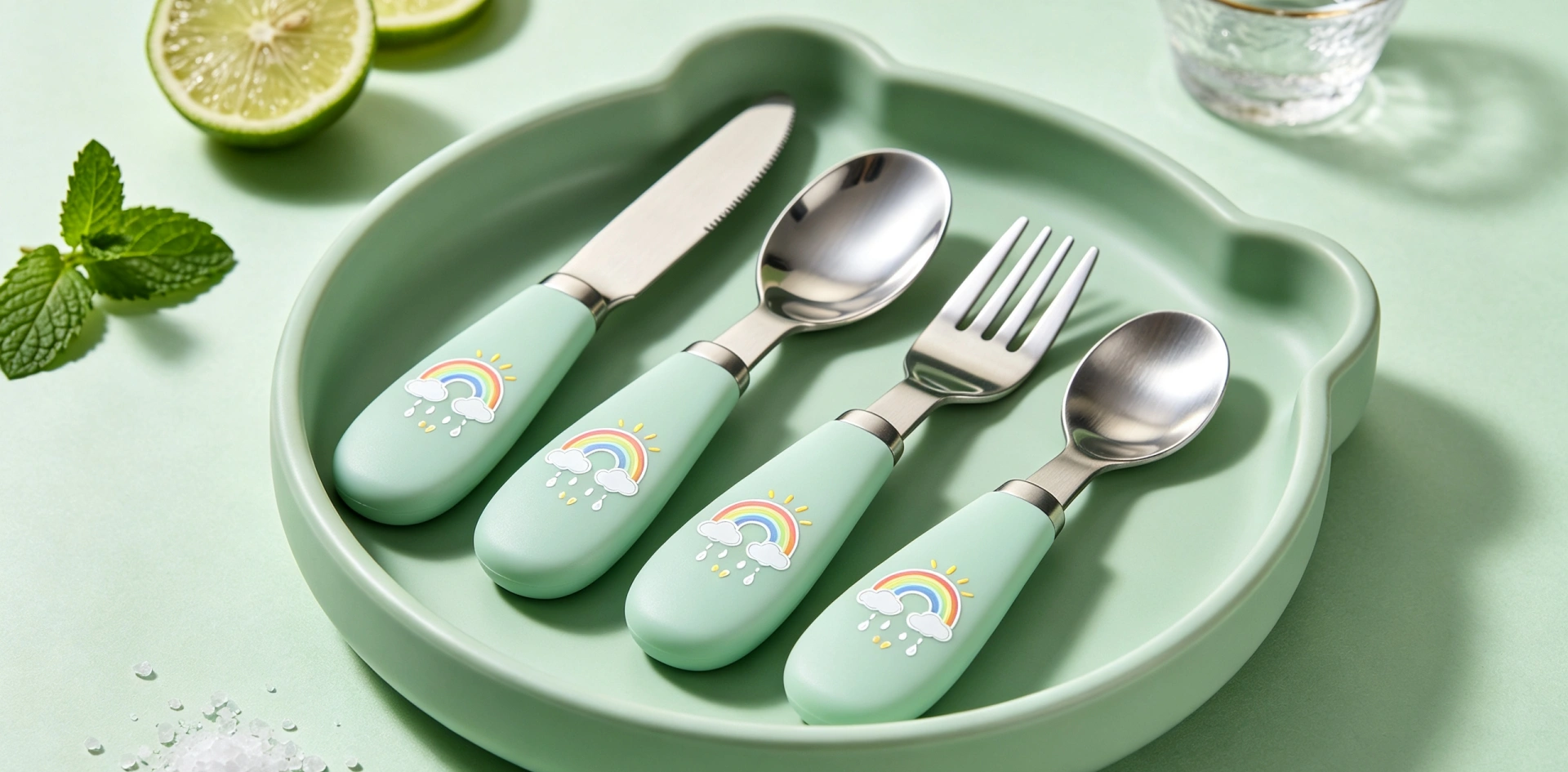
How to Define Design Ownership for Customized Stainless Steel Cutlery
Developing a customized stainless steel cutlery collection often involves several parties, including the buyer's product team, brand designers, packaging suppliers, and the manufacturing factory. Before production begins, it is important to clarify who owns each design element, which assets may be used for manufacturing, and what happens to project materials when the business relationship changes.
For importers, wholesalers, retailers, and private-label brands, these questions can affect future product development, repeat orders, and the ability to maintain a distinctive collection. Clear arrangements also help manufacturers understand their responsibilities when handling customer-supplied artwork or developing new knife, fork, and spoon designs.
Design ownership should therefore be discussed as part of project planning, rather than left until the first production order has been completed.
Distinguish Existing Designs From Newly Developed Work
A customized cutlery project may combine existing factory products with buyer-specific changes. For example, a buyer might select a standard stainless steel spoon and request a new logo position, a modified handle pattern, and customized retail packaging.
These elements may have different ownership histories. The underlying spoon design may already belong to the factory or be available as a standard product, while the buyer supplies the logo and brand artwork. A newly developed handle pattern may involve additional design work and require a separate agreement.
Before development begins, create a list of the main project assets:
-
Existing knife, fork, and spoon models selected from the factory's range.
-
Drawings, sketches, or design concepts supplied by the buyer.
-
New product shapes or decorative elements developed for the project.
-
Brand logos, artwork, and packaging layouts.
-
Tooling, molds, or production aids created for customized manufacturing, where applicable.
-
Product photographs, technical drawings, and specification documents.
This inventory provides a starting point for discussing ownership and permitted use. It also reduces the risk of treating every element in a customized product as if it automatically has the same legal status.
Put Design Ownership Terms in Writing
A verbal understanding may not be sufficient when a project involves original designs, exclusive market arrangements, or substantial development costs. Buyers and factories should document their agreement before committing to extensive design work or production.
The agreement may address which party owns pre-existing materials, who owns newly created designs, what rights each party receives, and whether the factory may use specific design elements for other customers. It should also explain how customer-supplied assets can be used during quotation, sampling, manufacturing, and quality inspection.
Useful questions to resolve include:
-
Who owns the original design files?
-
Who owns any newly developed design elements?
-
Does the factory receive permission to use the design only for the specified buyer or order?
-
Can the buyer manufacture the design with another supplier?
-
Are any market, territory, or duration restrictions agreed?
-
What happens to unfinished designs if the project is cancelled?
-
Which party is responsible for confirming that supplied artwork may legally be used?
The answers should reflect the actual commercial arrangement. When ownership, exclusivity, or enforceability is important, both parties should obtain appropriate legal advice for the relevant jurisdictions.
Clarify Tooling and Custom Production Assets
Some customized cutlery projects require dedicated tooling or other production assets. Whether such items are necessary depends on the design, manufacturing method, and extent of customization.
Buyers should distinguish between paying for product development and acquiring ownership of a particular physical asset. These are not necessarily the same arrangement. A development charge may cover design work or preparation, while a separate agreement may address the ownership, storage, maintenance, transfer, or future use of tooling.
Before placing an order, clarify:
-
Whether dedicated tooling is required.
-
Whether tooling costs are included in the quotation or charged separately.
-
Who owns the tooling under the agreed terms.
-
Where the tooling will be stored and who may access it.
-
How maintenance and replacement costs will be handled.
-
Whether transfer to another manufacturer is permitted and technically practical.
-
What happens to the tooling when production ends.
The agreement should use specific descriptions rather than broad terms such as “custom mold.” Different tools and production aids may serve different purposes, and their transferability can depend on technical compatibility.
For repeat orders, maintaining an asset record linked to the product model helps purchasing teams understand which development costs have already been incurred and which arrangements apply to future production.
Define the Permitted Use of Logos and Artwork
Branding materials often need to pass between the buyer, factory, and packaging provider. Without clear instructions, a logo or artwork file may be reused in a context that the buyer did not intend.
A practical project brief should identify the approved logo version, its permitted application, and the products or packaging for which it may be used. If the logo is approved for a specific spoon collection, that permission should not be assumed to cover unrelated product lines.
Buyers should provide the correct artwork files and confirm that they have the necessary rights or authorizations to use them. Factories should use the files for the agreed project and follow documented instructions when preparing samples and production references.
The same principle applies to product photography. A customized cutlery sample may contain unreleased branding or design details. Before the factory uses such images in a catalog, exhibition display, website, or social media post, the parties should confirm whether permission is required under their agreement.
Clear asset identification and approval records help prevent mistakes while supporting smoother communication between product development and production teams.
Make Exclusivity Specific and Practical
Some buyers want a customized cutlery design to remain exclusive to their brand. However, the word “exclusive” can mean different things unless the agreement defines its scope.
For example, a buyer may require exclusive use of a particular handle pattern in one market, while the factory continues to manufacture unrelated standard cutlery models. Another buyer may want broader restrictions covering a complete collection.
The parties should specify the design covered, the products affected, the relevant territory, the duration, and any conditions attached to the arrangement. They should also clarify whether exclusivity applies to the design itself, a particular combination of product features, or a branded presentation.
Commercial conditions may include minimum purchasing commitments, development fees, or agreed review dates. These conditions should be clearly stated and negotiated before production.
Exclusivity should not be assumed simply because a buyer paid for customization. The applicable rights depend on the agreement, the nature of the design, and relevant law. A carefully defined arrangement is more practical than relying on a general promise that a product will never be offered elsewhere.
Keep Approved Design Records Linked to Each Product Model
Clear ownership terms are only one part of good project management. Buyers and manufacturers also need reliable records showing which design was approved and how it relates to the final product.
For each customized model, maintain a controlled record containing the model number, approved drawing, relevant specifications, logo placement, finish requirements, packaging artwork, and approval date. Where several revisions exist, mark obsolete versions so that they are not accidentally used for sampling or production.
For example, a customized dinner fork may have three handle-design revisions before the final version is approved. The production team should be able to identify the correct revision without relying on an old email attachment or an informal description.
A consistent record system can also support repeat orders. If a buyer returns after several months, the factory can review the established reference before confirming whether the original design remains available and whether any details need to be reconfirmed.
The record should identify the approved version without making unsupported claims about legal ownership. Commercial approval and intellectual-property ownership are related but separate matters.
How Homefelt Factory Can Support Customized Cutlery Projects
Homefelt factory supports stainless steel knife, fork, spoon, and flatware projects involving customization, OEM/ODM manufacturing, wholesale supply, private-label development, and bulk production.
For a new project, buyers can share their target product style, technical specifications, artwork requirements, estimated quantity, and intended packaging. These details help define the development scope before quotation and sampling begin.
Buyers and the factory can also discuss product design, packaging development, and transportation coordination as part of a one-stop service arrangement. For projects involving original artwork, exclusive designs, or dedicated tooling, the relevant ownership and usage terms should be agreed separately and documented clearly.
A practical starting point is to prepare a project brief that distinguishes existing models from new design elements, identifies customer-supplied assets, and lists any requested exclusivity conditions. This gives both parties a clearer basis for evaluating feasibility, cost, and future production arrangements.
A Pre-Production Design Ownership Checklist
Before approving a customized stainless steel cutlery order, confirm that:
-
Existing and newly developed design elements have been identified.
-
Ownership and permitted use of supplied artwork are documented.
-
Tooling responsibilities and related costs are clearly described.
-
Any requested exclusivity has a defined scope and duration.
-
The approved drawings and specifications have identifiable revision numbers.
-
Rules for product photography and public display have been discussed.
-
External providers receive only the files needed for their assigned tasks.
-
Future repeat orders and possible design transfers have been considered.
These steps help reduce uncertainty without making the development process unnecessarily complicated. A clear agreement, a controlled design folder, and consistent communication can provide a practical foundation for long-term cooperation.
You May Be Interested In
How to Improve Cross-Team Communication in Stainless Steel Cutlery Export Projects
How to Plan Replacement Pieces for Stainless Steel Cutlery Collections
Related Article



