
Stainless Steel Cutlery Dimension Consistency for B2B Buyers
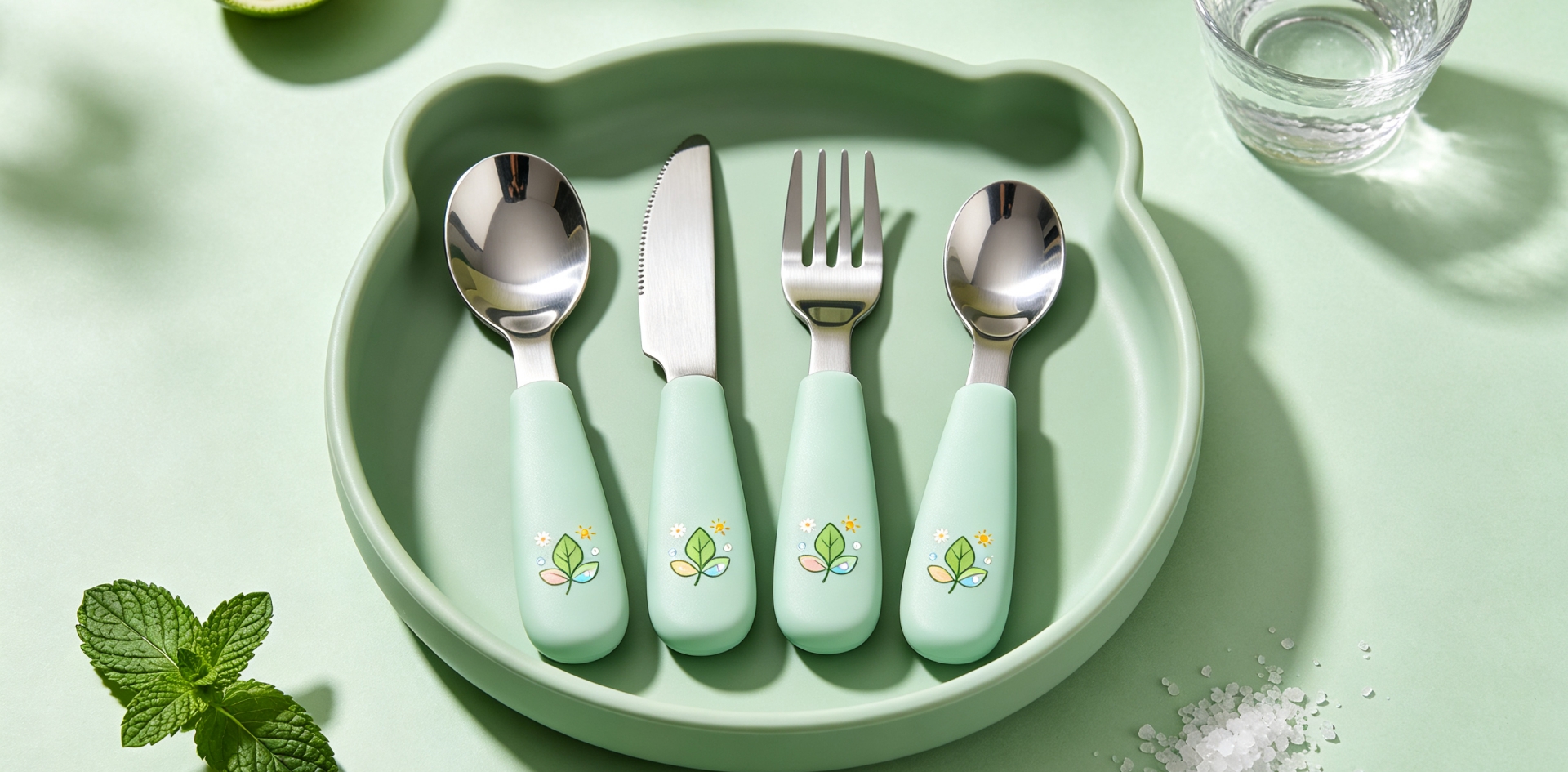
Stainless Steel Cutlery Dimension Consistency for B2B Buyers
When a B2B buyer approves a stainless steel cutlery product, the expectation is usually not only that the first production looks correct. Future production should also remain consistent with the approved product.
This is especially important for brands, distributors and retailers that reorder the same knife, fork, spoon or flatware set over time.
One of the practical factors behind this consistency is dimensional control.
Small differences in length, width, thickness or proportion may not always be obvious when looking at a single piece. When multiple products are displayed together or compared with an earlier production batch, however, dimensional differences can become much easier to notice.
For custom stainless steel cutlery programs, establishing clear dimensional references can therefore support more consistent long-term supply.
What Does Dimensional Consistency Mean?
Dimensional consistency means that the finished products remain within the agreed dimensional requirements during production.
Depending on the product, this may involve overall length, handle width, spoon bowl dimensions, fork head dimensions, knife blade dimensions or other relevant measurements.
Not every measurement needs to be identical to an infinite number of decimal places. Manufacturing naturally involves tolerances.
The important point for B2B buyers is that the agreed requirements should be clear enough for the manufacturer to produce the products consistently.
Why Dimensions Matter in Cutlery
Dimensions influence both appearance and function.
A spoon with a slightly different bowl proportion may look different from the rest of a collection. A fork with a changed head width may affect the visual balance of the product.
The handle dimensions also contribute to the way the product feels when held.
For brands developing a coordinated stainless steel flatware collection, these details can influence whether the finished products appear to belong to the same design family.
This is why dimensional control should be considered during product development rather than only after production.
Use the Approved Product as the Reference
For an OEM stainless steel cutlery factory, the approved product reference is an important starting point for repeat production.
This can include an approved sample, technical drawing or other confirmed product information.
The reference should clearly establish the dimensions that matter to the product.
Once the product has been approved, future production can be compared against the established requirements rather than against memory or informal descriptions.
This creates a more practical basis for long-term B2B cooperation.
Not Every Dimension Has the Same Importance
A cutlery product can contain many different measurements, but not every dimension has the same commercial importance.
For example, overall length may be an important visual and functional reference, while a less visible measurement may have more flexibility within the manufacturing tolerance.
For this reason, buyers should identify the dimensions that are critical to the product.
This allows the manufacturer to focus attention on the requirements that have the greatest impact on the finished product.
For an ODM flatware manufacturing project, this can also help balance design objectives with practical production requirements.
Dimensions Across a Complete Collection
A B2B cutlery collection normally contains several related products.
A dinner fork, dinner spoon and table knife may have different dimensions, but they still need to look coordinated when placed together.
The relationship between handle length, working-end size and overall proportion contributes to the visual identity of the collection.
When developing a custom collection, it can therefore be useful to review the dimensions of the complete range rather than considering each item separately.
This helps the manufacturer understand the intended relationship between the individual products.
Why Repeat Orders Need Special Attention
The first production of a new cutlery design receives a great deal of attention because it is the beginning of the product.
Repeat orders may receive less attention simply because the product is already established.
However, long-term consistency is just as important.
A retailer may continue selling the same cutlery design for several years. A distributor may add new inventory at different times. A hospitality customer may reorder additional quantities when existing products need replacement.
If the dimensions gradually change between productions, the newer products may look different when placed alongside the original pieces.
Maintaining the original product reference helps reduce this risk.
Avoid Changing Dimensions Without Confirmation
Sometimes a production adjustment may appear technically small but have a noticeable effect on the finished product.
If a manufacturer believes that a dimensional change would improve production efficiency or solve a technical issue, the change should be discussed with the buyer before the approved product is altered.
This is particularly important for private label products where the dimensions may already be connected to the brand's product specifications, packaging or sales information.
Clear communication allows both sides to determine whether the change is acceptable before production continues.
Dimensional Consistency and Product Presentation
Product presentation is another reason dimensions matter.
In retail packaging, a cutlery set is usually arranged so that the individual pieces appear visually coordinated.
If one piece is noticeably longer, wider or differently proportioned than expected, the overall presentation can be affected.
For wholesale stainless steel flatware programs, maintaining consistent dimensions helps the products remain aligned with the original visual concept.
This can be especially useful when the same collection is displayed across different stores or markets.
Check Physical Samples in a Practical Way
B2B buyers do not always need complicated equipment to make a basic dimensional comparison.
A suitable measuring tool can be used to compare important dimensions between an approved reference and a production sample.
The purpose is not to measure every part of every piece. Instead, the buyer can focus on the dimensions identified as important during product development.
For larger programs, the manufacturer can also establish its own production inspection procedures according to the agreed requirements.
The key is to have a shared understanding of which dimensions matter.
Dimensions and Manufacturing Tolerances
Manufacturing tolerances are a normal part of industrial production.
A stainless steel knife, fork or spoon cannot realistically be expected to have absolutely zero variation in every measurement.
What matters is that the acceptable range is appropriate for the product and consistently maintained.
For B2B buyers, discussing important tolerances with the manufacturer can make expectations clearer.
A professional stainless steel cutlery manufacturer can then evaluate the requested dimensions in relation to the actual production process.
This creates a more realistic specification than simply asking for every measurement to be “exact.”
Supporting Long-Term Product Consistency
Homefelt factory manufactures stainless steel knives, forks, spoons and complete flatware collections for B2B customers, including OEM, ODM, private label and wholesale projects.
When a customer develops a custom product, the approved design and relevant product requirements can become the reference for future production.
This is useful for brands and distributors that expect to reorder the same product rather than treating every purchase as a completely new project.
The objective is straightforward: when a buyer reorders an established stainless steel cutlery product, the new production should remain aligned with the approved product reference.
Dimensional consistency may seem like a technical detail, but it supports the larger goal of reliable B2B supply.
When product dimensions, manufacturing tolerances and approved references are clearly established, buyers and manufacturers have a stronger foundation for maintaining consistency across future orders.
Custom Stainless Steel Cutlery Manufacturing
OEM & ODM Stainless Steel Flatware
Private Label Cutlery Production
Stainless Steel Cutlery for Coastal Environments
Stainless Steel Cutlery Surface Smoothness for B2B Buyers
Related Article



