
Stainless Steel Cutlery Edge Design for Wholesale and OEM Projects
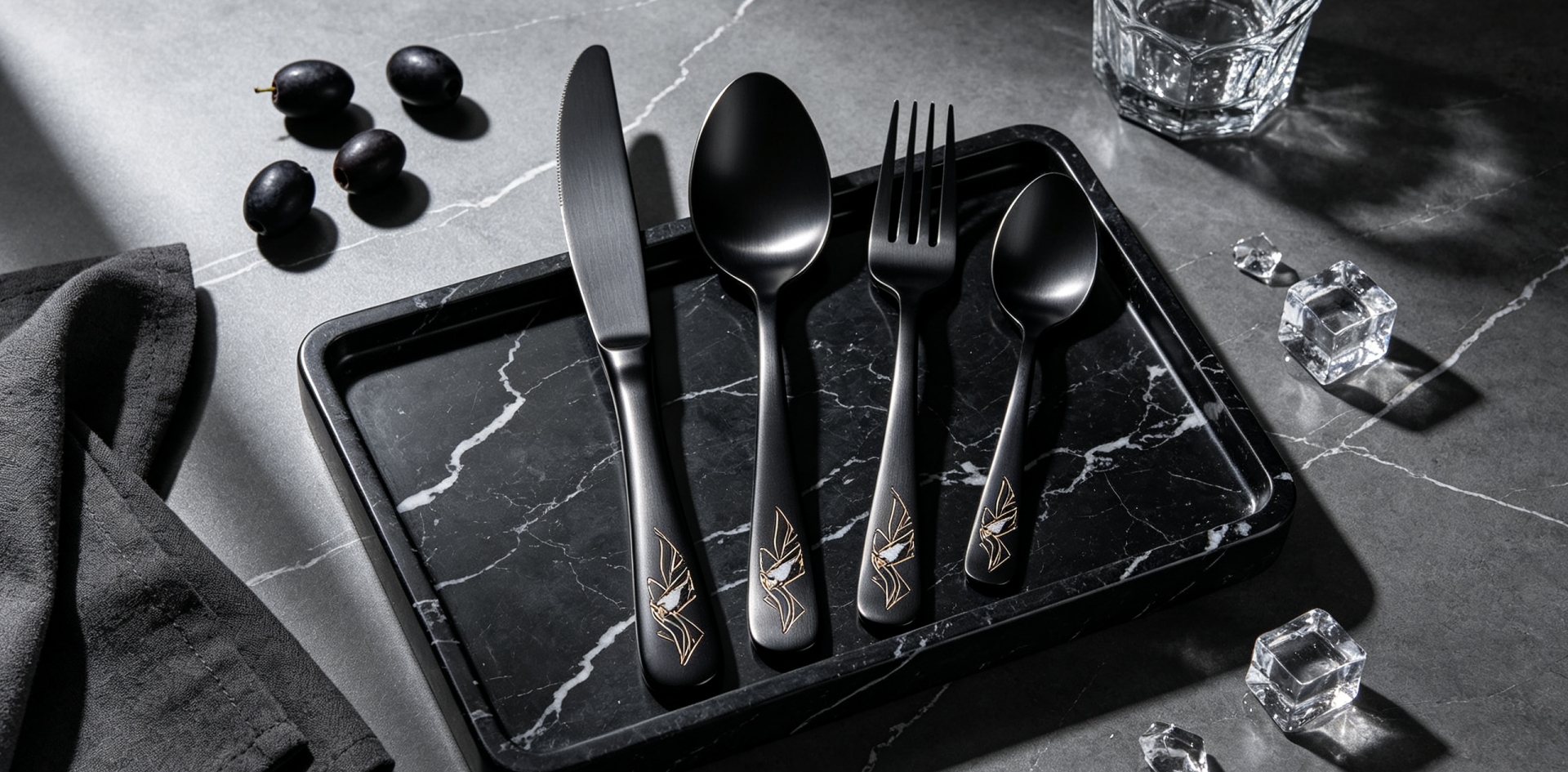
Stainless Steel Cutlery Edge Design for Wholesale and OEM Projects
When buyers evaluate stainless steel cutlery for wholesale, foodservice or private label projects, they usually focus first on material, appearance and price. However, the edge design of a spoon, fork or knife is another important product detail that can directly influence the overall user experience.
For stainless steel cutlery, the edge is not simply a finishing detail. It is closely related to product dimensions, forming, polishing, grinding and final inspection. A professional stainless steel cutlery manufacturer needs to control these factors together to achieve a consistent result across mass production.
For B2B buyers developing their own flatware collections, understanding how edge design is controlled can also make product selection and sample approval more efficient.
Why Edge Design Matters in Stainless Steel Cutlery
Different pieces of cutlery have different edge requirements.
A spoon has a bowl edge that should provide a smooth contact surface during use. A fork has multiple tine edges that need consistent forming and finishing. A knife has a working edge that requires a completely different manufacturing approach.
Therefore, it is not practical to use one identical edge specification for every product.
During product development, buyers and manufacturers may need to consider:
-
Overall product dimensions
-
Edge profile
-
Edge smoothness
-
Material thickness
-
Product shape
-
Handle construction
-
Polishing requirements
-
Grinding requirements
-
Final inspection standards
These details can be incorporated into the product specification before mass production.
Spoon Edge Design
For stainless steel spoons, the edge around the bowl is an important part of the product's contact area.
The shape of the bowl, the transition between the bowl and handle, and the final edge finishing all contribute to how the spoon feels during normal use.
When selecting a stainless steel spoon for a wholesale project, buyers can compare samples from several manufacturers by checking whether the bowl edge is visually consistent and whether the transition between the edge and the main body is smooth.
For customized products, the bowl width, bowl depth, overall length and material thickness can be discussed together.
This is particularly useful when developing a new spoon design instead of purchasing an existing standard model.
Fork Tines Require Consistent Finishing
Forks have a different structure because the working end contains multiple tines.
The tine length, width, spacing and forming consistency can influence both appearance and practical use.
For B2B buyers, a good sample evaluation should include comparison of:
-
Tine length
-
Tine spacing
-
Tine width
-
Tine alignment
-
Overall fork length
-
Handle proportion
-
Edge finishing
For large-volume orders, consistency between individual pieces is particularly important.
A professional factory should establish suitable production and inspection controls so that the approved sample can be used as a reference for subsequent manufacturing.
Knife Edge Design Is Different
A stainless steel table knife requires different technical considerations from spoons and forks.
The blade shape, blade thickness, cutting profile, handle connection and finishing process all affect the final product.
Depending on the customer's target market, a knife may be developed with different blade shapes and specifications.
For example, a buyer may require a more traditional table knife profile, while another customer may prefer a modern minimalist blade design to match a contemporary flatware collection.
The important point is that the knife should be developed as part of the complete collection.
Its proportions should visually coordinate with the corresponding spoon and fork while maintaining its own functional characteristics.
Parameters Should Be Confirmed Before Mass Production
For customized stainless steel cutlery, product drawings and samples are useful tools for confirming specifications.
Before production, buyers can confirm details such as:
-
Stainless steel grade
-
Overall length
-
Product width
-
Material thickness
-
Handle dimensions
-
Bowl dimensions
-
Fork tine dimensions
-
Knife blade dimensions
-
Product weight
-
Surface finish
-
Logo position
-
Packaging requirements
Not every project requires the same level of specification.
A standard wholesale project may only require confirmation of the main dimensions and material, while an OEM or private label project may require a more detailed technical specification.
The factory can adjust the development process according to the complexity of the project.
How to Evaluate a Cutlery Sample
A physical sample is one of the most useful references when developing a new stainless steel cutlery product.
Instead of checking only the appearance, B2B buyers can evaluate the sample from several perspectives.
First, check the overall dimensions against the drawing or quotation.
Second, inspect the spoon bowl, fork tines and knife blade individually.
Third, check the edge finishing and surface consistency.
Fourth, compare the handle shape and connection with the product design.
Finally, evaluate the complete set together.
This approach allows buyers to identify differences before approving mass production.
For projects involving multiple products, the sample approval process can also establish a common reference for the entire collection.
Experience Matters When Developing Custom Cutlery
Not every customer arrives with a finished technical drawing.
In many B2B projects, customers provide product images, reference samples or a general design idea and ask the factory to help develop the final product.
An experienced stainless steel cutlery factory can support this process by reviewing the customer's requirements and suggesting practical specifications.
For example, a customer may request a modern stainless steel spoon and fork with a particular handle shape. The factory can help coordinate the product dimensions, material thickness, edge finishing, surface treatment and matching knife design.
After samples are produced, the customer can review the actual products and provide feedback before final approval.
This project-based approach is especially useful for distributors, retailers and private label brands developing their own collections.
Certification and Quality Documentation
Product specifications are an important part of supplier evaluation, but international B2B buyers may also need information about factory qualifications, audits and certification.
Homefelt presents its manufacturing experience and qualification information for international customers, including BSCI, SEDEX 4P, BRC and ISO9001-related credentials, as well as Disney audit experience and FAMA and FSC certificates.
These materials can provide additional information when buyers are evaluating a potential long-term manufacturing partner.
For individual projects, buyers can also discuss specific product requirements, inspection procedures, testing requirements and documentation with the factory before placing a bulk order.
One-Stop Service for Customized Stainless Steel Cutlery
A successful cutlery project usually involves more than simply manufacturing the products.
Different customers may require different combinations of product development, packaging and logistics support.
Homefelt can provide a one-stop service according to the customer's actual project requirements.
This may include:
-
Product design support
-
Stainless steel material selection
-
Spoon, fork and knife development
-
Sample production
-
Logo and private label customization
-
Packaging design
-
Customized packaging production
-
Bulk manufacturing
-
Transportation coordination
The customer can therefore discuss multiple parts of the project with one manufacturing partner instead of managing every stage separately.
The purpose is to create a service package that fits the customer's business rather than offering the same solution to every buyer.
Supporting Long-Term Customer Growth
For B2B customers, the first order is often only the beginning of cooperation.
Once a product has been approved, future requirements may include additional sizes, new handle designs, matching cutlery pieces, updated packaging or larger production quantities.
Keeping product specifications, approved samples and project requirements clear can make future development more efficient.
Homefelt aims to work with customers as a long-term manufacturing partner, providing stainless steel knife, fork and spoon customization, OEM, ODM, private label and wholesale production support.
Our goal is to provide practical solutions based on each customer's market and project requirements, helping customers develop suitable products and grow their business together.
You May Be Interested In
Stainless Steel Cutlery Handle Connection Design for B2B Buyers
Stainless Steel Cutlery Weight & Balance Design for B2B Buyers
Related Article



