
Stainless Steel Cutlery Edge Smoothness for B2B Brands
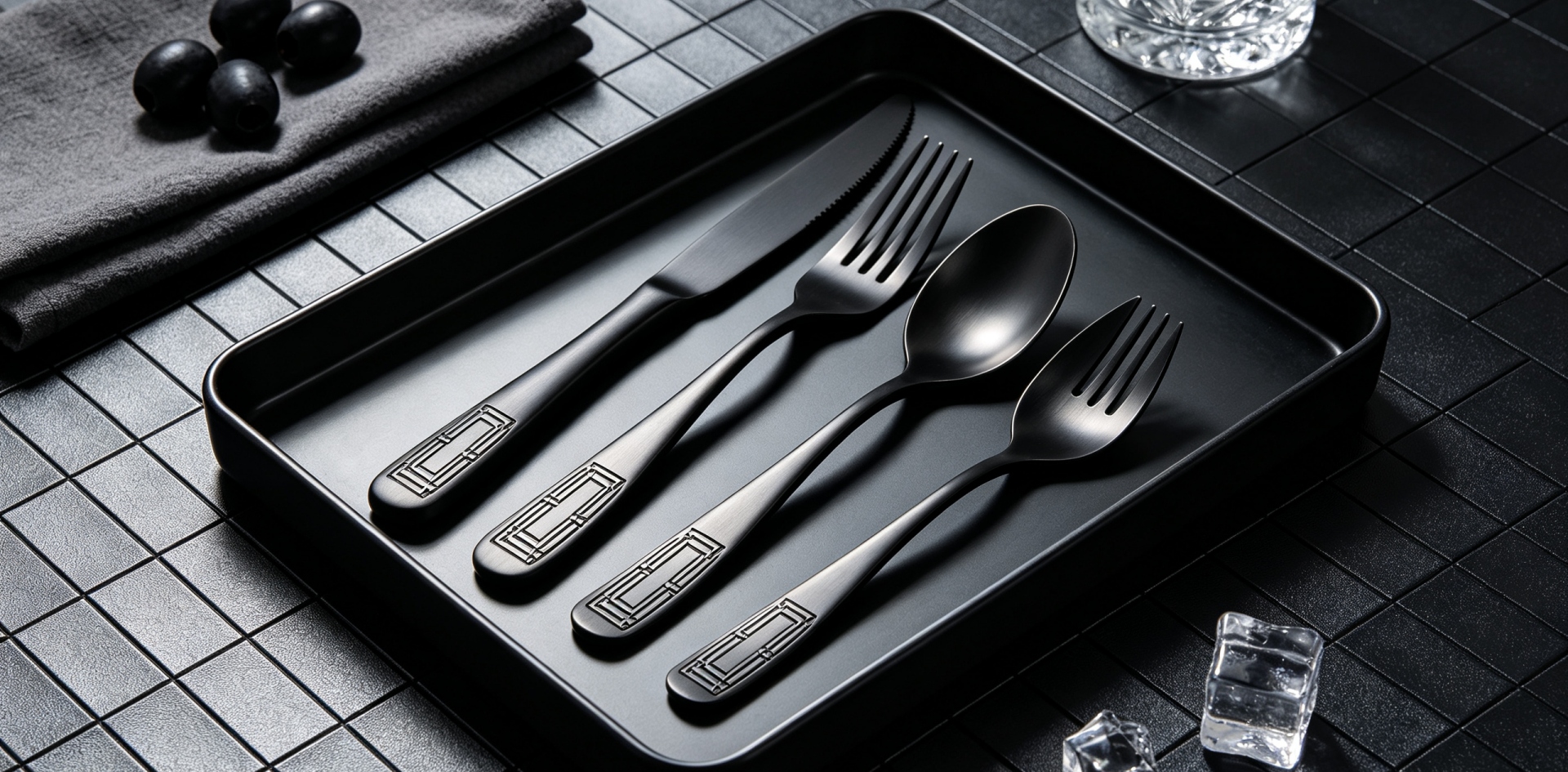
Stainless Steel Cutlery Edge Smoothness for B2B Brands
Small finishing details can have a noticeable influence on the overall experience of stainless steel cutlery. One of these details is edge smoothness.
For B2B buyers, wholesalers and private label brands, the edges of knives, forks and spoons should not only look clean but also feel appropriate during normal handling and use.
Edge finishing is therefore more than a visual step at the end of production. It is part of the overall product quality and should be considered when developing a customized stainless steel cutlery collection.
What Does Edge Smoothness Mean?
Edge smoothness refers to the condition of the product edges after forming, cutting, polishing and finishing.
A well-finished edge should have a controlled, clean surface appropriate for the intended product.
This applies to different areas of a cutlery piece.
A spoon has a bowl rim, a fork has the outer edges around the head and handle, and a knife has multiple edges that serve different functions.
The required treatment is therefore related to the specific product design rather than being exactly the same for every piece.
Why Edge Finishing Matters to B2B Buyers
Consumers may not know the technical name of a particular finishing process, but they can notice how a product feels when it is held or used.
A cutlery collection with clean, consistent edges can contribute to a more refined overall impression.
For B2B brands, this matters because the physical product represents the brand after it reaches the market.
A customized design may look excellent on a screen, but the final production quality still needs to support the intended product positioning.
This is why edge condition should be included in the product development discussion rather than left entirely to the final stage.
Different Edges Have Different Functions
Not every edge on stainless steel cutlery should be treated in exactly the same way.
The working edge of a knife has a different function from the rim of a spoon or the outer edge of a fork.
A knife may require a functional cutting edge, while the other contact areas need appropriate finishing for comfortable use and a clean appearance.
For B2B buyers, the important point is to define the intended function of each product before discussing the finishing requirements with the factory.
This helps the manufacturer understand which areas require functional treatment and which require smooth finishing.
Spoon Rim Finishing
The rim of a spoon is one of the areas that comes into direct contact with the user's mouth.
For this reason, the condition of the rim can contribute to the overall experience of the product.
The shape of the spoon bowl, rim profile and finishing process should be considered together.
A customized spoon design may use a different bowl shape or decorative transition from a standard product, so the finishing requirements may need to be reviewed accordingly.
Homefelt can discuss spoon design and finishing requirements as part of a broader stainless steel cutlery customization project.
Fork Edge Finishing
A fork has several areas that require careful finishing, including the outer edge of the head, the spaces between the tines and the transition toward the handle.
The tine design also influences how these areas can be finished.
For custom forks, buyers may have specific requirements for the head shape or tine arrangement. The finishing process should then be considered together with these design details.
This is especially useful when the fork is part of a coordinated knife, fork and spoon collection.
Knife Edge Requirements
Knives require a different approach because the blade has a functional cutting edge.
A table knife is not necessarily designed like a specialized kitchen knife or steak knife. Its edge characteristics should correspond with the intended dining application.
At the same time, other areas of the knife, such as the spine, handle connection and surrounding surfaces, require appropriate finishing.
For B2B buyers, separating these functional and non-functional areas can help create a clearer product specification.
Consistency Across the Collection
When a brand develops a complete flatware collection, edge finishing should be consistent with the overall quality level.
The knife, fork and spoon naturally have different edge structures, but their finishing quality should feel like part of the same product family.
This is particularly important for private label brands because customers often see the pieces together in a set or retail display.
A factory with experience in stainless steel cutlery can review the different products as one collection and identify where finishing requirements need to be adapted.
Edge Smoothness and Product Design
Design decisions can affect finishing requirements.
A heavily detailed handle, unusual fork head, narrow transition or special spoon rim may create different finishing considerations from a simple design.
This is another reason why it is useful to involve the manufacturer during the development stage.
The factory can consider whether the proposed design can be finished consistently at commercial production volumes.
The objective is not to simplify every custom product. It is to make sure that the selected design and finishing method work together.
Why Physical Samples Matter
Photographs can show surface appearance, but they cannot fully communicate how an edge feels when handled.
A physical sample allows the buyer to inspect the product directly.
The buyer can check the spoon rim, hold the fork, examine the knife and compare the overall finishing quality with an existing product.
For OEM and ODM projects, this provides a practical opportunity to confirm the intended result before moving into bulk production.
If any area needs adjustment, the feedback can be discussed with the factory while the product is still in development.
Supporting Private Label Product Quality
For private label brands, finishing quality is closely connected with brand presentation.
The customer may never know which factory manufactured the cutlery. They experience the product under the brand name shown on the packaging.
This makes consistent manufacturing important.
Homefelt factory supports private label stainless steel cutlery projects by combining customized product development with OEM and ODM manufacturing, packaging coordination and large-volume production.
Customers can discuss the level of customization they need according to their product positioning and sales channel.
From One Product to a Complete Collection
Edge finishing is only one element of a cutlery product.
A complete B2B project may also involve material selection, dimensions, handle design, surface treatment, branding, set composition and packaging.
When these requirements are handled together, the final collection can be developed with a clearer overall direction.
Homefelt works with stainless steel knives, forks, spoons and complete flatware sets for wholesalers, distributors and private label brands.
The factory can discuss individual product requirements or support a broader collection according to the customer's needs.
One-Stop Service for B2B Cutlery Projects
Some customers only need manufacturing. Others want support with product customization, packaging and export arrangements.
Homefelt provides a flexible service approach that can be adjusted according to the project.
Customers can discuss stainless steel cutlery design, OEM, ODM, private label production, packaging and bulk manufacturing with one factory.
Transportation requirements can also be considered as part of the overall project.
This allows customers to build a service package around their own situation rather than managing each stage separately.
Maintaining Consistency in Bulk Production
The value of edge finishing becomes particularly clear when a product moves into large-volume production.
A commercial order may contain thousands of knives, forks or spoons, so the approved finishing requirements need to be reproduced consistently.
The original sample and confirmed product specifications can provide an important reference for the production process.
For long-term B2B cooperation, the same reference can also support future repeat orders.
This helps brands maintain a stable product experience as their sales volume grows.
How Buyers Can Discuss Edge Requirements With a Factory
Buyers do not need to use highly technical terminology when contacting a supplier.
A simple description of the intended product, together with photographs, existing samples or reference products, can provide a useful starting point.
If the buyer has specific concerns about spoon rims, fork edges, knife blades or overall handling, these can be explained directly to the factory.
The supplier can then review the product design and identify the relevant manufacturing requirements.
Clear communication at the development stage makes it easier to establish a practical specification before production begins.
Developing Better B2B Stainless Steel Cutlery
Edge smoothness may appear to be a small detail, but small details contribute to the final impression of a stainless steel cutlery product.
For B2B brands, these details can help connect product design with actual user experience.
When edge finishing is considered alongside material, dimensions, surface treatment and overall construction, the result can be a more complete and consistent product.
Homefelt factory provides customized stainless steel knives, forks, spoons and flatware sets for OEM, ODM, private label and wholesale projects.
If you have an existing product, sample or new collection idea, you can share the information with the factory and discuss the appropriate development, packaging and production requirements.
Custom Stainless Steel Cutlery Manufacturing
OEM & ODM Stainless Steel Flatware
Custom Stainless Steel Knife, Fork and Spoon
Rayons des Couverts Inox pour les Projets B2B
Stainless Steel Fork Tine Thickness for B2B Cutlery
Related Article



