
How to Prepare a Stainless Steel Cutlery RFQ for B2B
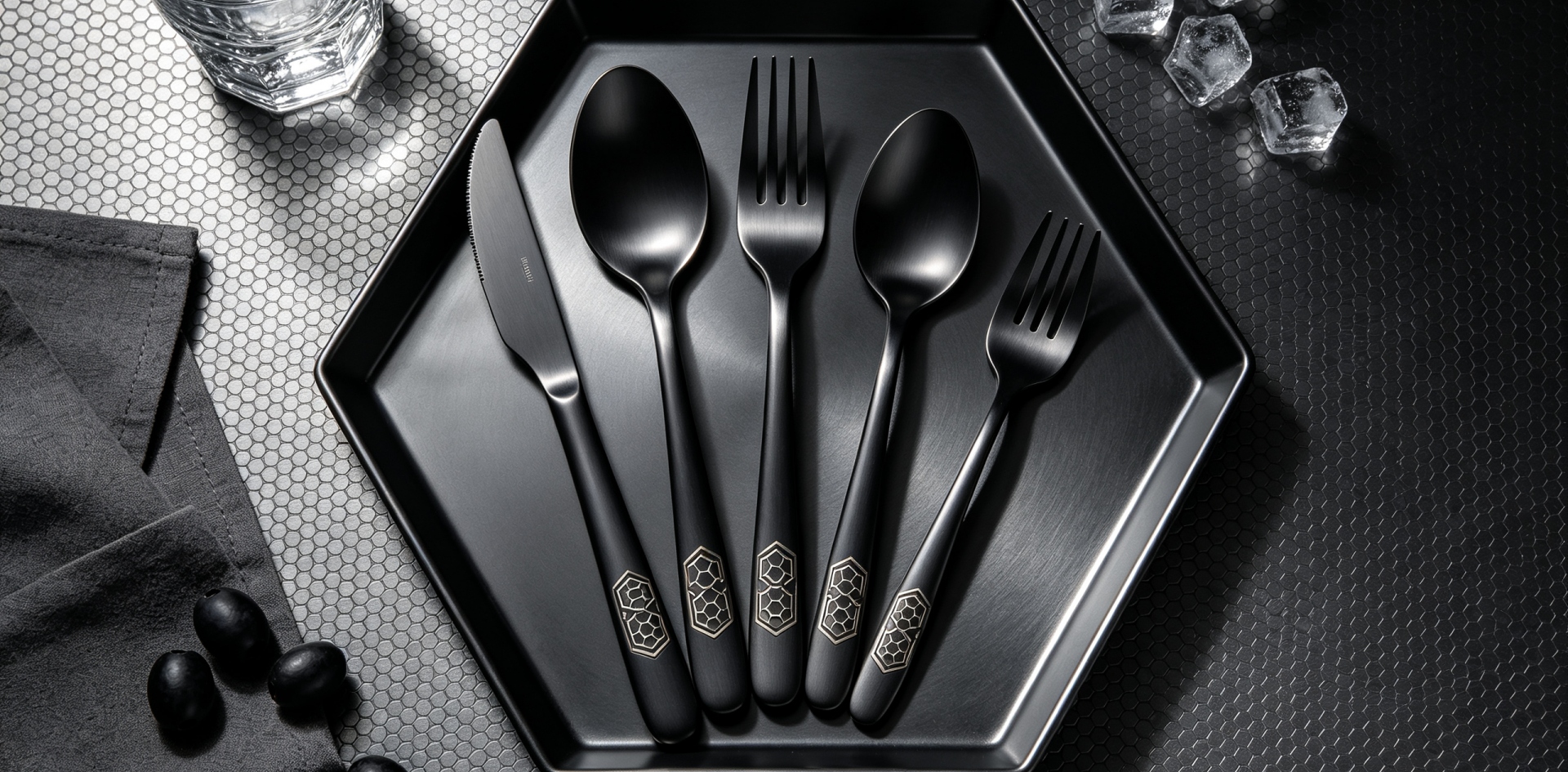
How to Prepare a Stainless Steel Cutlery RFQ for B2B
A good stainless steel cutlery project often starts with a good RFQ.
For B2B buyers, an RFQ is more than a request for a price. It is the first opportunity to communicate the products, quantities, specifications and commercial requirements that a factory needs to understand before preparing a quotation.
For importers, distributors, retailers and private label brands, a clear RFQ can make communication with a stainless steel cutlery manufacturer much more efficient.
Instead of sending a general request such as “Please quote your stainless steel flatware,” buyers can provide practical information that allows the factory to understand the actual project.
What Is an RFQ?
RFQ stands for Request for Quotation. It is a purchasing request sent to a supplier when a buyer wants to understand the price and commercial conditions for specific products.
For stainless steel cutlery, an RFQ can cover individual knives, forks and spoons, complete flatware sets or a customized collection.
The supplier uses the information in the RFQ to evaluate the product requirements and prepare a quotation.
A well-prepared RFQ does not need to be complicated. It simply needs to provide enough information for the manufacturer to understand what the buyer wants to purchase.
Start With the Product List
The first part of an RFQ should identify the required products.
Instead of describing the requirement only as “cutlery,” the buyer can list each product separately.
For example:
Dinner knife
Dinner fork
Table spoon
Teaspoon
Complete flatware set
If the order includes several products, each item can have its own quantity and product reference.
This gives the stainless steel cutlery factory a clearer picture of the project.
Include Estimated Quantities
Quantity is one of the most important pieces of information in a B2B cutlery RFQ.
A buyer does not necessarily need to know the final quantity when sending the first inquiry. An estimated quantity can still provide useful information.
For example, a buyer may be considering 5,000 pieces, 20,000 pieces or 100,000 pieces depending on the project.
If there are multiple products, the buyer can provide an estimated quantity for each SKU.
This helps the factory understand the scale of the order and prepare a quotation that is relevant to the purchasing requirement.
For private label programs, it can also be useful to mention whether the quoted quantity represents an initial order, a trial order or an expected recurring purchase.
Describe the Stainless Steel Requirement
Stainless steel specification is another important part of the RFQ.
If the buyer already has a required material specification, it should be included in the inquiry.
For example, the buyer may have a defined stainless steel grade for the knives, forks and spoons.
If the buyer does not yet have a final material specification, the RFQ can simply state that the factory should recommend a suitable option based on the intended application.
The important point is to make the material requirement clear enough for the manufacturer to understand what is expected.
Provide Product Dimensions When Available
Dimensions can significantly affect a cutlery quotation and manufacturing requirement.
For a custom spoon, the buyer may have requirements for overall length, bowl dimensions or handle proportions.
For a fork, the buyer may have specific requirements for length and head dimensions.
For a knife, the blade and handle specifications may already be defined.
If drawings are available, they can be attached to the RFQ. If drawings are not available, reference photos or existing samples can still provide useful information.
The more precise the product information, the easier it is for the factory to understand the intended design.
Explain Customization Requirements
Many B2B stainless steel cutlery orders involve some level of customization.
A buyer may require a specific handle design, product proportion, logo, branding element or packaging format.
These requirements should be included in the RFQ rather than discussed only after the quotation has already been prepared.
For example, a buyer can state:
Custom handle design required
Logo engraving required
Specific product dimensions required
Private label packaging required
Existing product to be modified
New design based on reference sample
This allows the OEM or ODM manufacturer to evaluate the project more accurately.
OEM and ODM RFQs Need More Detail
An OEM project usually starts with clearly defined buyer requirements.
The buyer may already have drawings, samples, specifications or an established product design.
An ODM project can begin with a product concept or an existing factory design that needs to be adapted for the buyer's brand.
In both cases, the RFQ should make the project type clear.
A buyer can state whether the request is for:
OEM manufacturing
ODM development
Private label production
Standard wholesale products
A mixed requirement
This gives the stainless steel cutlery supplier better commercial context when reviewing the inquiry.
Mention Branding Requirements
Private label customers should also explain their branding requirements.
A buyer may want a company logo, brand name or other identifying element on the stainless steel cutlery or packaging.
The RFQ can specify the preferred branding method if it is already known.
If the buyer is not sure which method is appropriate, it can simply provide the logo artwork and ask the factory to recommend a suitable solution.
Providing the branding requirement at the beginning prevents the quotation from being based on a standard unbranded product when the actual project requires customization.
Include Packaging Information
Packaging can be an important part of a commercial cutlery project.
A buyer may require individual boxes, sets, retail packaging or bulk packing for distribution.
If the packaging specification is already known, it should be included in the RFQ.
If the buyer is still developing the packaging, this can also be stated clearly.
For example, the buyer may request a quotation for the cutlery itself first and discuss customized packaging separately.
Clear communication helps the factory understand what is included in the requested quotation.
State the Target Market When Relevant
B2B buyers can also provide information about the intended market when it is relevant to the project.
A retailer may be developing a collection for a particular market, while a distributor may be purchasing products for several customers.
This information can help the manufacturer understand the commercial positioning of the order.
However, buyers do not need to provide unnecessary information. The RFQ should remain focused on the product and purchasing requirements.
Provide a Target Purchasing Period
If the buyer has a target purchasing period, it is useful to mention it.
For example, the buyer may be planning to place the order during a particular month or preparing for a seasonal sales period.
This gives the stainless steel cutlery factory additional context when reviewing the project.
The buyer can also indicate whether the timing is flexible or connected to a specific commercial deadline.
That distinction can be useful when discussing production and delivery arrangements later.
A Simple RFQ Structure
A practical stainless steel cutlery RFQ can be organized into several sections:
Product
Material
Dimensions
Quantity
Customization
Branding
Packaging
Target market
Target purchasing period
Shipping destination
Preferred commercial terms
Not every project requires every item, but this structure gives the buyer a useful starting point.
RFQ Information for a Complete Flatware Collection
When purchasing a complete collection, buyers should avoid describing all products as one general item.
A better approach is to list the individual components.
For example:
Dinner knife — quantity
Dinner fork — quantity
Table spoon — quantity
Teaspoon — quantity
Flatware set — quantity
If several set configurations are required, each configuration should be identified separately.
This makes it easier for the factory to understand the actual product mix.
How a Clear RFQ Supports Better Communication
The purpose of an RFQ is not simply to obtain a number.
It creates a common reference between the buyer and supplier.
When a buyer provides clear information, the manufacturer can ask more focused questions and prepare a quotation that is closer to the actual project requirements.
This can reduce repeated messages about basic product information and allow the discussion to move more quickly toward customization, samples and order confirmation.
Homefelt for B2B Stainless Steel Cutlery RFQs
Homefelt specializes in stainless steel knives, forks, spoons and complete cutlery sets for B2B customers.
The factory supports OEM, ODM, private label and wholesale manufacturing for commercial projects.
Buyers can begin an inquiry with their existing product specifications, reference samples, drawings or estimated quantities.
For customers who are still developing a product concept, the initial RFQ can also describe the intended product, approximate quantity and customization requirements. The factory can then review the project and discuss the appropriate manufacturing approach.
Whether the requirement is a standard wholesale order or a new private label collection, a clear RFQ provides a practical starting point.
From RFQ to Stainless Steel Cutlery Order
A strong B2B cutlery project begins with clear communication.
By providing the product list, quantities, material requirements, customization details and target purchasing information, buyers give the manufacturer the information needed to understand the project.
The next step is to review the quotation and confirm the specifications that will form the basis of the order.
For importers, distributors, retailers and private label brands, this process can turn a general product idea into a clearly defined stainless steel cutlery purchasing project.
If you already know the products and approximate quantities you need, you can send the requirements directly to a stainless steel cutlery manufacturer and request a project-specific quotation.
Request a Stainless Steel Cutlery RFQ
Discuss Your OEM or ODM Flatware Project
Stainless Steel Cutlery Purchase Orders for B2B Buyers
Stainless Steel Cutlery Incoterms for B2B Buyers
Related Article



