How to Maintain Finish Consistency in Stainless Steel Cutlery Bulk Production

How to Maintain Finish Consistency in Stainless Steel Cutlery Bulk Production
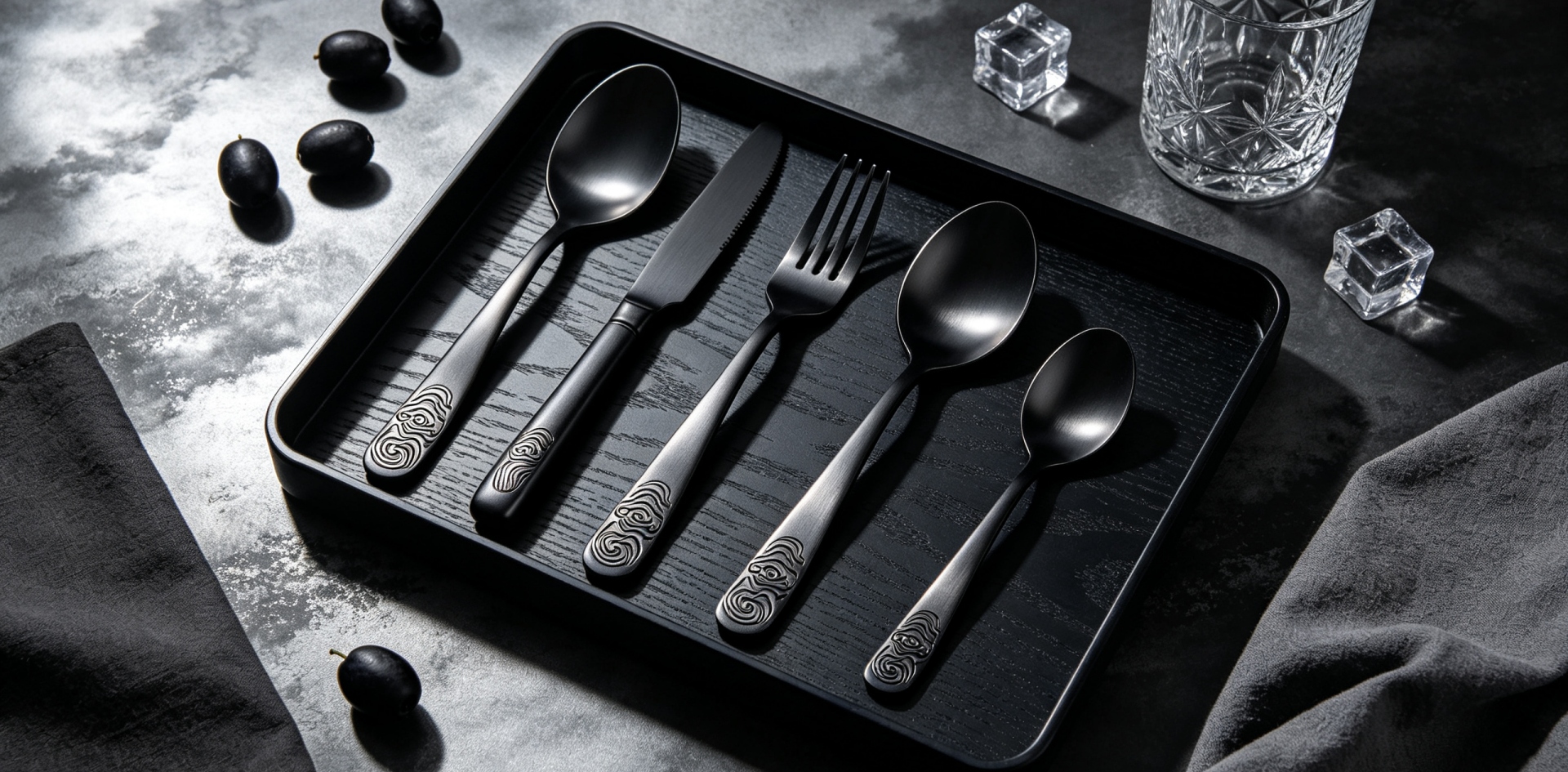
When buyers source stainless steel cutlery in large quantities, consistent appearance is essential to a professional product range. A spoon, fork, and knife may share the same design language, but visible differences in brightness, surface texture, or color can make the finished set look mismatched. These differences are particularly noticeable in retail displays, gift boxes, hospitality table settings, and private-label collections.
Finish consistency is not achieved by checking only the first approved sample. It requires a clear finish specification, controlled production processes, suitable inspection methods, and communication between the buyer and the factory. Establishing these controls before mass production helps reduce avoidable rework and quality disputes.
1. Describe the Intended Finish Precisely
Terms such as mirror polish, satin finish, brushed finish, and gold-colored finish describe different visual results, but the terms alone may not communicate every detail required for production.
A useful specification should identify the intended finish for each component and explain whether the surface should have a high reflection, a softer appearance, or a visible directional texture. It should also clarify whether the same finish is required across the spoon bowl, fork head, knife blade, and handle.
Product geometry affects how a finish appears. A curved spoon bowl reflects light differently from a flat handle, even when both have undergone the same finishing process. Buyers should therefore evaluate the finish on the actual product rather than relying exclusively on a generic reference image.
For customized stainless steel cutlery, the specification should combine written descriptions with approved physical samples and photographs where helpful. This gives production staff a practical reference for interpreting the buyer's expectations.
2. Approve Representative Samples Before Bulk Production
Sample approval provides an opportunity to assess the finish across the complete product range. Instead of approving only one spoon, buyers should consider whether the matching fork and knife deliver a coordinated appearance.
The sample review should cover the visible surfaces, transitions between different shapes, handle details, and any decorative elements. If the collection contains several product sizes, each significant variation should be checked because different shapes may respond differently during polishing or coating.
Once approved, the samples should be identified by product code and version. Both the buyer and factory should know which reference governs production. If a later design revision changes the handle shape, surface treatment, or material, the team should determine whether renewed finish approval is needed.
A clear approval record helps avoid disagreements caused by comparing mass-produced items with an earlier or different sample.
3. Understand the Main Sources of Finish Variation
Several stages can influence the appearance of stainless steel cutlery. Mechanical polishing may produce differences in surface smoothness or reflection. Handling between operations can introduce marks. Cleaning and drying may affect whether residue or water spots remain visible. For products with additional decorative treatments, differences in process conditions can also affect the final appearance.
The shape of the product matters as well. Narrow grooves, curved transitions, and areas near the handle can be more difficult to finish uniformly than broad, accessible surfaces.
A manufacturer should identify which production stages have the greatest influence on the agreed finish and monitor those stages accordingly. If variation appears repeatedly in the same area, investigating the process is more useful than relying on repeated final sorting.
Homefelt's stainless steel cutlery customization work can be planned around the buyer's specified product design, finish expectations, and inspection requirements so that these details are considered before a bulk order moves forward.
4. Keep Process Conditions Consistent
Finish quality depends on repeatable production conditions. For mechanical finishing, relevant controls may include the condition of polishing tools, process settings, work sequence, and handling between operations. The appropriate controls vary according to the product design and finishing method.
When production changes from one model to another, operators should follow the established settings and work instructions for the next item. A process suitable for a broad spoon bowl may not produce the same result on a narrow fork neck or a knife handle.
Equipment maintenance and operator training also support consistency. Worn tools, inconsistent handling, or undocumented adjustments can create differences that become difficult to correct once a large batch has been completed.
Factories should document important process parameters where appropriate and review unusual changes before continuing production. This helps distinguish a one-time defect from a recurring process problem.
5. Compare Matching Pieces Under the Same Conditions
A finish inspection should use consistent lighting, viewing angles, and product-cleaning conditions. Highly reflective stainless steel can appear brighter or darker depending on its surroundings, so comparisons made under different conditions may be misleading.
For a matching set, inspectors should place representative spoons, forks, and knives together and examine them as a group. The review should consider both the individual surface and the overall visual relationship between the pieces.
A practical comparison process includes:
-
Cleaning and drying the samples before inspection
-
Using the same lighting environment for all pieces
-
Comparing matching models with their approved references
-
Checking prominent surfaces and transition areas
-
Recording visible differences by product code and batch
The goal is not to make differently shaped items reflect light identically. It is to determine whether the finish meets the agreed appearance standard for the intended collection.
6. Control Batch Changes and Rework
Finish variation may appear when a production run is divided into multiple batches or when products are processed at different times. This is important for repeat orders, split shipments, and collections that include several coordinated models.
A factory should retain appropriate reference records and compare new production against the approved standard. If rework is required, the affected items should be checked again to ensure the corrective process has not created a different appearance or introduced new marks.
Buyers should also clarify whether separate batches can be mixed within the same retail set. Where visual matching is important, the factory may need to coordinate production and packing so that pieces in one set meet the agreed consistency requirements.
If a finish process or material changes, the supplier should communicate the change and obtain any required approval before applying it to the order.
7. Establish Inspection Criteria That Can Be Applied Consistently
Visual quality expectations should be documented in a way that inspectors can apply consistently. Statements such as “no visible defects” may need further explanation, including viewing conditions, defect categories, and the areas of the product that receive particular attention.
The inspection plan should distinguish minor cosmetic variation from defects that materially affect the product's intended appearance or function. Buyers and suppliers should agree on the applicable sampling method and acceptance criteria before mass production.
Inspection records should identify the product model, batch, finish type, and findings. If a lot does not meet the agreed standard, the team can determine whether sorting, rework, or a process correction is appropriate.
A written standard makes discussions more objective and helps maintain the same expectations across repeat orders.
8. What B2B Buyers Should Confirm With a Cutlery Factory
Before approving a wholesale or OEM project, buyers should confirm the finish description, reference samples, production controls, and inspection method. They should also clarify how changes to the design, material, or finishing process will be communicated.
For private-label collections, finish consistency can influence brand perception across product photography, retail packaging, and the customer's actual experience. Coordinating product approval and production requirements early can help avoid costly revisions after manufacturing has begun.
Homefelt provides stainless steel cutlery customization, OEM/ODM options, wholesale production, and coordination of product design, packaging, and transportation. Buyers can share their preferred finish, product dimensions, reference samples, and order requirements for evaluation.
To discuss a customized stainless steel spoon, fork, knife, or flatware collection, contact ingrid@homefelt.net or visit //www.huabao-homecollection.com/.
You May Be Interested In
How to Verify Material Thickness for Stainless Steel Cutlery Bulk Orders
How to Define Visual Quality Standards for Stainless Steel Cutlery Orders
Related Article