
Stainless Steel Cutlery Finish Gloss Level Control for OEM Production
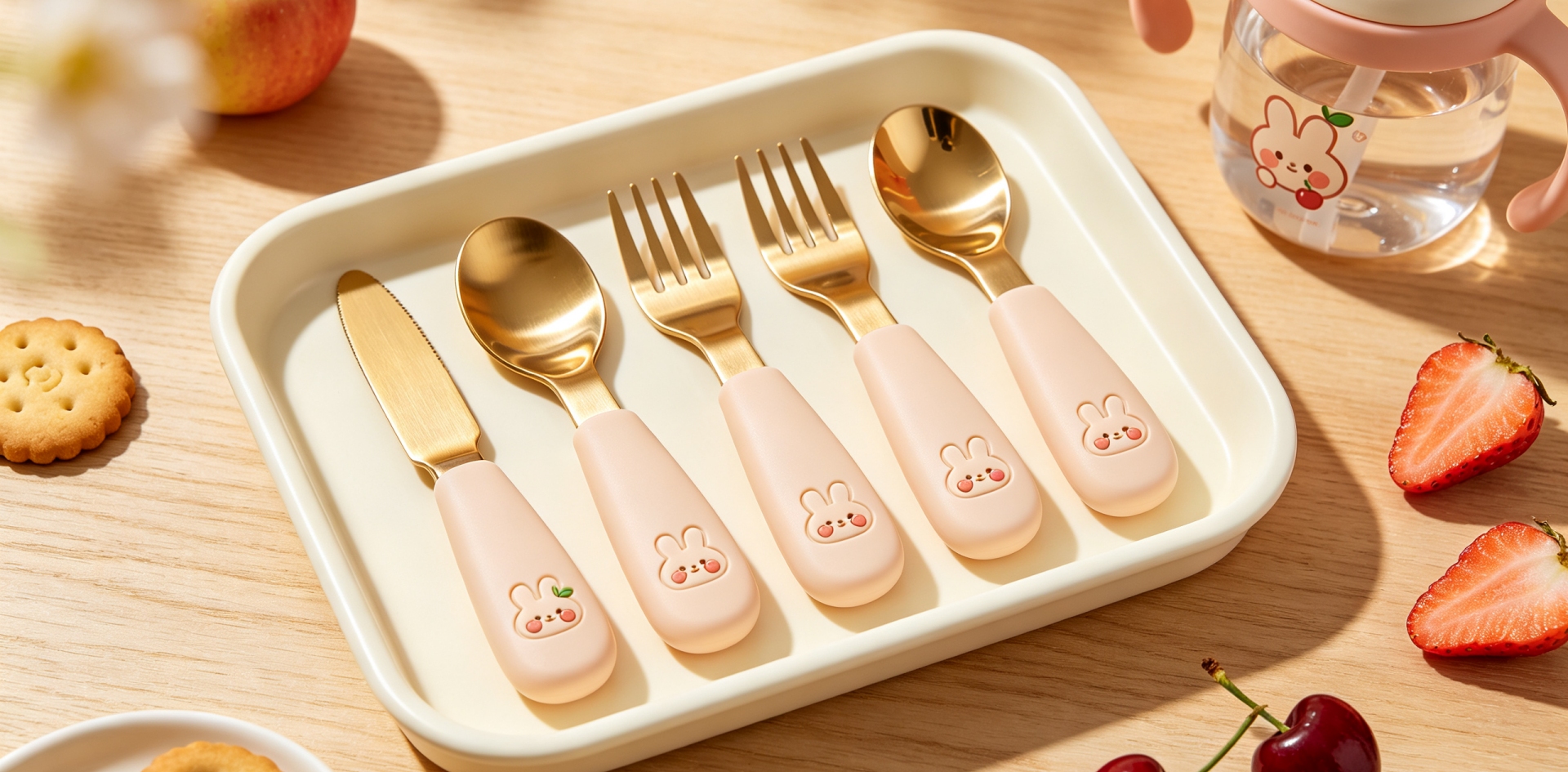
Stainless Steel Cutlery Finish Gloss Level Control for OEM Production
The gloss level of stainless steel cutlery has a strong influence on how a product looks under retail lighting, restaurant lighting and everyday use. Some collections feature a bright, mirror-like surface, while others use a softer satin appearance. For importers and private label brands, choosing the right finish is only the first step. The intended gloss level also needs to be communicated clearly and reproduced consistently during bulk manufacturing.
A cutlery set may include knives, forks, spoons and serving pieces with different surface areas and shapes. If their finishes appear noticeably different when displayed together, the collection may lose its intended visual identity. Establishing a clear gloss specification helps buyers and manufacturers evaluate samples and agree on practical acceptance criteria before production.
Homefelt factory supports stainless steel cutlery customization, OEM and ODM manufacturing, private label production and wholesale supply for business customers developing coordinated flatware collections.
What Is Gloss Level in Stainless Steel Cutlery?
Gloss level describes how strongly a surface reflects light in a directional or mirror-like manner. A highly polished surface often produces sharper reflections, while a satin or brushed surface generally produces a softer, less distinct reflection.
Gloss should not be confused with color, surface smoothness or overall product quality. Two surfaces may have similar colors but different gloss appearances. Likewise, a product can look shiny under one light source and appear less reflective under another.
For B2B purchasing, the goal is to define the finish that matches the product concept and the approved sample. The specification should make clear whether the collection requires a bright polished appearance, a subdued satin finish or a particular finish combination across different product areas.
Why Gloss Consistency Matters for Cutlery Sets
Maintaining a Coordinated Appearance
A matching cutlery collection is often evaluated as a group. If one spoon has a brighter surface than the other pieces, the difference may become noticeable when the set is arranged on a table or displayed in retail packaging.
This is especially relevant to private label products, where visual consistency supports the brand's overall presentation. Buyers should compare matching items together rather than evaluating each piece under unrelated lighting conditions.
Meeting Market Positioning Requirements
Different market segments may prefer different finishes. A premium retail collection may call for a bright reflective surface, while a contemporary hospitality range may use a softer satin appearance.
Neither finish is automatically better for every project. The suitable choice depends on the intended design, customer expectations, product maintenance requirements and target price.
The buyer should communicate the preferred finish early enough for the factory to assess the manufacturing approach and prepare a representative sample.
Supporting Repeat Orders
A clearly documented finish reference helps buyers reorder an existing product without relying solely on memory or a general description such as “shiny stainless steel.”
The approved sample, surface-treatment requirements and relevant inspection records can provide a more reliable reference for future production. This is useful when a distributor maintains several cutlery collections with different appearance standards.
Factors That Influence the Finished Gloss Appearance
Surface Preparation
The condition of the stainless steel surface before final polishing can influence the appearance of the finished product. Forming marks and surface imperfections may affect how evenly the surface reflects light.
The preparation process should therefore be considered alongside the final polishing method. A gloss target is easier to evaluate when the product surface is prepared appropriately for the intended finish.
Polishing Method
Different polishing processes create different reflection characteristics. A bright polished surface requires a different result from a brushed or satin finish, and the selected method should suit the product's geometry.
Curved spoon bowls, narrow fork handles and table knife blades may reflect light differently even when they belong to the same collection. Buyers should review the finish on representative products rather than assuming that all shapes will look identical.
Product Geometry
Surface curvature and angle influence the direction in which light is reflected. A spoon bowl may appear brighter at one viewing angle than its handle, while a flat handle section may produce a more defined reflection.
For this reason, gloss consistency should be assessed using agreed viewing conditions and suitable reference samples. The purpose is to maintain the intended overall appearance, not to expect every part of a three-dimensional object to reflect light in exactly the same way.
Additional Surface Treatments
Colored coatings, decorative textures and other treatments may alter the final visual effect. When a design combines different treatments, the buyer should identify the required appearance for each area and confirm whether the finish can be achieved with the chosen process.
How Buyers Should Specify Gloss Requirements
A useful cutlery specification should describe the desired finish in a way that the manufacturer can evaluate and reproduce.
-
Finish category: Identify mirror polish, satin finish, brushing or another agreed treatment.
-
Reference sample: Keep an approved physical sample representing the intended appearance.
-
Surface location: Specify whether the finish applies to the complete item or selected areas.
-
Visual reference: Provide clear photographs or design references where they help explain the desired result.
-
Inspection conditions: Agree on suitable lighting, viewing distance and comparison methods.
-
Acceptance criteria: Define the acceptable appearance and how noticeable differences will be evaluated.
-
Product coverage: Confirm which knives, forks, spoons and additional pieces use the same finish requirement.
If a project requires numerical gloss measurements, the buyer and manufacturer should agree on a suitable measurement method and relevant measurement locations. The measurement approach must account for the surface shape and the limitations of the equipment.
A single universal gloss value is not appropriate for every cutlery design. The target should reflect the selected finish and the actual product geometry.
Example: Matching Gloss Across a Private Label Collection
Consider a distributor developing a stainless steel cutlery set with a bright polished finish. During sample review, the dinner spoon looks more reflective than the dinner fork, while the knife blade produces a different reflection from the handle.
The buyer and factory first confirm that the products use the intended finish process. They then compare the samples under consistent lighting and review the surface preparation, geometry and polishing requirements.
If the appearance falls outside the agreed expectation, the team can discuss whether the finish specification or process needs adjustment. Revised samples are then evaluated as a complete set before approval.
This example illustrates a practical development process rather than a claim about a specific completed customer project. Actual adjustments depend on the material, surface geometry and manufacturing method.
Gloss Inspection During Bulk Production
Bulk inspection should compare finished products with the approved reference and the written surface specification. Depending on the project, the review may include visible scratches, polishing marks, uneven reflection and obvious differences between matching pieces.
A suitable inspection plan should define the sampling method, relevant product codes and the conditions under which samples are compared. Where numerical measurements are required, the method and acceptance limits should be agreed before production.
Inspection records help document the findings and provide a basis for investigating deviations. If a difference is identified, the team can review whether it is related to surface preparation, polishing, product geometry or a change in the production process.
Gloss inspection should be combined with checks for dimensions, material requirements, construction and other specified quality characteristics. A reflective surface alone does not establish that a cutlery item meets the complete product specification.
Product Documentation and Manufacturing Credentials
For custom flatware projects, clear documentation helps connect the approved appearance with production requirements. Depending on the order, useful records may include technical drawings, material specifications, finish references, approved samples, inspection records and relevant test reports.
Homefelt has experience in stainless steel cutlery manufacturing and supports OEM, ODM, wholesale and private label projects. Its business credentials include BSCI, SEDEX 4P, BRC and ISO 9001 audit or certification experience, as well as Disney audit experience. FAMA and FSC certificates are available for applicable projects. Buyers should confirm the specific documentation and scope relevant to their requirements.
For repeat orders, retaining the approved finish reference and recording any revisions can help reduce uncertainty when the product is manufactured again.
One-Stop Support for Custom Stainless Steel Cutlery
Developing a cutlery collection may involve product design, material selection, surface finishing, logo customization, packaging and transportation planning. Reviewing these requirements together helps buyers align the finished product with the intended market and brand presentation.
Homefelt factory works with importers, wholesalers, distributors and retailers sourcing stainless steel knives, forks, spoons and complete flatware sets. Buyers can share reference samples, preferred finish, target quantities and packaging requirements to begin discussing a suitable OEM or ODM solution.
You May Be Interested In
Stainless Steel Cutlery Carton Drop Protection for Bulk Export Orders
Stainless Steel Cutlery Sample-to-Bulk Consistency for OEM Orders
Related Article



