
Stainless Steel Cutlery Finishes Explained for B2B Buyers
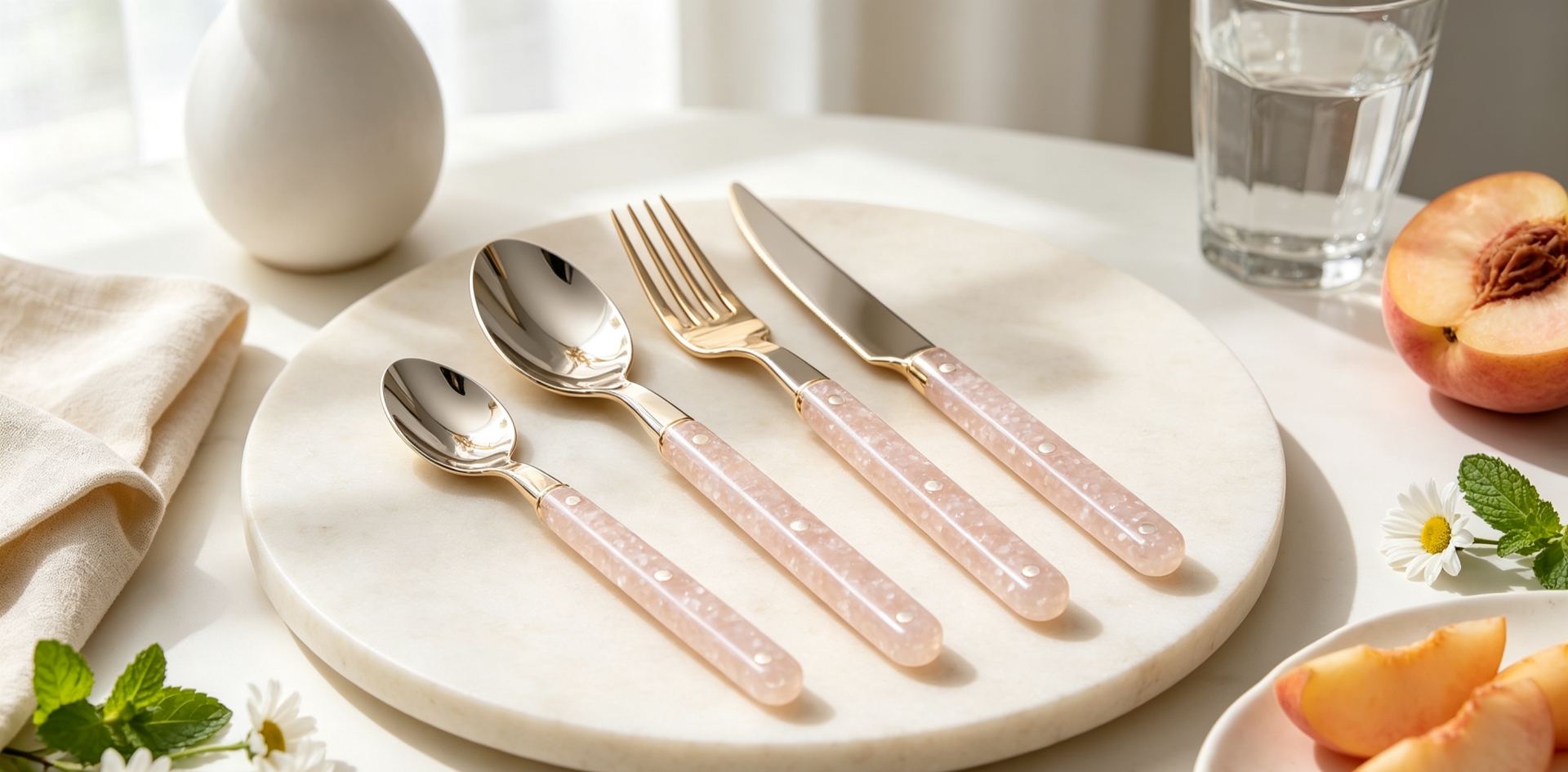
Stainless Steel Cutlery Finishes Explained for B2B Buyers
The surface finish of stainless steel cutlery can change the entire appearance of a product collection. Two cutlery sets with similar shapes can look completely different when they use different finishes.
For wholesalers, restaurants, hotels, retailers and private label brands, finish selection is therefore an important part of product development.
The right finish should match the product design, target market, table setting and expected level of use. It should also be considered together with the stainless steel material, product shape and packaging.
What Is a Stainless Steel Cutlery Finish?
A finish refers to the final appearance and surface treatment of the stainless steel product.
During manufacturing, stainless steel cutlery goes through different processes before reaching its final appearance. Polishing and surface treatment can influence how smooth, bright or textured the product looks.
Common cutlery finishes include:
- Mirror polish
- Satin finish
- Brushed finish
- Matte finish
Each option creates a different visual effect and can suit different commercial applications.
Mirror Polished Stainless Steel Cutlery
Mirror polish is one of the most recognizable finishes for stainless steel cutlery.
It creates a bright, reflective surface that can give the product a classic and refined appearance.
Mirror-polished cutlery is often considered for:
- Fine dining restaurants
- Hotels
- Banquet services
- Premium tableware
- Retail collections
The quality of the polishing process is important. A high-quality finish should have a clean and consistent appearance across the product.
For B2B buyers, samples should be checked carefully under suitable lighting before mass production.
Satin Stainless Steel Cutlery
Satin finishes provide a softer appearance compared with highly reflective mirror polishing.
The surface has a more understated visual effect and can work well with modern table settings.
Satin stainless steel cutlery can be suitable for:
- Modern restaurants
- Hotels
- Household tableware
- Contemporary retail collections
- Hospitality projects
For brands looking for a refined product without a highly reflective surface, satin can be an attractive option.
Brushed Stainless Steel Flatware
Brushed finishes create a visible directional texture on the surface.
The result is generally more subtle and contemporary than mirror polish.
Brushed stainless steel flatware can work well for modern product collections where a simple industrial or understated appearance is preferred.
For larger orders, consistency is important because differences in brushing direction or intensity can become noticeable across multiple pieces.
Matte Stainless Steel Cutlery
Matte finishes provide a low-reflection appearance.
They are often selected for contemporary collections and products that aim for a simple, modern visual style.
Matte cutlery can be especially suitable for brands that want to create a distinctive appearance compared with traditional polished products.
However, the exact appearance of a matte finish can vary depending on the production process, so buyers should always review a physical sample.
Which Finish Is Best for Restaurants?
There is no single finish that works for every restaurant.
A fine dining restaurant may prefer mirror-polished cutlery because of its formal appearance.
A modern restaurant may choose satin, brushed or matte finishes to match its interior design.
A casual restaurant may prioritize practical purchasing considerations over decorative surface treatments.
The restaurant's plates, glassware, furniture and overall table design should be considered when selecting the finish.
Which Finish Is Best for Hotels?
Hotels often operate several dining areas, so the finish may depend on the specific application.
A premium restaurant may use mirror-polished products.
A contemporary breakfast restaurant may prefer satin or brushed finishes.
Banquet operations may require a practical collection that can be purchased and replenished in larger quantities.
For hotel groups, keeping the same finish specification across repeat orders is particularly important.
Finish and Product Design Should Work Together
The same handle design can create a very different impression when produced with different finishes.
A decorative handle with mirror polish may create a formal appearance.
The same handle with a matte finish can look more contemporary.
For this reason, buyers should evaluate the handle and finish together instead of selecting them separately.
A sample can show how the complete design works in practice.
Finish and Stainless Steel Grade
Surface finish and stainless steel grade are two different specifications.
A buyer may choose 18/10 or 18/0 stainless steel and then select a mirror, satin, brushed or matte finish depending on the product design.
The material provides the foundation, while the finishing process affects the final appearance.
Both specifications should be confirmed before production.
Finish and Product Weight
Surface finish does not determine the weight of the cutlery.
Product weight depends more on factors such as:
- Stainless steel material
- Product thickness
- Handle design
- Overall dimensions
- Construction
This means a buyer can select a preferred finish without assuming that it will make the product heavier or lighter.
For commercial projects, weight should be specified separately.
Checking Finish Quality
When reviewing a sample, buyers should check whether the finish is consistent.
Look for:
- Uneven polishing
- Visible scratches
- Surface marks
- Irregular brushing
- Dull areas
- Uneven texture
The complete collection should also be compared together.
A fork, spoon and knife should have compatible surface characteristics.
For retail products, the finish shown in product photographs should also represent the actual production appearance.
Custom Finishes for Private Label Products
Private label brands may want a finish that becomes part of their product identity.
A custom product can combine:
- Unique handle design
- Specific stainless steel grade
- Special surface finish
- Custom logo
- Branded packaging
This allows brands to create a collection that is visually different from standard wholesale products.
For customized projects, the finish should be approved on the actual product rather than only through digital images.
Packaging and Surface Protection
The chosen finish can also influence packaging requirements.
Highly polished surfaces can show scratches more easily during transportation if pieces are allowed to move against each other.
Suitable internal protection can help reduce surface contact.
For export orders, packaging should be evaluated together with the actual cutlery.
This is particularly important for large wholesale shipments that may experience multiple handling stages.
Finish for Retail Cutlery
Retail buyers should consider how the finish will appear both on the shelf and in online product photographs.
Mirror polish can create strong reflections and a bright appearance.
Matte and satin finishes may photograph differently depending on lighting.
Before finalizing product photography and packaging, it is useful to approve the physical sample.
This helps ensure that the product shown to customers matches the actual product.
Finish for Catering and Foodservice
Catering businesses may need to balance appearance with practical handling.
Premium event services may prefer polished finishes.
Large-volume catering companies may select simpler finishes based on their event requirements and purchasing budget.
For recurring events, consistent finish across replacement orders is important.
A supplier should be able to reproduce the agreed surface appearance according to the approved specification.
How to Choose the Right Finish
B2B buyers can use several questions to narrow down the choice:
- What type of customer will use the product?
- Is the product for premium or everyday dining?
- What is the restaurant or brand design style?
- Will the product be sold individually or as a set?
- Is the product intended for retail or foodservice?
- Does the surface need a bright or low-reflection appearance?
- Will the product require customized packaging?
Answering these questions can make the selection process much easier.
Why Samples Matter
Finish is one of the product characteristics that is difficult to judge accurately from a screen.
Lighting, photography and display settings can change the way stainless steel appears.
A physical sample allows buyers to evaluate:
- Surface appearance
- Reflection
- Texture
- Handle design
- Product weight
- Overall presentation
For a large B2B order, approving a sample before production can reduce unnecessary misunderstandings.
Working With an Experienced Manufacturer
Surface finishing is closely connected to the manufacturing process.
Homefelt has more than 30 years of stainless steel manufacturing experience and produces stainless steel cutlery along with kitchen and dining products, BBQ tools, pet bowls and children's tableware.
For international B2B customers, Homefelt can support different product designs, material specifications and surface finishing requirements.
Buyers can discuss the intended market, product style, finish and estimated quantity before sample development.
For customized collections, the approved sample can then serve as a reference for future production.
Maintaining Finish Consistency
For wholesalers and brands with repeat orders, consistency is essential.
If a customer reorders a product six months later, the new pieces should look compatible with the original collection.
Product records should therefore include:
- Stainless steel grade
- Handle design
- Dimensions
- Weight
- Surface finish
- Packaging
- Approved sample
Clear specifications make repeat production easier to manage.
Conclusion
Stainless steel cutlery finishes can have a major influence on the appearance and positioning of a product collection.
Mirror polish, satin, brushed and matte finishes each offer different visual characteristics and can suit different restaurants, hotels, catering businesses and retail brands.
The best choice depends on the intended application, product design, target market and overall table setting.
For B2B buyers, the finish should be confirmed through a physical sample before large-scale production whenever possible.
With more than 30 years of stainless steel manufacturing experience, Homefelt works with international wholesalers, retailers, hospitality businesses and distributors on standard and customized stainless steel cutlery.
A clear finish specification and approved sample can help maintain consistent appearance across both the first order and future replenishment.
Related Topics for Your Content Matrix
18/10 vs 18/0 Stainless Steel Cutlery
How Stainless Steel Cutlery Is Made
Stainless Steel Cutlery Quality Control: What B2B Buyers Should Check
Custom Stainless Steel Cutlery for Wholesale Buyers
How to Choose Stainless Steel Cutlery for Restaurants
Stainless Steel Cutlery Packaging for Wholesale and Export


Baby cultery set
Stainless Steel Cutlery Quality Control: What B2B Buyers Should Check
Related Article



