
Stainless Steel Cutlery Flatness and Straightness for Bulk Orders
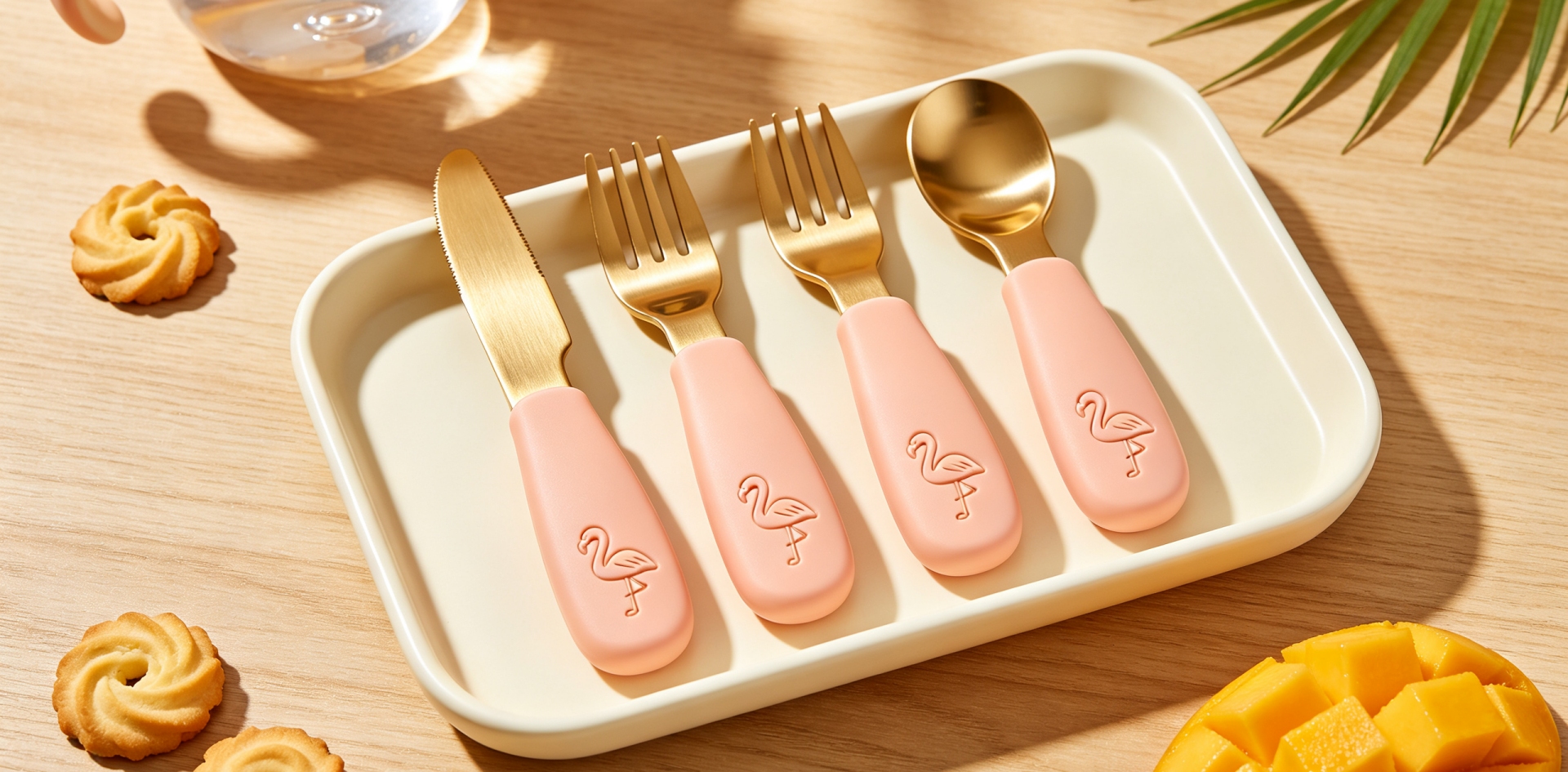
Stainless Steel Cutlery Flatness and Straightness for Bulk Orders
When buyers evaluate stainless steel spoons, forks and knives, visual appearance is usually one of the first considerations. However, some important product details are easier to notice only when the finished cutlery is placed on a flat surface or compared side by side.
Flatness and straightness are two such details. They can influence how a spoon rests on a table, how a fork aligns with other pieces and how a knife looks when arranged as part of a complete table setting.
For B2B buyers ordering stainless steel cutlery in large quantities, these characteristics are worth including in the product specification and sample approval process.
What Does Flatness Mean in Stainless Steel Cutlery?
Flatness generally refers to how evenly a finished cutlery piece sits against a reference surface.
For a spoon, the handle and bowl need to work together as part of the overall product structure. For a fork, the head and handle should maintain a stable relationship. A table knife should also maintain an appropriate finished shape along its main structure.
A product does not need to look completely flat in every area because spoons and other cutlery have intentionally designed curves. The important point is that the finished shape should follow the approved product design rather than showing unintended distortion.
Why Straightness Matters
Straightness is particularly noticeable when several pieces are placed next to each other.
If the handles of spoons, forks or knives do not maintain the expected direction, the collection may look inconsistent even when the basic design is correct.
For restaurant and hotel projects, this can become more noticeable because many pieces are arranged together on tables or trays.
For wholesale buyers, maintaining a consistent finished shape helps create a more professional appearance across the complete shipment.
Flatness of Stainless Steel Spoons
A stainless steel spoon naturally contains a curved bowl, so flatness should not be interpreted as making the entire spoon completely flat.
Instead, the product should maintain the intended relationship between the bowl, neck and handle.
The handle should remain visually stable when the spoon is placed on a suitable surface, while the bowl should retain the designed profile.
For custom spoon projects, these characteristics can be checked during sample development. If the finished shape does not match the approved design, the product specifications can be reviewed before bulk production.
Straightness of Stainless Steel Forks
For forks, the relationship between the fork head and handle is especially visible when several pieces are placed together.
The head should maintain its intended alignment with the handle, while the individual tines should remain arranged according to the approved product design.
For large-volume orders, consistency between individual forks is important because even small differences can become noticeable when many pieces are displayed together.
A physical sample provides a useful reference for confirming the intended appearance before production begins.
Straightness of Stainless Steel Table Knives
Table knives have their own structural requirements because the blade and handle form a longer product.
A consistent finished profile helps the knife look clean when it is placed beside a spoon and fork.
For hospitality and commercial projects, knives may be arranged in large quantities on tables, trays or storage racks. Maintaining a consistent shape across the order therefore becomes an important part of overall product presentation.
For customized knives, the finished straightness should be considered together with the blade and handle design rather than evaluated separately.
Why Sample Approval Is Important
Photographs can show the general appearance of stainless steel cutlery, but they cannot always reveal subtle differences in flatness or straightness.
A physical sample allows the buyer to place the spoon, fork or knife on a suitable reference surface and compare it with the intended product design.
For a complete collection, the buyer can also place the three products together and check whether their overall lines look coordinated.
This provides a practical opportunity to confirm the product standard before the bulk order is released.
Defining Product Requirements Clearly
For B2B purchasing, descriptions such as “straight,” “flat” or “good shape” may not be sufficiently clear for a long-term production standard.
A better approach is to define the relevant product area, reference sample and applicable inspection requirements.
Technical drawings can identify the intended product shape, while the approved physical sample can demonstrate the actual appearance.
For repeat orders, these references can help the factory and buyer maintain the same product standard over time.
Consistency in Bulk Stainless Steel Cutlery
The importance of flatness and straightness becomes greater as order quantities increase.
A single piece that looks slightly different may not attract much attention. However, when hundreds or thousands of pieces are placed together, variations can become much easier to see.
For distributors, hotels, restaurants and catering suppliers, consistent product appearance is therefore an important consideration when selecting a stainless steel cutlery supplier.
An established production reference can help the factory maintain consistency across the entire order.
Homefelt Factory for Bulk Cutlery Production
Homefelt factory focuses on stainless steel cutlery, including spoons, forks, knives and complete flatware sets. The factory supports OEM, ODM, wholesale and private-label projects for customers with customized product requirements.
Customers can provide product drawings, reference samples, photographs or existing specifications. The factory can then develop the product according to the customer's requirements and confirm the finished sample before moving toward larger-volume production.
For customers ordering complete collections, the spoon, fork and knife can also be reviewed together to ensure that the finished products maintain a coordinated appearance.
The factory can provide a one-stop service covering product design, packaging and transportation according to the individual project.
Experience and Quality Requirements
Homefelt has 40 years of experience in the stainless steel cutlery business and experience working with well-known brands. The factory has passed BSCI, SEDEX 4P, BRC, ISO9001 and Disney audits and has FAMA and FSC certificates.
For B2B customers, product specifications, sample requirements and applicable documentation can be discussed according to the project and target market.
The purpose is to establish a clear product standard before production so that both the customer and factory have a consistent reference for the finished stainless steel cutlery.
Flatness and Straightness as Part of Product Quality
A high-quality stainless steel cutlery product is not determined by one specification alone. Material, shape, dimensions, surface appearance and production consistency all contribute to the finished result.
Flatness and straightness are two less obvious characteristics, but they can become important when the products are placed together in large quantities.
For B2B buyers, confirming these details during sample approval can help create a clearer standard for future wholesale and repeat orders.
A well-defined product specification also allows customized spoons, forks and knives to move more smoothly from product development into long-term production.
Stainless Steel Cutlery Corner Radius Design for OEM Projects
Stainless Steel Cutlery Collection Design for OEM and Wholesale
Related Article



