
Stainless Steel Cutlery Handle Connection Design for B2B Buyers
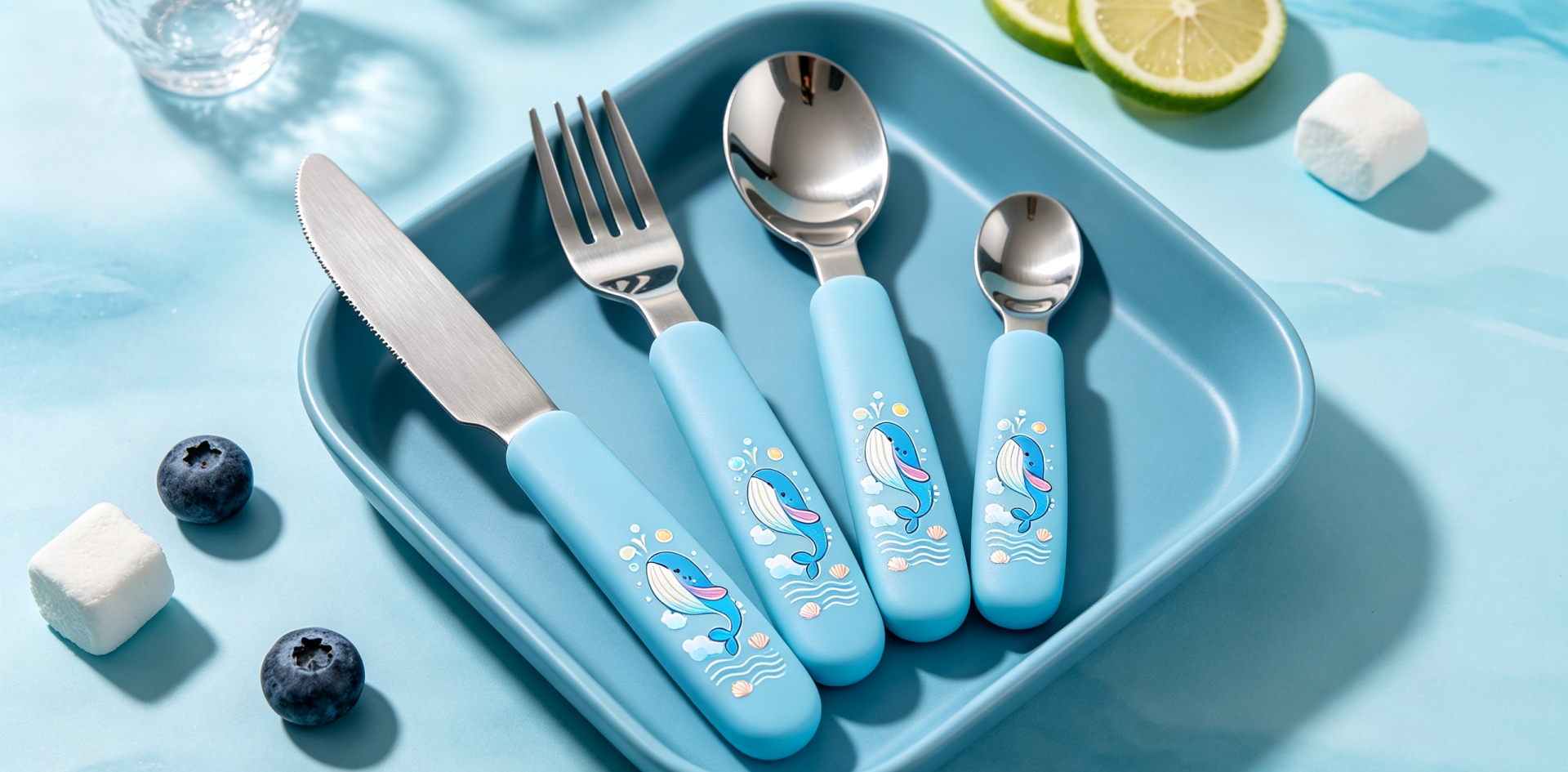
Stainless Steel Cutlery Handle Connection Design for B2B Buyers
For stainless steel cutlery, the handle is one of the most visible and frequently handled parts of the product. Its shape influences appearance, grip and the overall style of a spoon, fork or knife. At the same time, the connection between the handle and the main working section is an important manufacturing detail that B2B buyers should consider when developing or sourcing a new flatware collection.
For wholesale distributors, retailers, foodservice suppliers and private label brands, a successful stainless steel cutlery project requires more than selecting an attractive handle. The handle proportion, connection structure, material, dimensions and finishing need to work together with the rest of the product.
An experienced stainless steel cutlery manufacturer can help turn a design concept into a practical product specification and then maintain the approved specification during mass production.
The Handle Is Part of the Overall Cutlery Design
A spoon, fork or knife is normally viewed as one complete product, but different areas perform different functions.
The working section provides the primary dining function, while the handle determines much of the visual character and handling experience.
When developing a new cutlery design, buyers may need to confirm:
-
Overall product length
-
Handle length
-
Handle width
-
Handle thickness
-
Handle contour
-
Transition between handle and working section
-
Material specification
-
Product weight
-
Surface finish
-
Logo position
These parameters should be considered together rather than independently.
For example, increasing the handle width can change the visual proportion of the entire product. A longer handle may also require adjustments to the spoon bowl, fork head or knife blade so that the final product remains visually balanced.
Why the Handle Connection Matters
The transition between the handle and working section is particularly important because it connects two different parts of the product.
On a spoon, the handle transitions into the bowl. On a fork, it connects to the fork head and tines. On a knife, it connects to the blade section.
The transition should be consistent with the overall design and manufacturing requirements.
For B2B buyers, sample evaluation can focus on whether the connection appears continuous and whether the shape matches the approved drawing or reference sample.
When a customer develops several matching pieces, the connection design should also maintain a consistent visual language across the entire collection.
Handle Proportion and Product Length
Handle proportion is one of the first specifications to consider when developing customized stainless steel cutlery.
A handle that is too short or too long can change the appearance of the entire piece. The relationship between handle length and working section length is particularly important for matching spoons, forks and knives.
For example, when developing a three-piece collection, buyers may want the handle styles to match even though the working sections have different dimensions.
A professional factory can review the overall dimensions and develop samples based on the customer's intended design.
The final specification may include individual measurements for each product while maintaining a consistent collection style.
Different Cutlery Pieces Require Different Handle Solutions
Although spoons, forks and knives may belong to the same collection, their handle requirements are not always identical.
A spoon needs to accommodate the bowl shape and depth.
A fork needs to transition into a head containing multiple tines.
A knife needs to connect with a blade designed for its specific application.
This means that a matching collection should not simply copy one handle onto three different products without considering the structure of each item.
A good OEM or ODM development process takes the complete product into account.
The manufacturer can adjust the handle dimensions and connection area so that the three pieces look coordinated while retaining their individual functions.
Parameters Buyers Should Confirm
When ordering customized stainless steel cutlery, buyers can confirm the handle specifications together with the main product parameters.
Useful information may include:
-
Product name
-
Overall length
-
Handle length
-
Maximum handle width
-
Handle thickness
-
Working-section dimensions
-
Stainless steel grade
-
Surface finish
-
Logo or branding requirements
-
Individual product weight
-
Packaging requirements
For an existing design, the buyer can provide a drawing or sample.
For a new design, reference images can also be useful during the initial development stage.
The more clearly the main specifications are defined before mass production, the easier it is to keep the final products consistent with the approved sample.
Sample Development Before Bulk Production
For B2B stainless steel flatware projects, sample development provides an opportunity to review the physical product before committing to large-volume production.
During sample approval, buyers can check the handle shape, connection area, product proportions and overall appearance.
If adjustments are required, the factory can modify the relevant dimensions before the final specification is confirmed.
This is particularly useful for OEM, ODM and private label projects where the buyer is developing a product that is not simply an existing standard item.
Once the customer approves the sample, the approved design can become an important reference for subsequent production.
Experience in Customized Stainless Steel Cutlery
Many B2B customers do not begin with a complete engineering drawing.
They may have a product image, an existing sample, a competitor reference or simply an idea for a new flatware collection.
A manufacturer with practical project experience can help convert that initial concept into measurable product requirements.
For example, a customer may want a modern spoon and fork with a wider decorative handle and a matching knife. The factory can evaluate the handle proportions, connection area, product dimensions and production requirements before developing samples.
The customer can then review the physical samples and provide feedback.
This development process helps connect product design with actual manufacturing requirements and is particularly valuable when a buyer plans to place a large-volume order after sample approval.
Factory Qualifications and Product Documentation
For international B2B buyers, product development capability is only one part of supplier evaluation.
Factory audits, certifications and relevant quality documentation can provide additional information about the manufacturer's capabilities.
Homefelt presents its stainless steel cutlery manufacturing experience together with BSCI, SEDEX 4P, BRC and ISO9001-related credentials, as well as Disney audit experience and FAMA and FSC certificates.
For individual projects, buyers can also discuss product specifications, quality requirements, inspection arrangements and relevant testing documentation according to their market and purchasing requirements.
This allows the product specification and quality expectations to be clarified before mass production begins.
One-Stop Customization for B2B Cutlery Projects
A customized stainless steel cutlery project may involve several stages beyond product manufacturing.
Depending on the customer's requirements, Homefelt can provide one-stop support covering product design, sample development, packaging and transportation.
A customer may require a complete service package including:
-
Product design support
-
Spoon, fork and knife customization
-
Material and specification confirmation
-
Sample development
-
Logo and private label customization
-
Packaging design
-
Customized packaging
-
Bulk production
-
Transportation coordination
The service can be adjusted according to the customer's business model and project requirements.
For one customer, the priority may be a competitive wholesale product. For another, the focus may be a premium private label collection. The product and service solution can therefore be developed according to the actual project instead of using one standard approach for every buyer.
Building a Long-Term Manufacturing Partnership
A reliable stainless steel cutlery supplier should be able to support customers beyond the first production order.
After a collection has been launched, customers may need additional spoon sizes, matching forks and knives, new handle designs, packaging changes or larger production volumes.
Maintaining clear specifications and an approved sample can provide a useful foundation for future development.
Homefelt focuses on stainless steel knife, fork and spoon manufacturing for international B2B customers, including wholesale, OEM, ODM and private label projects.
Our goal is to provide customers with a practical one-stop service solution, help develop products that fit their market and continue growing together through long-term cooperation.
You May Be Interested In
Stainless Steel Flatware Dimensions and Proportions for B2B Projects
Stainless Steel Cutlery Edge Design for Wholesale and OEM Projects
Related Article



