
Stainless Steel Cutlery Handle Construction for OEM and Bulk Orders
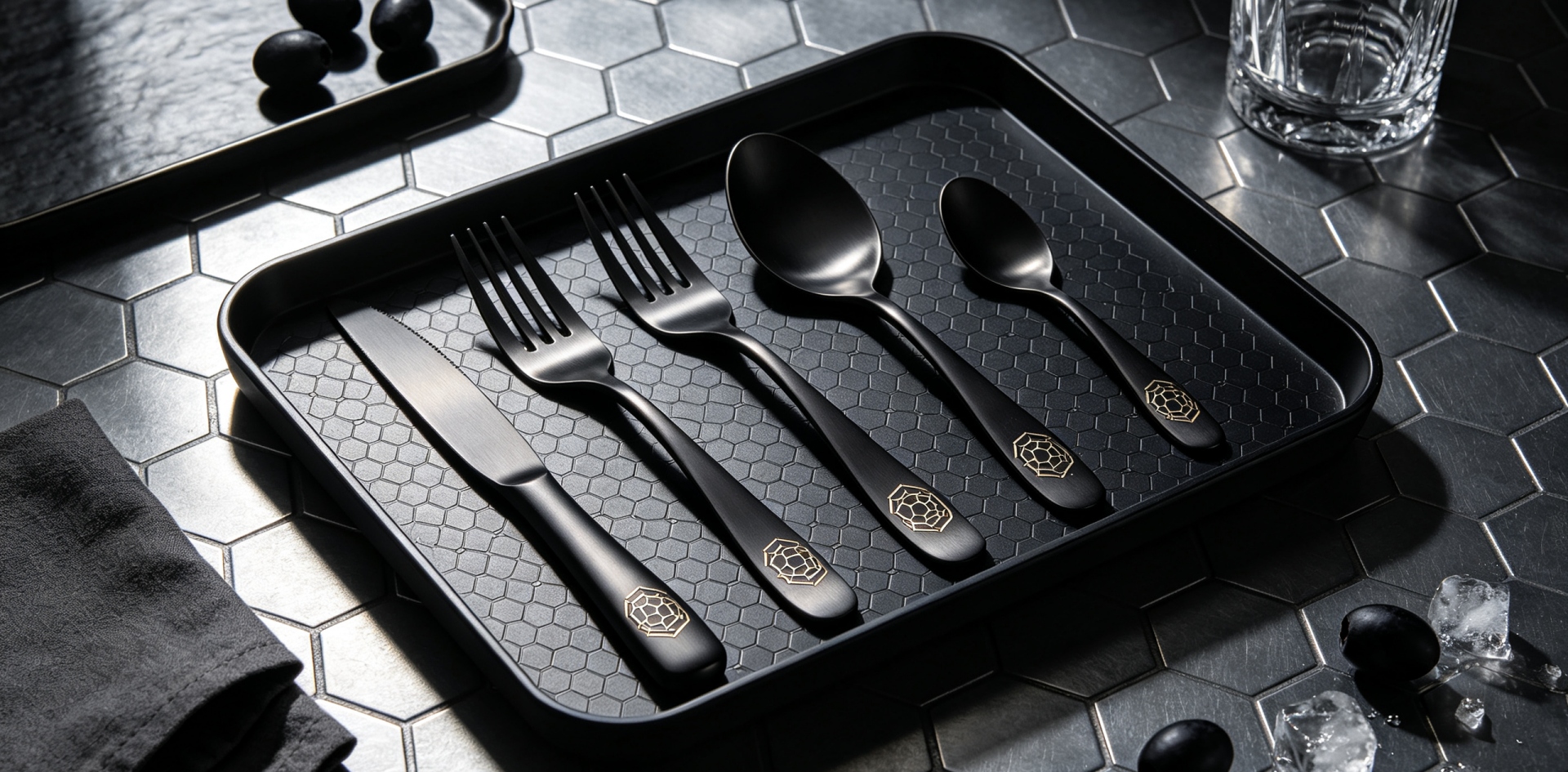
Stainless Steel Cutlery Handle Construction for OEM and Bulk Orders
When buyers develop stainless steel spoons, forks and knives for wholesale or private label markets, the handle is not only a visual part of the product. Its internal construction can also influence the overall feel, manufacturing approach, product positioning and packaging requirements.
For B2B cutlery projects, one construction option may not suit every product. Depending on the design and intended market, buyers may consider different handle constructions, including solid stainless steel handles and hollow or assembled handle structures.
Understanding the difference before production helps buyers communicate more clearly with an OEM or ODM stainless steel cutlery factory.
What Handle Construction Means in Stainless Steel Cutlery
A stainless steel cutlery handle can be manufactured in different structural forms.
A solid handle is produced as a continuous stainless steel component. It can provide a substantial feel and is commonly considered when the product concept emphasizes straightforward construction and durability.
A hollow or assembled handle uses a different internal structure. Depending on the product design, the handle may be formed or assembled from multiple components to create a specific appearance, weight distribution or design effect.
The choice is not simply about which construction is better. It should be connected to the product design, target market, quantity, manufacturing process and customer's expectations.
For OEM buyers, defining this point early can help avoid misunderstandings during product development.
How Construction Can Affect the Product Feel
When a buyer handles a stainless steel spoon, fork or knife, the perceived quality is influenced by several factors. The handle construction is one of them.
Two products with similar external dimensions can feel different because their internal construction and material distribution are different.
A solid stainless steel handle may provide a more substantial sensation in the hand. An assembled or hollow structure can provide opportunities for different product concepts and design treatments.
For a commercial flatware collection, the desired feeling should be considered together with the rest of the spoon, fork and knife.
The objective is to create a coordinated product rather than choosing a construction method independently from the overall design.
Construction and Manufacturing Requirements
Different handle constructions can require different production processes.
For a straightforward solid stainless steel design, the manufacturing route may focus on forming, shaping and finishing the stainless steel component.
An assembled handle may involve additional forming, joining or assembly processes depending on the design.
This means the construction method can influence manufacturing complexity, tooling requirements, production organization and inspection points.
For an OEM project, these factors should be discussed before the final quotation is confirmed.
A factory with experience in stainless steel cutlery can evaluate the customer's design and recommend a suitable production approach based on the actual product requirements.
Choosing Construction for Spoons, Forks and Knives
The construction decision can also vary between different cutlery pieces.
A spoon may have a relatively simple handle concept, while a table knife may require a different construction because the blade and handle serve different functions.
A fork may also require its handle construction to work naturally with the fork head and overall product design.
For a complete flatware collection, the buyer may want all three pieces to share a consistent visual language while allowing each product to use the most practical manufacturing structure.
This is why OEM cutlery development should consider the collection as a whole.
Homefelt's Approach to OEM Cutlery Development
Homefelt factory specializes in stainless steel spoons, forks, knives and flatware sets for OEM, ODM, private label, wholesale and bulk production.
When a customer presents a new cutlery concept, the factory can review the product design and manufacturing requirements together.
The discussion can include the external appearance, handle construction, material requirements, production quantity and finishing expectations.
For customers who already have drawings or product references, Homefelt can review the proposed construction and discuss practical manufacturing options. For customers who only have an initial concept, the factory can also support product development from an earlier stage.
This makes it possible to create an exclusive service package based on the customer's actual project rather than applying the same production solution to every order.
Construction Choice and Product Positioning
The handle construction can also be connected to the market position of a stainless steel cutlery collection.
A simple solid-handle design may be suitable for buyers seeking a practical commercial product with straightforward construction.
A more elaborate assembled handle may be considered when the customer wants a distinctive appearance or a particular product concept.
For private label brands, this can become part of the product identity.
For hospitality suppliers and distributors, the decision may instead focus on achieving the right combination of appearance, user experience, production efficiency and target cost.
There is no universal construction choice. The correct solution depends on the customer's product strategy.
What B2B Buyers Should Confirm
Before placing a large OEM or private label order, buyers can clarify several points with the stainless steel cutlery manufacturer:
-
Whether the handle is solid or assembled
-
Stainless steel material requirements
-
Handle construction and connection method
-
Expected product feel and overall weight
-
Surface finish requirements
-
Relationship between handle and spoon, fork or knife head
-
Target order quantity
-
Packaging requirements
-
Private label requirements
-
Production and inspection expectations
These details help the factory understand the actual product rather than quoting only from a product photograph.
For large-volume projects, early confirmation is especially useful because changing the construction after production has started may affect tooling, production planning and cost.
Experience Behind the Product
Homefelt has more than 40 years of experience in the stainless steel cutlery business and has worked with well-known brands.
Its production experience covers stainless steel spoons, forks, knives and complete flatware collections for different commercial markets.
The factory has also passed or worked with requirements associated with BSCI, SEDEX 4P, BRC, ISO9001 and Disney audits. These provide supporting evidence of manufacturing management, while the product design, construction and agreed specifications remain the primary references for each individual project.
For B2B customers, practical manufacturing experience is particularly valuable when a product requires more than a standard catalog specification.
From Product Design to Finished Shipment
Handle construction is only one part of a successful OEM stainless steel cutlery project.
Homefelt provides one-stop support covering product design, manufacturing, packaging and transportation. This allows the customer to discuss the product and its commercial requirements within one coordinated project.
For ODM and private label customers, this can simplify communication between product development and mass production.
For wholesale buyers, the same approach can help when an existing product needs to be adapted for a specific market, customer group or sales channel.
The factory can also discuss bulk production requirements based on the customer's expected order volume.
Building a Practical Long-Term Cutlery Program
A stainless steel cutlery supplier should be able to do more than reproduce a product once. For brands and distributors, the supplier should also understand how the product is expected to perform as part of a long-term collection.
Choosing the right handle construction at the beginning can therefore help establish a clearer production foundation for future orders.
Once the construction, material, appearance and commercial requirements have been agreed, the same product concept can be developed into a stable wholesale or private label supply program.
Homefelt aims to work with customers as a long-term China service partner, supporting product development and large-volume stainless steel cutlery production while growing together with customers.
Stainless Steel Cutlery Component Joining for OEM and Bulk Manufacturing
Stainless Steel Cutlery Loading Planning for OEM and Bulk Shipping
Related Article



