
Stainless Steel Cutlery Handle Design for Custom B2B Flatware
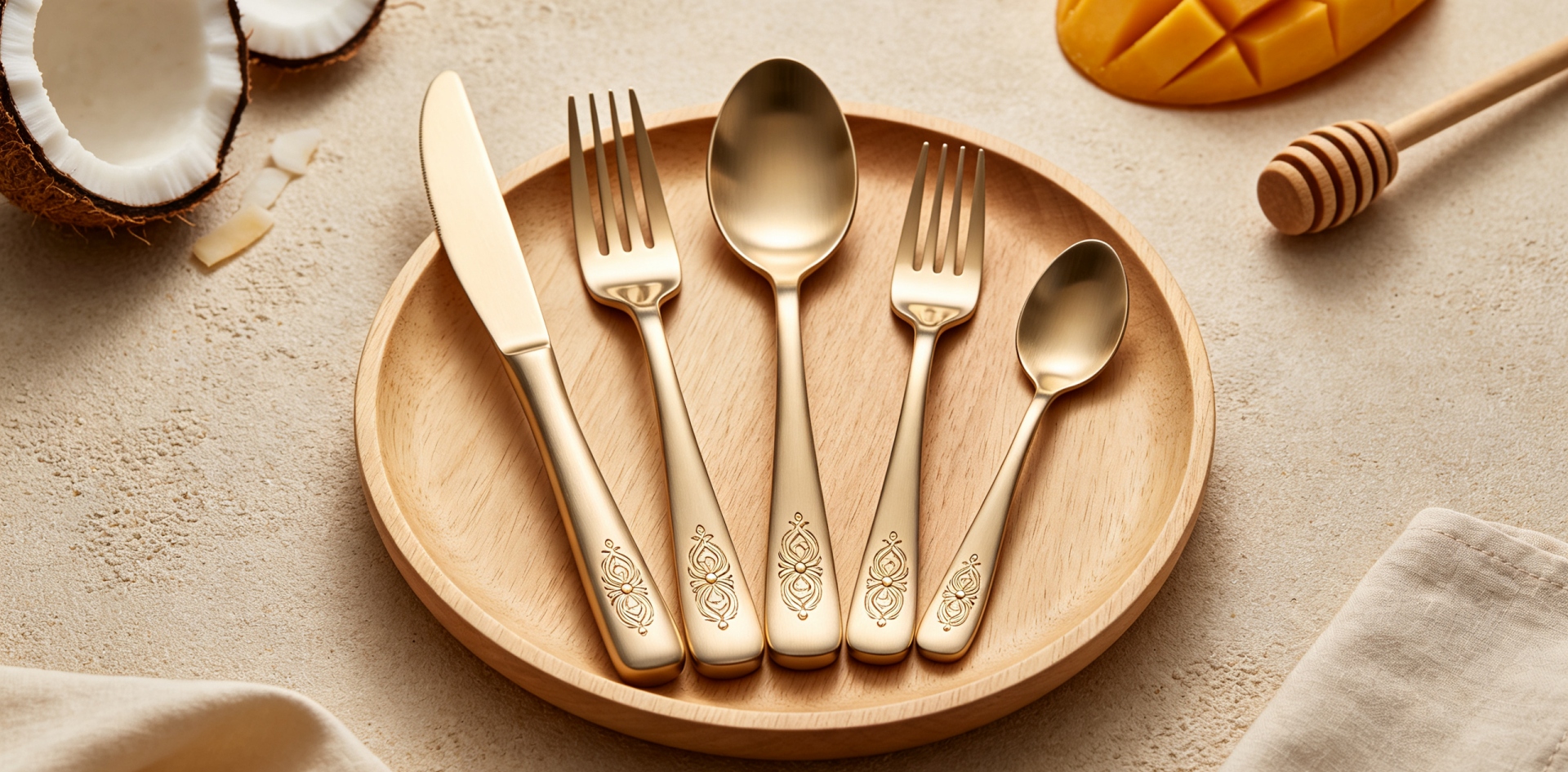
Stainless Steel Cutlery Handle Design for Custom B2B Flatware
The handle is one of the most visible elements of a stainless steel cutlery collection. For a knife, fork or spoon, the handle connects the functional section with the user's hand and also contributes strongly to the visual identity of the product.
For B2B buyers developing wholesale flatware, restaurant cutlery or private label collections, handle design should be considered together with product dimensions, material, surface finish and the overall collection style.
A successful handle is not simply attractive. It needs to be practical to manufacture, consistent across different pieces and suitable for the intended market.
Homefelt factory specializes in stainless steel knives, forks, spoons and complete flatware sets. The factory provides OEM, ODM, private label and bulk manufacturing services for international B2B customers.
Why Handle Design Matters in Stainless Steel Cutlery
When customers compare different cutlery collections, the handle is often one of the first elements they notice.
A straight handle can create a simple and modern appearance. A tapered handle may produce a more refined visual effect. Curved or shaped handles can give a collection a distinctive identity.
For commercial buyers, handle design can therefore become part of the product positioning.
A restaurant supplier may prefer a practical and understated design, while a private label brand may want a more recognizable handle profile that differentiates its collection.
The handle should also be developed in proportion to the knife, fork or spoon. If the handle is too wide, narrow, long or short relative to the functional section, the complete product may look unbalanced.
Important Handle Dimensions for B2B Projects
A customized stainless steel cutlery handle can be described through several measurable parameters.
Handle length is one of the basic specifications. It should be considered together with the total product length.
Handle width can vary along the handle rather than remaining constant. For a tapered design, the width at different reference points should be defined.
Handle thickness can also influence the physical feel of the product and should be specified when the customer has a particular requirement.
The handle profile should be supported by a drawing or physical sample whenever the design contains curves or special transitions.
The connection between the handle and functional section should also be considered. A knife, fork and spoon may share the same visual language while requiring slightly different structural transitions.
For a B2B buyer, these details can be included in the technical specification before sampling.
Creating a Consistent Handle Across Knife, Fork and Spoon
A complete cutlery collection should normally have a recognizable relationship between its individual pieces.
The handle of a stainless steel knife may be slightly different in construction from a spoon or fork, but the main visual characteristics can remain consistent.
For example, a collection can use the same handle outline, decorative line and surface finish across all three pieces.
The dimensions can then be adjusted according to the function of each product.
This approach allows the collection to look coordinated without forcing the knife, fork and spoon to have identical physical structures.
For private label customers, this is especially useful when building a long-term product range.
Handle Shape and Surface Treatment
Handle shape and surface finish should be considered together.
A highly reflective finish can emphasize curves, edges and decorative details. A more subdued finish can create a different visual impression.
The choice should therefore be based on the customer's target collection rather than treating the finish as an independent decision.
A buyer developing a custom stainless steel cutlery set can provide a reference image, existing sample or preferred surface appearance.
The manufacturer can then discuss how the selected handle shape and finishing method should be combined.
This is one reason why physical samples remain important during product development.
From Reference Sample to Custom Handle
Many B2B projects begin with an existing product.
A customer may already sell a stainless steel spoon successfully and want to develop a matching fork and knife.
Alternatively, the buyer may have a product from another supplier and want to develop a customized version for a private label brand.
In these cases, the reference sample can provide useful information about handle proportions, dimensions and surface appearance.
Homefelt can review the customer's requirements and discuss which parts should remain unchanged and which parts can be redesigned.
The final objective is to create a manufacturable product that reflects the customer's commercial requirements while maintaining consistent production quality.
Sample Approval and Production Reference
A customized handle should normally be evaluated through a sample before large-volume manufacturing.
The buyer can check the actual dimensions, visual proportions, surface treatment and overall product balance.
If the handle is part of a complete collection, the knife, fork and spoon can also be reviewed together.
Once the customer approves the sample, the confirmed product specifications can become the production reference.
This is particularly important for private label and repeat-order projects because future production can be compared with the approved reference.
Clear specifications help both the customer and factory maintain consistency as the business grows.
Experience in Stainless Steel Cutlery Manufacturing
Handle customization requires more than a visual design.
The design must also be suitable for stainless steel cutlery manufacturing and compatible with the required product dimensions and finishing process.
Homefelt has more than 40 years of experience in the stainless steel cutlery business and has experience working with well-known brands.
This manufacturing background supports B2B customers developing customized knives, forks, spoons and complete flatware collections.
For projects involving several customized elements, the factory can review the product requirements as a complete manufacturing project rather than treating each detail independently.
Factory Qualifications and Certification Information
When selecting a stainless steel cutlery supplier, buyers can review product samples together with factory qualifications and quality-management information.
Homefelt lists BSCI, SEDEX 4P, BRC and ISO9001 among its factory audits and qualifications, together with a Disney audit. The company also has FAMA and FSC certificates.
These materials can provide additional information for buyers evaluating the supplier's manufacturing background.
For specific orders, customers can also discuss their market requirements and request applicable product documentation or testing information related to the project.
OEM, ODM and Private Label Handle Development
A stainless steel cutlery handle can be customized at different levels.
Some buyers may only require a logo and customized packaging.
Others may need a modified handle shape, dimensions or decorative elements.
A private label brand may want an exclusive handle design that becomes a recognizable feature of its entire flatware collection.
Homefelt provides OEM, ODM and private label stainless steel cutlery manufacturing according to customer requirements.
The service can include product design, sample development, customized production, logo application, packaging and transportation coordination.
This one-stop approach allows customers to create a customized service package based on their actual business situation.
Supporting Different Commercial Markets
The right handle design depends on the customer's market.
Wholesale distributors may prefer a practical design that can be offered to a broad customer base.
Restaurant and hospitality suppliers may need a collection that balances appearance with everyday commercial requirements.
Private label brands may focus more strongly on distinctive design and brand recognition.
Homefelt can discuss these requirements with customers and develop the product according to the intended application and market positioning.
The factory's role is not only to manufacture the stainless steel cutlery but also to help customers turn product requirements into a workable production specification.
Growing Together Through Long-Term Cooperation
A successful handle design can become the foundation of an extended cutlery collection.
Once a customer has established a preferred handle profile, additional spoons, forks, knives and other pieces can be developed around the same visual language.
This creates opportunities for long-term product expansion and repeat orders.
Homefelt aims to provide customers with a reliable one-stop stainless steel cutlery service and grow together with customers through long-term cooperation.
For B2B buyers, a manufacturing partner that can support product design, customization, packaging and transportation can simplify the process from the first idea to repeat production.
Stainless Steel Spoon Bowl Size and Capacity Guide for B2B Buyers
Stainless Steel Fork Tine Design Guide for B2B Cutlery Projects
Related Article



