
Stainless Steel Cutlery Handle End Design for Custom Flatware
Stainless Steel Cutlery Handle End Design for Custom Flatware
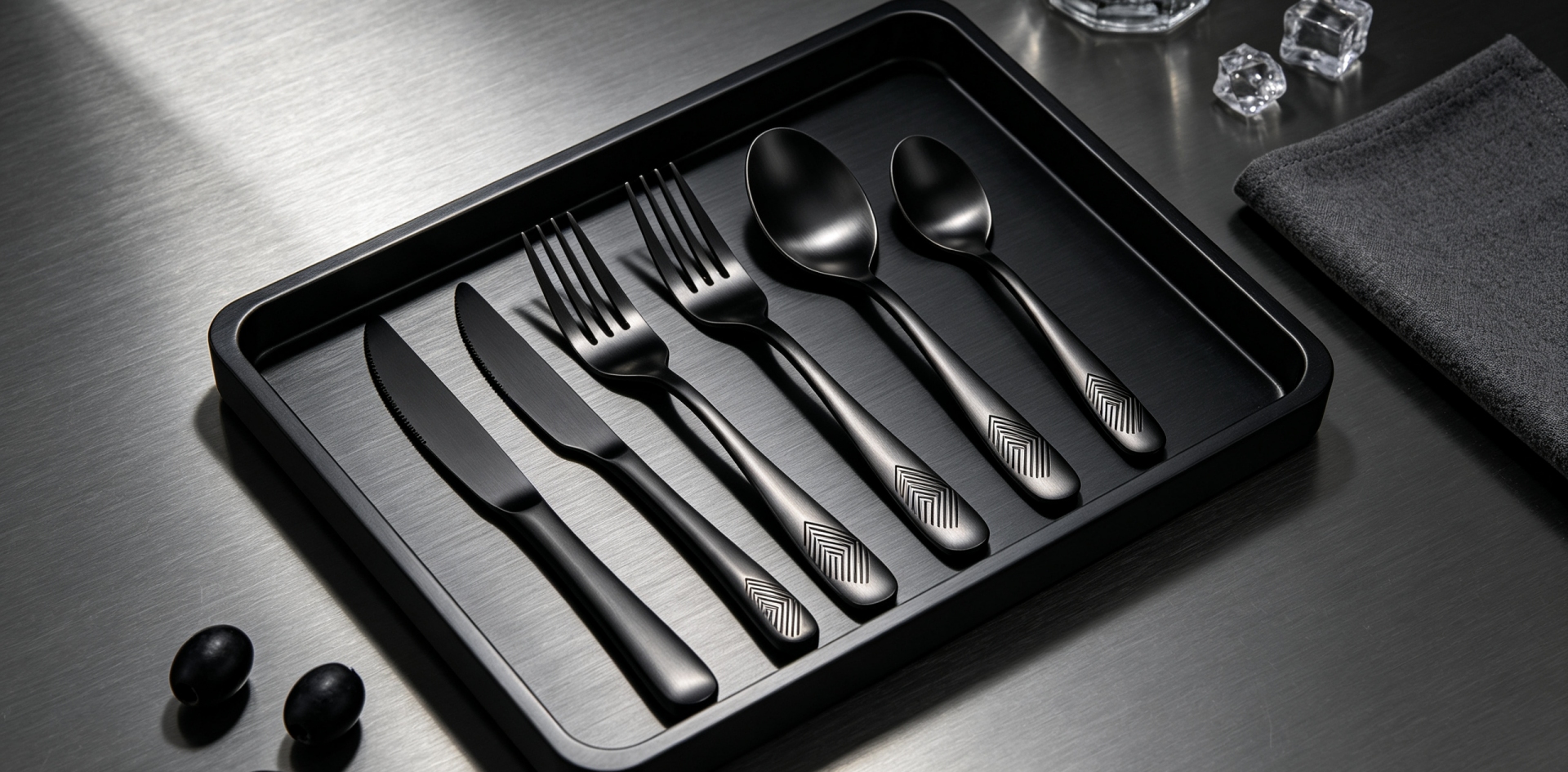
The handle is one of the most visible parts of stainless steel cutlery, but small details at the end of the handle can have a surprisingly strong effect on the overall appearance of a spoon, fork or knife. A rounded end, straight end, tapered end or specially shaped finial can make the same basic cutlery structure look completely different.
For B2B buyers developing a new flatware collection, the handle end is therefore more than a decorative detail. It can influence the visual identity of the collection, the relationship between different pieces and the way a product feels when it is placed on a table.
A professional stainless steel cutlery manufacturer can develop this detail together with the complete product rather than treating it as an isolated feature.
Why the Handle End Matters in Cutlery Design
When stainless steel cutlery is placed on a dining table, the handle is immediately visible. The end of the handle is often the area that gives the product its final visual impression.
A simple straight ending can create a clean and modern appearance. A rounded ending can produce a softer look, while a tapered shape can make the handle appear more refined. More distinctive end structures can also be developed for customers looking for a recognizable private-label collection.
The right choice depends on the overall design language of the spoon, fork and knife. A handle end should look intentional and should complement the shape of the rest of the product.
Matching Handle Ends Across a Cutlery Collection
For B2B projects, customers rarely purchase only one individual piece. A typical collection may include a table spoon, teaspoon, table fork, dinner knife and additional serving pieces.
Because each product has a different front section, the handle becomes one of the main elements that connects the collection visually.
For example, a customer may choose a particular handle-end shape as the common design feature across several products. The spoon, fork and knife can then have different functional dimensions while maintaining the same overall visual identity.
This approach is useful for hotel, restaurant, catering, retail and private-label collections where a consistent table setting is important.
Common Handle End Shapes
There are many ways to develop the final section of a stainless steel cutlery handle.
A rounded end is a practical choice for collections that require a soft and familiar appearance. A straight end can create a more contemporary profile. A gently tapered end can make the handle appear slimmer toward the bottom.
For a more distinctive product, the end can incorporate a wider or narrower section, a subtle curve, a geometric transition or another customized feature.
The important point is that the handle end should be considered together with the handle width, overall length and visual proportions. A shape that looks attractive on a drawing may need adjustment after it is developed into an actual stainless steel sample.
Designing the End for Different Cutlery Pieces
The same design concept does not always need to be copied at exactly the same size on every product.
A dinner knife generally has a different handle structure from a spoon or fork. The handle may need to accommodate the weight and balance of the knife while maintaining the same collection style.
Similarly, a teaspoon has a smaller overall structure than a table spoon. The handle-end design may therefore need to be proportionally adjusted rather than simply reduced mechanically.
An experienced stainless steel cutlery factory can develop a common design language while allowing the individual pieces to maintain appropriate proportions.
From Drawing to Physical Sample
For custom flatware projects, the handle-end concept can begin with a drawing, reference picture or customer sample.
The factory can then review the design and develop the required product specifications. Depending on the project, the customer may need to confirm dimensions, shape details, artwork or other requirements before sampling.
A physical sample is particularly useful for evaluating the final appearance. It allows the buyer to see how the handle end works with the complete spoon, fork or knife rather than judging the detail independently.
If the end appears too wide, too narrow, too sharp in appearance or visually disconnected from the rest of the handle, adjustments can be made before bulk production.
Product Parameters Buyers Should Confirm
When developing a customized handle-end design, several product details should be clearly defined.
These may include the overall handle length, handle width, end width, end shape, transition area and relationship with the rest of the handle. The applicable stainless steel material and product specifications should also be confirmed.
For a collection containing multiple pieces, buyers can establish the main design principle first and then define the individual dimensions for each spoon, fork and knife.
Clear specifications help the factory maintain consistency between the approved sample and the subsequent production order.
Homefelt Factory for Custom Stainless Steel Cutlery
Homefelt factory focuses on stainless steel cutlery including spoons, forks, knives and complete flatware sets. For customers developing their own products, the factory can support OEM and ODM projects from product concept through sampling and bulk production.
A customer does not necessarily need to provide a finished technical drawing. A reference product, handle idea, sketch or existing collection can also provide a starting point for discussion.
The product design can then be developed according to the customer's target market, preferred appearance, required quantity and purchasing requirements.
For private-label and wholesale customers, the service can also extend beyond the cutlery itself. Product design, packaging and transportation can be coordinated as part of a one-stop service package according to the customer's project situation.
Experience in Large-Volume Cutlery Production
For a custom product, design quality and production consistency need to work together. A handle-end shape that looks good on one sample should also remain consistent throughout a large production order.
Homefelt has 40 years of experience in the stainless steel cutlery business and has worked with well-known brands. This experience provides a practical foundation for handling customized spoon, fork and knife projects where design details need to be translated into repeatable production.
For B2B buyers, this is particularly important when a new collection is expected to become a long-term product rather than a one-time sample.
Quality and Factory Qualifications
Supplier selection also involves more than product appearance. Buyers may need to consider factory management, audit requirements and supporting certifications when developing a long-term supply relationship.
Homefelt has passed BSCI, SEDEX 4P, BRC, ISO9001 and Disney audits and has FAMA and FSC certificates. The applicable documentation for a particular project can be discussed according to the customer's market and purchasing requirements.
For customized products, the approved product sample and confirmed specifications can also serve as important references for production and quality inspection.
Building a Distinctive Flatware Collection
Small design details can help a stainless steel cutlery collection become more recognizable. The end of the handle is one such detail that can be customized without changing the basic function of the spoon, fork or knife.
For distributors, hospitality suppliers and private-label brands, a carefully developed handle-end shape can become part of the collection's visual identity. When the same design principle is carried across multiple pieces, the result can look more complete and professionally developed.
The best solution is not necessarily the most complicated shape. A simple detail that is well proportioned, practical to produce and consistent with the overall product can often create a stronger long-term design.
Stainless Steel Fork Head Design for OEM and Wholesale Projects
Stainless Steel Cutlery Logo Customization for OEM Projects
Related Article



