
Stainless Steel Cutlery Handle End Profile for B2B
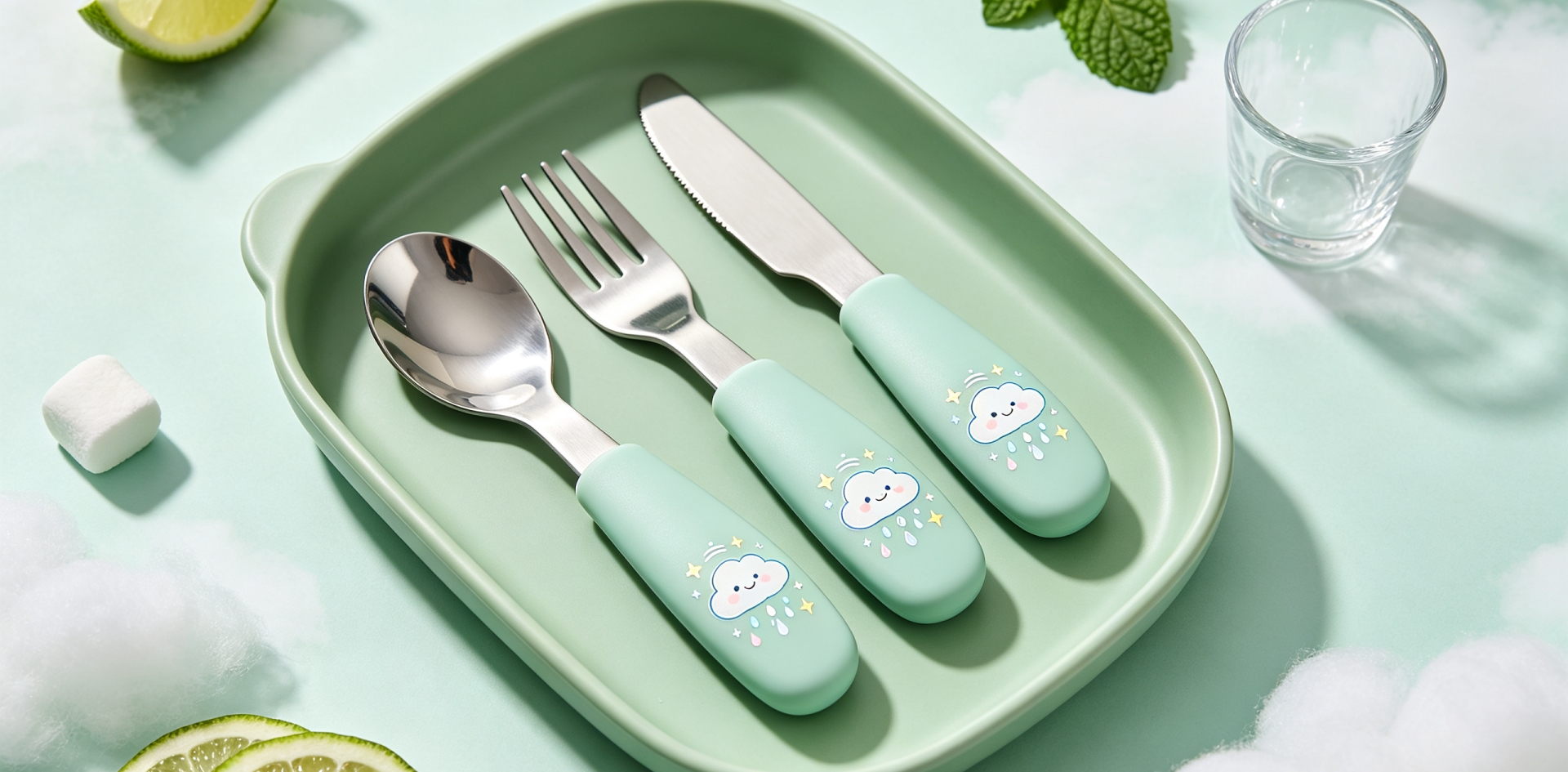
Stainless Steel Cutlery Handle End Profile for B2B
When developing stainless steel knives, forks and spoons for a B2B collection, the handle is often one of the first design elements buyers consider. Width, thickness, surface finish and overall length can all affect the appearance of the finished product.
Another small but visually important detail is the shape of the handle end.
The end of a cutlery handle can be rounded, squared, tapered, angled or shaped with a subtle decorative profile. Although this area may seem minor, it can influence the visual balance of the complete piece and help define the character of a collection.
For OEM, ODM and private label projects, the handle end profile can therefore be worth defining before moving into bulk production.
What Is a Handle End Profile?
The handle end profile describes the shape and contour of the final section of a stainless steel cutlery handle.
Some handles finish with a soft rounded end. Others use a straight edge, a slightly angled termination or a more distinctive decorative form.
The end may also affect how the handle appears when several pieces are placed side by side.
For B2B buyers, the important consideration is not choosing one specific profile for every product. The appropriate design depends on the collection concept, handle proportions and intended market.
A well-defined end profile simply gives the manufacturer another clear reference when reproducing a custom product.
Why the Handle End Matters
The handle end is one of the areas that remains visible when cutlery is placed on a table.
It can influence the visual rhythm of the product and contribute to the overall proportion between the front and rear sections.
A rounded ending may create a softer appearance. A straight or angled ending can create a more geometric look. A shaped end can become a recognizable detail within a private label collection.
These differences are relatively small, but they can have a noticeable effect when multiple pieces are displayed together.
For retailers and brands, the handle end can therefore become part of the visual identity of a stainless steel flatware range.
Handle End Profiles and Collection Design
A complete cutlery collection usually contains knives, forks and spoons with different functional structures.
The handles, however, can share common design principles.
Using a related handle end profile across the collection can help the products look coordinated. The exact dimensions do not need to be identical because the knife, fork and spoon may have different overall proportions.
What matters is that the visual language remains consistent.
For example, a collection may use softly rounded ends across all pieces for a relaxed appearance. Another collection may use a clean geometric termination to create a more contemporary style.
For private label brands, these small details can help make a collection feel intentionally designed rather than assembled from unrelated standard products.
The Relationship Between Handle Length and End Shape
The handle end should be considered together with the overall handle length.
A particular end profile may look balanced on a long handle but appear too prominent on a shorter piece.
Likewise, a wide handle may require a different end proportion from a narrow handle.
This is why custom cutlery development should evaluate the complete handle rather than specifying only one isolated dimension.
During OEM or ODM development, the buyer can provide a drawing or reference sample. The factory can then review the handle proportions and discuss how the end profile should be reproduced during production.
This helps connect the visual concept with practical manufacturing requirements.
Handle End Design and Product Feel
The end of a cutlery handle can also contribute to the overall feel of the product.
Although the user's hand interacts with the entire handle, the final shape can affect how the handle transitions toward its rear section.
A carefully designed end can support the intended visual and ergonomic character without requiring unnecessary complexity.
For B2B buyers, the goal is to create a product that combines appearance with practical production.
The handle end should therefore be evaluated together with the handle cross-section, material thickness and overall weight rather than treated as an independent decorative feature.
Custom Handle Ends for OEM Projects
OEM customers may already have an established handle design they want to reproduce. ODM customers may instead want the factory to help develop a new design based on a general concept.
In either case, the handle end can be included in the product development discussion.
The buyer can specify the desired shape through a drawing, sample or visual reference. The manufacturer can then assess how the shape can be formed and finished consistently.
This is especially useful when the handle end is intended to become a recognizable feature of a private label collection.
Once the design is approved, the agreed profile can become part of the production reference.
Maintaining Consistency in Large Orders
A custom handle design is only valuable if it can be reproduced consistently.
During mass production, forming, cutting, polishing and finishing processes all contribute to the final appearance of the handle.
If the handle end varies noticeably from one piece to another, the difference may become visible when the products are arranged together.
For B2B orders, an approved sample can provide a practical reference for production. Product specifications can also describe the important characteristics of the handle end.
This helps the factory maintain the intended design across larger quantities.
For repeat orders, the same reference becomes even more useful because it provides continuity between the original production and later replenishment.
Handle End Profiles for Different Product Styles
There is no universal handle end that fits every stainless steel cutlery collection.
A minimalist collection may use a simple straight or softly rounded ending. A traditional collection may benefit from a more decorative profile.
A modern hospitality range may prioritize clean lines and easy visual coordination, while a retail private label brand may want a distinctive shape that separates the product from standard market offerings.
The appropriate profile should therefore be selected according to the broader product strategy.
The factory can help buyers evaluate the design in relation to material, dimensions, production process and order quantity.
This creates a better balance between product differentiation and manufacturing practicality.
Creating a Recognizable Private Label Collection
For private label brands, differentiation does not always require an unusual or complicated product.
Sometimes a small, consistent design element can help establish a recognizable collection.
The handle end can be one such element.
When the same design principle appears across knives, forks and spoons, customers may perceive the products as part of one coordinated range.
Combined with material, finish, handle shape and packaging, the end profile can contribute to a complete product identity.
This is particularly useful for brands that want to develop their own stainless steel flatware collection rather than sell generic products.
From Sample to Production Specification
A sample provides the physical appearance of the handle, but the production team also needs a clear understanding of what should remain consistent.
The handle end can be documented through drawings, dimensions, reference photographs or the approved physical sample.
The exact documentation depends on the complexity of the product and the requirements of the customer.
For a straightforward design, the approved sample may provide sufficient visual guidance. For a more detailed OEM project, additional technical information may be useful.
The purpose is to create a practical reference that supports communication between the buyer and factory.
Homefelt Factory for Custom Stainless Steel Cutlery
Homefelt factory provides stainless steel knives, forks, spoons and complete flatware sets for B2B customers.
The factory supports OEM, ODM, private label, wholesale and large-volume production projects according to customer requirements.
For custom products, buyers can discuss handle design, dimensions, material, surface finish, packaging and transportation requirements with the factory team.
Homefelt can develop a service package according to the actual needs of the customer, rather than limiting the project to a standard catalog product.
This one-stop approach can be particularly useful for brands developing a complete collection and needing several coordinated pieces.
Handle End Design Across a Complete Collection
When a buyer develops a knife, fork and spoon together, the handle end can provide a simple visual connection between the products.
The pieces do not need to have exactly the same dimensions. Instead, their handle endings can share the same design principle.
This creates a sense of continuity.
For example, a spoon may have a slightly broader handle than a fork, while both use a similar end contour. A knife may have a different overall proportion but still retain the same visual termination.
This approach allows the collection to remain functional while maintaining a coherent appearance.
Planning for Repeat Orders
A successful B2B product may continue in production for years.
Once a cutlery model becomes part of a brand's regular assortment, repeatability becomes important. Customers expect the reordered product to look and feel consistent with previous purchases.
The handle end profile can therefore become part of the product's long-term reference.
Keeping the original sample and production specifications available gives the factory a clearer basis for future orders.
For distributors and wholesalers, this can help maintain product continuity across multiple purchasing cycles.
For private label brands, it can also provide a stable foundation for expanding the collection with matching pieces.
Why Small Handle Details Matter
Stainless steel cutlery is made from many interconnected design decisions.
The material determines the basic product characteristics, while dimensions, forming, finishing and proportions shape the final result.
The handle end may represent only a small section of the product, but it can influence the overall visual balance and contribute to a recognizable design language.
For B2B buyers, the practical approach is to identify the details that matter to the product and discuss them with the manufacturer before production.
This allows the factory to understand the customer's expectations and establish an appropriate production reference.
The result is a product that is easier to reproduce consistently and easier to develop into a broader collection.
Homefelt Factory for B2B Cutlery Programs
Homefelt factory supports customers with customized stainless steel knives, forks, spoons and complete flatware collections.
Whether the requirement is OEM, ODM, private label, wholesale or bulk production, the service can be adapted according to the customer's product concept and purchasing requirements.
Product development, customization, packaging and transportation can be coordinated as part of an integrated service approach.
For buyers developing a new collection, details such as handle end profile can be discussed together with the wider product design. Once the product is approved, the agreed characteristics can be used as a reference for mass production and future replenishment.
A successful stainless steel cutlery collection is not defined by one feature alone. Small details work together to create the final appearance and identity of the product.
By clearly defining the handle end profile when it matters to the design, B2B buyers can create a more coherent collection and provide the factory with a stronger basis for repeatable production.
Custom Stainless Steel Cutlery for OEM & ODM Projects
Private Label Stainless Steel Flatware Manufacturing
Custom Knife, Fork and Spoon Collection Development
Wholesale Stainless Steel Cutlery for B2B Buyers
Homefelt Factory Custom Cutlery Service
B2B Stainless Steel Cutlery Manufacturing
Stainless Steel Cutlery Handle Edge Radius for B2B
Stainless Steel Table Knife Bolster Design for B2B
Related Article



