
Stainless Steel Cutlery Handle Joint Quality for B2B Orders
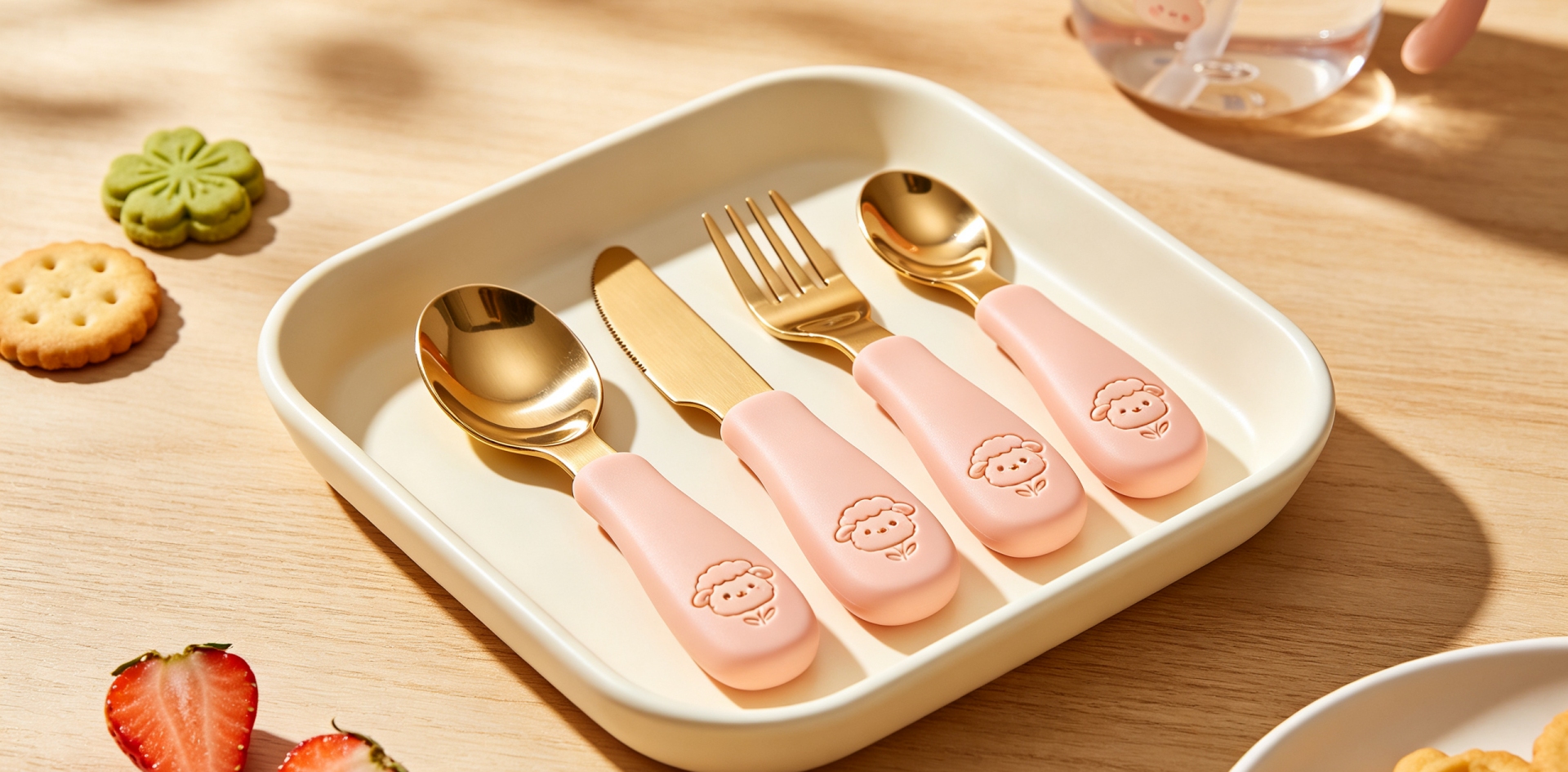
Stainless Steel Cutlery Handle Joint Quality for B2B Orders
When buyers evaluate stainless steel cutlery for wholesale or private label projects, attention often goes to material, appearance and price. However, the way different parts of a spoon, fork or knife are constructed and connected can also have an important effect on the finished product.
For B2B orders, structural consistency matters because the products may be used repeatedly, packed in large quantities and supplied to restaurants, hotels, retailers or distributors. A stainless steel cutlery manufacturer therefore needs to consider not only how the product looks but also how the different parts work together as a finished piece.
Understanding Cutlery Construction
Stainless steel spoons, forks and knives can be produced in different structural configurations depending on the product design. Some models use a straightforward one-piece construction, while other designs may involve different components or specially developed handle structures.
The construction method should be selected according to the product's design requirements, intended application and production quantity.
For buyers developing a custom collection, it is useful to discuss construction details at the beginning of the project. A manufacturer can evaluate the product drawing, reference sample or concept and identify the production requirements before a quotation and sample are finalized.
This helps prevent a situation where a design looks suitable visually but requires significant changes during manufacturing.
Why Handle Construction Matters
The handle is one of the most noticeable parts of a spoon, fork or knife, but it is also an important part of the overall construction.
When a cutlery design includes a connection between components, the transition needs to be properly controlled. The finished product should have a stable and consistent structure that matches the approved sample.
For commercial buyers, this becomes especially important when purchasing large quantities. A small difference that is barely noticeable on one piece can become much more obvious when hundreds or thousands of pieces are placed together.
Consistent construction therefore supports both product quality and brand consistency.
Spoon Construction for Bulk Orders
A stainless steel spoon needs to combine its bowl and handle into a finished product with the correct overall structure. For custom B2B projects, the relationship between these areas should be considered during product development.
The shape of the spoon, the handle design and the intended manufacturing method all influence the final construction.
When a buyer provides a reference spoon, the factory can evaluate its construction and discuss whether the same concept can be reproduced for the required quantity.
For private label projects, sample approval is particularly useful because the buyer can inspect the physical product before confirming mass production.
Fork Construction and Connection Consistency
Forks require careful attention because the head contains multiple tines while the handle forms the main gripping area.
The transition between these areas should be consistent with the product design. During production, the factory needs to maintain the intended structure across different pieces so that the final shipment remains uniform.
For B2B customers purchasing several fork models, consistent construction can also help create a unified product range.
This is useful for retailers and distributors that want different stainless steel flatware products to share a common design language while still having individual product characteristics.
Knife Construction for B2B Cutlery Projects
Knives can have different construction requirements depending on the blade and handle design. Some commercial projects may require a straightforward stainless steel structure, while other products may involve additional design elements.
Before production, the buyer and manufacturer should confirm the product construction, connection requirements and approved appearance.
For OEM projects, this information can become part of the product specification used during sampling and bulk production. Having a clear reference makes it easier for the purchasing team and factory to communicate when future orders are placed.
Checking Construction During Sample Approval
A production sample gives B2B buyers an opportunity to inspect more than just appearance.
When reviewing a stainless steel cutlery sample, buyers can examine whether the handle and main body are correctly aligned, whether the connection matches the approved design and whether different pieces from the sample batch remain consistent.
This is especially important for custom products because the sample represents the manufacturing standard that the buyer expects to receive during the bulk order.
If adjustments are required, they can be discussed before large-scale production begins.
Construction Consistency in Large-Volume Production
Large-volume production requires stable manufacturing procedures. A factory may produce thousands of spoons, forks or knives within one order, so the production process needs to maintain consistent product construction from the beginning to the end of the batch.
Quality inspection can help identify products that do not match the approved requirements.
For distributors and importers, this consistency is important because the same product may be sold through different channels. Customers generally expect the products from the same SKU to maintain the same construction and appearance.
A reliable production reference also becomes useful for repeat orders.
Custom Construction for OEM and Private Label
OEM and private label projects can involve unique product requirements. A buyer may have an existing cutlery model, a drawing from a designer or simply a reference product that needs to be developed into a new collection.
In these situations, the manufacturer needs to understand the product structure before determining the most practical production solution.
Homefelt factory provides OEM/ODM stainless steel cutlery manufacturing for B2B customers. The factory can work with product drawings, reference samples and customized requirements for stainless steel spoons, forks, knives and cutlery collections.
The service can cover product development, sampling, production, quality control, packaging and shipping arrangements according to the customer's project.
Construction and Long-Term Product Development
For brands that plan to reorder the same cutlery products, keeping clear product information is valuable.
Once a model has been approved, the construction details, sample and related production requirements can provide a reference for future manufacturing. This is particularly useful when a buyer later increases order quantities or adds related spoon, fork and knife models.
A stable product reference can also help purchasing teams communicate with the factory more efficiently.
For long-term B2B cooperation, the goal is not simply to complete one shipment. It is to create a repeatable manufacturing process that can support the customer's growing product range.
What B2B Buyers Should Confirm
Before placing a bulk stainless steel cutlery order, buyers can ask the manufacturer to confirm several basic construction details:
-
Overall product construction
-
Handle and body connection method
-
Approved sample requirements
-
Production consistency standards
-
Quality inspection procedures
-
Material and product specifications
-
Packaging requirements
-
Expected production quantity
-
Repeat-order reference process
These details can make communication clearer and reduce unnecessary changes after production has started.
Homefelt Factory for Custom Stainless Steel Cutlery
Homefelt factory has 40 years of experience in the stainless steel cutlery business and works with B2B customers on customized spoon, fork and knife projects.
The factory supports OEM/ODM, private label, wholesale and large-volume production. Customers can discuss product concepts, reference samples, construction requirements and other specifications with the manufacturing team before moving to sampling and bulk production.
For buyers who need a long-term stainless steel flatware supplier, having one manufacturing partner for product development, production, quality control, packaging and shipping can simplify the purchasing process.
Custom Stainless Steel Cutlery Tooling for OEM B2B Projects
Stainless Steel Cutlery Polishing Quality for Consistent B2B Orders
Related Article



