
Stainless Steel Cutlery Handle Taper: A Detail for Custom B2B Flatware
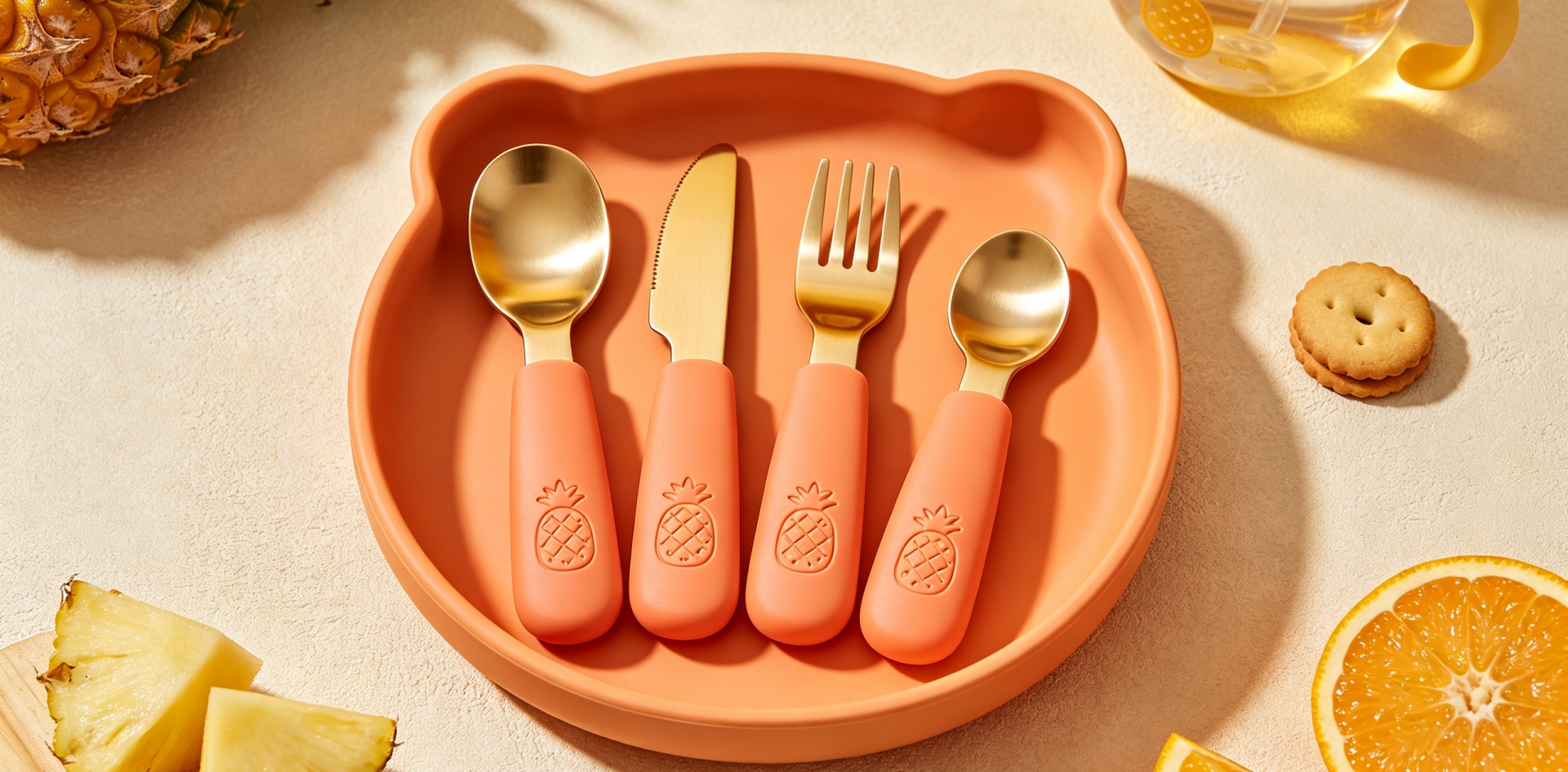
Stainless Steel Cutlery Handle Taper: A Detail That Shapes Custom B2B Flatware
When a stainless steel cutlery collection is developed for a B2B market, the handle is often one of the first areas considered. Buyers may already have a preferred length, width, finish, or overall shape in mind. But there is another detail within the handle design that can significantly change the appearance of the finished product: the taper.
Handle taper refers to the gradual change in the handle's width or visual profile from one end to another. It can be subtle or more pronounced, depending on the design. Although it may seem like a small specification, the taper can influence the character of a fork, spoon, knife, or complete flatware collection.
For OEM, private label, and custom manufacturing projects, understanding this detail can help buyers communicate their design expectations more clearly and develop a product that feels intentional rather than generic.
How Handle Taper Changes the Overall Silhouette
A completely uniform handle creates a different visual effect from one that gradually becomes narrower or wider. Even when two pieces of stainless steel cutlery have similar overall dimensions, their silhouettes can look quite different because of this change.
A gradual taper can create a more flowing appearance. A stronger change in width can make the handle look more structured or distinctive. A nearly straight handle can provide a simple and restrained appearance.
There is no single taper that works for every collection. The appropriate shape depends on the design direction, target market, product positioning, and relationship between the handle and the functional section.
For a B2B brand developing its own range, this means that the handle should be considered as a complete profile rather than simply a rectangle with a decorative surface.
Connecting the Handle With the Rest of the Cutlery
A handle does not exist independently from the rest of the product. Its shape needs to work with the spoon bowl, fork head, or knife blade.
For example, a handle that gradually becomes wider toward the end may create a stronger visual weight at the bottom of the product. A handle with a more continuous taper may produce a lighter and more streamlined appearance.
The same design principle can be applied across a collection.
A custom fork, spoon, and knife do not need to have identical dimensions. Their functional sections are naturally different. However, a consistent approach to the handle profile can make them look like members of the same product family.
This is particularly useful for B2B collections where several SKUs are sold under one brand or included in one flatware set.
Handle Taper and Brand Identity
For private label brands, differentiation often comes from a combination of relatively small design decisions.
The handle taper can be one of those decisions.
A standard stainless steel cutlery model may follow a familiar straight-line profile. A custom model can introduce a more specific taper that matches the brand's visual language. Combined with the right surface treatment, proportions, and finishing, this can create a more recognizable collection.
The purpose is not necessarily to make the design complicated. In many successful product programs, the strongest identity comes from simple shapes that are carefully proportioned.
For a manufacturer, the challenge is to preserve the intended design while ensuring that the shape remains practical for series production.
Designing for Series Manufacturing
A custom handle may look straightforward in a drawing, but producing it consistently at commercial volumes requires controlled forming and dimensional accuracy.
When the handle gradually changes width, the transition needs to be clearly defined. The manufacturer must understand where the taper begins, how quickly the dimension changes, and how the final profile should appear.
These details can be communicated through technical drawings, CAD files, dimension tables, or approved samples.
For B2B projects, clear specifications become especially important when the order contains multiple products. If several SKUs share the same design language, the taper should be defined consistently across the collection.
This helps reduce unnecessary interpretation during production and provides a clearer reference for future repeat orders.
The Importance of Proportion
A handle taper is not only about whether the handle becomes wider or narrower. The amount of change matters as well.
A very subtle taper may barely change the appearance of the product but can create a smooth transition between different sections. A more noticeable taper can become a defining part of the design.
The total handle length also affects how the taper is perceived. On a short handle, a small dimensional change may appear relatively strong. On a longer handle, the same change may look more gradual.
For this reason, a manufacturer evaluating a custom design should consider the handle length, overall width, thickness, functional section, and end shape together.
This is one reason why a simple reference such as “slightly tapered handle” may not always be sufficient for a production specification. A drawing or sample can make the intended shape much easier to understand.
Different Taper Directions
Handle taper can be developed in different ways.
Some designs become gradually narrower toward the handle end. Others widen slightly to create a stronger terminal section. Some handles maintain a similar width through most of their length and only change near the end.
There can also be differences between the visual taper and the actual dimensional taper. A curved or shaped surface may create the impression of a gradual change even when the basic width remains relatively consistent.
For custom cutlery manufacturing, these distinctions matter because they influence the forming requirements and the final appearance.
A B2B buyer does not necessarily need to specify every manufacturing parameter. However, explaining the desired visual effect and providing a suitable reference gives the factory a stronger starting point for technical evaluation.
Keeping a Collection Visually Consistent
When a brand develops a complete flatware program, consistency is often more valuable than making every individual piece highly distinctive.
The fork, spoon, and knife should each work as individual products while also looking appropriate when placed together.
A shared handle taper can help achieve this.
For example, the knife may require a different blade construction from the spoon, while the fork has a different head shape. Their functional sections change, but the handle profile can remain related.
This approach can make a collection easier to present in catalogs, retail packaging, hospitality programs, or distributor product lines.
For OEM manufacturing, it also provides a useful framework for adding future SKUs without completely redesigning the visual language of the collection.
Taper and Custom Product Development
A custom cutlery project usually involves several decisions rather than one isolated specification.
The client may begin with a general design concept and then define dimensions, material, surface treatment, handle details, and packaging requirements. The handle taper can be incorporated into this process as one of the design parameters.
If the project is based on an existing product, the taper may need to be modified to create a more distinctive version. If the project starts from an original drawing, the taper can be defined from the beginning.
For an experienced stainless steel cutlery manufacturer, both approaches can be evaluated according to the expected production quantity and product construction.
This makes the discussion more practical for B2B buyers. Instead of simply asking whether a factory can “make this handle,” buyers can provide enough information for the manufacturer to assess how the complete profile should be produced.
What to Include in a Custom Cutlery Inquiry
When requesting a quotation for custom stainless steel cutlery, buyers can provide a drawing or reference image showing the desired handle shape. If the taper is important to the design, the relevant dimensions or profile can be marked directly on the drawing.
It is also useful to provide the expected order quantity, number of SKUs, finish requirements, and whether the products will be sold individually or as a flatware set.
For OEM and private label projects, information about the intended collection can also help. If the fork, spoon, and knife are meant to share the same handle concept, this should be communicated from the beginning.
The more clearly the design intent is presented, the easier it is for the manufacturer to evaluate the project and prepare a suitable quotation.
From a Design Detail to a Commercial Product
The value of handle taper is not simply aesthetic. For B2B cutlery, the real objective is to turn a design idea into a product that can be manufactured consistently and sold as part of a complete commercial range.
A carefully developed taper can support the visual identity of a collection, improve the relationship between different SKUs, and give a private label product a more distinctive appearance.
At the same time, the design needs to remain practical for manufacturing and repeat production.
For wholesalers, importers, distributors, and brands looking for custom stainless steel flatware, these details are worth discussing before the final production specifications are confirmed.
A custom cutlery factory can evaluate the proposed design, review the dimensions, and discuss how the handle profile can be translated into a repeatable manufacturing process.
If you already have a handle concept, drawing, or reference product, it can be the starting point for a B2B development discussion. With the right specifications, a simple design idea can become a complete stainless steel cutlery program suitable for wholesale, OEM, or private label supply.
Custom Stainless Steel Cutlery for Your Brand
OEM Stainless Steel Flatware Manufacturing
Private Label Cutlery Production
Wholesale Stainless Steel Cutlery Supplier
Custom Flatware Collection Development
Request a Custom Cutlery Quotation
Edelstahlbesteck Vorderteil: Wie die Form die B2B-Kollektion beeinflusst
Couteau de Table Inox : Pourquoi le Design du Talon de Lame Compte en B2B
Related Article



