
Stainless Steel Cutlery Handle Texture for B2B Custom Designs
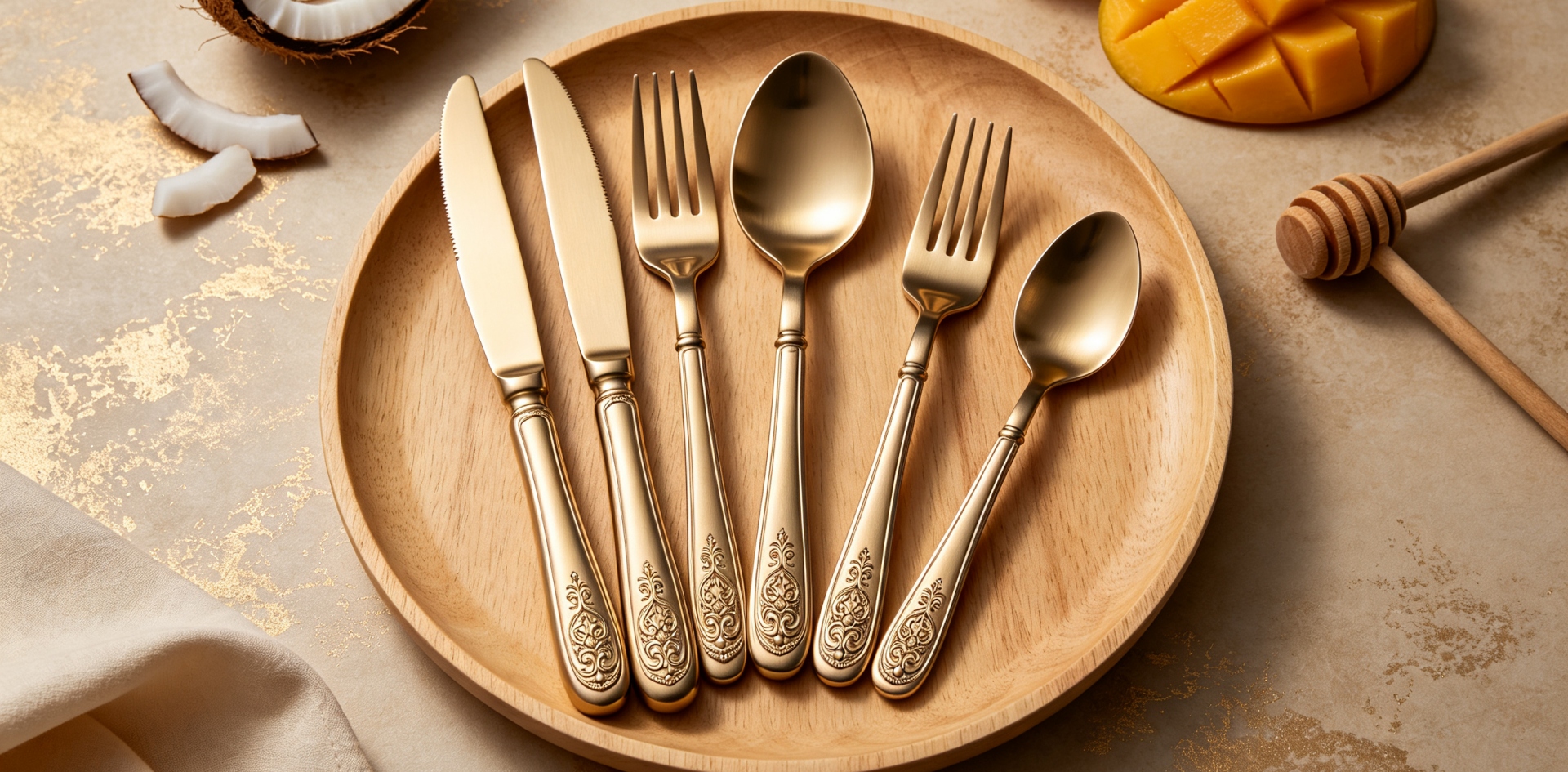
Stainless Steel Cutlery Handle Texture for B2B Custom Designs
The handle is one of the most visible and frequently touched parts of stainless steel cutlery. While overall shape and proportions define the basic appearance of a knife, fork or spoon, handle texture can add another layer of character to the finished product.
For B2B buyers developing custom stainless steel flatware, texture can be used to create a distinctive appearance without changing the fundamental structure of the cutlery. Depending on the design, the handle can remain visually simple while incorporating subtle lines, patterns or other surface details.
The key is to make the texture work naturally with the existing handle design.
Why Handle Texture Matters
A stainless steel handle can have a completely smooth appearance, or it can include controlled textural elements that change how light interacts with the surface.
A smooth handle generally creates a clean and understated look. A textured handle can introduce additional visual depth and make the product easier to distinguish from standard flatware designs.
For a private label cutlery collection, this can be useful when the brand wants a recognizable detail while keeping the basic knife, fork and spoon structure practical.
Texture and Tactile Character
Unlike decorative details that are only seen, handle texture can also be felt when the cutlery is held.
The texture should therefore be considered from both visual and tactile perspectives. A subtle pattern may provide a different sensation from a deeper or more pronounced surface treatment.
For everyday stainless steel cutlery, the texture should remain compatible with the intended use of the product. The handle should still feel comfortable in the hand and maintain a practical surface.
This is why texture development should be evaluated on an actual sample whenever possible.
Different Types of Handle Texture
There are many possible directions for stainless steel cutlery handle texture.
Fine linear details can create a contemporary appearance. Repeated geometric elements can provide a more structured visual effect. Subtle raised or recessed patterns can make a plain handle more distinctive without changing its overall silhouette.
Some designs use texture only on a specific section of the handle rather than across the entire surface. This can create a visual transition between the front and rear sections of the product.
The appropriate approach depends on the desired collection style and the relationship between the handle and working section.
Texture and Light Reflection
Stainless steel is naturally reflective, which means surface texture can influence how light appears on the handle.
A completely smooth surface may produce a continuous reflection, while a textured surface can break the reflection into smaller visual areas.
This effect can become particularly noticeable when several pieces are displayed together. Knives, forks and spoons with coordinated textures can appear more closely connected as a collection.
For B2B brands, this provides another way to establish a recognizable product appearance without relying entirely on color or complex shapes.
Coordinating Texture Across Knives, Forks and Spoons
A complete cutlery collection should maintain a consistent design relationship between individual pieces.
The same texture does not necessarily have to be applied in exactly the same way to every product. The knife, fork and spoon have different working sections and may require different handle proportions.
However, a shared texture language can help connect the pieces visually.
For example, the same linear pattern can be adjusted to follow the available handle area of each piece. This allows the collection to look coordinated while respecting the individual construction of each knife, fork and spoon.
Custom Texture for OEM and ODM Cutlery
For OEM and ODM projects, buyers can provide a reference pattern, drawing or physical sample showing the desired handle texture.
The factory can then evaluate how the texture should be incorporated into the stainless steel handle and whether the design needs to be adjusted for practical production.
This stage is useful because some patterns may look attractive in a drawing but produce a different visual effect when applied to a curved or shaped metal surface.
Sample development allows the buyer to review the actual appearance before the product specification is finalized.
Texture Depth and Product Appearance
The depth and definition of a texture can significantly change the appearance of the handle.
A very subtle texture may only become visible under certain lighting conditions, creating a restrained effect. A more defined pattern can become one of the main visual characteristics of the product.
For B2B custom cutlery, the right level of definition depends on the overall product concept. If the knife, fork and spoon already have distinctive proportions, a subtle texture may be sufficient. If the basic silhouette is simple, a stronger handle detail can give the collection additional character.
The objective is to create balance rather than add unnecessary decoration.
Maintaining Consistent Handle Texture
Once the texture has been approved, consistency across production is important. The pattern should remain visually stable from one piece to another so that the collection maintains the same appearance.
This is particularly relevant for bulk stainless steel cutlery orders where many pieces are displayed or used together.
For repeat orders, keeping the approved texture specification also helps maintain continuity between different production batches.
Handle Texture for Private Label Flatware
Private label brands can use handle texture as one of the details that separates their products from standard stainless steel cutlery.
A recognizable texture can become part of a collection's visual identity while the underlying knife, fork and spoon structures remain practical and familiar.
This approach can be useful when a buyer wants a custom appearance but does not need a completely new product structure.
Homefelt Factory for Custom Stainless Steel Cutlery
Homefelt factory specializes in stainless steel knives, forks, spoons and complete cutlery sets for B2B customers. The factory supports OEM, ODM, private label and wholesale production for customized stainless steel flatware projects.
For custom handle development, buyers can discuss texture, surface appearance, handle shape, material and other product details together. Reference drawings, samples or existing cutlery can be provided to help communicate the intended design.
Homefelt can also develop coordinated knife, fork and spoon collections so that customized handle details remain consistent across the complete set.
Stainless Steel Knife Blade Length for B2B Custom Cutlery
Stainless Steel Cutlery Handle Thickness for B2B Custom Designs
Related Article



