
Stainless Steel Cutlery Handle Transition Radius for OEM Manufacturing
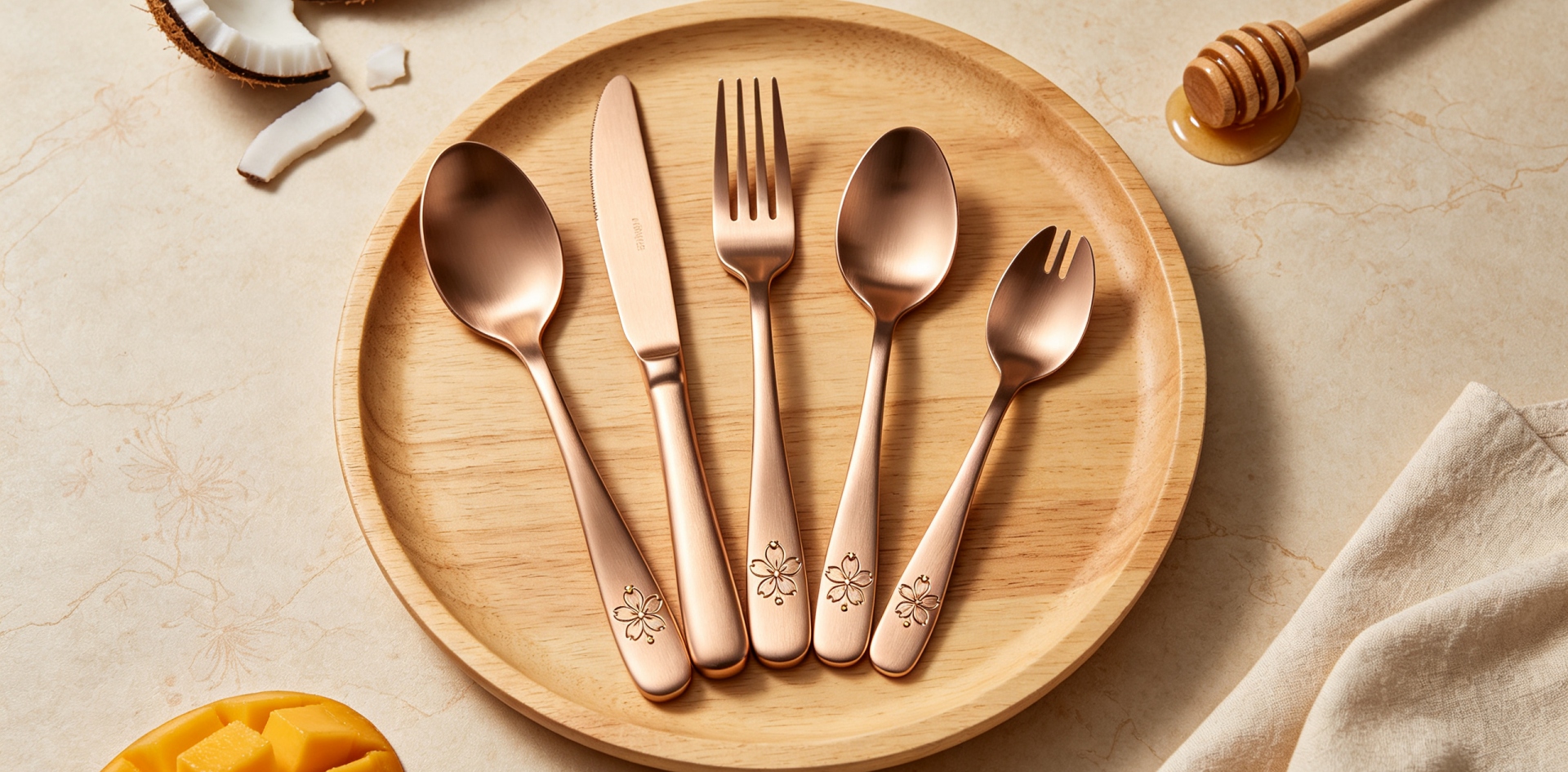
Stainless Steel Cutlery Handle Transition Radius for OEM Manufacturing
The transition between a stainless steel cutlery handle and its wider or narrower sections is an important part of product design. A smooth, controlled transition helps define the handle's silhouette, influences the visual flow of the piece and supports consistent manufacturing. For buyers sourcing custom knives, forks and spoons, specifying this detail can help ensure that production samples match the intended design.
Homefelt factory supports OEM and ODM stainless steel cutlery projects for importers, wholesalers, distributors and private label brands. By reviewing drawings, dimensions, material choices and finish requirements before production, buyers can establish a clearer reference for product development and bulk manufacturing.
What Is a Handle Transition Radius?
A handle transition radius describes the curvature used where one section of a cutlery handle connects to another section with a different width, thickness or contour. Rather than forming a sharp change in direction, the transition follows a defined curve.
The feature may appear where a narrow handle section expands toward a decorative end, where the handle widens near the neck, or where a shaped contour blends into the main grip area.
The radius is different from the handle's overall profile, thickness or taper. These features work together, but each describes a different aspect of the geometry. Two handles can have similar overall dimensions and still look noticeably different because their transition curves are not the same.
There is no single radius suitable for every cutlery design. The required shape depends on the drawing, material, manufacturing method and appearance the customer wants to achieve.
Why Transition Radius Matters for Cutlery Buyers
1. A consistent design language
The handle often provides the strongest visual identity of a flatware collection. Rounded transitions can create a softer appearance, while tighter curves may give the design a more defined or contemporary character.
For a coordinated collection, buyers may want related transitions across dinner spoons, forks and table knives. The radius does not have to be identical on every piece, but the differences should be intentional and consistent with the design concept.
2. Smooth visual flow
Abrupt changes between handle sections can make a product look disconnected when the design calls for a continuous curve. An appropriate transition helps the eye follow the handle from its central grip area toward the neck or end.
This is particularly relevant for private label products displayed in retail packaging, catalogues and online product photography. Comparing the pieces side by side can reveal differences that are less obvious when each item is viewed separately.
3. Forming and finishing quality
A handle's transition geometry must be compatible with the selected material and forming process. Depending on the product construction, the transition may be created during stamping, forming or subsequent finishing operations.
Polishing can also affect the final appearance of a curved area. If the transition is difficult to access or the curve is poorly defined, finishing may make the contour look uneven. The actual result depends on the geometry, tooling and finishing method.
4. Repeatability in mass production
For bulk orders, the approved curve must be reproduced consistently. If the transition changes across production pieces, the handles may appear mismatched even when their overall length and width remain within specification.
Defining the radius and its reference points gives the factory a more reliable basis for sample evaluation and quality inspection.
How to Specify the Transition Radius
Use a dimensioned drawing
A technical drawing should identify the location of the transition and provide the relevant radius or profile dimensions. If the handle has multiple curved sections, each critical curve should be identified clearly.
For complex decorative designs, a detailed profile drawing may be more useful than a single dimension. It can show how the transition connects with the surrounding contours and prevent different interpretations during manufacturing.
Clarify the tangent connections
A radius does not fully describe how two sections meet unless the surrounding geometry is also defined. Buyers should consider whether the transition should connect smoothly with the adjacent straight or curved sections.
Where a continuous visual flow is important, the drawing can indicate the intended tangency or profile relationship. This helps the manufacturer understand the design beyond simply reproducing one radius value.
Confirm the material and thickness
Stainless steel grade and sheet thickness influence forming behavior and production decisions. Commonly specified grades include 304 and 430 stainless steel, but the appropriate material depends on the intended application and customer requirements.
The transition radius should be evaluated alongside the material specification and manufacturing process. A curve that looks suitable on a drawing may require review during sample development to confirm its appearance and manufacturability.
Approve a representative sample
A physical sample allows the buyer to assess the transition under actual lighting and handling conditions. The sample should use the intended material and surface finish whenever possible.
Once approved, the sample and corresponding drawing should be treated as matching references. If the radius changes later, the updated design should be documented and approved before it becomes the new production reference.
Inspecting Transition Radius in Bulk Orders
A practical inspection plan can include the following checks:
-
Confirm the transition location against the current technical drawing.
-
Measure the specified radius using a suitable instrument, template or profile-comparison method.
-
Compare the complete handle contour with the approved sample.
-
Check for visible irregularities, abrupt steps or unintended asymmetry.
-
Inspect the polished surface for uneven reflections or finishing marks around the curved area.
-
Compare samples from the production batch to assess consistency.
Not every decorative curve requires the same inspection method. For simple profiles, a dimensional check may be sufficient. More complex contours may need a profile template or other suitable measurement method.
The buyer and manufacturer should agree on the inspection reference and acceptance criteria before mass production. This reduces the risk of disagreements caused by subjective descriptions such as “smooth,” “rounded” or “well balanced.”
Example: Developing a Coordinated Flatware Collection
A retailer plans to introduce a private label collection with a distinctive handle that widens near the decorative end. The first samples have the correct length and width, but the curved transitions appear slightly different across the spoon, fork and knife.
The buyer and factory can review the profile drawings, identify the intended radius for each item and compare the samples against those references. If necessary, the drawings or tooling can be reviewed before a revised sample is approved.
This process helps distinguish intentional differences between product types from unintended production variation. It also provides a documented basis for future repeat orders.
Material Documents and Manufacturing Experience
Technical specifications are only one part of a reliable cutlery sourcing decision. Buyers may also need material documentation, inspection records and applicable product test reports to support their internal purchasing procedures.
Homefelt has experience in stainless steel cutlery manufacturing and has worked with established brands. Its documented credentials include BSCI, SEDEX 4P, BRC and ISO 9001, along with Disney audit experience and FAMA and FSC certificates for applicable projects. Buyers should confirm which documents apply to their particular product, facility and market requirements.
For OEM and ODM projects, the final specification should bring together the product drawing, material grade, dimensions, surface finish, logo details, packaging requirements and agreed quality checks. This gives both parties a shared reference throughout sampling and production.
OEM and ODM Support from Homefelt Factory
Homefelt factory specializes in stainless steel knives, forks, spoons and coordinated cutlery sets. Its services support customization, private label manufacturing, wholesale purchasing and large-volume orders.
Customers can discuss handle design, decorative contours, product dimensions, surface treatments and packaging requirements. Homefelt can coordinate product design, sample development, manufacturing, packaging and transportation as a one-stop service based on the customer's project needs.
For an efficient quotation, buyers can provide a drawing or reference sample, estimated quantity, target market, material preference, packaging format and required delivery schedule. These details help the team evaluate the project and identify the information needed before production confirmation.
You May Be Interested In
Website: //www.huabao-homecollection.com/
Stainless Steel Spoon Bowl Centerline Alignment for OEM Production
Stainless Steel Fork Head Plane Angle for OEM and Private Label Manufacturing
Related Article



