
Stainless Steel Cutlery Handle Twist Control for OEM and Bulk Production
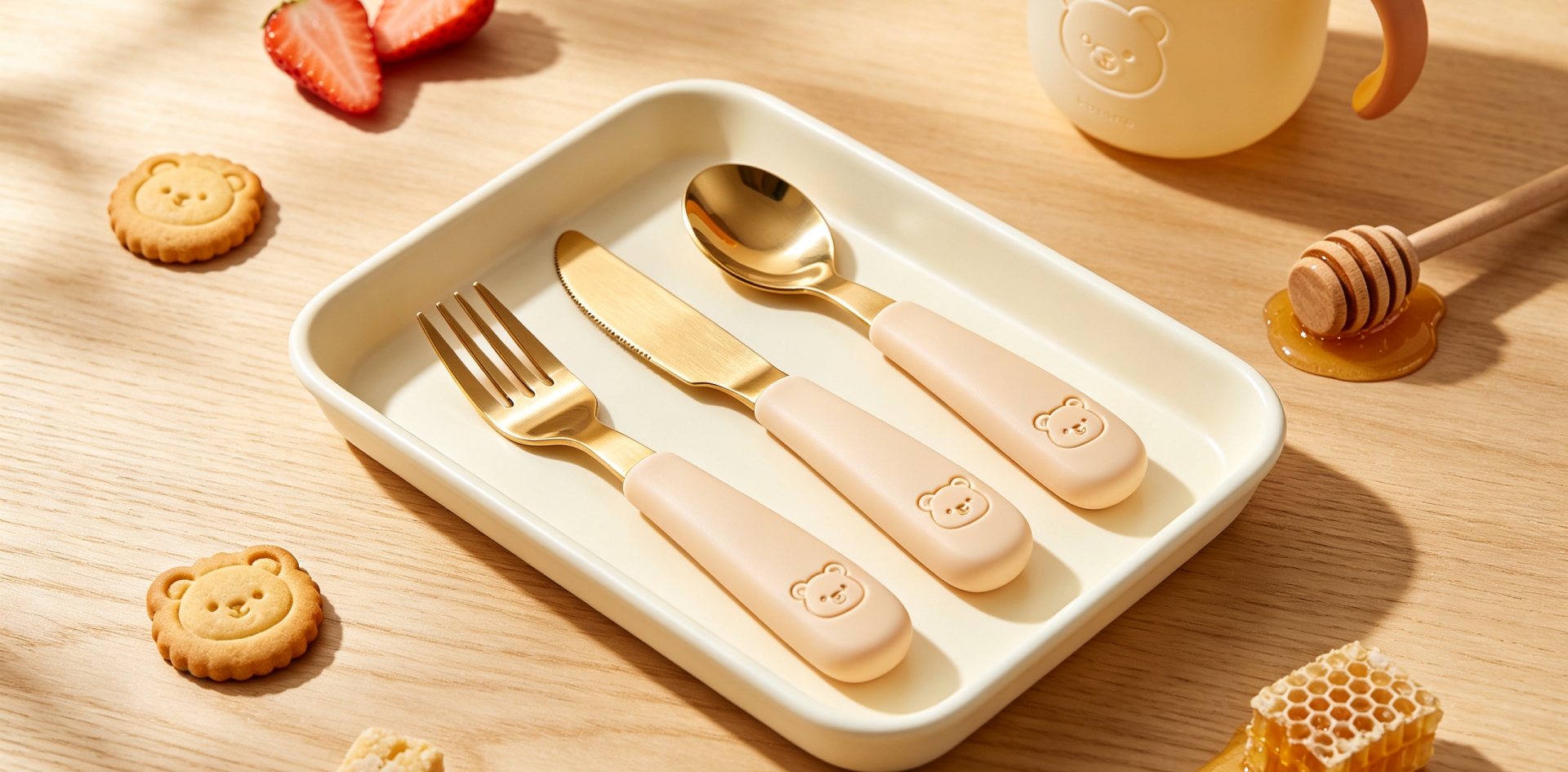
Stainless Steel Cutlery Handle Twist Control for OEM and Bulk Production
When buyers develop a new stainless steel cutlery collection, attention is often placed on length, thickness, surface finish and overall shape. However, another dimensional characteristic can strongly influence the final appearance and handling experience: the rotational position of the handle.
For stainless steel spoons, forks and table knives, the handle should maintain a controlled relationship with the working end of the product. If the handle is slightly twisted from one piece to another, the difference may be difficult to notice on an individual sample but become obvious when hundreds or thousands of pieces are placed together.
For OEM, ODM and private label projects, Homefelt factory treats handle twist control as part of the overall product engineering and production consistency process.
Why Handle Twist Matters in Stainless Steel Cutlery
Handle twist refers to the rotational deviation of the handle around the product's longitudinal direction. It is different from handle straightness. A handle may appear straight when viewed from the side while still having a rotational offset when viewed from the top, bottom or multiple directions.
This becomes particularly important for modern flatware designs with:
-
Wide or sculpted handles
-
Asymmetrical decorative details
-
Brushed or directional textures
-
Colored or PVD finishes
-
Embossed logos or patterns
-
Geometric handle profiles
-
Multi-piece handle constructions
When a collection is displayed together, inconsistent rotational positioning can make otherwise identical products look different.
For commercial buyers, this can affect presentation, especially when cutlery is arranged in retail packaging, restaurant settings, hospitality projects or private label gift sets.
How Handle Twist Is Defined During Product Development
For a repeatable OEM project, the rotational position should not be left to visual judgment alone.
A practical specification can define a reference axis through the product. The handle's upper and lower surfaces, side profiles or decorative features can then be evaluated against this reference.
Depending on the handle design, manufacturers may consider:
-
Longitudinal reference axis
-
Handle cross-section orientation
-
Rotational angle
-
Decorative feature position
-
Relationship between handle and spoon bowl
-
Relationship between handle and fork head
-
Relationship between handle and knife blade
-
Allowable production tolerance
The exact specification should be established according to the product drawing and intended construction rather than applying one universal value to every cutlery design.
This approach gives the production team a clear reference when developing tooling and checking samples.
Material and Forming Factors
Stainless steel flatware does not always retain exactly the same orientation throughout manufacturing. Material thickness, blank geometry, forming pressure, tooling condition and subsequent finishing operations can all influence the final position of the handle.
For example, a handle with a three-dimensional cross-section requires more controlled forming than a simple flat handle. If the forming sequence creates uneven forces across the handle, rotational deviation may appear after the product is released from the tooling.
Material characteristics also need to be considered. Different stainless steel specifications can behave differently during forming, and the production process should be adjusted accordingly.
For an OEM project, Homefelt can review the customer's drawings, product samples and required material specifications before production. This helps determine an appropriate manufacturing approach rather than treating handle orientation as a simple visual adjustment at the end of production.
Checking Handle Twist Across Knife, Fork and Spoon
A complete flatware collection should be evaluated as a group.
A spoon may have a bowl that visually establishes a clear center direction. A fork has multiple tines that create another reference structure. A knife normally has a blade and handle relationship that makes rotational deviation easier to identify.
Therefore, inspection methods can be adapted to the specific product.
For spoons, inspectors can compare the handle orientation with the centerline of the bowl.
For forks, the handle can be checked against the centerline established by the fork head and tine arrangement.
For table knives, the relationship between the handle, blade and cutting edge provides useful reference points.
The purpose is not simply to make every product visually identical from one angle. The objective is to establish a repeatable three-dimensional relationship between the working section and the handle.
Why This Is Important for Private Label Collections
Private label buyers often invest heavily in the visual identity of their flatware. A distinctive handle may contain a logo, decorative groove, geometric surface or special profile.
When the rotational position changes between pieces, these design elements may no longer appear consistently aligned.
This is particularly noticeable in:
-
Retail flatware sets
-
Hotel and restaurant collections
-
Premium tableware programs
-
Branded gift sets
-
Private label collections
-
Custom promotional cutlery
A consistent handle orientation helps the finished collection maintain the appearance established during product development.
Production Control for Bulk Orders
Handle twist control should ideally be considered before mass production begins.
A typical project can include drawing review, sample development, tooling preparation, pilot production and final bulk manufacturing. During these stages, the factory can establish reference points and inspection methods for the finished product.
For larger orders, production consistency becomes more important because even a small rotational difference can become visible when products are packed in large quantities.
Homefelt's production experience in stainless steel cutlery allows customer requirements to be translated into practical manufacturing checkpoints. Depending on the product structure, inspection can include dimensional comparison, fixture-based positioning checks and visual evaluation against an approved reference sample.
The goal is to make the approved sample a practical production reference rather than relying only on subjective judgment.
Homefelt Factory for OEM, ODM and Private Label Cutlery
Homefelt factory focuses on stainless steel knives, forks, spoons and complete flatware collections for B2B customers. With long-term experience in stainless steel cutlery production, the factory supports OEM and ODM development, private label manufacturing, wholesale orders and large-volume production.
The project process can cover product design, specification confirmation, sampling, manufacturing, packaging and transportation as a one-stop service. Customers can also develop an exclusive service package according to their market, product positioning and order requirements.
For projects involving custom handle geometry, the production team can evaluate the relationship between handle shape, material thickness, forming method, surface treatment and final assembly requirements.
This practical engineering approach is useful when buyers need a product that can be reproduced consistently rather than simply creating an attractive first sample.
Experience, Expertise and Production Reliability
Homefelt has 40 years of experience in the stainless steel cutlery business and has worked with well-known brands and international B2B customers. This accumulated experience is valuable when a custom product involves multiple dimensional and visual requirements.
The factory also has experience supporting quality and compliance requirements through certifications and audits including BSCI, SEDEX 4P, BRC and ISO9001, as well as Disney audit experience. FAMA and FSC certificates are also available for applicable business requirements.
For buyers, these materials can provide additional reference when evaluating a long-term manufacturing partner. More importantly, the production specification, approved sample and inspection requirements should be aligned before bulk manufacturing begins.
From Handle Specification to Finished Cutlery
Handle twist control is only one part of a complete stainless steel cutlery specification. A successful OEM project also requires the right combination of material, dimensions, forming, surface finish, decoration, packaging and shipment planning.
This is why an experienced manufacturer should evaluate the complete product instead of treating individual parameters separately.
If you are developing a new stainless steel spoon, fork, knife or flatware set, you can provide Homefelt with your drawings, reference samples, target specifications or initial design ideas. The factory can then evaluate the product structure and recommend a practical manufacturing solution for OEM, ODM, private label or bulk production.
Related Article



