
Stainless Steel Cutlery Labeling for B2B Product Programs
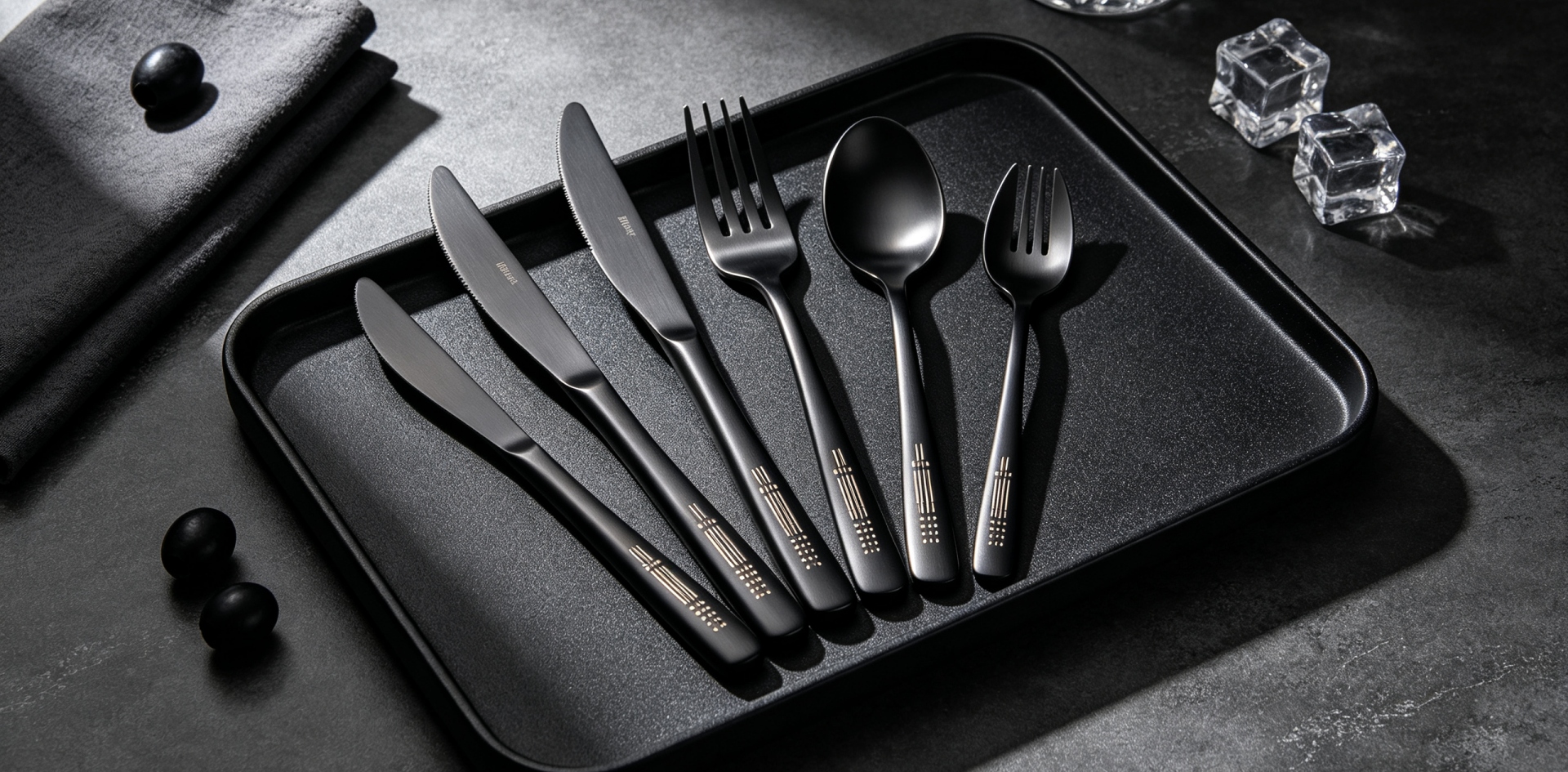
Stainless Steel Cutlery Labeling for B2B Product Programs
When a stainless steel cutlery collection grows from a few products into a larger B2B range, clear product identification becomes increasingly useful.
A knife, fork or spoon may look easy to recognize, but purchasing teams often manage multiple designs, sizes, finishes and packaging formats at the same time. Clear product labeling helps buyers, factories, warehouses and sales teams understand exactly which product is being discussed.
For wholesalers, distributors, retailers and private label brands, organized product information can make day-to-day cutlery purchasing more efficient.
Why Product Labeling Matters
A stainless steel cutlery program may contain many similar-looking products.
Two spoons can have nearly identical shapes but different dimensions. Two forks may use the same handle design but have different finishes. A cutlery set may contain several combinations of individual pieces.
Without clear identification, communication can become dependent on photographs or product descriptions that may not always be precise.
A consistent labeling system gives every product a clear reference.
Create Simple Product References
A product reference does not need to be complicated.
A buyer may use a short product code or model number to identify each knife, fork, spoon or set.
The code can be connected to the product's main specifications and approved sample.
For example, a buyer may use separate references for a dinner knife, dinner fork, table spoon and teaspoon within the same collection.
The exact format can be chosen by the buyer, but consistency is important.
Connect Labels With Product Information
A product label becomes more useful when it connects to accurate product information.
Depending on the B2B project, the information may include product name, material, dimensions, finish, weight, packaging format and other relevant details.
The objective is not to place every specification on a physical label.
Instead, the product reference can act as a link between the physical product and the buyer's internal product information.
This is particularly useful when a purchasing team manages a large stainless steel flatware range.
Labeling for Custom Cutlery
Custom stainless steel cutlery can require even more careful identification.
A private label brand may have several custom handle designs, finishes or packaging configurations.
If these products are not clearly identified, it can become difficult to distinguish between approved and developing versions.
A product reference can therefore be assigned during the development process and maintained through production.
This helps the buyer and manufacturer communicate about the correct product without relying only on visual descriptions.
Supporting OEM and ODM Projects
For OEM and ODM projects, product identification can also support communication between different departments.
The purchasing team may use the product code when discussing quantities.
The product development team may use it when reviewing drawings or samples.
The factory can use the same reference when organizing production information.
Using one consistent reference across the project reduces unnecessary translation between different product names.
Labeling for Private Label Brands
Private label customers often have their own internal product coding systems.
The factory may also have internal references for manufacturing purposes.
Both systems can exist at the same time.
The important point is to make sure the buyer's product reference can be clearly connected to the corresponding factory product.
This becomes especially valuable when the brand has multiple cutlery collections or works with several sales channels.
Managing Product Changes
Stainless steel cutlery products can sometimes be updated during development.
A buyer may change the handle design, finish, packaging or another product detail before final approval.
When a change occurs, the product information should make it clear which version is current.
A simple version reference can help distinguish an earlier sample from the approved product.
This is particularly useful when samples, photographs and production discussions are taking place at different times.
Labeling Individual Pieces and Sets
A B2B cutlery program may contain both individual pieces and complete sets.
These should be distinguishable in the product information.
For example, a stainless steel spoon sold individually may have a different reference from a four-piece cutlery set containing a spoon, fork, knife and additional piece.
Clear identification helps purchasing teams understand whether an order refers to individual products or finished sets.
This can also make warehouse and sales communication easier.
Product Information for Wholesale Customers
Wholesalers may need to provide product information to their own customers.
Clear product references make it easier to organize catalogs, quotations and internal purchasing systems.
When the same product reference is used consistently, information can be updated without creating multiple names for the same stainless steel cutlery item.
For larger wholesale programs, this can save time across repeated purchasing cycles.
Making B2B Communication More Efficient
Product labeling may seem like a small administrative detail, but it can have a practical impact when many products are involved.
Instead of writing a long description each time, a buyer can simply refer to the product code and then confirm any specific changes.
The factory can quickly identify the corresponding product information and continue the discussion.
This becomes particularly useful when buyers communicate about several knives, forks and spoons in the same project.
Homefelt Factory for B2B Stainless Steel Cutlery
Homefelt factory manufactures stainless steel knives, forks, spoons and complete flatware sets for B2B customers.
The factory supports OEM, ODM and private label manufacturing for wholesalers, distributors, retailers and brands, including wholesale and large-volume production.
For customized projects, buyers can provide product references, drawings, photographs, samples and other product information to establish a clear basis for development and production.
Whether the project involves a small custom range or a larger private label collection, clear product identification can help connect product development, purchasing and manufacturing.
Build an Organized Cutlery Product Range
A growing stainless steel cutlery collection becomes easier to manage when every product has a clear identity.
Simple product references, consistent information and clear version identification can help buyers communicate more efficiently with factories and internal teams.
If you are developing a custom stainless steel cutlery range, you can provide your product references, existing samples or design requirements to a manufacturer and establish a clear product identification system from the beginning.
Custom Stainless Steel Cutlery Manufacturing
OEM and ODM Stainless Steel Flatware
Private Label Cutlery Production
Stainless Steel Cutlery Batch Sampling for B2B Orders
Stainless Steel Cutlery Durability Testing for B2B Buyers
Related Article



