
Stainless Steel Cutlery Logo Legibility Control for OEM Production
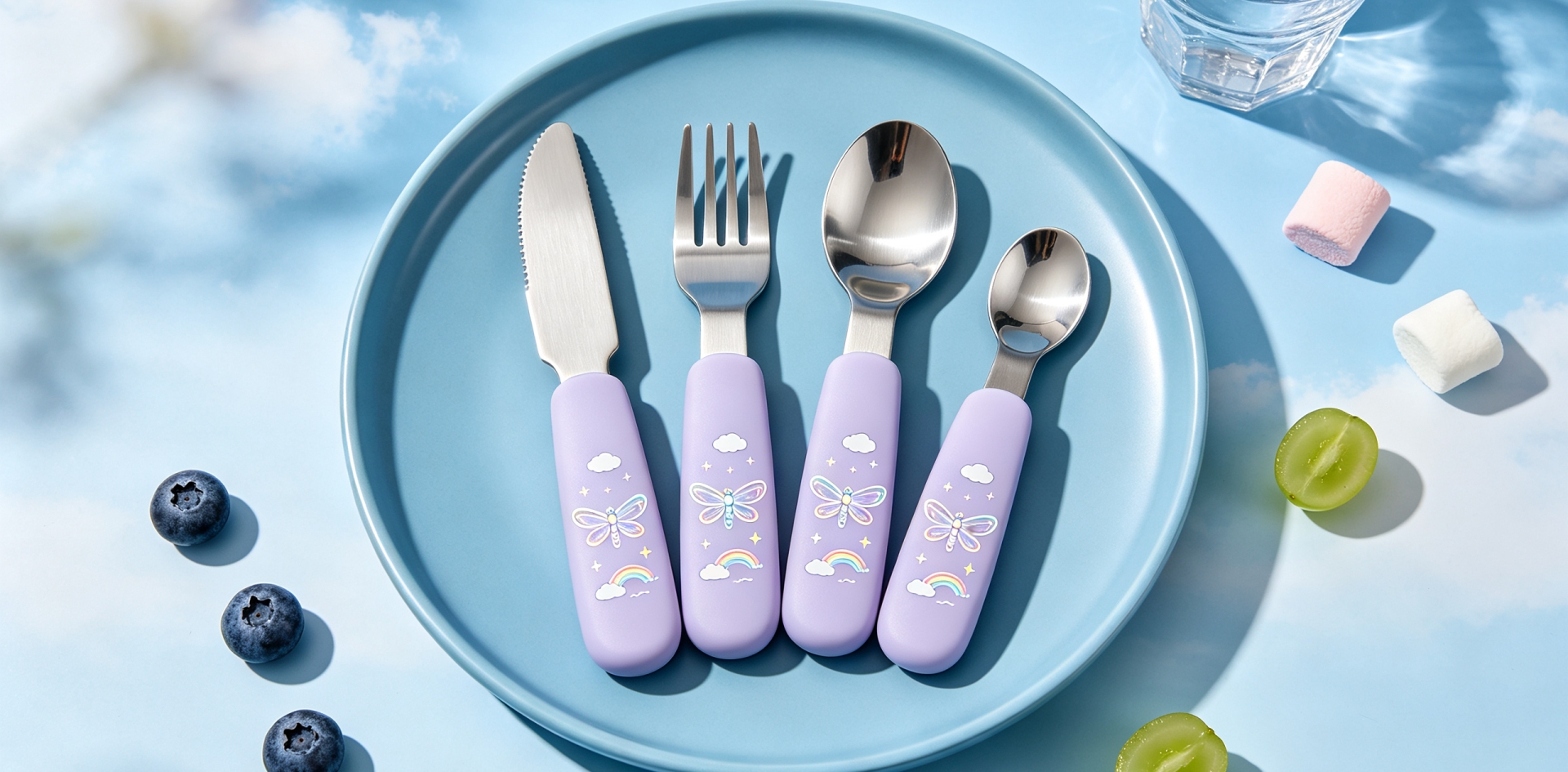
Stainless Steel Cutlery Logo Legibility Control for OEM Production
A logo on a stainless steel knife, fork or spoon is more than a decorative feature. For retailers, distributors and hospitality brands, it helps identify the product and connect the physical item with the brand's visual identity. However, a logo that looks clear on a computer drawing may become difficult to read when reproduced on a small, curved or highly reflective metal surface.
Logo legibility should therefore be considered early in custom stainless steel cutlery development. Buyers need to evaluate not only the logo artwork but also its size, placement, marking method and appearance on the finished product. These details are especially important for private label projects and large-volume orders, where the approved design must be reproduced consistently across many pieces.
Homefelt factory supports custom stainless steel cutlery manufacturing, OEM and ODM development, private label branding and wholesale production for business customers.
What Determines Logo Legibility on Cutlery?
Logo legibility refers to how clearly a brand mark can be recognized on the finished product under normal viewing conditions. A mark may contain the correct letters or symbol but still appear unclear if its lines are too fine, the spacing is too tight or the contrast is insufficient.
Several factors influence the result:
-
Logo dimensions: The available handle area limits the practical size of the artwork.
-
Line thickness: Fine strokes may be difficult to reproduce consistently, depending on the marking process.
-
Character spacing: Closely spaced letters or intricate symbols can lose clarity at small sizes.
-
Surface condition: Mirror-polished, brushed and coated surfaces can affect the visual appearance of the mark.
-
Logo location: Curved surfaces, narrow handles and nearby decorative features may restrict placement.
-
Marking method: Laser marking, engraving and other suitable processes produce different visual effects.
The most appropriate solution depends on the design, the stainless steel surface and the intended market. A logo should be assessed on the actual product rather than approved solely from a digital preview.
Choosing a Suitable Logo Marking Method
Laser Marking
Laser marking can be suitable for fine details, small text and many custom branding applications. The result depends on the equipment settings, surface condition, artwork and material.
Buyers should review the appearance of the mark under normal lighting and confirm that important details remain recognizable. For a highly detailed logo, the factory may recommend simplifying some elements to improve reproduction.
Engraving
Engraving creates a physical mark in the surface. It can provide a distinct appearance, but the achievable detail depends on the equipment, design geometry and available marking area.
For cutlery handles with limited space, the artwork may need to be adjusted so letters and symbols remain clear without crowding the surrounding design.
Other Decorative Processes
Some collections use printed, embossed or other decorative branding techniques, depending on the product construction and finish. Each method has its own practical requirements, so buyers should confirm the available options with the manufacturer.
The decision should consider the intended appearance, order quantity, production process, durability expectations and cost. A more complicated marking method is not automatically the best choice for every cutlery range.
How to Prepare Artwork for OEM Cutlery Production
Providing clean artwork helps the factory assess whether the logo can be reproduced at the intended size.
Buyers should prepare a high-quality vector file when available, together with the brand's preferred logo proportions and any requirements for symbol spacing. If the logo includes small text or thin lines, the factory can review whether adjustments are needed for the selected marking process.
A practical logo specification should identify:
-
Approved artwork and revision number.
-
Logo width and height, or the intended size range.
-
Placement on the knife, fork, spoon or other item.
-
Distance from relevant handle edges or design features.
-
Marking method and intended visual appearance.
-
Reference sample and agreed inspection criteria.
If the same logo appears on several products, each item should have its own placement reference where the handle geometry differs. Applying one generic position to every SKU may not produce a visually consistent result.
Logo Position and Product Geometry
The usable marking area varies across cutlery designs. A broad, flat handle may accommodate a longer brand name, while a narrow or curved handle may require a compact symbol.
The logo should also be considered alongside the product's overall design. Its position should not interfere with decorative patterns, make the handle look crowded or appear unintentionally close to an edge.
For a knife, fork and spoon set, the appropriate logo location may differ slightly between items because their shapes are not identical. The objective is to maintain a coherent branding approach while adapting placement to each product.
During development, buyers can ask the factory to review logo position on drawings and then confirm the appearance on physical samples. This process helps identify layout issues before bulk manufacturing begins.
Example: Developing a Private Label Flatware Set
Consider an importer preparing a stainless steel cutlery set for a retail brand. The initial design uses a detailed logo with thin lettering and a small emblem. On the polished handle of the sample spoon, the lettering appears clear, but the same logo is harder to recognize on the narrower fork handle.
The buyer and factory review the artwork, available marking area and intended logo dimensions. They then evaluate whether the artwork should be simplified or adapted for the different handle shapes. Revised samples are prepared so the logo can be assessed across the complete set.
Once the buyer approves the artwork and physical samples, the relevant files and placement requirements can be used as production references. This illustrative example shows why checking the logo on each product type is more reliable than assuming that one successful sample represents the entire assortment.
Logo Quality Inspection for Bulk Orders
Logo inspection should verify both the branding details and the surrounding product surface. Depending on the agreed specification, checks may include:
-
Correct artwork and orientation.
-
Position relative to the approved reference.
-
Clarity of letters, symbols and fine lines.
-
Consistency of visible size across the same SKU.
-
Unwanted marks or surface damage near the logo.
-
Conformity to the approved sample.
For measurable requirements, the buyer and manufacturer can establish suitable tolerances. For visual characteristics, approved samples and clear reference images provide a practical basis for comparison.
A documented inspection process is particularly helpful when an order includes multiple SKUs or when a buyer plans repeat production. If an issue is identified, the team can determine whether it relates to artwork preparation, marking settings, product geometry or handling during subsequent operations.
Logo inspection should complement the normal quality checks for dimensions, material, surface finish and construction. A clear brand mark is important, but it does not replace verification of the complete product specification.
Documentation and Supplier Capabilities
A well-managed custom cutlery project should keep branding requirements connected to the product specification. Depending on the project, useful documents may include technical drawings, approved logo files, marking instructions, reference samples and inspection records.
Homefelt has experience in stainless steel cutlery manufacturing and supports OEM, ODM, wholesale and private label projects. Its business credentials include BSCI, SEDEX 4P, BRC and ISO 9001 audit or certification experience, as well as Disney audit experience. FAMA and FSC certificates are available for applicable projects. Buyers should confirm which documents are relevant to their particular order and requirements.
For large-volume orders, confirming artwork and marking specifications before production helps reduce avoidable revisions and gives both parties a shared reference for reviewing finished goods.
One-Stop Customization for Branded Cutlery
A private label cutlery project may involve product design, logo placement, material selection, surface finishing, retail packaging and transportation. Coordinating these elements early helps ensure that the branding works with the finished product and its intended presentation.
Homefelt factory works with importers, wholesalers, distributors and retailers to discuss customized knife, fork and spoon collections. To begin a project review, buyers can share the logo artwork, product references, required items, estimated order quantity and preferred packaging format.
You May Be Interested In
Stainless Steel Cutlery Set Piece Count Accuracy for OEM Orders
Stainless Steel Cutlery Set Visual Uniformity for OEM Manufacturing
Related Article



