
Stainless Steel Cutlery Logo Customization for Private Label Brands
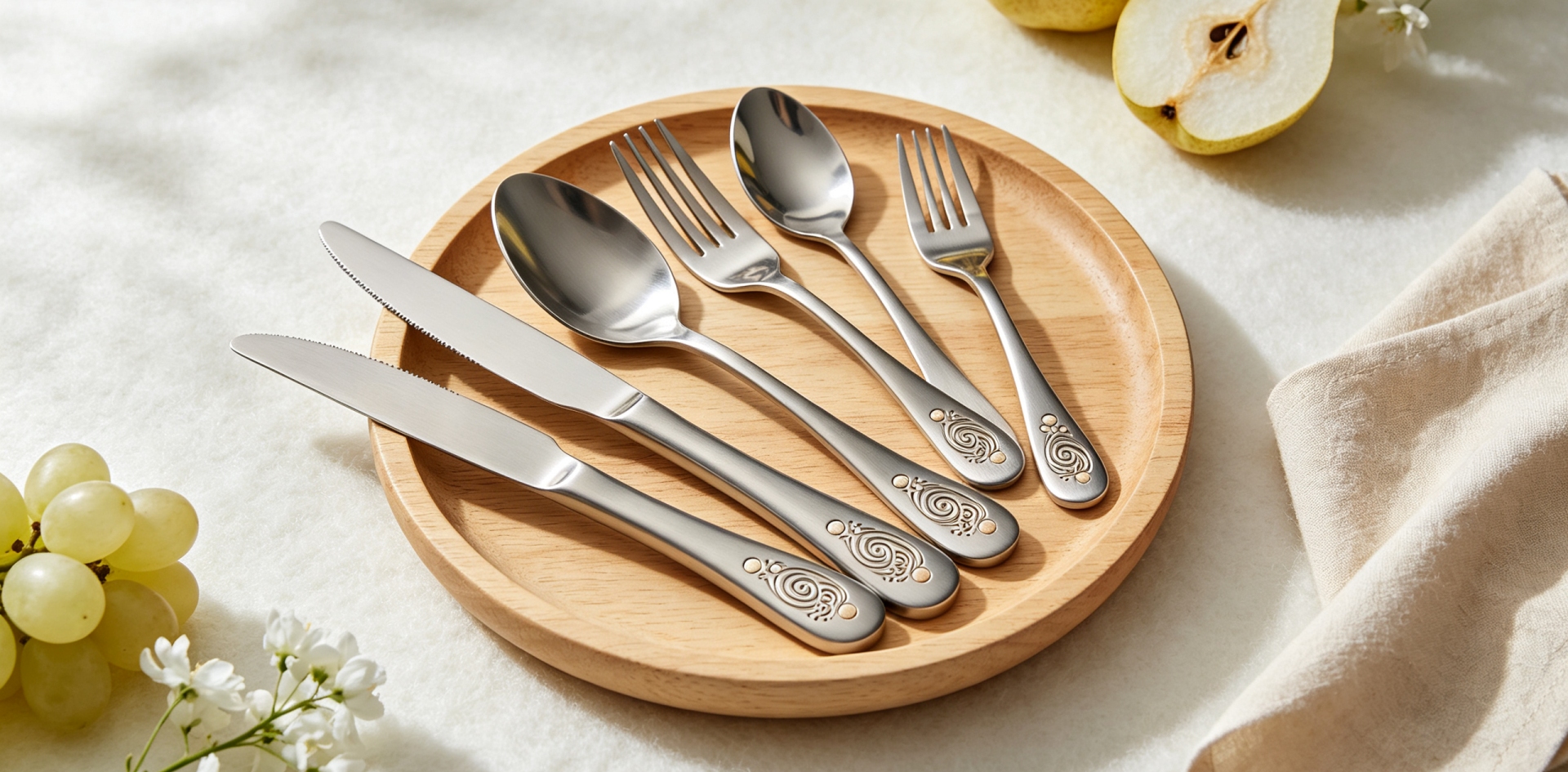
Stainless Steel Cutlery Logo Customization for Private Label Brands
For brands developing their own stainless steel cutlery collections, a logo is more than a simple decoration. It is one of the details that helps customers recognize the product, connect it with the brand and distinguish one collection from another. When the spoon, fork and knife are produced as part of a private label project, logo customization needs to be considered together with the cutlery design, material, dimensions, finishing requirements and production process.
For B2B buyers, the right logo solution also needs to remain consistent across large production quantities. A mark that looks clear on the approved sample should maintain its appearance during mass production. This is why experienced stainless steel cutlery manufacturers normally confirm artwork, logo position, size and production requirements before finalizing the order.
Logo Placement on Stainless Steel Cutlery
The available logo area depends on the design of the spoon, fork or knife. Handles are often selected for brand marking because they provide a visible and relatively stable surface. However, the shape, width, curvature and decorative details of the handle can affect the available marking area.
For a custom stainless steel cutlery project, buyers can provide their brand logo, artwork or design reference. The factory can then evaluate the suitable position and proportions based on the actual cutlery model.
For example, a logo may be positioned toward the end of a handle for a subtle appearance, placed closer to the center for stronger visibility, or integrated into a specially designed handle pattern. The final solution depends on the product structure and the visual effect required by the brand.
Keeping the Logo Consistent Across a Cutlery Collection
A private label collection may contain several spoons, forks and knives with different shapes and sizes. One challenge is keeping the brand identity visually consistent across all pieces.
The logo should therefore be considered as part of the complete collection rather than as an isolated marking. Its scale, position and visual relationship with the handle design should be reviewed across different products before mass production.
This approach is especially useful for hospitality suppliers, restaurant brands, retailers, distributors and other B2B buyers who need multiple cutlery models under one brand.
A manufacturer can prepare samples for different models so buyers can compare the logo appearance before confirming the production version. This helps reduce misunderstandings and gives both sides a clear reference for later bulk production.
Custom Logo Requirements for Spoon, Fork and Knife
Spoons, forks and knives have different structures, so the same logo specification may not always produce the same visual result on every item.
A spoon handle may provide a broad area for branding, while a fork handle may have different proportions. A knife can also require special attention because of its handle construction and overall design.
For this reason, buyers should provide more than just a logo file when requesting a quotation. Useful information can include:
-
Stainless steel cutlery model or reference image
-
Spoon, fork and knife requirements
-
Logo artwork
-
Preferred logo position
-
Approximate logo size
-
Desired visual effect
-
Surface treatment requirements
-
Quantity for each model
-
Packaging requirements
-
Target market or application
With these details, the factory can evaluate the project more accurately and recommend a practical production solution.
Private Label Cutlery for Retail and Hospitality Brands
Private label stainless steel flatware can be developed for many B2B applications. Retail brands may require branded cutlery collections for their own product lines, while restaurant groups and hospitality suppliers may need customized products that match their brand identity.
Distributors can also use private label cutlery to create a differentiated product range instead of selling completely standard models.
For these projects, branding usually works best when it is coordinated with the product itself. Handle design, logo placement, finish, packaging and product combination can all contribute to a consistent collection.
The goal is not simply to place a logo on a standard spoon or fork. A well-planned OEM project can turn the cutlery into a product that is specifically developed around the customer's commercial requirements.
Sampling Before Bulk Production
Sample approval is an important stage for custom stainless steel cutlery logo projects. Before placing a large order, buyers normally need to check whether the actual product matches the approved design.
The sample can be used to review the logo position, proportions, appearance and relationship with the cutlery handle. It also gives the buyer an opportunity to confirm the overall product before production moves to the bulk stage.
For repeat orders, the approved sample or confirmed production specification can become an important reference. This helps the factory maintain consistency when producing larger quantities or future batches.
From Custom Design to Bulk Production
A professional B2B cutlery manufacturer should be able to connect different stages of the project rather than treating logo customization as a separate service.
At Homefelt factory, customers can discuss stainless steel spoon, fork and knife requirements from the initial design stage through sampling, OEM/ODM development, private label customization, packaging and large-volume production.
For buyers who already have their own product concept, the factory can work from drawings, reference samples or artwork. For buyers who are still developing their collection, the manufacturing team can discuss practical options based on the intended market, product positioning and order requirements.
This flexibility is useful for both established brands and distributors developing a new private label collection.
Documentation and Quality Control for Branded Cutlery
B2B customers often need more than a finished product. Depending on the market and project, buyers may also require product specifications, inspection records, certification documents or other supporting materials.
Clear documentation can help purchasing teams, quality departments and importers maintain consistent product requirements. It also creates a useful reference when the same branded cutlery needs to be reordered later.
Homefelt factory has experience working with well-known brands and has passed audits and certifications including BSCI, SEDEX 4P, BRC and ISO9001, with FAMA and FSC certification available for relevant business requirements. Buyers can discuss the specific documentation needed for their project before production.
Building a Long-Term Private Label Cutlery Program
A successful private label project does not necessarily end with the first shipment. Once a collection has been approved, brands may expand the range with additional spoon, fork and knife models, develop new handle designs or adjust product combinations for different markets.
Working with a manufacturer that understands the original product requirements can make these future developments more efficient. The approved samples, specifications and branding requirements can provide a foundation for future orders.
For B2B customers, this can be especially valuable when purchasing volumes increase or when the brand needs several related stainless steel flatware products over time.
Homefelt factory provides custom stainless steel cutlery, OEM/ODM, private label manufacturing, wholesale and bulk production services. The team can work with customers on product design, logo customization, sampling, packaging and shipping arrangements according to the requirements of each project.
Stainless Steel Cutlery Polishing Quality for Consistent B2B Orders
Stainless Steel Cutlery Thickness Specifications for B2B Projects
Related Article



