
Stainless Steel Cutlery Matching for Custom B2B Collections
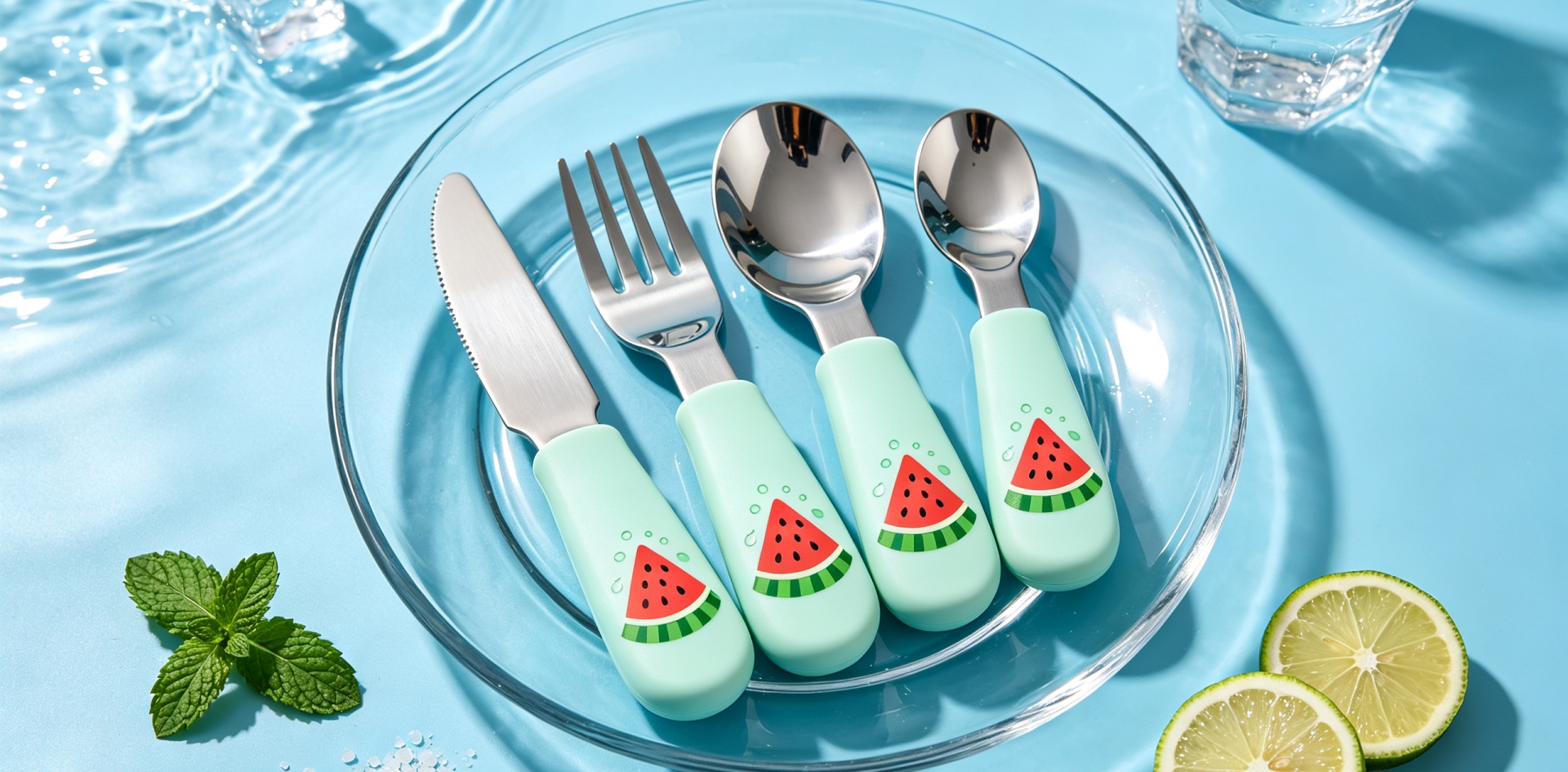
Stainless Steel Cutlery Matching for Custom B2B Collections
A stainless steel cutlery collection is usually made up of several individual products, but customers rarely view those products completely independently. When a knife, fork and spoon are placed together on a table, packed into one set or displayed as part of a retail range, their relationship becomes part of the overall product design.
For B2B buyers developing private label flatware, this makes cutlery matching an important stage of product development.
Matching does not mean that every piece needs to be identical. Each product has its own function and proportions. The objective is to make the pieces look and feel like they belong to the same commercial collection while preserving the characteristics required for each individual item.
What Does Cutlery Matching Mean?
Cutlery matching refers to the coordination of knives, forks, spoons and other selected flatware pieces within the same product range.
Several elements can contribute to this relationship.
The handle design is one of the most obvious. However, the relationship between the handle and functional section is also important. The fork head, spoon bowl and knife blade each have different shapes, yet they can share a common visual language.
Surface finish, overall proportions, visual weight and design details can also contribute to the impression of a coordinated collection.
For an OEM or ODM project, these elements can be discussed together rather than developed as completely separate products.
Why Matching Matters for B2B Buyers
For wholesalers and distributors, a coordinated collection can make it easier to present several related SKUs to customers.
For private label brands, matching helps establish a recognizable product identity. A customer purchasing a spoon from the collection should be able to recognize its relationship to the corresponding fork and knife.
This is particularly relevant when products are sold individually as well as in complete sets.
A retailer may offer a table spoon, dinner fork and table knife separately while also selling them together as a flatware set. If the pieces share a coherent design, the different sales formats can still feel like part of one product program.
Starting With a Common Design Direction
One practical way to develop matching cutlery is to establish a common design direction before finalizing individual products.
The customer may begin with a reference product, sketch, photograph or existing collection. From there, the manufacturer can discuss how the design principles can be applied to the other pieces.
For example, the handle may have a particular silhouette that needs to continue across the spoon, fork and knife. The exact dimensions will naturally differ, but the overall design relationship can remain consistent.
This approach gives the factory a clearer framework for developing the collection.
Matching Does Not Mean Identical Dimensions
A common misunderstanding is that matching cutlery should have the same proportions.
In reality, knives, forks and spoons perform different functions and therefore require different functional structures.
A spoon needs an appropriate bowl. A fork requires properly formed tines. A knife requires a suitable blade structure.
The goal is to coordinate these functional components with the common design language of the collection.
This distinction is important for B2B buyers because it allows the collection to remain visually unified without compromising the purpose of each individual product.
Matching Handle Design Across a Collection
The handle is often the strongest visual connection between different pieces of flatware.
A brand may want a particular handle silhouette, decorative detail or surface treatment to appear across the entire collection.
During OEM or ODM development, the manufacturer can use the chosen handle direction as a reference when developing different products.
The spoon, fork and knife may not have exactly the same handle dimensions, but their profiles can be developed to maintain a related appearance.
For a private label collection, this type of consistency can help create a recognizable product identity.
Coordinating Functional Sections
The functional sections also need to work together visually.
The spoon bowl, fork head and knife blade naturally have different shapes, but their relationship to the handle can be coordinated.
For example, if the handle has a refined and relatively slim appearance, the functional sections should be considered in relation to that visual character. A significantly different visual weight in one product may make the collection feel less coordinated.
This is why complete collection development can be more effective than designing each piece independently.
Matching Surface Finishes
Surface finish is another element that can connect different products.
If a collection uses a consistent finish, the knife, fork and spoon can share a similar overall visual appearance.
However, because their surfaces have different shapes, the way light reflects from each piece will naturally vary.
The important consideration is the intended finish and overall visual relationship rather than expecting identical reflection patterns across every product.
For B2B projects, the desired finish should be confirmed during development so that the manufacturer has a clear reference for the collection.
Matching Product Weight and Visual Presence
Weight is another characteristic that can influence how a collection is perceived.
Knives, forks and spoons do not need to weigh the same. Their construction and functional requirements are different.
However, if one piece appears significantly heavier or lighter in visual presence than the others, the collection may feel less balanced.
For this reason, buyers developing a custom range can consider the relationship between the products rather than selecting specifications independently.
The manufacturer can then discuss the practical production requirements for each piece while keeping the overall collection direction in mind.
Developing a Collection for Different SKUs
Many B2B customers need more than a three-piece combination.
A product program may include several spoon sizes, different fork types, multiple knife designs or additional pieces developed around the same basic style.
In this situation, establishing a common design language becomes even more valuable.
The customer can define the core characteristics of the collection and then determine how those characteristics should be applied to individual SKUs.
This approach allows the range to expand without making every new product look completely unrelated.
Matching for Retail and Wholesale Programs
Different sales channels can require different product configurations while still using the same underlying design.
A brand may sell individual pieces through retail channels and complete sets through another distribution channel. A wholesaler may offer the same collection to different customers with different SKU combinations.
When the underlying products share a consistent design direction, these variations can be managed more easily.
The factory can produce the individual cutlery pieces according to the approved specifications, while the buyer determines how they will be combined and marketed.
Using Samples to Review the Complete Collection
When several products are being developed together, it is useful to evaluate them as a group.
Looking at a fork by itself may give a different impression from seeing it next to the matching knife and spoon.
During the sample stage, buyers can place the products together and evaluate their overall relationship.
This can reveal details that are difficult to identify from individual product images. A handle may appear appropriate on one product but require adjustment when viewed alongside the others.
For custom B2B projects, reviewing the complete collection can therefore help the buyer make more informed design decisions before bulk production.
Communication Between Buyer and Manufacturer
Clear communication becomes especially important when multiple SKUs are developed together.
The buyer can provide reference images, drawings, existing samples and descriptions of the desired design direction.
It is also useful to identify which features must remain consistent across the collection and which features can vary according to product function.
For example, the handle design may need to remain highly consistent, while the functional sections can be adapted to each product.
This gives the manufacturer a clearer understanding of the customer's priorities.
Supporting Private Label Cutlery Development
Private label projects often begin with a concept rather than a finished specification.
A brand may know the style it wants but still need support translating that concept into individual stainless steel knives, forks and spoons.
An experienced cutlery manufacturer can help turn the overall direction into production-ready products by discussing the requirements for each SKU.
Homefelt focuses on stainless steel knives, forks, spoons and cutlery sets for B2B customers. The factory supports OEM, ODM, private label and wholesale projects for customers developing their own stainless steel flatware ranges.
For a new collection, customers can provide reference designs, target quantities and product requirements so the manufacturing project can be discussed around the actual commercial objectives.
From Matching Products to a Commercial Collection
A successful flatware collection is not simply a group of products with similar handles.
The relationship between design, proportions, finish, function and product presentation all contributes to the final result.
For B2B customers, developing these relationships early can make the collection easier to manage as it grows.
The process may begin with one reference design, continue through several individual product developments, and eventually become a broader range of stainless steel cutlery for wholesale or private label sales.
Once the collection has been approved, the individual SKUs can be manufactured according to their respective specifications while maintaining the common design direction.
This provides a practical foundation for future product expansion and repeat purchasing.
Planning a Custom Matching Cutlery Range
Before contacting a manufacturer, buyers can prepare several useful details.
These may include:
The desired collection style
Reference products or images
Required knife, fork and spoon types
Preferred stainless steel specification
Surface finish
Estimated order quantities
Target sales channels
Private label requirements
Packaging expectations
Future SKU expansion plans
With this information, a factory can better understand the scope of the project and discuss the most suitable development approach.
For brands, wholesalers and distributors, the objective is not simply to find individual stainless steel cutlery products. It is to build a product range that can be purchased, presented and replenished as a coherent commercial program.
A coordinated design direction helps connect those individual products into one recognizable collection.
Custom Stainless Steel Cutlery Manufacturing
Private Label Stainless Steel Cutlery
Stainless Steel Cutlery Order Terms for B2B Projects
Stainless Steel Cutlery Visual Inspection for B2B Orders
Related Article



